Amid lofty valuations and a lack of compelling value opportunities in large-cap stocks, Power Finance Corporation (PFC) remains surprisingly under-discussed. Here’s a quick look at PFC’s FY 2025 financials and why it appears to be very undervalued.
FY 2025 Financial Highlights
Profit Attributed to Owners: ₹22,990 Cr
Consolidated Profit: ₹30,514 Cr
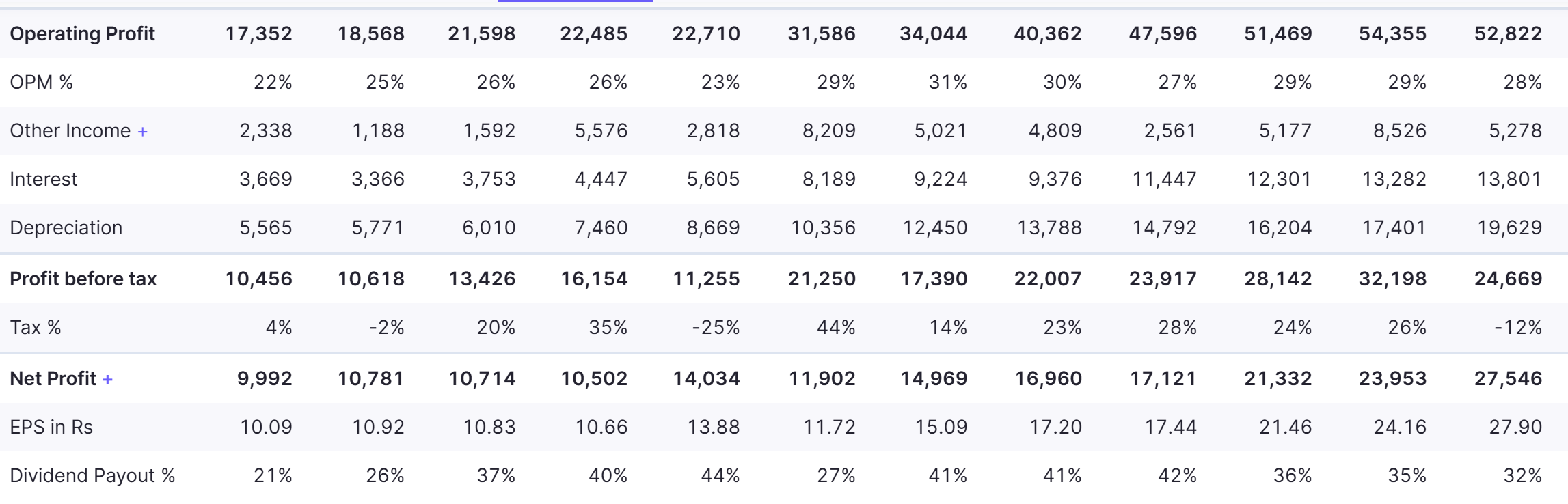
Standalone Profit: ₹17,352 Cr
Market Capitalization: ₹1,35,000 Cr
Net Worth: ₹90,000 Cr (Standalone), ₹1,34,000 Cr (Consolidated)
Loan growth guidance for FY 2026: 10-11 %
PFC is trading at an extremely attractive valuation, potentially close to its liquidation value, offering a high margin of safety. The stock offers a 4.5% dividend yield, particularly attractive in a falling interest rate environment.
PFC acquired 52.6 % stake in REC for around 14,500 cr. This stake is valued at 52,000 Cr at present market value. So ignoring the holding company discount, we are getting PFC assets for around 83000 Cr (remember the standalone profit is around Rs 17,990 Cr).
Some More Financial Metrics:
Cost of Funds: 7.44% (vs. 7.97% for Bajaj Finance, a best-in-class NBFC).
Yield on Loans: 10.02%.
Return on Equity (ROE): 19.5%.
Business Model in Simple Terms
PFC, a NBFC, primarily borrows from bond markets and banks at competitive rates and lends predominantly to the power sector, with a small but growing exposure to infrastructure. Its ability to offer long-tenure loans (15–20 years) and deep expertise in power projects gives it a competitive edge over banks.
Key Risks
Bad Loans: The power sector has historically faced challenges with non-performing assets (NPAs), which have been a concern in past investment cycles. However, the introduction of the Insolvency and Bankruptcy Code (IBC) and other reforms have mitigated this risk to some extent. Additionally, 77% of PFC’s loan book is to government-backed entities, significantly reducing the likelihood of NPAs.
Net Interest Margin (NIM) Compression: Increased competition from banks and a growing trend of companies raising funds directly through the bond market could pressure PFC’s loan demand and margins. However, PFC’s low cost of funds (7.44%) and expertise in long-tenure loans (15–20 years) provide a competitive advantage.
Ps : While not always the best metric for evaluating companies, a comparison with Indian Railway Finance Corporation (IRFC), a government-owned NBFC lending primarily to Indian Railways, highlights PFC’s undervaluation:
Financials for FY 2025 of IRFC
Net profit FY 2025 : 6500 Cr ( 22,500 Cr for PFC)
Market Cap : 1,80,000 (1,35,000 Cr for PFC)
Profit Growth (Last 3 Years): Near 0% (It is almost 50 % for PFC)
Despite PFC’s superior profit growth and lower market cap relative to its earnings, IRFC commands a higher valuation. By most valuation metrics—such as price-to-earnings, price-to-book, and profit growth—PFC appears significantly undervalued compared to IRFC. This discrepancy suggests PFC may be overlooked by investors.
Even for investors seeking good-dividend-yield stocks, PFC presents a compelling opportunity.
The operating costs of PFC and REC are very low compared to their profits, so there won’t be much synergy benefit from a merger in terms of cost savings. The main advantage I see is simply the creation of a much larger entity, with around ₹2 lakh crore in capital and a ₹10.5 lakh crore balance sheet. This new entity has the financial strength and scale to take on bigger infrastructure projects.
I had this question as well when the merger was announced. Other than scale economies and all. I feel the biggest would be the inclusion in the Nifty 50 which is ranked as per the free float market cap. PFC has a free float market capitalization of 60,295 crores and REC has 44,886 crores. The combined entity would have a free float market cap as of today is about 1,05,182 crores. A screener would rank the combined entity in the top 39th in free float market cap.
This would definitely increase the demand for these shares from large cap funds and passive funds. With the combined entity trading at Dividend yield of about 4.41% and Earnings yield of about 18.3%, I think the demand will be even higher.
I have a broader point in PFC; far better earnings and ROE versus NTPC; half the value ~ almost. both same sector. PFC is also a derivative of more power spending overall due to power finance company. Any growth trigger can jump the price to book? Sheer numbers are mind boggling :
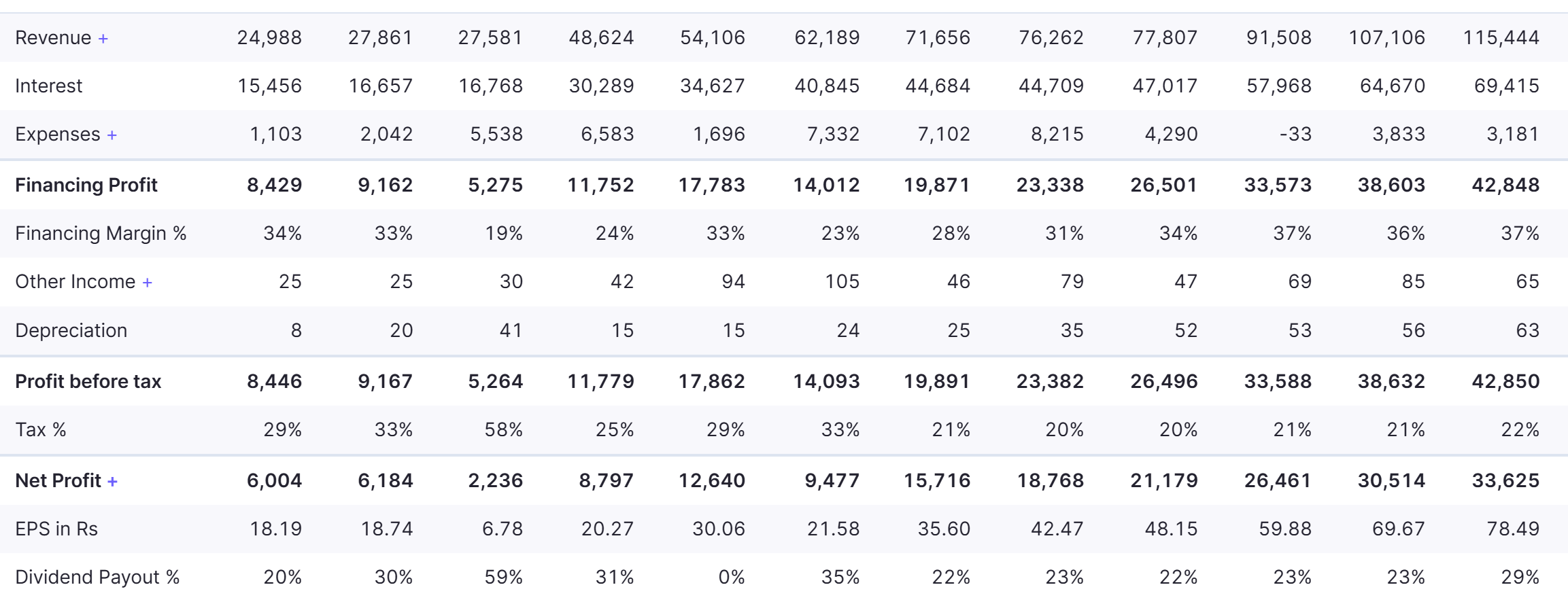
PAT - PFC: 33625 crore; NTPC : 27546;
ROE - PFC : 20.7%; NTPC : 14%
ROE for NTPC cannot go big enough due to business model compulsions. Although for PFC as well, this seems very high compared to earlier times.
Read the PFC concall and it seems that even a 10% growth does not have full confidence of the market as of now.
Comparison to NTPC is interesting. Here is another hypothesis / aspect I have been exploring.
PFC-REC Merger: The Nifty 50 Inclusion Hypothesis. The proposed consolidation of Power Finance Corporation (PFC) and REC Ltd would eliminate the holding company discount, and the combined entity’s post-transaction free-float market capitalisation will very likely lead to its inclusion into the Nifty 50 index — though not immediately. This could potentially trigger a significant institutional re-rating, but the timeline and mechanics deserve careful examination. To get a sense of the chances of index inclusion, we need to get a sense of what the free float market cap of the combined entity might be and for that purpose we will make try to see how the merger might pan out (under some reasonable PB-based assumptions). Later we will see what it might lead in terms to PE-based valuation rerating.
1. Core Working Assumptions
Share Price Benchmark: ₹443 per share, representing approximately 1.1x the current book value of PFC. Note that PFC has recently been trading in a range of ~5% around this in the last few weeks.
The Swap Ratio: Assumed at 8 PFC shares for every 9 REC shares. This is an indicative ratio, originating from UBS and circulated by other brokerages, based on then-prevailing market prices. The official ratio will be determined by independent valuers — RBSA Advisors and SBI Capital Markets — and has not been finalised. A book-value-per-share comparison between PFC and REC would suggest REC shareholders might receive approximately 10% fewer shares than the 8:9 market-price ratio implies; the final valuation will blend income, net asset value, and market price approaches, so divergence in either direction is possible.
Government Shareholding Resolution: It is assumed that the Government of India (GoI) maintains statutory “Government Company” status under the Companies Act by restoring its direct stake to exactly 51% via a fresh preferential equity infusion at the benchmark price of ₹443. The starting point for this calculation is GoI’s current direct stake of 55.99% in PFC (as of March 2026).
Financial Data Base: Capital boundaries and net worth lines are anchored on Q4 FY26 earnings disclosures (PFC Standalone BVPS at ~₹403; Group Consolidated Net Worth at ~₹1,73,441 crore).
2. The Post-Merger Accounting Walkthrough
When the merger triggers (current status: approvals from the highest levels of GoI received) , PFC’s legacy 52.63% stake in REC is legally extinguished. PFC issues fresh equity solely to REC’s 47.37% public minority.
Intermediate Equity Base Expansion: PFC’s outstanding share base expands from 330.02 crore shares to 440.90 crore shares post-swap. Because GoI’s current direct holding in PFC is ~56% (~185 crore shares), this mechanically dilutes it to ~42% of the expanded base.
The GoI Capital Infusion: To restore sovereign ownership from ~42% back to exactly 51.0%, PFC issues approximately 82 crore fresh shares to GoI at ₹443, infusing roughly ₹36,300 crore of cash onto the balance sheet. This figure is sensitive to the ₹443 issuance price assumption — at current market prices of ~₹430-433, the required infusion would be somewhat larger in share-count terms (and the BVPS impact slightly different).
Final Capital Architecture:
Total Outstanding Shares: ~523 crore
Combined Group Net Worth: ~₹210 Kcrore (Consolidated base + fresh GoI cash)
Post-Transaction BVPS: ~₹401 per share
Key Takeaway: Because the preferential share issuance to the government occurs at ₹443 (a premium over standalone BVPS of ~₹403), it substantially insulates the equity base from book value dilution. The combined entity emerges with a BVPS very close to today’s standalone figure.
3. The Nifty 50 Inclusion Engine — And Its Timeline
The core alpha opportunity lies in the mechanical rules governing NSE Indices’ methodology, but the timing deserves more precision than is often discussed.
The Size Qualification
With GoI locked at 51% post-infusion, public free float represents 49% of final equity capital (~256 crore shares). At the assumed price of ₹443:
A cross-sectional analysis of free-float market caps as of 09-Jun-2026 suggests this would rank approximately #32 (behind Grasim Industries but ahead of Bajaj Auto). Under NSE’s index entry protocols, a non-constituent stock is included if its 6-month average free-float market cap is at least 1.5 times that of the smallest index constituent. Bottom-tier Nifty 50 members currently hover around 60 Kcrore in free-float market cap — this figure should be verified against the live NSE constituent list at time of reading, as it is dynamic. At ~113 Kcrore, the combined entity would comfortably breach the 1.5x displacement threshold on size alone.
The Critical Caveat: There are lots of caveats and risks associated to this thesis and its very unclear when (or even if) index inclusion will happen. NSE’s methodology has other requirements (including listing history) and the combined entity would need to satisfy them as well which might delay index inclusion. Free-float market caps of Nifty 50 constituents are continuously evolving. A sustained rally in current bottom-tier members, an index churn or a broad market re-rating, could raise the 1.5x displacement threshold materially above 90 Kcrore by the time the merged entity qualifies for review.
If and when the combined entity does get included its valuation multiples (especially price to earnings) might improve via two distinct mechanisms:
Mechanical passive inflows at the point of index inclusion — these are near-certain if inclusion occurs, as index trackers and ETFs must build positions proportional to the entity’s index weight. This is a one-time demand event.
A sustained PE re-rating by active managers, who would benchmark the asset against Nifty50 peers. Currently the smallest earnings multiple of a the Nifty50 constituent is ~7.6x (for ONGC) and when restricted to financials it is ~11.1x (for SBIN). With this background in mind, it seems likely that earnings multiple ascribed to PFC might increase significantly from the current ~5.5x if and when it gets included in the index.
Disclosure: Invested, possibly biased.
Disclaimer: This post is for analytical and educational purposes and does not constitute financial advice. The merger details, final swap ratios, and regulatory permissions are currently under review by appointed merchant bankers and corporate boards. All figures in this post are based on publicly available data and working assumptions — the final path chosen by the Government of India to address its holding dilution remains subject to board, cabinet, and regulatory approvals.
Narrative:
Energy is a thin margin business. It isn’t like FMCG or Capital Goods where you will pay a premium for a company’s quality goods or services. A consumer is always looking or will go to the company who charges the least for their goods and service. So in order to get a respectable ROE from their business and not take too much capital risk themselves, companies will need leverage. So, the need for institutions like PFC is inevitable.
The Merger:
PFC is issuing 88 shares for 100 shares of REC to merge the entities but PFC can’t own its own shares so this is basically for the minority shareholders who own 124.58 crore shares. PFC gives them 124.58 * 88/100 = 109.63 shares of PFC. So post merger PFC will have about 439.63 crore shares outstanding.
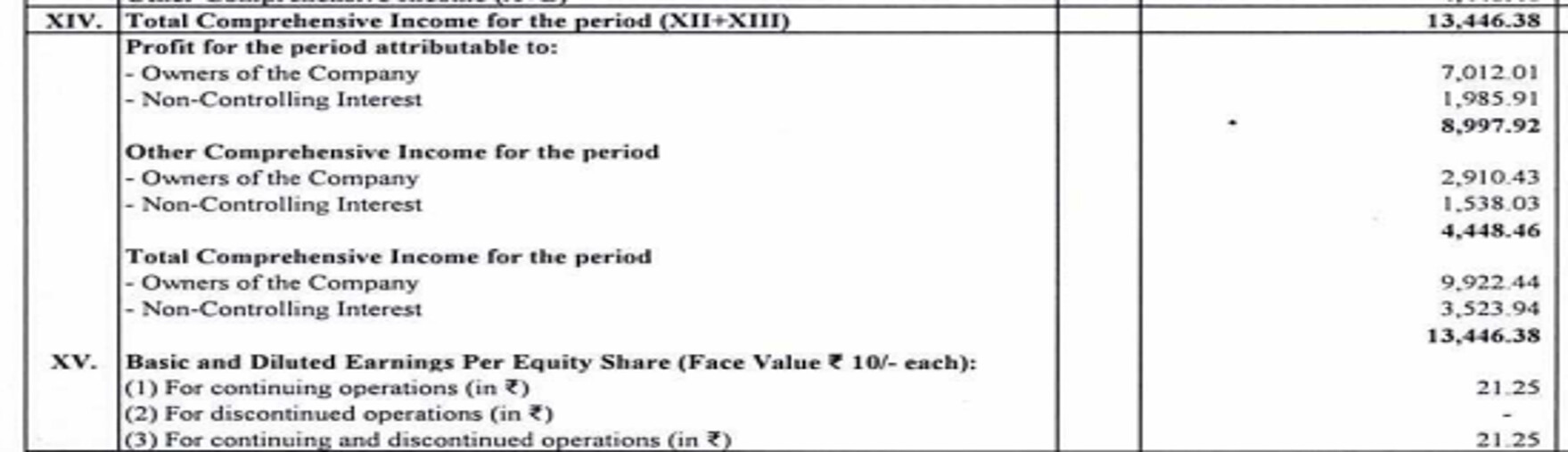
As per the latest Q1FY27 filing, PFC made this quarter a consolidated PAT of ₹ 8,998 crores or annualized 35,992 crores or ₹ 81.86 per share. This includes the earnings for minority shareholders of REC as well but post merger, this earnings will be added to the “Owners of the Company” line. PFC generally likes to give 25% of its earnings as dividends so you are looking at ₹ 20.46 per share per year.
Note: per share calculation is using the post merger shares outstanding of 439.63 crores.
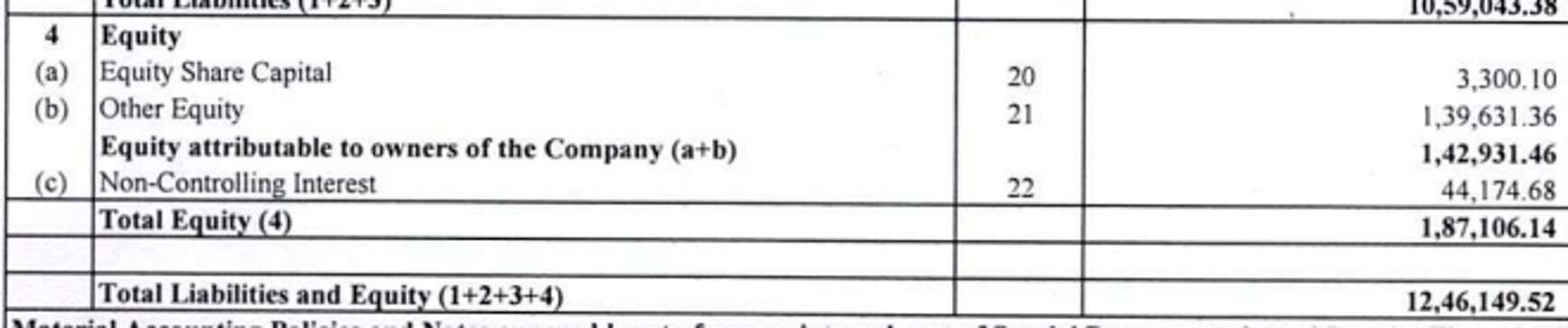
Similarly, PFC’s book value becomes ₹ 1,87,106.14 or ₹ 425.6 per share. So post merger you are getting a business that has an ROE of about EPS/BVPS = 81.86/425.6 = 19.23% which is way better than the median Nifty 500 company. Since it pays out about 25% of its PAT, 75% of the PAT is retained and invested back at this 19.23% engine giving a internal growth rate of about 14.42%. Clearly, this is a great company which has high returns on capital and able to reinvest at these high rates of returns.
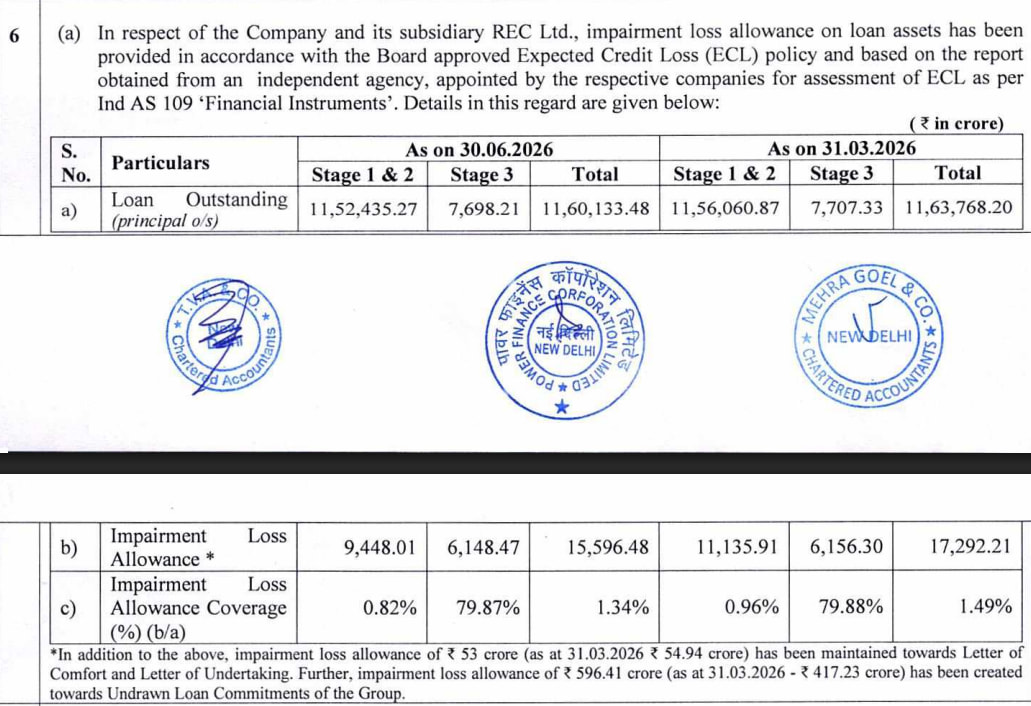
I hear the argument that they are giving loans to risky people or DISCOMS that don’t pay. PFC has provisioned ₹ 80 rupees for every ₹ 100 rupees it thinks is risky as per its latest filing which is its Stage 3 loans which is ₹ 7,698.21 crores or 4% of its book value. GNPA and NNPA is at 0.66% and 0.13% respectively.
As an Infrastructure Finance Company (NBFC-IFC) registered with the Reserve Bank of India (RBI), they are required to maintain a minimum CRAR of 15%. Both PFC standalone and REC have a CRAR of about 23%. Essentially, PFC is being conservative and can give more loans without taking in more capital.
Valuation:
At the current market price of ₹ 383 per share. We are looking at the following valuations based on the above calculated data:
Price to Earning ratio = 383/81.8 = 4.68 (-77% below than Nifty 50’s)
Earnings yield = 1/PE = 21.35% way more than bond yields and 15%
Price to Book ratio = 383/425.6 = 0.90 (-70% below than Nifty 50’s)
Dividend yield = 20.46/383 = 5.34% (324% more than Nifty 50’s)
ROE = 19.23% (33.54% more than Nifty 50’s)
What is a fair PB to give PFC? According to the Justified Price to Book ratio formula which is Fair PB = (ROE - g)/(r - g), where r is my required rate of return of 15% and g is the long term growth rate. Price to Value (PV) is the current PB / Fair PB expressed as cents on the dollar or paise on the rupee.
g = 0, Fair PB = 1.28, PV = 70 paise on the rupee.
g = 7%, Fair PB = 1.53, PV = 58 paise on the rupee.
g = 10%, Fair PB = 1.84, PV = 49 paise on the rupee.
We can also do a sum of the parts valuation as well, REC is trading at a MCAP of ₹ 90,320 crores of which PFC owns 52.63% which is valued at ₹ 47,535 crores. So PFC standalone MCAP = PFC consolidated MCAP - Value of PFC’s stake in REC = ₹ 78,580.6 crores. PFC standalone makes ₹ 20,295 crores of which about ₹ 2,500 crores is dividend income from REC so PFC standalone makes about ₹ 17,795 crore. Implying the standalone PFC entity is trading at a PE of 78,580/ 17,795 = 4.41 or Earnings yield of about 22.64%.
A much better freehand valuation is using Gordon Growth Model in the dividend yield which is your rate of return = dividend yield of the stock + growth in dividends or earnings. So in this case for my 15% rate of return and 5.34% dividend yield, dividends has to grow 9.66% per year. This can be easily done either by increasing payouts, increasing earnings, reducing costs, giving more loans, etc.
In short, I just don’t see the risks that market sees in PFC. If there is any, I think it is priced in the stock.
Very good analysis. I feel there are two main issues with PFC right now. First, can it grow its book? (I don’t know if you noticed, their loan book declined by ₹10,000 crore on a QoQ basis in Q1). Second, can they maintain their NIM?
I feel the biggest threat right now causing problems for PFC is IRFC. They have branched out and are funding all infrastructure projects. They have a very unique structure where they don’t pay any corporate tax (because of the thousands of crores of depreciation on their books) and they operate at NIMs that are less than half of PFC’s. Their capital adequacy ratios are also off the charts because of their lending to Railways. IRFC is now targeting all the erstwhile traditional borrowers of PFC. PFC has to rebuild its business model and find a new set of borrowers.
PS: I don’t agree with the market view that DISCOMs are going to default. All the state DISCOMs are state government backed and guaranteed. So there is almost a sovereign level guarantee on their loans.
I agree most of the risk is already priced in. If they can navigate this phase there is huge opportunity.
Thanks @RaghuG for the compliment. Regarding your points:
It is largely accounting noise in my view. A borrower paid down ₹10,000 crore of principal toward the end of the quarter. You can see the corresponding rupee-for-rupee ₹10,000 crore reduction on the liabilities side of the Q1 FY27 results under “Total Principal Outstanding of Debt Securities”. There was no corresponding sharp drop in interest income, so it is not a structural concern.
NIM compression is the word of the season across the entire financial sector. Borrowing costs have risen globally and domestically, so this is not a PFC-specific issue.
Demand Side (Yields):
Credit demand across India’s energy ecosystem remains unsatiated:
Nuclear energy expansion and large-scale renewable integration.
Comprehensive power grid overhauls.
Burgeoning interest in green hydrogen and ammonia projects.
Storage capacity demand—specifically Pumped Storage Projects (PSP) and Battery Energy Storage Systems (BESS) to balance daytime solar peak production with nighttime demand surges.
Traditional commercial banks face severe Asset-Liability Management (ALM) constraints and cannot easily match the long-tenor requirements of these mega projects. PFC has decades of specialized underwriting expertise here, allowing it to price risk accurately and protect asset yields.
Supply Side (Cost of Funds):
As a AAA/quasi-sovereign institution, PFC already commands the lowest market borrowing rates. If they need to lower their cost of funds further, they can expand issuance of Section 54EC capital gain bonds (currently offering a ~5.25% coupon) which they have already stated they will do.
I hold a different view on the IRFC threat for several key reasons:
1. Moat & Underwriting Limitations
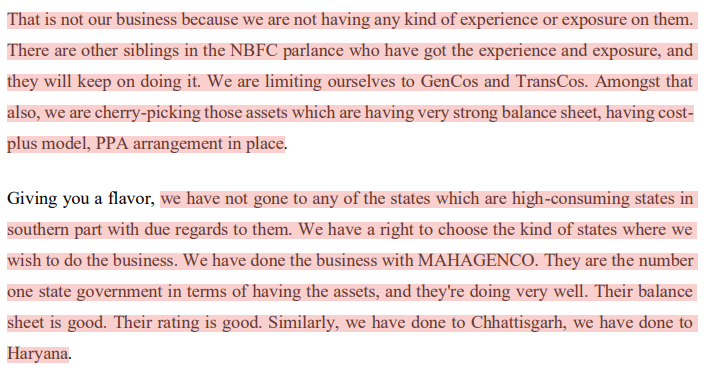
IRFC is restricting itself primarily to Generation (GenCo) and Transmission (TransCo) PSUs, cherry-picking top-tier borrowers. It is given in their concall below:
However, these AAA borrowers demand razor-thin interest rates, limiting IRFC’s potential margin expansion.
Furthermore, stepping deeper into the commercial risk spectrum presents major execution challenges:
Operating Costs: IRFC must build in-house appraisal, credit risk, and loan recovery teams from scratch—a capability PFC has refined over decades.
Forex Risk: Unlike railway leases where the Ministry of Railways absorbs foreign exchange variations, non-railway foreign currency borrowings and hedging costs will sit directly on IRFC’s balance sheet.
(Note: IRFC’s zero-corporate-tax advantage is also temporary. As management highlighted in recent concalls, depreciation benefits will run out in 5–6 years, after which standard tax rates apply.)
3. The Risk-Weight Asset (RWA) & Leverage Ceiling
This brings us to IRFC’s fundamental capital allocation dilemma.
Railway assets carry a 0% Risk Weight. If your core underlying assets have zero risk weight and generate a positive spread, why build up equity on the balance sheet at all? The corporate finance logic dictates using maximum debt leverage to optimize ROE, while distributing 100% of cash flows as dividends or share buybacks. Instead, IRFC continually accepted equity infusions at par value from the government, diluting capital efficiency. This is why I never invested in them the first place.
Now, management guidance states they want to shift toward a 60% Railway / 40% Non-Railway asset split. The moment you introduce non-railway commercial assets, the math tightens:
Railway Assets (60% weight): 0% RWA
Non-Railway Assets (40% weight): ~100% RWA
Weighted Average RWA: 40%
To maintain a conservative 25% CRAR on a ₹100 asset base:
Required Equity = CRAR * RWA = ₹ 40 * 25% = ₹ 10
An equity base of ₹10 on a total asset base of ₹100 caps maximum leverage at 10x. Since IRFC is already operating near ~9.1x leverage, it has very little headroom to scale non-railway assets without:
Diluting existing shareholders via an FPO/Rights Issue.
Cutting dividend payouts to retain earnings.
Selling off legacy railway assets.
To put it another way, gathering non-railway assets actually hurts IRFC’s return profile more than it helps.
4. Co-Lending Advantage for PFC
Rather than being a threat, IRFC’s entry into power infra is actually a positive for PFC. It creates a co-lending partner to syndicate large project loans, reducing single-entity concentration risk.
Under RBI norms limiting single-project exposure for NBFC-IFCs to 30% of Tier 1 capital:
IRFC can lend up to ~₹17,000 crore per project.
PFC can lend up to ~₹56,000 crore per project.
PFC remains the dominant player for large-scale energy infrastructure financing and yet it trades at 56.3% discount to IRFC in PB ratio terms even though it has 48% more the ROE of IRFC.
Thanks for the detailed explanation. I agree with most of your points. Looking ahead, however, I see a few issues that could still impact the thesis, even if they ultimately don’t materialize. Since we’re discussing this, I’ll lay out my concerns.
Demand side You are right that there is strong demand in nuclear, green hydrogen, and storage. I’m not questioning the overall credit demand. My concern is how much of it is realistically addressable by PFC and REC.
Adani Power used to borrow from PFC/REC but has shifted to local and foreign bond markets. Large players like Reliance and NTPC rarely borrow from them . So even if Reliance builds a major green hydrogen project or NTPC/Adani execute large nuclear plants, PFC may not benefit. Bigger players increasingly have better funding options.
Evidence of IRFC competition I’ll share three examples (there are more) that show IRFC moving into PFC’s traditional space. Note that ~80% of PFC’s current loan book is to government controlled entities and only ~20% to private players:
IRFC loan of ₹12,842 crore to HURL
IRFC disbursement of ₹1,000 crore to MAHAGENCO
IRFC funding for Hyderabad Metro
These look like loans that would previously have gone to PFC. This is clear market share loss. PFC and REC are not even meeting their own modest 9 - 11% loan-growth targets. The last two years have been weak, and this year doesn’t look promising either. Even HUDCO is showing better growth.
PFC and REC could have funded many metro projects and schemes like Kaleshwaram in Telangana. IRFC is capturing these relatively straightforward financing opportunities.
On project financing, PFC and REC have not done substantial new private sector project lending relative to their loan books. They are mostly directed at discoms and state government projects.
Regarding IRFC’s 5 to 6 year corporate tax benefit, in investment time frames that is a meaningful advantage to a competitor.
To reiterate , I don’t disagree with your overall points. I’m simply seeing rising competition and risks to PFC’s current lending model. Things may change and PFC may adapt, but that remains to be seen. Feel free to point out anything I’ve got wrong.
When you can raise money at PFC’s cost of funds, why would any logical corporate pay PFC’s margins? This is not a new development — NTPC, Adani, and Reliance have been accessing bond markets for years. Yet PFC’s loan book nearly doubled since 2018 despite this. The empirical evidence already answers the theoretical concern.
More importantly, even in mega projects, there are hundreds of contractors and subcontractors who cannot access bond markets and need financing. This is where PFC operates comfortably within its circle of competence.
Of the three IRFC examples you cited, only MAHAGENCO falls within PFC’s mandate. The others are a fertilizer company, an urban infrastructure project, and an irrigation project. Here is PFC’s actual product mandate — financing irrigation, metro, and fertilizer projects is neither PFC’s interest nor its expertise. The more pertinent question is: why is IRFC taking credit risk in sectors it has no experience underwriting?
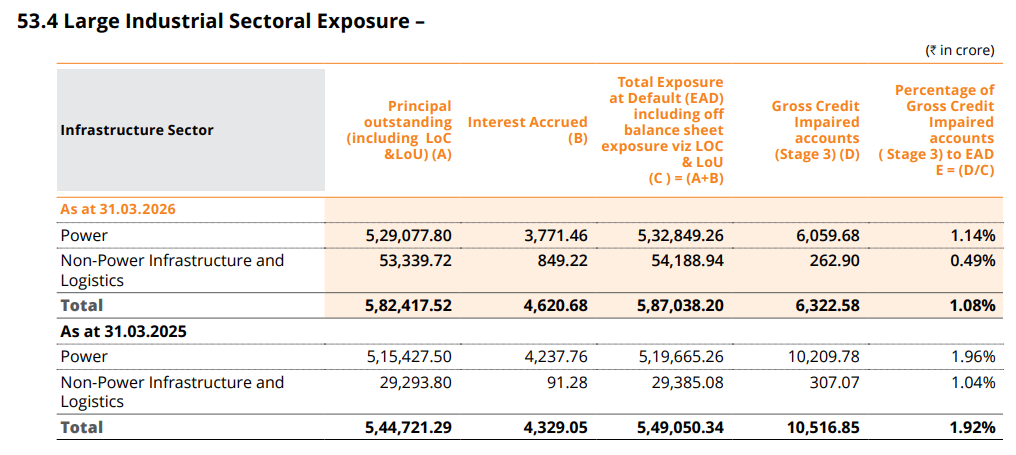
Edit: I just revisited PFC’s annual report and it seems PFC does have non-power lending as well at ₹53,339.72 crores or 4.28% of the assets. Don’t know if it includes infrastructure-adjacent lending — roads, ports, gas pipelines — that’s consistent with PFC’s underwriting competence. Don’t know how much is the cap on this. This can also be seen in the first item in the mandate page.
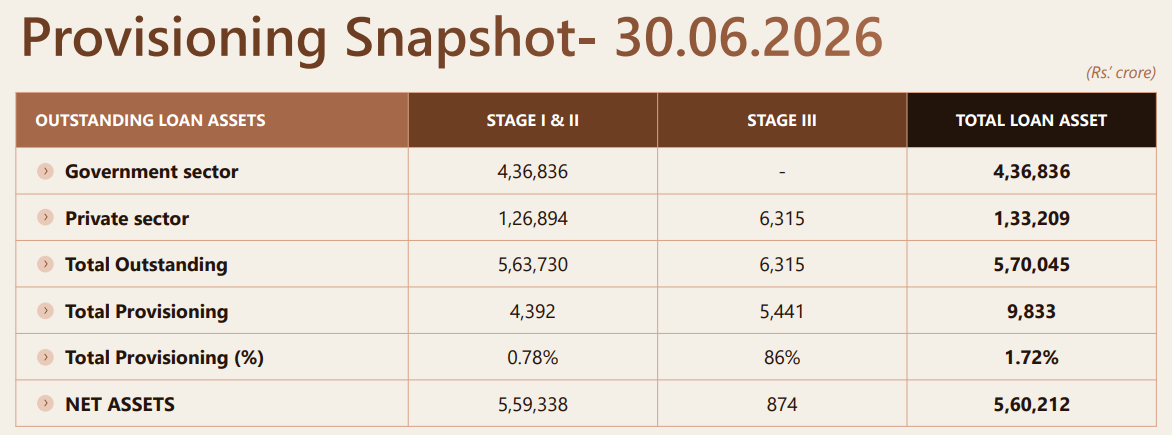
On private sector lending — the data answers this better than any argument. IREDA has 75% of its loan book in the private sector and carries a GNPA of 3.76% and NNPA of 1.23%. PFC’s Stage 3 loans are concentrated in the private sector, requiring 86% provisioning. BluSmart alone cost ₹650 crores in NPAs. The evidence is clear — undisciplined private sector lending in this space creates NPAs. PFC sticking to its circle of competence is not a weakness. It is exactly the kind of credit discipline that protects long-term book quality.
The fair price-to-book ratio for any business can be expressed as:
Fair PB = (ROE − g) / (r − g)
This formula reveals a simple but powerful principle: when a company’s ROE exceeds your required return, you should pay a premium to book value — regardless of whether growth exists. Any growth simply makes the business more valuable. You can see this in PFC’s case:
The inverse is equally important. When ROE falls below your cost of capital — as it does for IRFC and HUDCO at 12-13% against my hurdle of 15% — you should pay a discount to book value, and growth actively destroys value:
g = 0%: Fair PB = 0.86
g = 7%: Fair PB = 0.75
g = 10%: Fair PB = 0.60
The lower the growth, the better the deal for the investor — because the company is reinvesting less capital at a below-hurdle return.
PFC today trades at an earnings yield of 21.7% — a PE of 4.59 — and a PB of 0.88. The market is pricing it as though every rupee retained is worth only 88 paise. There is no growth in the price. The stock is priced as if the business will simply stop growing — or worse, slowly die.
This is precisely the point I am making. At current valuations, growth is not a requirement — it is a bonus. The market prices PFC as if growth is zero. CRISIL’s August 2026 credit report shows PFC has sanctioned ₹1,60,000 crore of new borrowing for FY27 — implying approximately 10% loan book growth. The market is giving you that growth for free.
My investment case is straightforward. I buy PFC at ₹376. It has generated EPS of more than ₹56.4 (15% of ₹376) for three consecutive years, and the merged entity will generate approximately ₹81.8 per share. Management takes some of that as dividends and reinvests the rest into a business earning 19.2% ROE. That reinvestment compounds at 1.28x my 15% hurdle (19.2% ÷ 15%). If they paid out 100% of earnings as dividends and simply rolled over the existing loan book indefinitely, I still earn 21.7% annually. The investment case is complete without a single rupee of loan book growth.
For IRFC and HUDCO — earning 12-13% ROE — the math runs in reverse. Every rupee they retain and reinvest earns 0.86x my required return. Growth compounds the value destruction. I would rather they paid out everything as dividends so I could redeploy at my hurdle rate. I simply don’t look at businesses that earn below my cost of capital regardless of their growth narrative.
Edit: Just to drive this home, here is the last from FY16 to FY26 PBT growth and equity capital growth for the three discussed companies from screener.
FY16
FY26
CAGR
Note
PFC PBT
9,167.00
42,850.00
16.67%
HUDCO PBT
1,076.00
3,221.00
11.59%
IRFC PBT
1,950.00
7,009.00
13.65%
PFC Equity
1,320.00
3,300.00
9.60%
Bonus/ No Dilution.
HUDCO Equity
2,002.00
2,002.00
0.00%
IRFC Equity
3,584.00
13,069.00
13.81%
Rights + IPO.
Per Share PBT
PFC PBT per share
6.94
32.46
16.67%
HUDCO PBT per share
0.54
1.61
11.59%
IRFC PBT per share
0.54
0.54
-0.14%
I used PBT to make it a level playing field. HUDCO had some tax credits and IRFC has a corporate tax crutch.
On the loan growth criticism — slow growth during a high interest rate environment is prudence, not weakness. When borrowing costs are elevated, the best borrowers reduce leverage to protect their interest coverage and liquidity ratios. The borrowers who continue taking on debt aggressively are often those with no alternative — the most credit-constrained, highest-risk names in the system. A lender chasing volume in this environment may see NIM expansion in the short term. What they are accumulating is NPA risk for the medium term. PFC’s restraint reflects exactly the kind of credit discipline that separates good lenders from reckless ones.
To summarize: Growth is valuable to me only when a company earns above my cost of capital — as PFC does. For IRFC and HUDCO, growth is value destruction. And at PFC’s current price, growth is not even in the equation. It is a free option on a business the market has priced to die.
You are missing the point. I am not defending the returns or the business operations of HUDCO or IRFC. The key point is that they are funding projects at cheaper rates than PFC. We are analyzing PFC’s fundamental performance relative to its competition. If the competition chooses to operate at lower margins (or even lose money), that is their decision, it does not change the outlook for my position. My concern is that if competitors are willing to accept thinner margins, it poses a greater competitive threat to PFC.
I understand your point that PFC looks attractive because of its extremely low market cap and the reasons explained earlier. However, I don’t know if market will reward a business that is shrinking. I would like to emphasize that I am also invested in PFC, but I am playing devil’s advocate to show that all is not so rosy.
Adding REC’s Net Profits and Book Value to PFC’s Standalone for post merger calculations is incorrect because Standalone PFC owns 52.63% so the book value will contain their investment cost and the profits will also report dividends received from REC. PFC’s consolidated results is basically what a merged entity will look like. I have taken it here in the earlier post:
I also owned PFC in the past and make money from it. And I’ll admit the current valuation looks attractive but I fear, what if the stock stagnates for a long time like it did earlier for a decade. Also the growth is slow. I can buy 30% growing companies at 10-12 PE vs this 5-10% growing company at 4.5 PE. I know it feels intuitively wrong but over the long term, the higher growth company will come out ahead despite the higher valuation. This was assuming buy and hold. You could instead flip the stock in a few years but I don’t see any catalysts for rerating.
Do note that earlier there was a npa crisis so that was why banks didn’t lend to power companies for a decade. Now there is competition. I still believe the company will grow but the rewards don’t appear to be big enough to keep my capital invested in it.
I think banks will find it difficult to fully replace pfc for funding power projects. Power financing requires one to write very long-term checks 20-40 years. Banks by its design have short duration liabilities. So writing a lot power/infra checks can cause asset liability mismatch