
good writeup
2 Likes
Use VPN in light of India pak tussle geo block for most govt websites
1 Like
Not yet. Date is 5th June.
Valuation finally converging to NAV. Only 5% discount now.
1 Like
This has risen 20% and closed the gap with NAV.
A learning for self. When valuations are depressed we try to find all kind of reasons and extrapolate it to worst case scenarios to avoid. This true other way round for pricey valuations also.
Disc: Started nibbling at 81 and put in 2.5% of PF at 76.5(my target allocation).
8 Likes
A very generic article, does not go into specifics and highlights the issue of the InvIT not acquiring any new assets. In fact PGInviT should be able to provide double digit yield at the current price of Rs.91 for the next 20+years even if no new assets are acquired and the article does not mention it.
it’s paywalled; could you please summarize?
Just registration required to read the article, no payment required. Key points from the article, it is a 101 level article on PGInvIT and does not have much detail.
Summary: On the surface, infrastructure trusts like Power Grid InvIT offer dream-like dividends—13 per cent annual payouts from government-backed assets. But beneath the steady cheques lie structural cracks that most investors miss. What happens when growth dries up? And are you really earning as much as you think?
Revenue is headed for a drop
The issue lies in what’s coming next. From FY27 onwards, two of PGInvIT’s biggest revenue contributors, Vizag and Kala Amb, will undergo tariff resets. These resets will reduce their income by nearly 20 per cent. Since they together contribute about one-third of the InvIT’s revenue, this will significantly shrink overall cash flow unless new assets are added.
Should you invest in Power Grid instead?
PGInvIT’s high payouts may look tempting, but they come with hidden risks—falling asset value, uncertain growth and shrinking cash flows. Sometimes, the smarter bet is to invest in the company behind the trust.
I have been tracking this Invt closely.
Would like to understand why would tariff reset in Fy27 onwards result in reduction of Income by 20%.
Didn’t find the document or comment on downward negotiation( reset) for Vizag and Kala Amb.
My understanding was they manage the Transmission asset and with inflation the contracts like to get revised and negotiated upward to accomdate the inflationary costs.
Secondly the unlike INDGrid, PGInvit is strong to take leverage and aquire assests as when opportunity arise and mgmt stops playing too defensive.
Ignore the details in the article, it does not seem to be well researched. Look at the valuation report for the expected cash flows from the SPVs. There is significant reduction in FCFs from three SPVs from 2028 onwards and not from Vizag SPV.

Seems like one of the marquee investor (CPP) have completely exited the invit which led to the drop in price.
When I thought of picking some of it, I came across this information of revenue drop in upcoming finance years.
Can someone share the document in which it has been mentioned so that I can take a look at it?
While CPP has sold a large chunk, many other FPIs and DIIs have invested recently.

Disclaimer: Invested in a small way.
2 Likes
any hope of any of these ‘small’ additions, coming through? Has anyone tracked specifics on this, through sources?
The dividend yield of PGINVIT is currently being shown by Screener at 9.95%. Is this true? Is the dividend level likely to continue? Any views?
In year 2025-26, the management has guided for a payout of Rs.3 every quarter (3 already paid, last one due in may 2026). Next year guidance will come when they declare the last quarter/full year results in May 2026 (most likely will be close to this year’s payout). Payouts are expected to reduce (about 20-30%) from 2027-28 year onwards if no new assets are acquired by then.
2 Likes
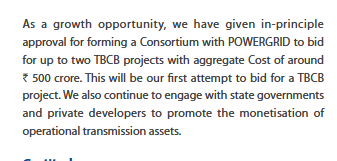
On the May 19, 2026, concall, management for the first time indicated (already known from IPO prospect) a potential revenue decline in the range of 23–24% (2027-28). If the company is unable to complete the long-pending state project acquisition or see progress in the ₹500 crore Powergrid TBCB projects, the outlook could weaken further. In such a scenario, with no meaningful order inflow to offset the decline, the stock price may come under significant pressure.
Disc : Invested and partially exited.
2 Likes
looks like there is no update to TBCB buy; from the recent annual report chairman address page 18 https://crimg.kfintech.com/bmails/files/PIT_24139_ANNUAL_REPORT.pdf,
they’re still talking
1 Like