JEENA SIKHO- seems shady, one off?

Emami to acquire remaining 73.5% stake in Axiom Ayurveda Pvt Ltd for up to ₹200 crore

Already held 26.5%, now bought 36.7% (first tranche) → stake crosses 63%

Remaining stake to be acquired in next 3 months (subject to approvals)

:chart_increasing: Financials & Growth

FY25 revenue: ~₹107 crore

FY26 expected: ~₹180 crore (strong growth expected)

:bar_chart: Industry Trend

Ayurveda & natural products market: $10–12 billion

Growth rate: 15–20% annually


Hindustan Unilever Limited (HUL) has strategically expanded its Ayurveda and premium personal care portfolio through targeted acquisitions, most notably

acquiring the Ayurvedic hair oil brand Indulekha for ₹330 crore in 2015. HUL has continued this push with investments in modern wellness brands, recently buying the remaining 49% stake inOZiva(plant-based nutrition) to become a wholly-owned subsidiary by 2026

besides all these recent notable Major M&As, I am also observing a lot of interest in the private markets among private equity and venture capital investors in the Ayurveda space.

3 Likes

The fuel for Growth is in the rich cash position of the company further strengthened by the decrease in AR in FY 26 as compared to FY 25 despite the increase in base (Sales). The company has huge cash to operate, a well placed capex and a MOAT in its Ayurvedic expertise. The volumes of IPD, OPD and Day Care are down slightly on a QoQ basis which is either attributable to the Quarterly factor or a shift in trend. Historically, March Quarter has been better for the company similar to the healthcare industry but it is different this time for the company. This factor is to be deep dived into.

In my opinion, it is not much of a concerning factor as the number of Beds for the chain has expanded and will be seeing much better occupany i.e. capacity utilization in the coming years.

Inviting other members to pour their thoughts on the same and add more to the discussions.

Disclosure: Invested

6 Likes

I was doing some math on the numbers posted by the Jeena Sikho in last year.. as per the May 2025 Presentation they were having total 115 care centre..

If we go through the number of last year out of total revenue of 469 cr. employee cost was 21.42 % which comes to around 100.5 Cr..

Employee cost per center comes to around 87.35 lac per year.. and at around 7.27 lac per month for one care center

They claimed to be having hospital also in this data..

is it really possible to maintain a hosptial with such low employee cost??

even running a small shop will need more expenditure than this towards the employee

please correct me if I am wrong

3 Likes

I think one needs to assume different cost of hospitals vs day care centers/clinics. If there’s an information on how many staff they have on such clinics the entire calculations changes and numbers will start making sense.

2 Likes

Also doctors are usually not employees but work as consultants with various hospitals. So that will skew the analysis as well

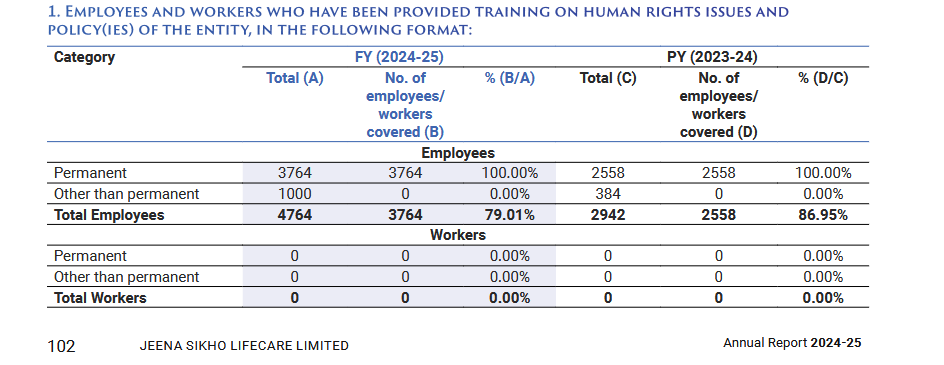
There is no payment towards consultancy or professional fees as per AR of the company.. they were having total 3764 permanent employee and 1000 other than permanent..

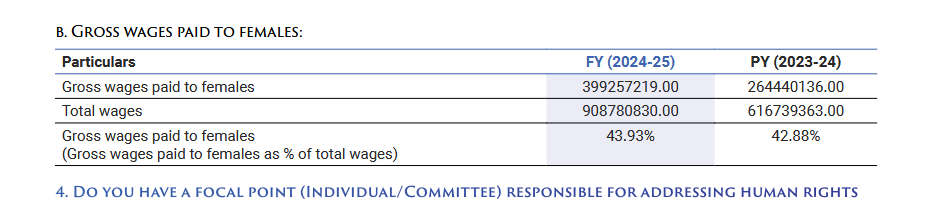
Total wages paid was 90.87 Cr. which comes to 2.41 lac per employee.. no mention about the wages paid to other employee..

4 Likes

As per my understanding the top line affected due. Change in accounting practices. They used clock the sale once the patient pays booking. But now they are counting only after the treatment.
Feels little off about the way they handled this quarter con call. But I still believe there no change in fundamentals.

Disclosure: Invested

Jeena Seekho Lifecare -

Q4 FY 26 results and concall highlights -

Q4 outcomes -

Revenues - 215 cr, up 55 pc

EBITDA - 78 cr, up 70 pc ( margins @ 36 vs 33 pc )

PAT - 45 cr, up 80 pc

In Patients @ 10.9k vs 6.41k, up 70 pc

Out Patients @ 150k vs 96k, up 56 pc

FY 26 outcomes -

Revenues - 801 vs 469 cr, up 71 pc

EBITDA - 349 vs 140 cr, up 148 pc ( margins @ 44 vs 30 pc )

PAT - 222 vs 80 cr, up 178 pc

The sequential moderation in margins was largely on account of higher provisioning relating to labour code

amendments ( they took the hit in Q4 vs most other companies that took the hit in Q3 ), ESOP provisioning, and certain performance-linked bonuses paid to employees at the close of the financial year

For FY26, EBITDA margins improved to 44% compared to 30% in FY25, reflecting operating leverage, improved asset utilization, and increasing scalability across both business verticals

Company’s infra -

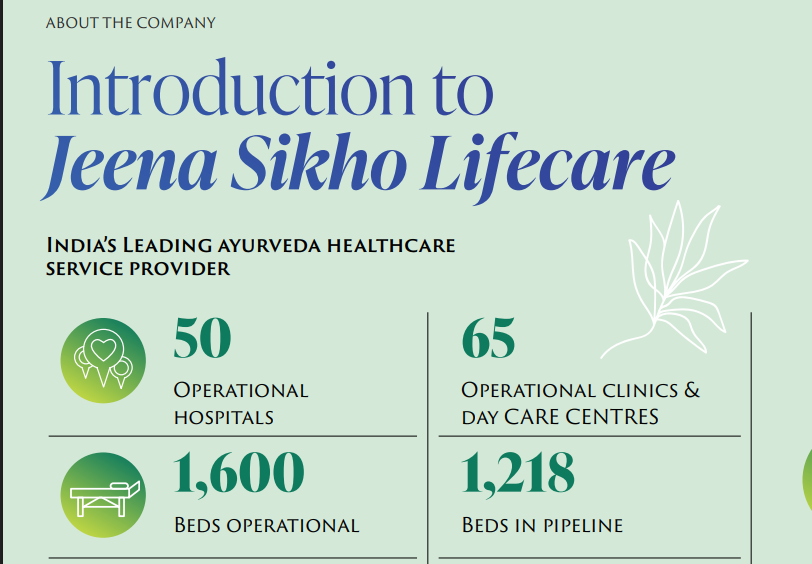
61 operational hospitals

58 operational clinics

2300 operational beds, 2861 total beds

No of SKUs of ayurvedic medicines that the company sells @ 330. Have been selling Ayurvedic medicines and related products since 2009

Company’s cost of new bed addition stands @ Rs 4 lakh / bed vs an allopathic hospital where this cost is usually > 50 lakh per bed

Notes from previous concalls -

Have launched 1 new OTC product ( Pet Yakrit Pleeha Suddhi Kit ) in FY 26. Has started to clock sales of Rs 10 cr / month - very encouraging response. Should launch a total of 5-6 products by Dec 26

Have opened 2 hospitals in ME. Going to open hospitals / clinics in US, 6 more in ME, Kazakhstan. International expansion should be a key focus area going forward

Company’s key focus areas wrt treatment at their hospitals include - body detox, improving metabolic and gut health, addressing joint pains, stress relief, improving immunity, improving skin conditions

Have also started diagnostic services ( via a tie-up with Chandan Healthcare ). Should be able to clock 15 cr kind of revenues from this vertical in FY 27. At present, have 34 operational centers for diagnostics. Should ramp up to 70 centers by end of FY 27

Company’s ARPOB in Q3 stood @ Rs 8400

Have entered into a distribution agreement with Entero Healthcare for distribution of their Ayurvedic medicines and OTC products. Entero’s reach covers aprox 10 pc of Indian chemists

Going to launch a herbal Multi Vitamin to cure common vitamin deficiencies in India. It’s a twice daily syrup by the name - NutriRoz. It’s being made out of 33 herbs. The addressable mkt for this is huge. Will also be launching Ayurvedic products for blood purification, diabetes, BP etc in next 1 yr

As the health insurance companies have started recognising Ayurvedic treatments - it is turning out to be a significant tailwind for the company

Have identified 15 OTC products that address a person’s day to day nutritional / wellness requirements. Have only launched 1 out of them ( 2nd launch is imminent ). These set of 15 products can really help the company ramp up its sales and profitability in a big way. These products will also include products for ppl who are pre-diabetic and pre-hypertensive. These areas have huge growth and profitability possibilities

Chandan Healthcare is Jeena Seekho’s exclusive partner for their diagnostic services. Jeena Seekho has picked up stakes in Chandan Healthcare. Chandan also gives out a percentage of revenue to Jeena Seekho for the patients referred by them

All of company’s products go through ICMR approvals before hitting the markets

Notes from Q4 concall -

Revenues from healthcare services - 385 cr

Revenues from sale of Ayurvedic products - 416 cr

Capex estimates for a typical 100 bedded hospital -

Furniture and Fixtures @ 50 - 60 lakh

Medical Equipment @ 65 - 70 lakh

Other Infra @ 250- 260 lakh

Grand total @ 3.5-4 cr or 3-4 lakh / bed

Opex estimates for a typical 100 bedded hospital -

20 Ayurveda docs

80 support staff

100 contractual staff

Total salary bill of around 55 lakh / month

10-12 lakh of monthly rental

Variable costs - 12-15 pc of monthly sales

Revenue potential from a typical 100 bedded hospital -

ARPOB @ aprox 8500 ( including panchkarma )

Avg occupancy @ say 70 pc ( after 12-18 months )

Avg monthly revenue @ 1.8 cr / month

Hospitals start breaking even @ 35-40 pc occupancies

Insurers that r now empaneled with Jeena Sikho include - ICICI Lombard, Bajaj Allianz, SBI General, HDFC ERGO, Ifco Tokio etc

33 of their hospitals r run by Franchisees. All expenses ( except Doctor’s salaries r bourne by the franchisee )

Key focus disease @ Jeena Seekho include -

Thyroid

Obesity

High Cholesterol

Depression/Anxiety

Migraine

Joint and Muscle pain

Skin care

Psoriasis

Asthma

No of operational beds should jump from 2300 to 3000 by Q2 FY 27

Company is also empanelled with CGHS, ECHS. Also empaneled with state Govts of Punjab, Haryana, UP

They made an ECL provision of 5 cr in Q4 - again, surpassing profitability

Did see some cancellations of advance bookings in Mar - due breakout of Iran war. Already seeing these preventive customers coming back in Q1

Aim to more than triple their consol ( both hospital + medicines ) sales inside next 5 yrs

Company has stopped recognising advances received ( against appointments booked ) as sales. Sales r only recognised when the patient actually receives the bill post receipt of treatment. This has also led to non-recognition of certain revenues in Q4

Adjusted for impact of new labour laws, additional bonus to employees, ECL provisions, Gratuity - EBITDA margins would ve been around 43-44 pc

Company has tied up rates of 8.8 to 9.2k / day with various health insurance companies

GoI’s Ayushmann Bharat scheme is also planning to empanel company’s Ayurvedic treatments. If this happens, company’s occupancy may just shoot up ( timely payments would still remain a concern - imho )

Company’s adv and promotions cost reduced to 8 pc of revenues from 12 pc in FY 25 - despite a steep increase in revenues - very encouraging trend

Govt sales in FY 25 was 118 cr. In FY 26, the same was at only 36 cr. They did this deliberately because of long payment cycles wrt Govt business

Two yrs back, contribution from health insurance to total revenues was 4 pc. Has jumped to 26 pc in FY 26 - very encouraging trend. This is also a proof of concept - If Insurance companies are paying up, the treatments offered by them must be really effective

Going to open 2 luxury hospitals @ Panchkula and Manali. The one @ Manali is ultra luxury

Confident of achieving a PAT of 300 cr in FY 27 !!!

Chandan Diagnostics helped them clock PAT of aprox 1 cr in FY 26 - growing @ a brisk pace

New hospitals are gonna come up in Ahmedabad, Kolkata, Patna, Lucknow, another one in Pune, adding beds in Mumbai

Disc: holding a small position, inclined to add more, not SEBI registered, not a buy/sell recommendation, posted only for educational purposes

5 Likes

Thoughts on this?:

  1. https://youtu.be/pjJsMs_h2mk?si=C3PzhrilOqHOZO1H
  2. https://youtu.be/JprngsZtFJY?si=or8qPPY2NvJ86eYV

There are naysayers, just like how Ayurvedic doctors do not quite accept allopathy and its practices, and allopathy believers too have their disagreements…I am not saying what was said in the video was right or wrong, as I hardly found time to watch it fully, but what matters in the end is the patient satisfaction, which is acceptable in the case of Jeena Sikho, as most hospitals and clinics are rated between 3.9 and 4.9 stars (ratings seem genuine and not bought).

1 Like

I think it’s healthy to be skeptical, especially in healthcare and wellness businesses.

After spending time going through the FY26 results, investor presentation, and conference call, I haven’t yet seen evidence that supports calling JSLL a fraud.

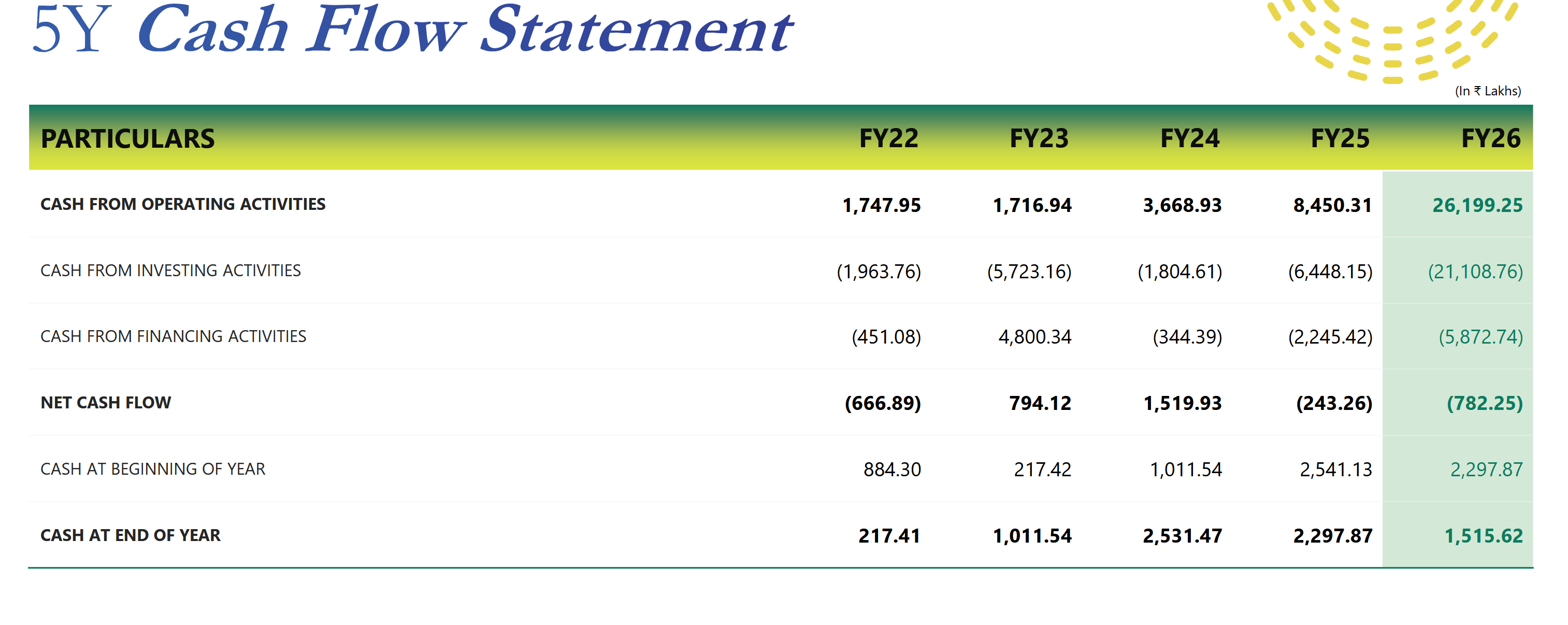
In fact, one thing that stood out to me was cash flow quality. FY26 operating cash flow was actually higher than PAT, which is usually not what you see in businesses that are simply selling stories.

What I’m personally trying to understand is not whether Ayurveda works or doesn’t work. The investment question is different:

Can they continue scaling occupancy across hospitals?

Can they maintain patient growth?

How much of the product business comes from repeat customers?

Can the clinic, hospital, medicine ecosystem continue working at a larger scale?

If those metrics hold up over the next few years, the business can continue growing. If they don’t, the bear case becomes stronger.

So far, I see reasons to be cautious, but not enough evidence to conclude fraud. Happy to change my view if someone has specific data points rather than broad accusations.

8 Likes

Agree with your point be cautious…still there are red flags in the business model..the TAM is not calculative and still the consumer for this don’t have that money to spend on Auyerveda.What i can see company will move to product side rather than hospital side …if they able to execute correctly than the business has potential to realize ..and keeping a bed business and driving the revenue is not feasible

Disclosure: I own the stock, so please read this knowing I have skin in the game. That also means I’m constantly looking for reasons to disprove my own thesis rather than blindly defend it.

I agree there are risks. TAM is still evolving, founder dependency is real, and execution at this pace is never easy.

However, after going through the FY26 annual report, investor presentation, results and conference call, I don’t think the company is simply choosing between hospitals and products. The two are designed to work together.

Hospitals and clinics build trust, insurance tie-ups improve affordability, and the product business creates recurring revenue. In the latest call, management highlighted that they are empanelled with most major insurance providers, which reduces the argument that patients have to fund everything out of pocket.

The bigger question for me isn’t “Will people spend on Ayurveda?” It’s whether management can continue scaling occupancy, maintain unit economics and convert patients into repeat product customers.

One thing I’ve learned from following growth companies is that the early years are usually filled with skepticism. Sometimes the skeptics are right and the story falls apart. Sometimes the company keeps executing and perceptions change only much later. That’s why I prefer tracking evidence rather than narratives.

I’m not emotionally attached to any investment. As long as management keeps walking the talk and the operating metrics continue supporting the thesis, I’m happy to stay invested. The day I see sustained growth slowing, execution slipping, governance deteriorating, or I find a materially better opportunity elsewhere, I’ll reduce or exit without hesitation.

For now, I think the debate should focus on data occupancy (8-10K beds in next 3-5 Years) cash flows, repeat customers, insurance adoption and execution.

5 Likes

Food for thoughts

  • Name : Jeena Seekho is not something that should be kept as Brand Name. No Class in the name at all. it will only allow to capture lower level of customer.
  • Branded Ayurveda Therapy Resorts which charge in Lacs for a complete Detox is a big Opportunity which can be scalled to International Level is missing and will not go big with this name and management Style
  • This complete company is running on the Name value of the Founder. who got famous because of Youtube primarily. Not much improvement in Fan Following in last few year. Virality is necessary unless company create its own brand, own stories of success.

Overall what i feel from the earlier success when it was expending now its time to consolidate and prove that occupancy explode else opex will bite hard. in Hospitals occupancy, ARPU and Brand Name what matters most.

3 Likes

With whatever I’ve studied about the company over the past few months (results, annual report, investor presentation and conference calls), I see this slightly differently.

I don’t think JSLL is trying to build an aspirational luxury healthcare brand. The strategy appears to be building a mass-market Ayurveda healthcare platform.

The brand seems designed around trust and accessibility rather than aspiration. Their model combines affordable Ayurveda healthcare, Insurance integration, CGHS, ECHS, Referral-led patient acquisition, high-margin healthcare products and A hub-and-spoke hospital network

In that context, a name like Jeena Sikho (Learn to Live) actually fits the strategy well. It’s simple, culturally rooted, and approachable for a broad audience. If the ambition is to become India’s largest Ayurveda healthcare platform, familiarity and trust may matter more than having a premium-sounding brand.

Also, management did address the premium wellness opportunity in the latest conference call. They mentioned launching two wellness centres, one in Panchkula and another ultra-luxury wellness centre in Manali. The rationale was interesting: preventive/wellness customers currently share facilities with curative patients, and many wellness customers prefer a separate environment. Their plan is to separate preventive wellness from curative healthcare, rather than reposition the entire brand.

That said, I do agree with one important point the key person risk. A lot of the company’s vision, execution and communication currently revolves around Acharya Manish. That’s probably the biggest risk I see today, which is why position sizing and continuous monitoring are important if you’re invested.

Disclosure: Invested and as long as management continues to execute, improve governance, and the operating metrics (occupancy, cash flows, insurance adoption, and product growth) keep supporting the thesis, I’m comfortable staying invested. If execution weakens or the thesis changes, I’ll reassess without hesitation.

7 Likes

Well pointed.

i just felt they should target to premium. i listened the concall of builders & Developers, Auto Sector companies and acknowledged the point that premium is the segment where the money is while EWS is something shrinking and currently not in capacity to demand.

All the best wish for this investment

2 Likes

Thanks, appreciate the discussion.

I agree that premiumisation is a powerful trend in sectors like real estate, automobiles and even consumer brands, where higher ASPs often translate into better profitability.

Healthcare, however, is a little different. I think JSLL’s strategy is to first build scale and trust by addressing the mass market, especially through insurance integration and government panel empanelments. That significantly expands both the addressable market and the TAM.

It’ll be interesting to see how this strategy evolves over the next couple of years. I’ll also be keenly following management’s commentary in the upcoming conference call once it’s announced.

I’ll share my findings after I go through the results and the call transcript.

3 Likes

Had a chance to go through the numbers, and my first impression is that this was an average quarter, slightly below my expectations.

Revenue and PAT both grew around 28–29% YoY, which are healthy numbers in absolute terms. However, what stood out to me was the slowdown in the Healthcare Services segment, which grew only around 11% YoY, while the Products business continued to drive most of the growth.

Upcoming conference call becomes important to understand whether this is just a temporary slowdown due to capacity ramp-up or an early sign of moderating growth.

It will also be interesting to see how the market reacts on Monday and, more importantly, after the conference call on management’s explanation and future outlook.

This quarter is also a good reminder of why position sizing is so important in high-growth businesses. Even a relatively small disappointment versus expectations can lead to significant price volatility, despite the long-term thesis remaining largely intact.

Disclosure: Invested and holding a position.

8 Likes

JSLL Q1 FY27 Conference Call: My Takeaway

Following up on my earlier post, I have now gone through the conference call in detail. My concern was the ~11–13% growth in Healthcare Services despite much stronger patient-volume growth. The call provided some context, although I was not completely convinced.

1. The healthcare slowdown needs to be viewed in the context of the business mix

IPD patients grew by 33%, OPD by 22%, and daycare by 31%, while Panchkarma revenue grew by 13%.

Management explained that ticket sizes have come down because they are deliberately filling some capacity with discounted admissions, including patients at roughly ₹4,000–6,000, partly to improve occupancy, train doctors and prepare for the eventual Ayushman opportunity.

If volumes keep growing but revenue per patient continues to fall, that would concern me.

2. The shift away from government business is deliberate

Government Panchkarma revenue reportedly declined from around ₹15 Cr to ₹5 Cr, but private Panchkarma increased from roughly ₹78 Cr to ₹100 Cr.

Management’s reasoning is straightforward: government receivables have long payment cycles, whereas the private business is much more cash-generative.

I actually view this shift positively from a cash-quality perspective, even though it makes the headline healthcare growth look weaker during the transition.

3. The Products business remains the strongest part of the story

Products grew approximately 47% YoY.

Management is continuing to invest in the brand and has increased advertising expenditure by around ₹4 Cr, including several major media partnerships.

The next interesting catalyst is Entero, where testing is substantially complete and 15–20 products are expected to enter external distribution.

4. The 41% EBITDA margin needs some context

Q1 EBITDA was around ₹92 Cr with a ~41% margin.

That’s obviously strong, but I don’t want to simply annualise the quarter.

There was around ₹7 Cr of one-off income in other income, including warrant revaluation and capital gains. Management indicated recurring other income is closer to ₹4–5 Cr.

So for valuation purposes, I’m using normalised earnings, not blindly annualising Q1 PAT.

5. Manali is interesting, but delayed

The ultra-luxury Manali wellness centre has been pushed from the earlier July timeline to around September/October/Diwali.

Management expects limited FY27 contribution, with the larger benefit coming later.

The model itself is interesting because JSLL is using a relatively asset-light structure, with the property partner bearing most operating costs. Management is targeting ~50% occupancy and ~₹32–35k ADR in the first year.

6. The long-term ambition remains extremely aggressive

Management continues to talk about:

  • 3,000–3,500 operational beds

  • 7,000–10,000 beds over the following 3–5 years

  • ~30% annual growth

  • ₹1,000 Cr+ revenue ambitions

  • 40% EBITDA margin

The opportunity is clearly large if they can execute.

Although the positives remain compelling: strong product growth, rising patient volumes, increasing private healthcare contribution, improving systems/technology and a potentially capital-light expansion model.

The risks are equally clear: lower healthcare ticket sizes, aggressive expansion targets, marketing expenditure, execution timelines and significant dependence on key management personnel.

Disclosure: Invested, but I trimmed 2% today during the call purely for risk management and position-sizing reasons. I’m comfortable holding the remaining position, but I want the next few quarters to prove that the patient-volume growth can translate into revenue and cash-flow growth. This is my personal research and not a buy/sell recommendation.

6 Likes

Jeena Sikho– Some Reg Flags needs deeper understanding about Corporate Governance and also lacks maturity dealing with governance and capital markets

  1. Revenue Recognition Policy : The allegation is specifically suppression of turnover and incorrect classification of goods - amount is small, so fine (Many companies undergo these so we can leave with benefit of doubt).
  2. Future Maker Life Care : The promoter was named as a respondent in an ED/PMLA proceeding relating to Future Maker Life Care (This needs to be clarified)
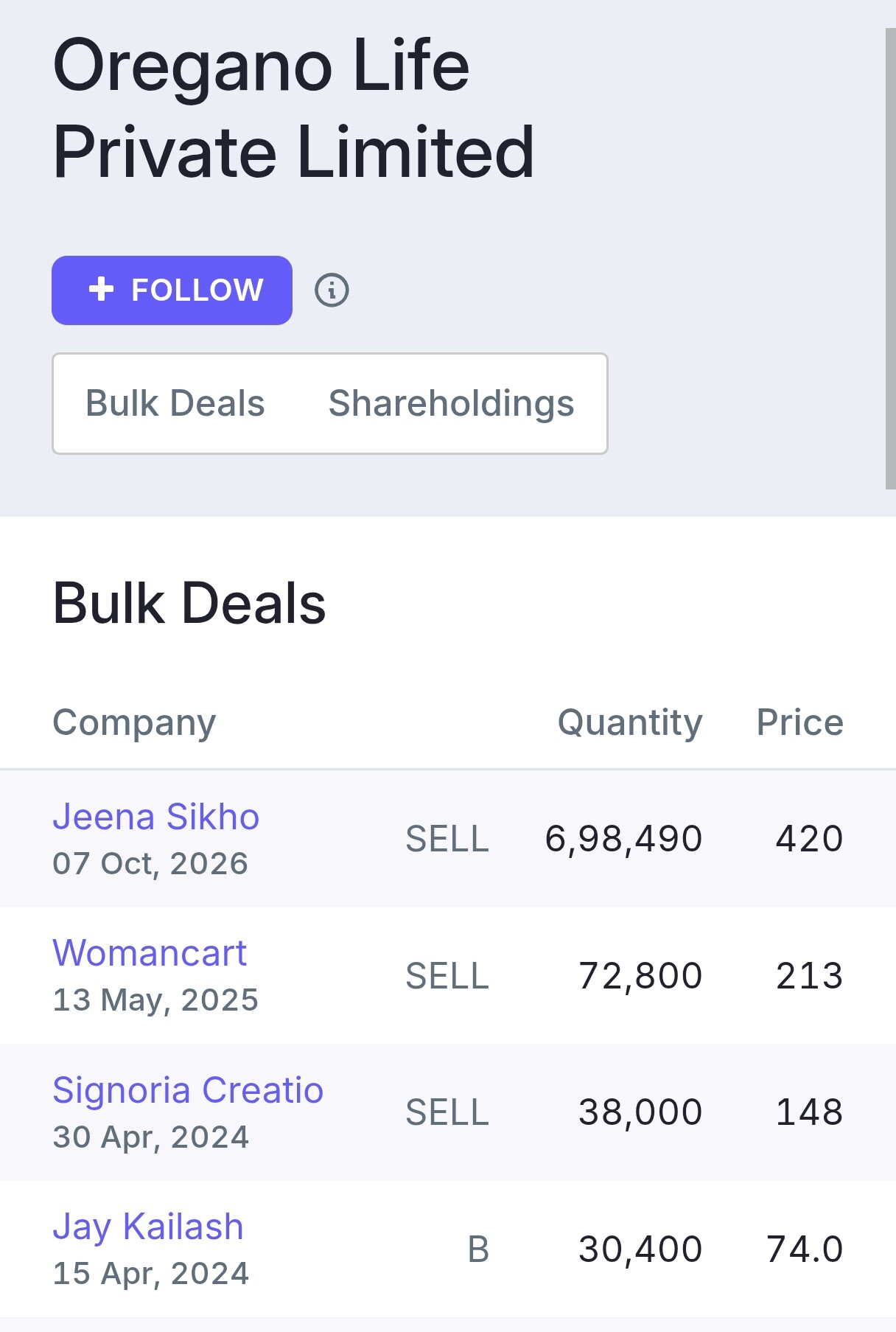
  3. Money Making Deal - Oregano. This needs little more deep dive.

Oregano Private Life LTD

Jeena Sikho bought 5 Oregano centres for around ₹70 cr. Share swap deal for and also Oregano had roughly 10% stake, which has now come down to around 2.95%.

What is interesting is that Oregano’s FY24 reported revenue was only around ₹5.6 cr and Also, out of the ₹70 cr purchase price, only around ₹8 cr was identifiable net assets, so nearly ₹62 cr went towards goodwill.

They were related party and management said, they were competitors to them and so they acquired :slight_smile: :slight_smile: :slight_smile:

When insiders sell the stock and storification is at the best.

Oregano also has position in several stocks where manish grover ji also has stakes.. One should ask who is ultimate beneficiary of this venture..

See the stock names after they dumped all are down significantly..

One should question the management in the earnings conference call

But I don’t see anyone questioning regarding Oregano !!

Ask tough questions in earnings a conference call it gives management to also clarify.

Disc : These are observations, so please DYOD. Also very important like someone write negative don’t think outright it’s a fraud company. NO that’s not the point.

Point is finding out answers to these questions and evaluate accordingly .

Hope it adds value :white_check_mark:

9 Likes