Q2 Concall Highlights
Margin Down - We acknowledge that EBITDA margins were lower by 122 basis points year-on-year, primarily due to a 6.3% increase in milk procurement costs versus a 4.5% rise in realizations. Pricing actions helped absorb much of the inflation, but the mismatch was temporary due to delayed pass-through during the lean season.
Subsidiaries - Simultaneously, the Heritage Novandie Foods operational level integration continues to gain traction with yogurt now reaching Tier 2 cities and new SKUs expanding our health-oriented range. Our wholly owned subsidiary, Heritage Nutrivet Limited, delivered another strong quarter with revenue of INR581 million, a 34% increase yearon-year and PBT of INR54 million, an 80% increase year-on- year. This growth is sustainable backed by higher feed adoption and efficiency improvements.
About Q3 - Yes, at this point in time, Q3 is usually good in terms of milk availability because of with the onset of flush post Diwali, this time around Diwali is earlier. So we expect flush season also to be advanced from that point of view. We do not see any reason to have any worry at this point in time. We don’t see any structural problem. We are hoping that the flush season will be normal as it always is and the prices should ease. Quarter 3 is low on value-added products as far as mix is concerned. See, we will continue to grow value-added products. We might grow at 20% in quarter 3 also, value-added products. Every indication shows us that value-added product growth in quarter 3 will be higher than quarter 2. But that said, the mix changes because quarter 3 is more festive and all of that, so our fat sales go up. Fats is not as profitable as value added products.
VAP Groth 15% wrt 20% Forecast - This quarter, our performance was about 15% and this performance is at least 5 percentage below our own internal expectation. Please understand in value-added products, apart from paneer, all the other products have some dependence on weather, whether it is curd, our entire range of drinkables, which is butter milk and milk shakes and flavored milk, etcetera, ice creams. These all have dependency on weather except for sweets and paneer.
Mktg and Advt Helping to Increase Mkt Penetration - we doubled down on marketing and consumer outreach. And we did several interventions. For example, our milk campaign was a very big success story from – after spending close to about 5,000 GRP on television, we went on digital, which garnered 47 million views. Now these kind of numbers are really incredible. And if you – in the investor presentation, we had shared with you that the awareness levels across our markets have gone up tremendously. For example, in Bangalore, our awareness level went up by 12%. Trials went up by 22%. Chennai, 22%, 25% trial rates improved. Hyderabad, 30 percentage trial rates improved. So, these are all trials that is directly proportionate to consumers buying our product.
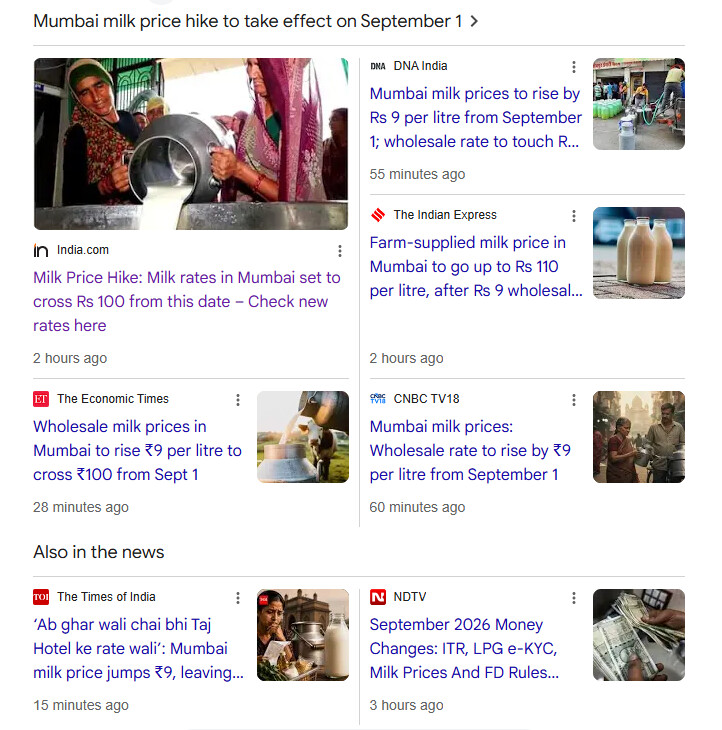
Milk Sales 1% Growth Where as 3% is Normal - Yes, milk growth has been a bit subdued for our liking. It’s – usually, we see that whenever we take up prices, we – it has some impact in terms of volumes, consumption drops a little bit. So it’s something that we have seen in the past as well. And in this quarter, we have taken up prices of milk by about 4.5%. We had no go to do that because the raw milk prices had increased by about 6.3%. And although we were not able to pass on the full cost, 4.5 percentage out of that raw milk price increase was passed on to the consumer, and that impacted the volumes.
Opex Growth Higher - So the gap is primarily driven only because the top line is not – or rather actually the volume growth is not as much as we would have wanted it to be or as much we would have planned it for. And I believe it’s a matter of time. Employee cost has been growing at 13% to 14% – and I agree with you that we also would like that to be in single digits, right? But the fact is we are expanding and we are adding more people. We are investing in facilities for manufacturing, etcetera. And this is a people-intensive operation. This is a people-intensive business, which means that the headcount will increase and hence, the cost will increase. We call ourselves a mass, premium player for a reason because everything for us is actually volume driven. We had invested close to 150 tons of additional manufacturing capacity for curd, for example, we increased our paneer capacity, we increase many of our value added product capacity. And so it’s a bit of like improved efficiency in our existing but additional new facilities coming up, and the volume is not catching up to the expectation.
Measures to Reducing Operating Cost - A few years ago, maybe 3 years ago, we used to have 214 chilling centers, and we were procuring about 13 lakh liters of milk. Today, we are procuring 17 lakh liters of milk with just 186 chilling centers. econdly, we used to have close to 1,300 vehicles to pick up the 13 lakh liters of milk. Today, we have lesser number of vehicles**, about 1,200-odd vehicles,** which is procuring the higher volume. And the milk collected per kilometer is increasing, which means actually the distance that we need to travel to get the milk is coming down, which improves the freshness of the milk as well as reduce the cost of pickup.
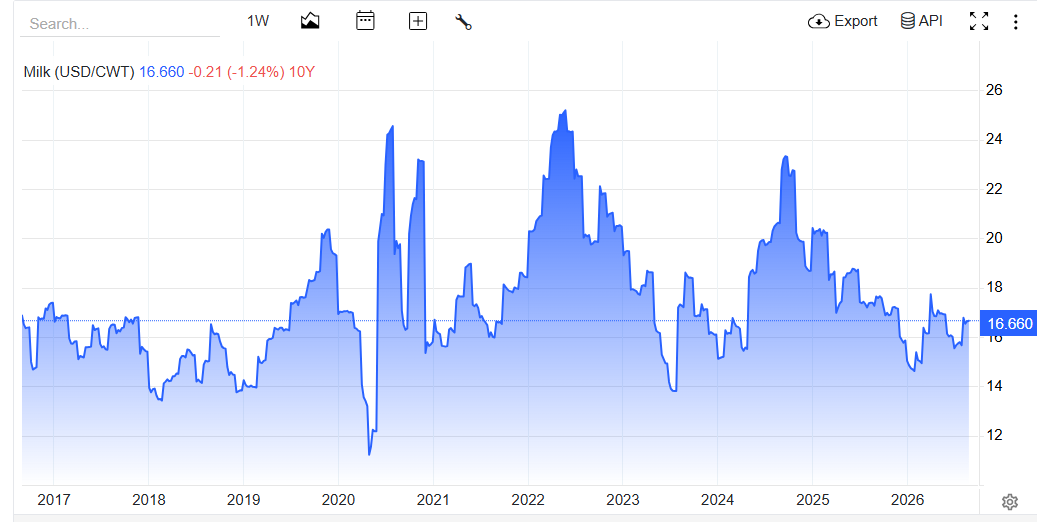
Market Volatility - You must have seen that in FY '22, '23, it was a peak inflationary period where milk prices went up so high and then it came crashing down. And then we had a good 2 years, okay? Now this is another year where it is seem to be going up. So this volatility is something that we will not be able to do anything much because it’s a very large industry. India is the largest producer of milk. And despite our size, we have only a very small percentage contribution in this. So we, as an individual player, there is very little we can do in terms of managing the industry volatility. That said, we are hoping that, like I mentioned before, law of averages catch up and next year prices softened. Usually, it happens after a peak inflationary year, and it is good for all of us.
Ice Cream Plant - Actually, in fact, we are manufacturing our ice creams internally only. We have our own processing facility with a capacity of 25,000 liters per day, which we’ve, in fact, maxed out in peak summer season in the 3 months of Q4, which is why we had taken the Board approval to invest into a larger automated ice cream facility, not just to produce our existing range of SKUs, but also to widen our portfolio with exciting new SKUs, which is the need of the market or what consumers are asking for. Having said that, , that it will be commissioned by the end of the financial year, just in time for the summer season.
Increasing Milk Vol Sale - You should assume that every retail point should give us at least 5 to 6 liters of milk. That’s about 20,000. So if we have to sustain and get growth to 8% or 9 percentage like you rightly mentioned, we need to sustain this growth momentum, which means that in quarter 3, we need to add 10,000 more retail outlets. f you add 10,000 more retail outlets, that will give me 50,000 liters of milk, right? So we are absolutely focused on doing what needs to be done on the ground so that irrespective of price increases, irrespective of whether we can continue to drive growth, especially in milk. Secondly, we’ve just launched – I spoke about Sampurna cow milk, which just got launched in this particular quarter. We are in the process of scaling it up. In fact, yesterday, day before yesterday, we launched 2 new variants in – for our country markets, which is called Sampurna milk which will come in Q3.
Turning Around Yogurt - So imagine Mamie Yova was doing x volume, we are doing the same volume with Livo brand in just 2 months’ time. So which means actually we could actually grow tremendously from here. This is despite the bad weather because Yogurt is also a category which is weather dependent. – consumption goes up during summer and during rains, it comes down. So volume-wise, it is a great performance. And in terms of unit economics also, I believe that the profitability as in the losses are much lesser compared to the previous operation.
VAP Breakdown - 71% of all value-added products will be curd for us. And after that will be paneer. So these are 2 main value-added products that we are trying to build. Apart from that, we have about 5-odd percent of our revenues coming from ice creams and roughly around 10 percentage of revenue coming from drinkables.