The links you shared has plenty of info on the reasons for failure.
Idea was to own aircraft not lease : “The carrier hopes to launch late this year and to start fully fledged operations by March/April next year. But as the 777 freighters will not be delivered until 2009, the carrier will start with leased aircraft. It hopes to seal an agreement in the next month or so, and is looking at Boeing MD-11 or Airbus A300 freighters.”
Hence planned to spend huge sums of money on owning them : Flyington had in July 2006 reportedly agreed to buy four Boeing 777F cargo planes for about $1 billion (about Rs 5,500 crore now). But subsequently after getting a better offer from rival Airbus, it placed orders worth $2.4 billion with the European plane maker for 12 A330-200F aircraft.
The planes which never got delivered : However, Flyington could not commence operations because of excessive delays in getting the aircraft from Airbus, according to a complaint it filed with India’s Competition Commission in April last year. In the complaint, Flyington accused Airbus of adopting discriminatory and onerous conditions for aircraft financing
Mr. Deepak was in mgmt. but not in promoter group (my guess) : Through an agreement dated July 25, the promoters had deposited the original share certificates of 80 lakh equity shares with PVP Capital. While Venkattram Reddy and his brother pledged 26.66 lakh shares each, vice-chairman Iyer pledged 6.66 lakh shares. Also, senior DCHL executive N Krishnan and Deepak Parasuraman, the managing director of Flyington Freighters, pledged 10 lakh shares each.
I think overall, it seems good lesson learnt by Mgmt. because they never mention about owning aircrafts or spending insane amounts in buying them. Current aggressive guidance from mgmt. are related to execution/operation in leasing and covering more routes, which are different in nature than aggression in spending money you don’t have. Setting aggressive guidance and not meeting them while still doing pretty decent in business is ok while market is not pricing it based on those aggressive guidance. It’s available at ~15x kind of earning for current year with good visible growth. So we can bucket the mgmt. into the ‘over guides and meets them with time lag’ category and pay accordingly. I think market is already doing that.
I had done some digging into the management as well.
Mr Iyer, board member in Deccan and accused in the Deccan case is Deepak’s brother. But this has already been disclosed in the RHP and all the cases against Mr Iyer have also been disclosed.
This was my conclusion as well, that Flyington was collateral damage in the Deccan debacle.
Afcom’s successful start only re-affirms the fact that the promoter has learnt his lesson.
NB: Invested and Biased.
Edit: Sorry, missed this part, the SFIO, in it’s petition for re-starting the Deccan case, cites Mr. Deepak as a respondent , and calls him “Ex Director” at Deccan - this is most likely false or a clerical error, as the RHP specifically says that Deepak was never a Director at Deccan - which I believe, since directorship is not something you can deny/hide, with each person having DIN numbers and all.
Him being a respondent is more likely through his association with Flyington. This is also corroborated by the news reports at the time.
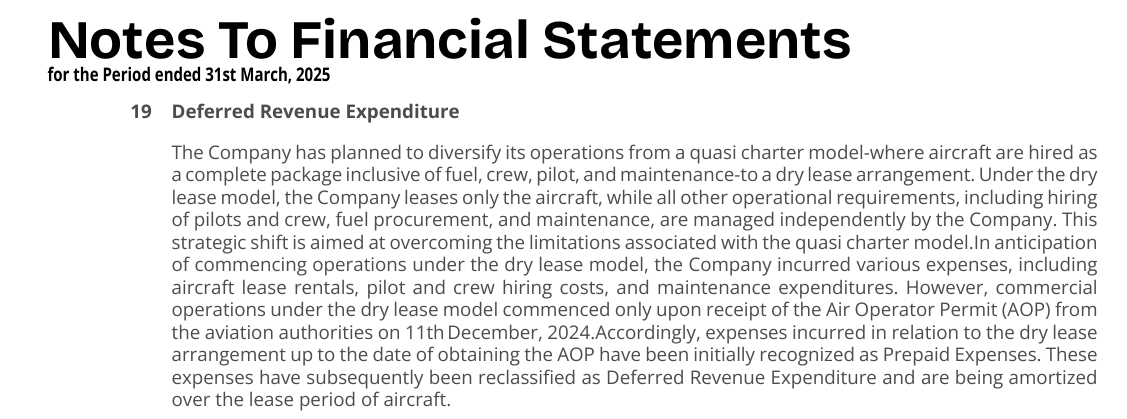
My understanding is Amortization of Dry Lease Expenses is a one-time action when the company had obtained aircrafts, but the Air Operator Permit was not received. The lease expense upto this date was treated as pre-operative expense and is being amortized now. This will gradually get written off and will not come up again.
The actual current rentals are being included in Operating Costs line item in the quarterly results.
But I now have a new question. Though the quarterly results club everything under a single line item called “Operating Cost”, the Annual Report for FY25 gives the breakup. Here, the Aircraft Charter Fee for FY25 is shown as Rs.118 crore out of total Operating Cost of 149.57 Crore. So 80 % of the Operating Cost is Aircraft Charter Fee.
Operating Cost for Q3 FY26 was Rs.83 crore and assuming this same ratio, Aircraft Charter Fee should come to 80 % of this i.e. about Rs.66 crore. This is much higher than the USD 200,000 per aircraft per month mentioned by the management in the video above. This still needs clarification. I think we have to wait till the FY26 Annual Report to get better clarity on this.
What I am not able to understand if why the stock is trading at 19.4 TTM PE if their operating margins are so good and has a clear revenue growth path.
Is there a terminal value risk with oversupply or increase in airplane lease cost due to supply constraints once the contract period is up?
Is the company reaping rewards of operating in niche routes which is not repeatable as the company scales?
Is it because of the lack of moat around the company or is operational efficiency the moat like Indigo
Is it due to dependence on GCCs for all of their revenue
Is there any other airport cargo company in the world with margins like this?
Either there’s something deeply negative which is known to some big investors and they are selling heavily
Currently, a lot of smallcap and specially SME stocks are being beaten badly despite so good performance. This is not a company or fundamental issue but a money supply problem. A lot of ruthless selling is happening in some stocks like Oriana power, ABS-Marine, etc. This is a time and money problem and as soon as the supply of money improves, these stocks will look extremely attractive and will again trade at higher multiples. When and how much, nobody knows but this is the time to hold with conviction.
It’s both 1 & 2 imho. Markets in general are down, the promoter has a slightly chequered history, and aviation companies have a reputation of going bust. To add to all this the balance sheet and cash flows are not exactly pristine. Afcom is a high risk high reward play.
Each plane revenue is 20 crore per month so 240 cr per annum while cost of airplane is usd 200k ie 22 cr per annum. So around 10% cost belong to lease rental of each plane.
Yes, was early morning in a different timezone so did not take notes , so these are from memory:
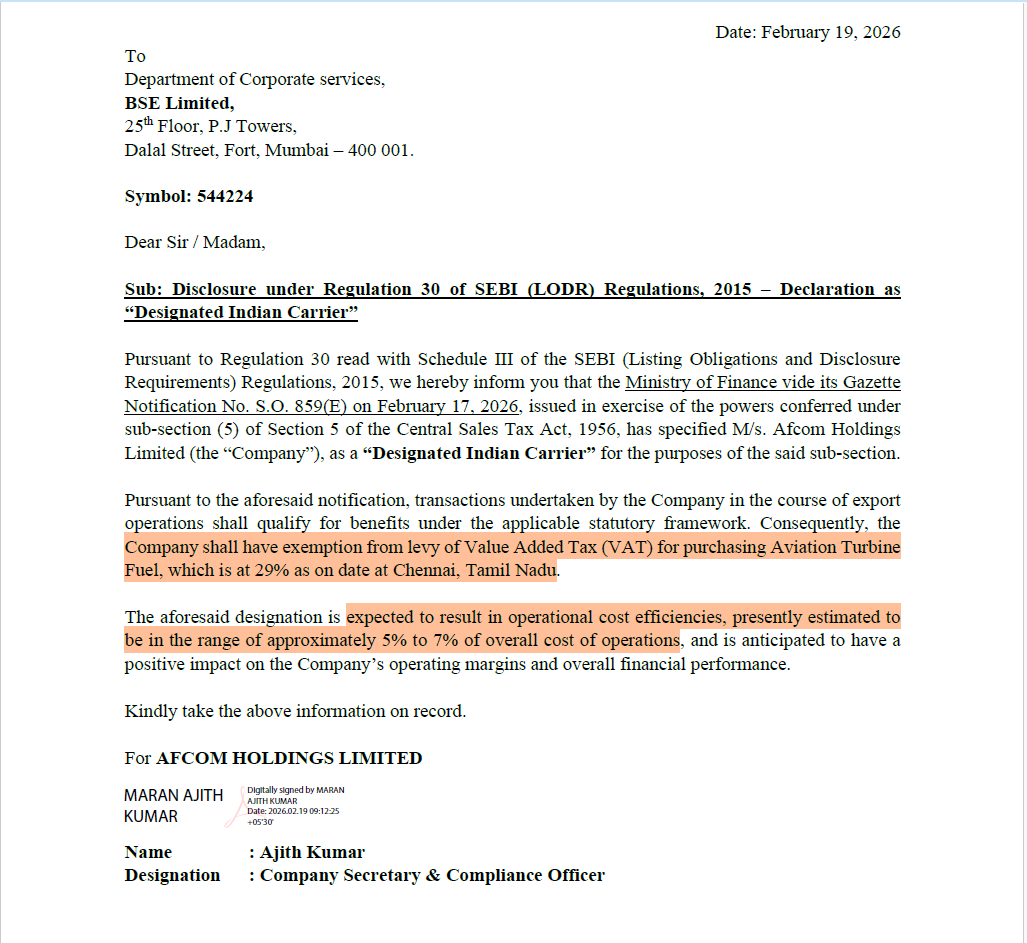
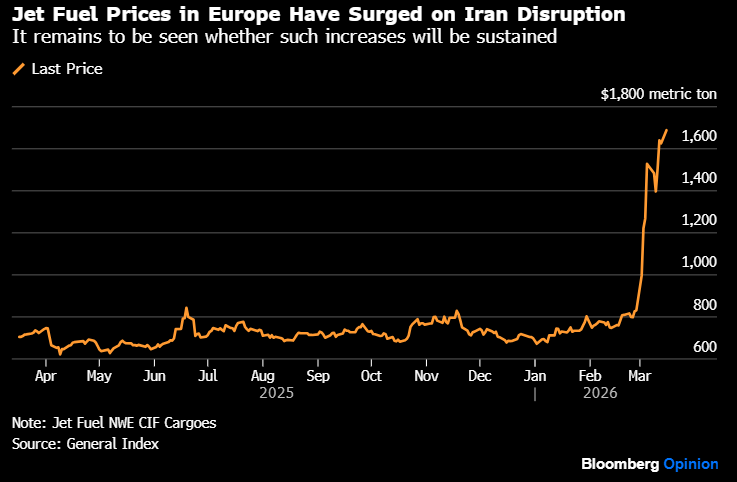
Regarding the war, acknowledged possible fuel price hike but at the same time they expect freight rates and demand to go up as well because of it.
Middle eastern operations just started, but paused because of the war. Don’t see long term impact.
The 3rd aircraft is in the process of being operationalized, paper work includes re-registration and it’s being handled now. It’ll be at least Q1FY27 before it starts contributing meaningfully to revenue. 4th and 5th still in pipeline.
The delay in the procurement was because the lessor planned initially was a Georgian company, which had some internal issues so that didn’t happen. Afcom then switched to Nauru and they have the plane with them now. Nauru has offered some relief/compensation on the costs incurred because of the delays on their side.
A part of the agreement with Nauru is that Afcom will feed cargo into Nauru’s network at Bali, which will forward cargo to the Australia region.
Alliance with Nauru is going beyond what was initially planned, with the possiblity of a JV (50:50 partnership) which will operate out of Bangkok as a hub.
2 B737-300 planes (smaller ones than the current B737-800s) with 15-16 ton capacity will be added to the JV company. This is on top of Afcom’s 5 B737-800 fleet.
MRO facility will be joint ownership with Nauru (30:70), and will have long term contract for maintaining Nauru’s fleet
Plans for wide body planes are on track. Company says there’s no dearth of demand.
Company is in the process of switching to IND-AS, most probably by Q4FY26.
All these are the points that stood out, the rest have been said in the past already or have been included in the PPT.
Not just Indigo, any competitor can crash their margins.
Afcom’s management’s had given one possible reason that would deter passenger airlines from entering this market - they’re already selling belly cargo space, which is practically free money for them. If they start freighter operations it might kill this line of their business.