- A company demerged with a focussed approach
Aarti Pharmalabs Limited (APL) is not a random demerger that markets occasionally throw up. When Aarti Industries carved out its pharmaceutical business in October 2022, the intent was clear: give complex pharma chemistry its own balance sheet, capital allocation, and strategic focus. What emerged is a company that sits in a rare intersection — deep chemical engineering + regulated pharmaceutical manufacturing. This combination is difficult to build, slow to scale, and extremely hard to replace once established.APL today operates six manufacturing facilities (three USFDA approved), employs over 2,100 people, and runs with a conservative balance sheet (net debt/equity ~0.19x, AA- credit rating). It has the financial patience required for businesses where gestation periods are measured in years, not quarters.
-
At a thematic level, APL rides three long-duration trends:
-
· Global pharma moving away from China-centric supply chains (China+1)
-
· Accelerating outsourcing of development & manufacturing (CDMO)
-
· A niche but cash-generative leadership in Xanthine derivatives (caffeine and related molecules)
-
This is not a momentum story. It is a capacity + credibility + chemistry story.
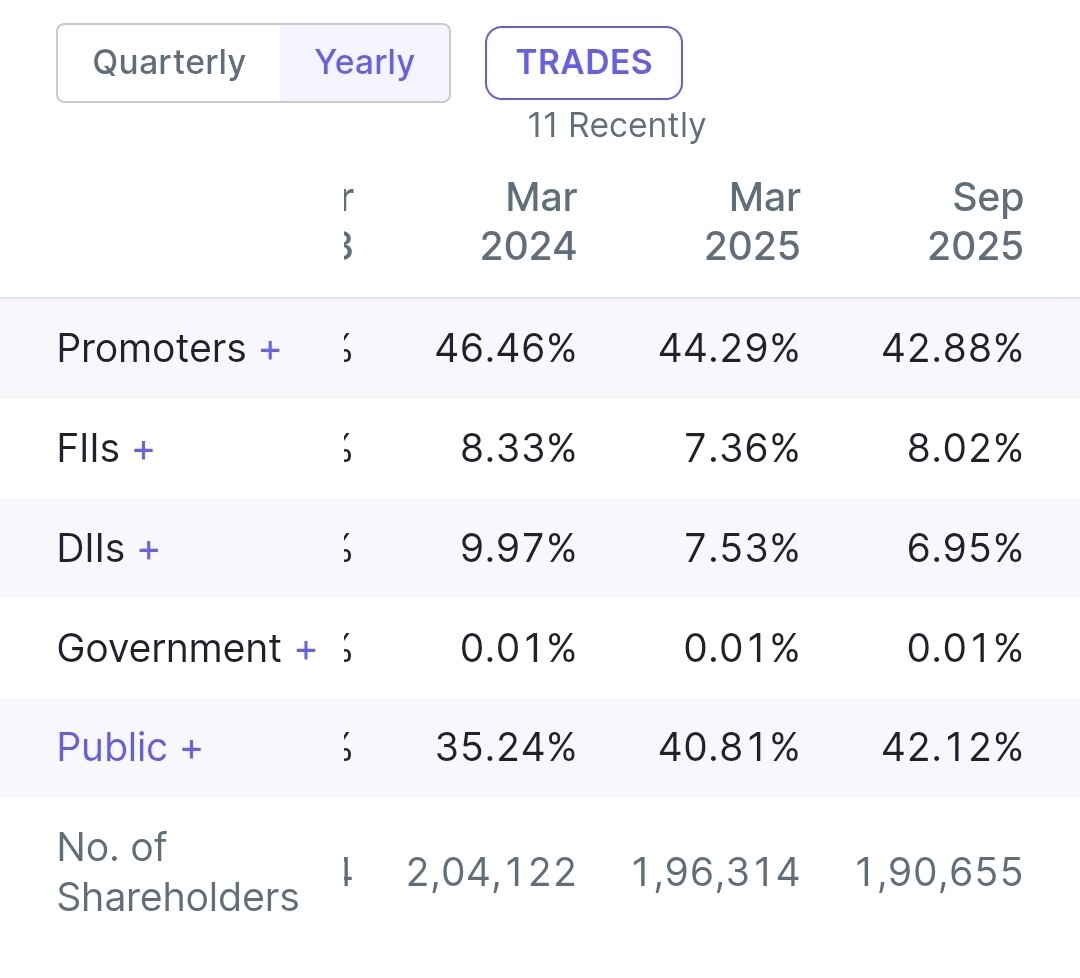
2. Promoters, professionals, and why succession risk looks low
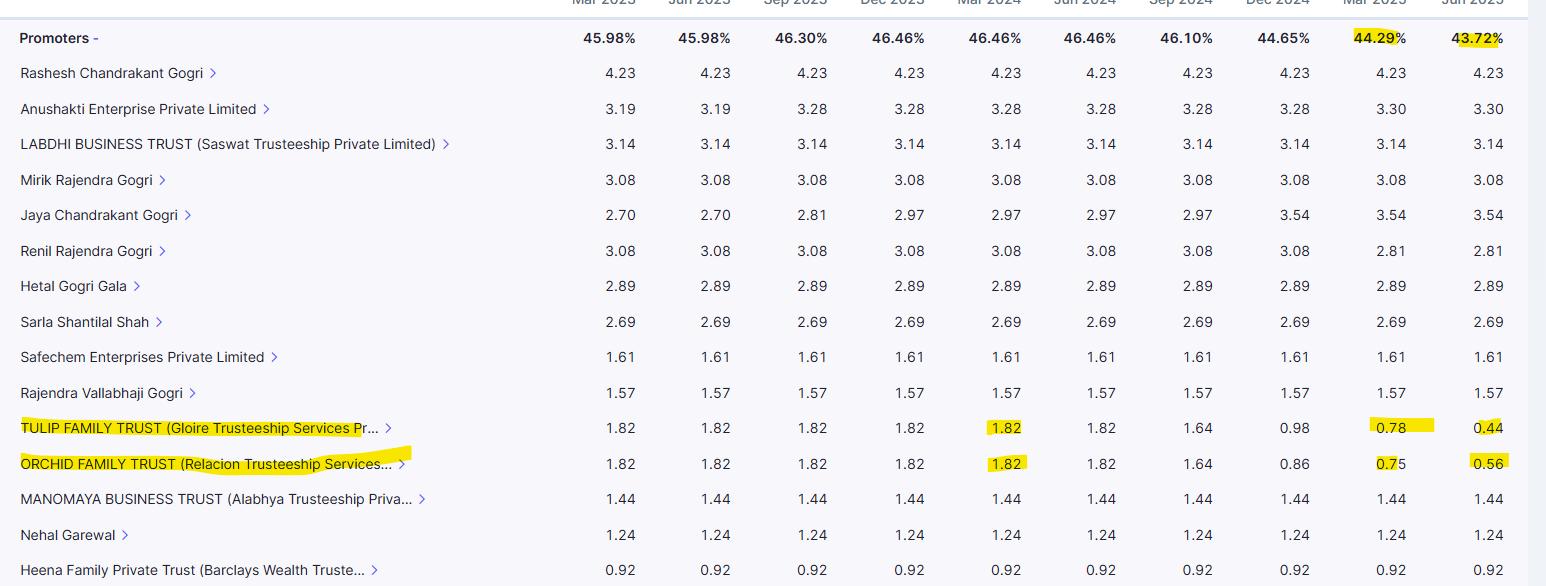
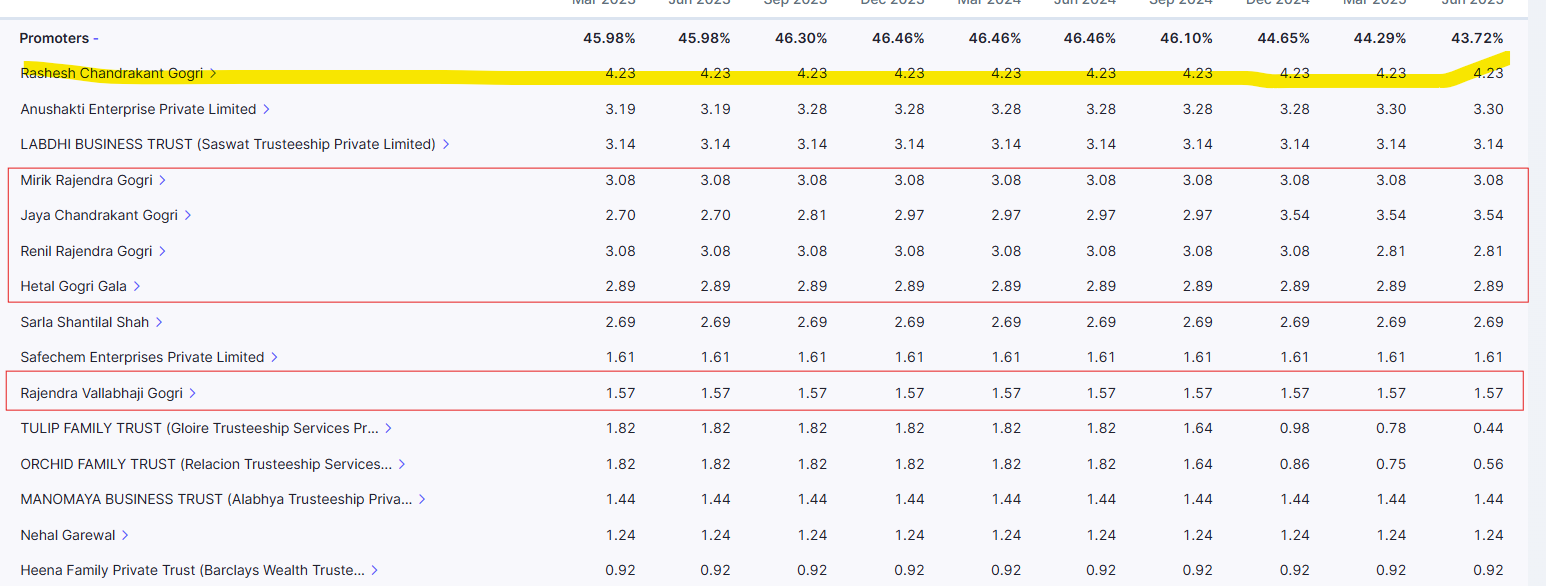
One of the most underappreciated strengths of Aarti Pharmalabs is governance continuity without promoter overreach.The Gogri family is not new money chasing optionality. They are chemical engineers who have spent decades building hazardous chemistry at scale.· Rajendra Gogri, founder-promoter, remains on the board as a non-executive anchor — focused on capital discipline and long-term risk. · Rashesh Gogri (Chairman) and Hetal Gogri Gala (Vice Chairperson & MD) effectively represent the operational second generation. Both have been deeply involved well before the demerger.This is not symbolic succession. It is earned succession.
Third generation — quietly incubated
Interestingly, the third generation is not being rushed into board seats. Instead, family capital is being deployed through platforms like Spectrum Impact and Alchemie Ventures, focusing on sustainability and climate-linked businesses.
This matters. It signals a grooming process through capital allocation and strategic investing — not entitlement. For long-horizon investors, this reduces key-man and succession risk.
3. Governance: clean, boring, and that’s a compliment
Mid-cap pharma companies often stumble on governance. APL does not show those scars.
· Unmodified audit opinions
· Strong internal financial controls
· Zero whistleblower complaints in FY25
· No bribery or corruption-related penalties
· Related-party transactions largely operational (benzene derivatives from Aarti Industries), disclosed, arm’s length, and audit-committee monitored
This is not flashy governance. It is institutional-grade hygiene, which becomes invaluable once the company scales CDMO revenues.
4. The business model: where chemistry does the heavy lifting
APL is best understood as a chemo-pharma hybrid, not a vanilla API company.
Pillar 1: APIs & intermediates — the stabiliser
Unlike many API players who depend on external intermediates, APL makes most of them in-house. This backward integration: - Protects margins - Ensures quality consistency - Makes APL a reliable long-term supplier.This segment provides baseline stability.
Pillar 2: Xanthine derivatives — the cash engine
APL is among the largest non-Chinese producers of Xanthines globally, with ~15–20% market share.
Why this matters: - Global beverage companies actively want non-China supply - Entry barriers are environmental, regulatory, and chemical - Cash flows here fund CDMO expansion
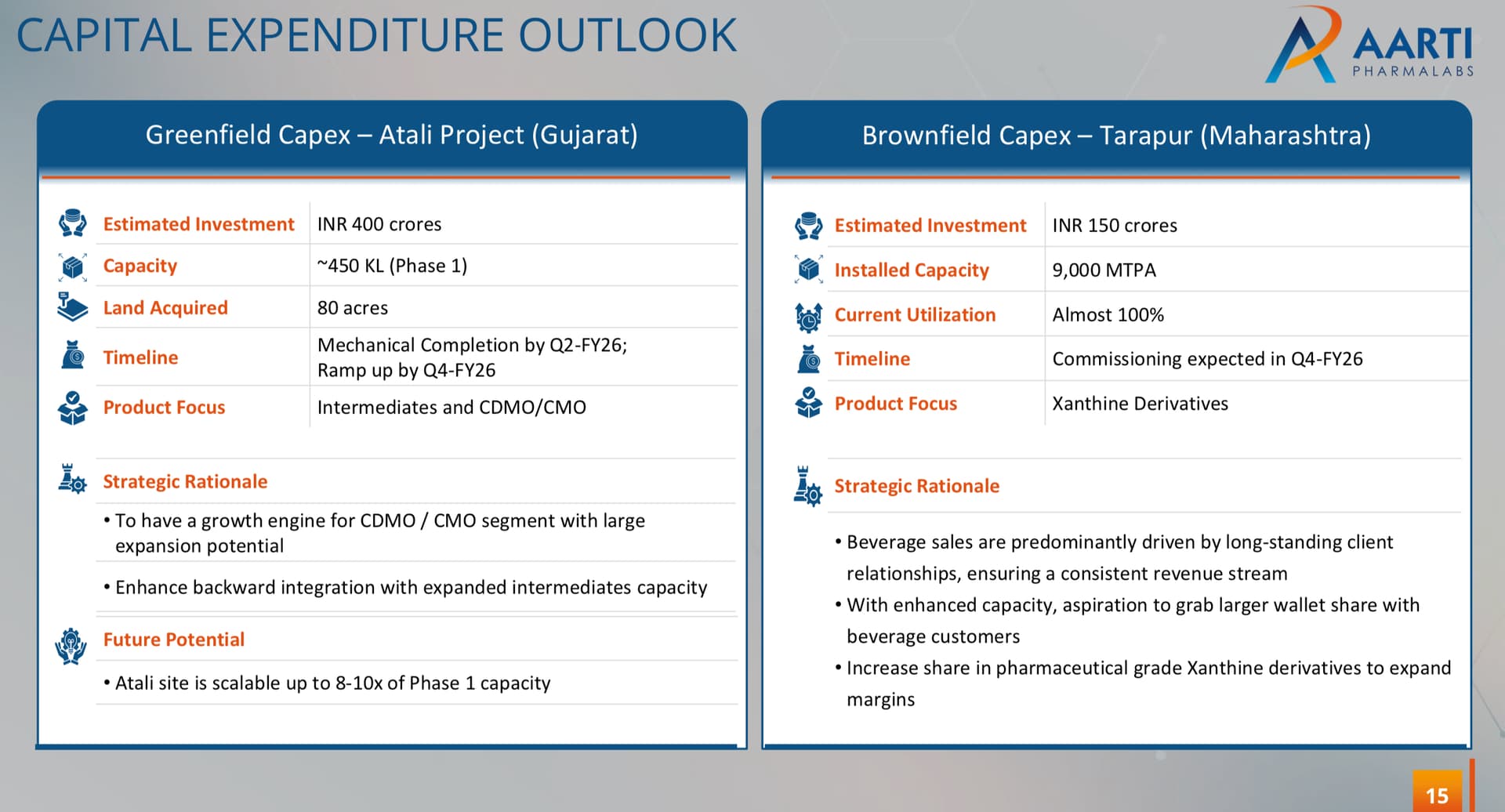
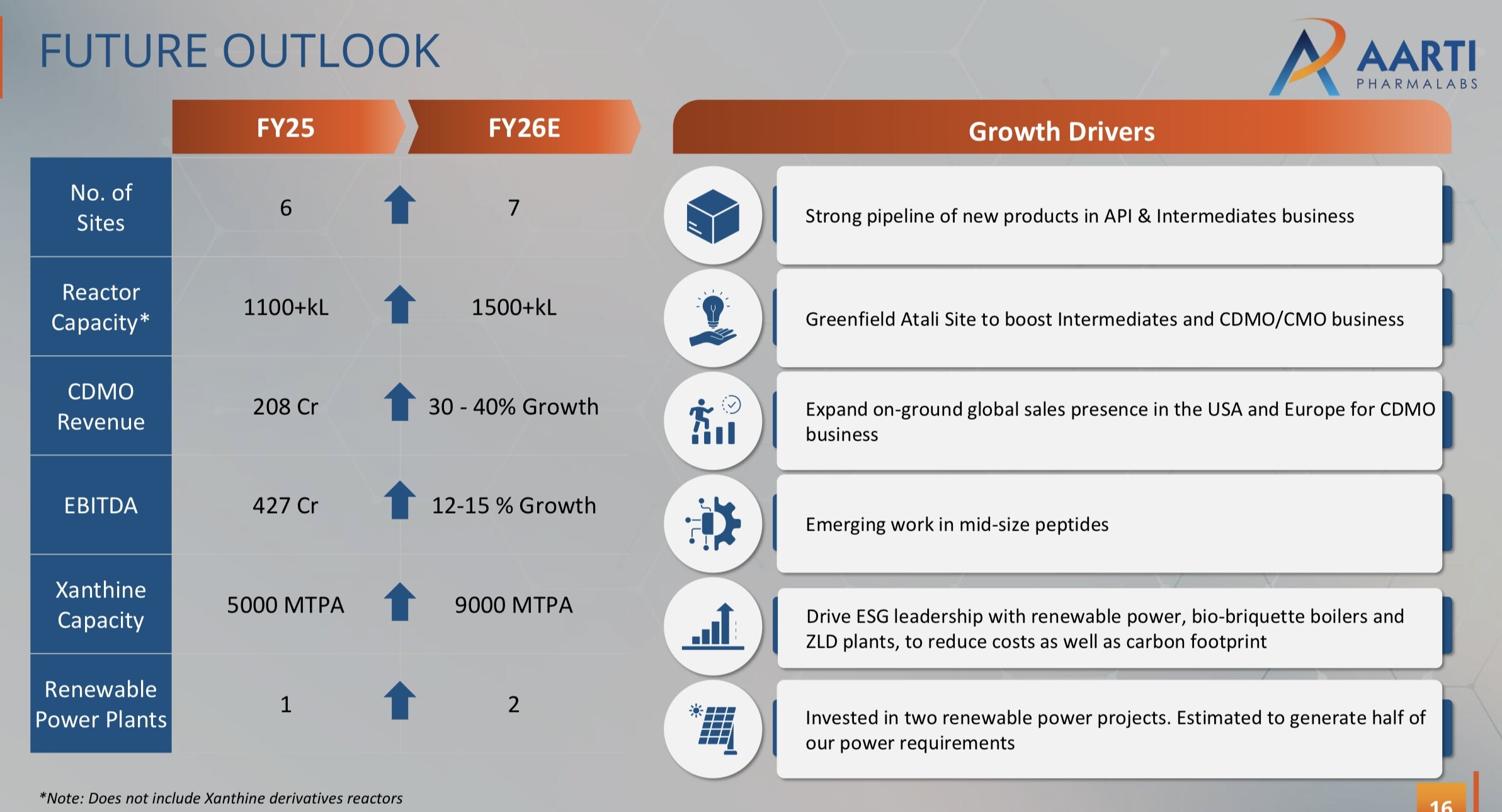
Capacity is expanding from ~5,400 MTPA to ~9,000+ MTPA, aligning with China+1 sourcing mandates.
Pillar 3: CDMO — the re-rating engine
This is where the long-term optionality sits.
APL’s CDMO business is built on complex chemistries — hydrogenation, cyanation, high-potency APIs — the kind that innovators don’t want to do in-house.
· ~59 active CDMO projects
· ~39 already commercial
· Multiple projects graduating from development to commercial every year
· Management prioritises CDMO orders over commoditised volumes in fungible plants
This deliberate choice sacrifices short-term volume for long-term revenue quality.
5. The moat is not branding — it’s barriers
APL’s moat is structural, not narrative-driven:
· Chemistry moat: hazardous reactions need licenses, land, safety, and experience
· Regulatory moat: USFDA approvals take years; once approved, clients rarely switch
· Integration moat: in-house KSMs protect against supply shocks
· Execution moat: ability to scale from lab to tonne-level using flow chemistry
These are not easily replicable advantages.
6. Sustainability as qualification, not marketing
In pharma outsourcing, ESG is now a gatekeeper.
APL’s EcoVadis Gold rating (top 5% globally), SBTi commitments, and renewable energy investments are not cosmetic. They are entry tickets to European and US CDMO contracts.
Without these, growth simply does not happen.
7. Growth visibility: the Atali inflection
The greenfield Atali facility in Gujarat is the operational pivot.
· 450 KL additional reactor capacity
· Commissioned in FY26
· Designed to support 3–4 years of growth
As this ramps up: - CDMO revenues can sustain 30–40% growth - EBITDA margins can expand with better mix - Earnings volatility should reduce post-capex phase
This is the classic capex before compounding phase.
8. China, tariffs, and geopolitics — mostly a tailwind
APL benefits quietly from global realignments:
· US tariffs hurt Chinese suppliers, more than Indian ones
· Innovators want regulatory-safe, non-China capacity
· Dumping risk exists, but regulated markets protect APL
The company is positioned where geopolitics helps rather than harms.
9. Is this VC-like?
Not in the Silicon Valley sense. APL is asset-heavy, compliance-heavy, and chemistry-heavy. That caps upside but dramatically improves probability.Think of it as a high-quality compounder: - 20%+ earnings CAGR.
10. Closing thought
Aarti Pharmalabs does the work others avoid — dirty, dangerous, regulated chemistry — and does it consistently. In a market obsessed with speed and stories, APL offers something rarer: Patience backed by process. For long-term investors, that combination tends to age well.
11.Author’s note (why this company stays on my radar)
I tend to get interested in businesses where progress is visible only after patience is tested — capex-heavy phases, muted quarters, and uncomfortable waiting periods. Aarti Pharmalabs fits that pattern. This is not a story that will look exciting every quarter, and that is precisely the point. When chemistry, compliance, and capacity all matter at once, growth rarely shows up neatly in spreadsheets before it shows up on the ground.I may be wrong on timing. Execution always carries risk. But the direction of travel here — toward higher-value chemistry and deeper client integration — is clear enough for me to keep watching closely.
As always, this is a reading note, not a recommendation.
Disclosure: Invested and no transaction in last 30 days