Zinka Logistics -Accelerating Freight on Digital Highway

INDIAN TRUCKING LANDSCAPE

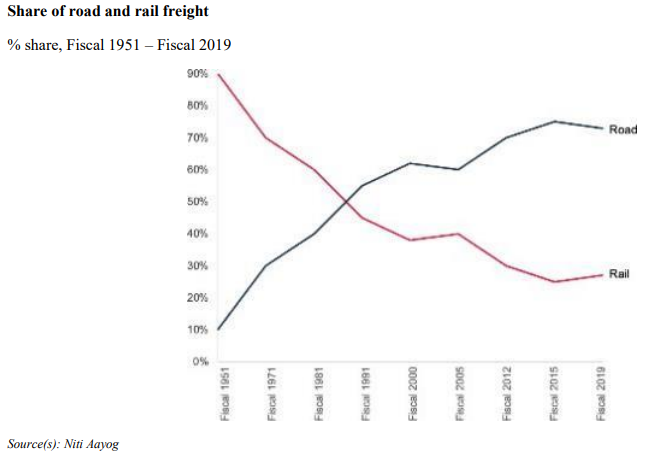
Road transport dominates logistics in India, forming the bulk of logistical expenses and emerging as the largest and most significant mode of transportation. Transportation accounts for the bulk of the expenses and accounts for nearly 66% of logistical expenses as of Fiscal 2024, with road transport being the preferred mode for various industries.
image

Hence, road transport stands as the backbone of the country’s logistics. Trucking is one of the fastest-growing sectors in logistics in India.

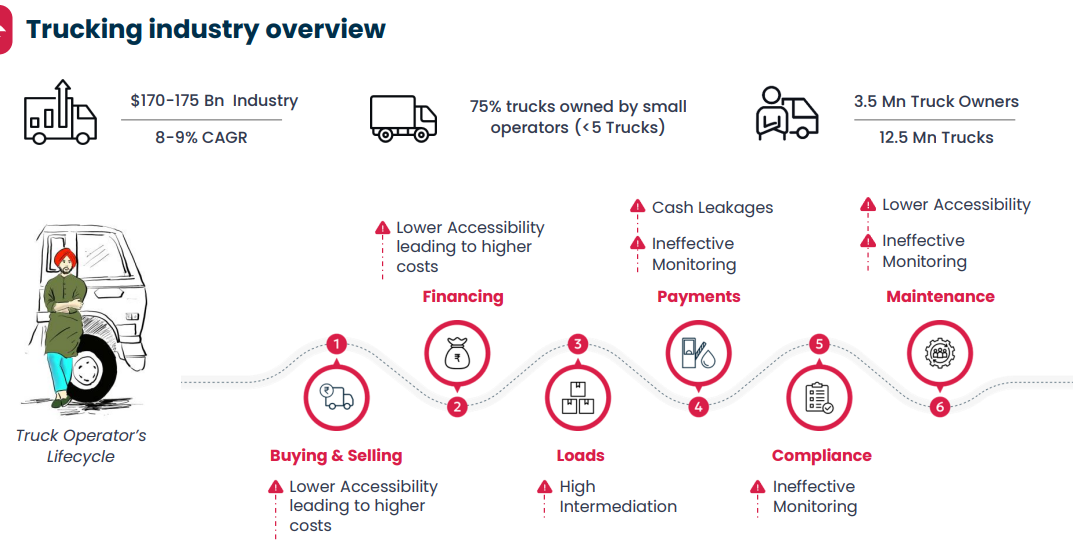
The Indian trucking industry stands as a vital component of the nation’s logistics sector. With approximately 12.5 million trucks and about 3.5 million truck operators as of Fiscal 2024 traversing Indian roads, the total freight value through trucks has witnessed a steady growth rate of 8-9% CAGR over the past four years. This growth trajectory is expected to persist over the next four years

Digital Toll and Fuel Payments
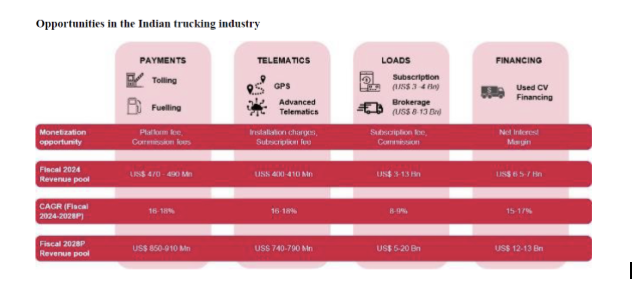
Toll and fuel payments represent almost 80% of a typical truck operator’s expense. The introduction of FASTags for toll payments and digital fuel cards is transforming how these transactions are managed. The total revenue pool for digital payments is projected to grow from $470-490 million in Fiscal 2024 to $850-910 million by Fiscal 2028, at a CAGR of 16-18%. Digital payment systems can help truck operators track and manage expenses more efficiently, reducing leakages and improving cost control.
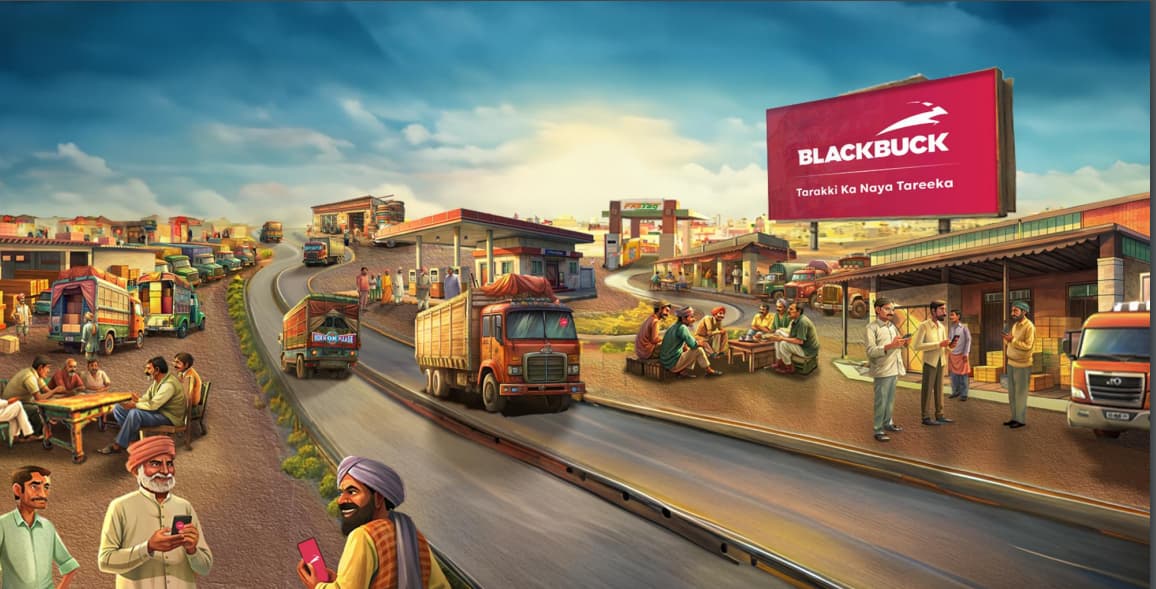
Incorporated in 2015, Zinka Logistics Solutions Ltd provides a digital trucking platform for payments, telematics, loads marketplace, and vehicle financing services

As consumers, when we use mobile apps, apps on our mobile phone, we typically will have social media apps or browsers which typically will take largest mind share. For a truck operator, blackbuck is an app, and they are in the top 2-3 apps what he uses on a daily basis. And on an average, a truck operator on a daily basis is using Blackbuck’s app for like 41 minutes, which is continuously going up on an year-on-year basis.

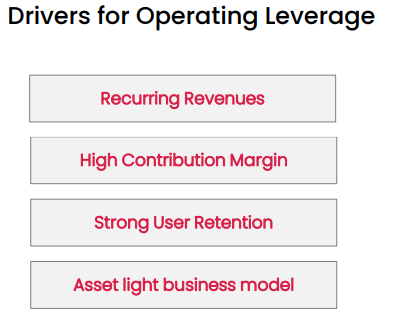
BlackBuck has an asset-light business model that primarily generates recurring revenue
through platform fees, subscription fees and commissions. There is neither any inventory risk nor ownership of trucks on the balance sheet, and distribution of loans is through financial partners.

Services Offered:
a) Payments:
Tolling, Fuelling
b) Telematics:
GPS, Fuel Sensor
c) Loads Marketplace:
Listing Marketplace, Freight Brokerage
d) Vehicle Financing:
Used Vehicle Financing

^ This seems right from text book - now some value adds around the whole thesis we should keep our eye on.

Tolling and telematics

  • Tolling : 61% of rev : They have Pan India Service n/w + Guaranteed incorrect deduction refund + Protection from blacklisting through auto-recharge in case of low wallet balance
  • They Earn via :- Commission fees, FASTag servicing fees, Subscription fees (Gold membership) - Partner are IDFC and Axis + more
  • Fueling : Commision from OMCs, Subscription fees from truckers - Partner list : HPCL, Reliance, IOCL
  • Telematic : 25% of Rev : Real-time visibility of the Fleet movements - Route optimization + Fuel management : Earn via : Device installation charges + Subscription fees + Own proprietary design of GPS device + GNSS can drive higher penetration as GPS becomes mandatory for precise toll deduction

Now, when it comes to tolling, if you look at a truck operator, a truck operator is like 100 times more powerful user than a car FASTag user. Car FASTag user annually probably spends INR5000-INR10,000 on a FASTag. A truck operator who has three trucks, average monthly is INR16,000 per truck, three trucks monthly is INR48,000-50,000, annually is INR6 lakh

Revenues in Tolling for Blackbuck is a function of 3 vectors:

First vector is basically how India macro grows.15% to 20% growth directly comes from how India macro grows because government is laying more roads, state highways get replaced by national highways. So more toll spend happens, more flow through to FASTag happen and the number of trucks keep growing

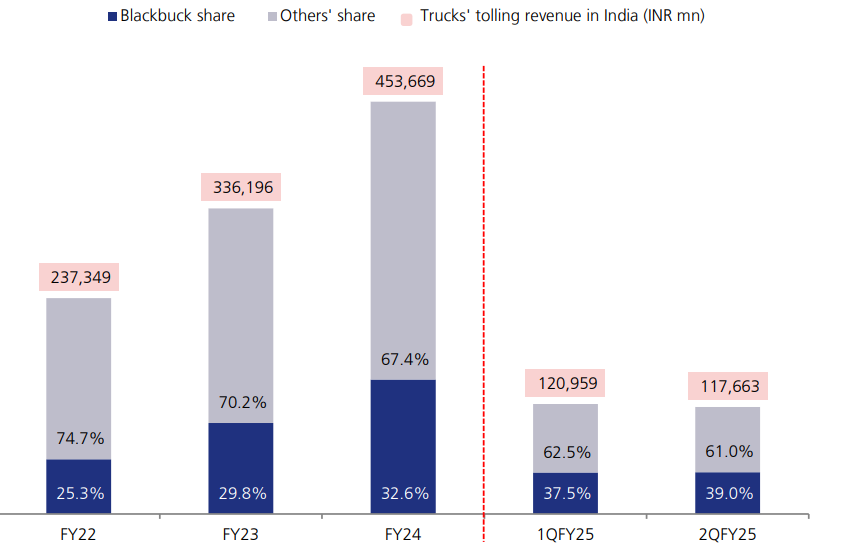
Second area is that we continue to gain market share.They have always gained higher percentage points of market share. That has happened continuously. they are the only ones who are doing and they continue to gain market share. Last FY24, they as a company gained like 7 percentage points market share over the previous year. This year again, probably they will be gaining similar or more.

Third lever of growth is their penetration of value added services. They provide much more better value to their customers than others. And they also charge customers for these value streams. That has helped them break out and add another alpha on top of that, which has helped them compound revenues at like 47 percentage kind of a level and in the core verticals.

Cross-Sell oppurtunity

With the company having 1mn+ annual transacting truck operators who spend a substantial amount of time on its app, there remains a sizeable cross-sell opportunity. BlackBuck currently has only 20-25% overlap in its two largest offerings – tolling and telematics. Meanwhile, Fueling, Loads Marketplace and Vehicle Financing only have around 10-15k truck operators and hence can grow sharply driven by cross-sell on the existing consumer base itself. This results in the company incurring minimal acquisition costs to grow these businesses and delivering healthy LTV-CAC ratio.

Operating Leverage enabled via contribution Margins

There is an instance in the concall where Management mentions that they have already increased the fees and it was in the range of 20-40% and that went smoothly with no churn at all. Shows a lot of strength in the model and the kind of service they are providing
image
BlackBuck’s platform led revenues driving a P&L with strong operating leverage


Transform truck operator → Transform Indian Trucking
BlackBuck continues to gain trucks’ tolling market share

Financials

Risks should be kept closer vs the thesis

  • Tolling and telematics business might see slowdowns which can lead to issues
  • High dependence on cash-handling increases leakages at all these touchpoints, ultimately reducing profitability for the truck operators.
  • Dependence on strategic partners - In the payments offering, one specific partner contributes to 45.26% of total revenue. High dependance poses risk too.
  • Revenue concentration - High concentration 94% in payments and telematics offerings
  • Dependence on suppliers - Some vehicle tracking solutions are imported and there are limited suppliers for the same.
  • Seasonality business - Company’s payments and loads marketplace offerings might see seasonality especially demand during monsoon season due to logistical disruptions.
  • Regulatory risks - Evolving laws and regulations. Dynamic nature of regulations, particularly in payments and telematics
  • Vehicle financing risks - inherently risky due to the nature of borrowers.
  • FASTag might make way to HNSS tolling ie a satellite bases sys that automatically collects tolls from vehicles and expressways vs FASTag which uses RFID tech
  • https://www.business-standard.com/india-news/new-toll-rules-is-fastag-s-end-near-with-gnss-rollout-who-s-using-it-124091100595_1.html

Government initiatives

At a policy level, there is a clear realization regarding the value and prosperity that can be unlocked by digitizing transactions, introducing more efficiencies and fostering transparency in trucking operations in India. Below are some of the noteworthy initiatives towards this transformation:

  • Electronic tolling: The government’s implementation of FASTags has digitally transformed the tolling system, achieving 98% penetration by March 24 in toll collection. This move aims to modernize the cash-based industry, curbing leakages and enhancing efficiency by minimizing congestion and travel time on roads. Moreover, the transition to digital payments has spurred growth in toll payments through the NETC platform, with 3.5-4 billion transactions in Fiscal 2024.

  • Mandatory GPS requirement: In India, the implementation of the Automotive Industry Standard (“AIS”) 140 protocol has been pivotal in mandating the installation of GPS devices in trucks requiring fitness certificates and specific mining permissions to improve safety, security and compliance. This regulatory requirement has significantly increased the adoption of telematics devices within the trucking industry, enhancing monitoring capabilities and promoting operational efficiency.

  • E-way bills: E-way bills ensure faster movement of goods and optimal vehicle utilization at check posts. With preregistration required online for goods over ₹50,000 and a single e-way bill system, transportation processes are streamlined across the country. This eradicates the need for separate transit passes in each state, facilitating seamless road freight transportation.

  • National Logistics Policy: Government of India’s launch of the National Logistics Policy (“NLP”) aims to revolutionize India’s logistics sector, reducing costs from 11-13% of GDP to align with global standards. By enhancing efficiency and lowering expenses, the policy will boost the competitiveness of Indian products globally. Leveraging a holistic approach.

Rajesh Yabaji is very articulate and a must watch to understand a bit more about the man himself

Blackbuck Youtube Channel where you can follow them and look at some of the Ads they have worked upon https://www.youtube.com/@blackbuckzinkalogisticssol8238/videos

Disc : Invested
16 Likes

The results are quite good and the concall was also encouraging.

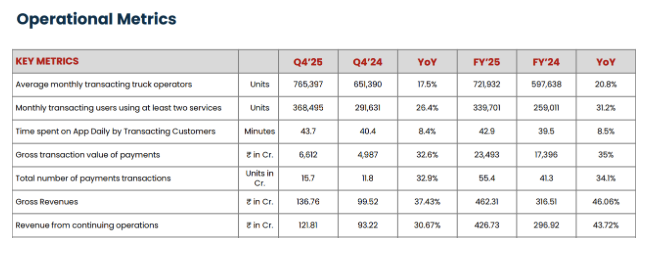
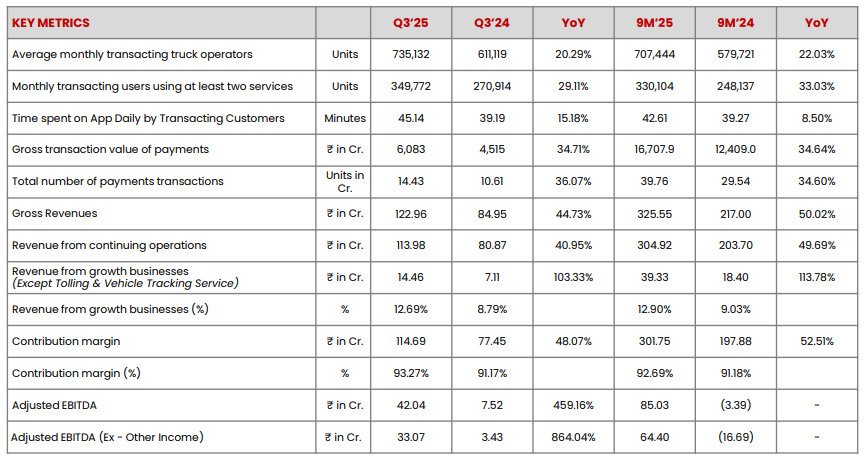
All key growth metrics are looking good. Monthly transacting users have increased by 20%, the number of users using at least 2 services have gone up by 29%, showcasing company’s ability to cross-sale, without needing to spend additional bucks. The GTV and numbers of transactions also increased by ~35%.

The operating leverage is real kicker here. 44% increase in the gross revenue resulting into 48% increase in the contribution margin and 460% increase in the adjusted EBITDA.

The management seemed quite bullish about their fuel sensor business and they have managed to bring the cost of fuel sensor down by almost 4K, which can further be reduced if the scale kicks in.

The management also seemed bullish about their vehicle financing business, where they have onboard one more bank.

The company is adding new offerings like fleet docs etc. which is increasing the time operators are spending on their app.

The management also hinted that share based payment cost would be very less in coming quarters and we could see adjusted PAT very close to actual PAT numbers.

Disc: Holding a tracking position.

10 Likes
2 Likes
3 Likes
3 Likes

BlackBuck Beefs Up Vehicle Financing Business With INR 40 Cr Infusion

BlackBuck said that it has invested the sum towards the subscription of 50 Lakh equity shares of BFPL with a face value of INR 10 each

BlackBuck said that the investment is part of its strategy to augment the NBFC’s capital base

BFPL facilitated disbursements of 5,109 loans amounting to INR 252.76 Cr as of June 31, 2024

2 Likes

A question directed towards investors who follow such ‘new age’ companies - How does one value companies like Zinka ? on P/S or P/BV since they are not making PAT yet ?
Also which companies do you compare Zinka’s valuation with ? to me the business model seems to be something like a platform play where they have acquired customers (both load providers and truck owners) and have existing revenue verticals like financing , tracking , fuel sensor , load brokerage , etc and also the optionality to further develop new verticals to increase wallet share form each customer . If this is the case should I compare their P/S P/BV metrics with something like a IndiaMart or Zomato ?

4 Likes

Conference Call Summary Q4 FY25

  • Trucking industry is a $180 million industry growing at a 8-9% CAGR for the last 5 years.
  • There are more than 75% trucks which are owned by people who own 5 or less trucks, roughly 12.5 million trucks owned by 3.5 million truck operators.
  • They have a 10000 person touchpoint system and cover 85% districts in the country to provide support and services to the truckers many of whom are uneducated.
  • Received the in-principle approval for the PPI license in the last quarter which will take a few quarters to operationalize.
  • Fuel sensor sales doubled from the previous quarter.
  • Doubled the Private vehicle loan hubs from 50 to 100 in the last fiscal. Lending partners have slowed down disbursement given the macro environment in the lending space since the partners are looking at more quality than quantity of disbursement.
  • Telematic devices are not manufactured by them, they get them from suppliers in India and China.
    • Vehicle Tracking: Can help give live location tracking of the vehicle, track driver’s driving behavior and also remote control of their truck. About 25% of the product is sold via the government mandate and rest are customer’s buying on their own. They have a 30% market share in this product.
    • Fuel Sensor: Helps get exact fuel filled, mileage, fuel theft if any. Initially sold the device at 15-25k which didn’t sell many devices. Re-engineered the device and brought the price down which lead to good uptake. They have a 40-45% market share in this product.
  • They don’t mind competition entering the telematics since the trucking industry is already underserved and also will lead to more awareness and penetration.
  • Risks of OEMs providing their own telematics product has been there for long, however, they have the advantage of strong support due to more touchpoints, lower cost of the devices and customer stickiness since customer would like to use the same platform for all their trucks.
  • Their Freight business is like a brokerage business now where they manage the match and payment of the transaction earning 6-8% commission on transaction basis. They already have truckers onboarded through their other businesses which acts as the supply and brings better quality control than their previous attempt at this segment of the business.
    • Still an early stage segment, they have to work on the demand side of the business.
    • They have 5 hubs including Bangalore where they want to focus more before expanding.
  • User acquisition on the trucker side will see growth slowing down in the range of high or low double digits however, with their strong base, they will leverage cross selling their products and service to their existing customers.
  • Increase market share in the tolling business from 37% to 45% this year.

Disclaimer: Studying and Tracking

9 Likes

MARKET OVERVIEW

  • Here’s how India’s freight transport breaks down by mode:

    • :delivery_truck: Road: ~64% of goods movement by ton‑kilometres
    • :locomotive: Rail: ~27%
    • :passenger_ship: Sea (coastal + inland waterways): ~5% coastal + ~2% inland = ~7% total
    • :airplane: Air: ~ 1% or less
  • Double digit industry growth projected for next 5 years in all verticals

JOURNEY OF ZINKA LOGISTICS

2015 – :green_circle: Incorporation & Platform Launch

  • Company founded as Zinka Logistics Solutions Pvt Ltd and launched the BlackBuck marketplace for full-truck-load (FTL) freight

  • Raised initial seed funding led by Accel India.


2017/18–2019 – :chart_increasing: Growth & Recognition

  • Continued expanding digital load-matching and introduced telematics solutions and FASTag/fuel card integration.

July 2021 – :unicorn: Unicorn Milestone & Expansion

  • Raised $67M in Series E led by Tribe Capital, reaching $1.02B valuation

  • Began exploring financial services and insurance, investing in product and data science


2019–2023 – :receipt: Fintech Integration

  • 2019: Founded BlackBuck Finserve Pvt Ltd (BFPL) as NBFC arm

  • 2023: BFPL received NBFC license and started lending by October 2023

  • By mid-2024, BFPL issued 5,109 loans worth ₹253 Cr


June – November 2024 – :loudspeaker: IPO & Public Listing

  • November 13–18: IPO opened, raising ₹1,115 Cr (mix of fresh issue and OFS). INR 550 crore was primary issuance

  • Listed on NSE and BSE on November 22, 2024

  • TZF Logistics (BlackBuck’s subsidiary) got in-principle approval for a PPI license — helps own payment processes fully. PPI License (Prepaid Payment Instrument):
    A license that lets a company manage digital payments end-to-end—like prepaid wallets. Gives better control of transactions and improves customer payment experience

PRODUCTS/SERVICES:

Payments:

Tolling: The company provides tolling solutions (FASTags) in partnership with FASTag Partner Banks. They are the largest distributor and technology provider of FASTags for truck operators in Fiscal 2024 in terms of GTV with a market share of 33% in FY 2024 vs 26% in FY 2023

Revenue model:

  • Commission margins from FASTag Bank Partners on the toll transaction flowthrough based on the monthly transaction value of the FASTags distributed
  • Activation or convenience fee from truck operators in relation to FASTAgs
  • Subscription fees to access specific services on the platform in relation to our tolling offering

Fueling: The company provides fueling payments solution through a cashless fuel payments platform, in partnership with multiple oil marketing companies (“OMCs”). It is the largest fuel loyalty management platform for truck operators in India, in terms of GTV in Fiscal 2024, with coverage enabling 72% of total fuel stations in India

Revenue model:

  • Commission margin from OMCs in fueling transaction flowthrough based on either the monthly consumption volume of fuel or monthly transaction value of fuel purchased

  • Service fees for providing services such as distribution and recharge of fuel cards, dedicated customer support, alerts and transaction history

Telematics:

GPS and Fuelsensoring:

  • Provide real-time visibility into fleet movements, route optimization and enhanced fuel management, with the aim of increasing cost savings and improving efficiency
  • Provide vehicle tracking and fuel monitoring solutions on the platform
  • One of the largest players for vehicle tracking solutions in the trucking segment in India, with 356,050 average monthly active telematics devices in Fiscal 2024 and 390,088 average monthly active telematics devices in three months ended 30 June 2024

Revenue model:

  • Monthly/Annual subscription fee from truck operators

Loads marketplace

Listing marketplace:

  • Loads marketplace efficiently matches truck operators with shippers across commodities, load weights, truck types and distance ranges.
  • This is India’s largest digital freight platform with 2.12 million digital loads posted in Fiscal 2024 via BlackBuck Transporter App.

Freight brokerage

  • In January 2024, they started a freight brokerage business which is an extension of listing marketplace where they enable end-to-end logistics transactions for shippers. For the freight brokerage business model, they leverage the listing marketplace to discover trucks which meet the shipper’s requirements, negotiate the price and payment terms, and handle fulfillment responsibilities with the truck operator, on behalf of shippers

Revenue model:

  • The loads marketplace offering is in the early stages of monetisation
  • Subscription fees are charged to shippers for posting loads
  • Subscription fees to truck operators for preferred matching services
  • Commission on freight brokerage business
  • Various other subscription plans to shippers and truck operators

Vehicle financing

Used Vehicle financing: Enable truck operators to buy used commercial vehicles or to avail financing on an existing vehicle by providing financing solutions. They facilitate disbursement of credit in partnership with our Financial Partners

Revenue model:

  • Loan service fees. In addition, we are entitled to certain other fees charged to the borrowers in the process of loan disbursal and collections, either partially or in full.

REVENUE MIX:

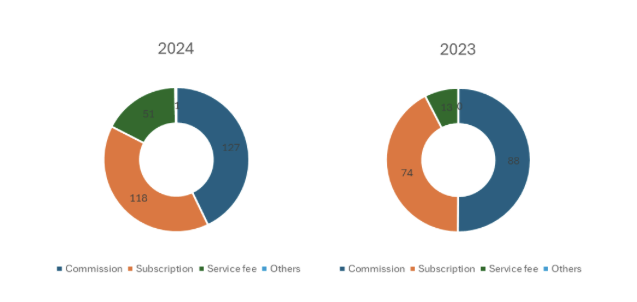
Commission fee and subscription fee makes up 83% of revenue in FY 2024 decreasing from 92% of the revenues. Service fees which is currently at a low base is growing faster and makes up 17% of total revenues

GO TO MARKET:

  • Mix of digital marketing and targeted notifications through the BlackBuck App
  • As of 30 June 2024, 9,374 Touchpoints on the ground, to acquire new customers, as well as cross-sell/upsell the products
  • As of June 30, 2024, 843-member telesales unit that reaches out primarily to the existing customers for upselling and cross-selling
  • 587 channel partners to reach out to truck operators for sales across multiple product offerings
  • As of June 30, 2024, sold and serviced the products in 80% of India’s districts, including in all the major transportation hubs and across 76% of the toll plaza network in India
  • Increased the base of annual transacting truck operators to 963,345 customers in FY 2024 from 761,871 in FY 2023 and 482,446 in FY 2022.

KEY PERFORMANCE INDICATORS:

  • Significant growth in users, usage per day, GTV, no of payments on the platform and as a result, revenues increased. Amongst all the KPIs, in my view, 2 most important KPIs are no of truck operators, GTV of payments which increased 21% and 35% YoY respectively

FINANCIALS:

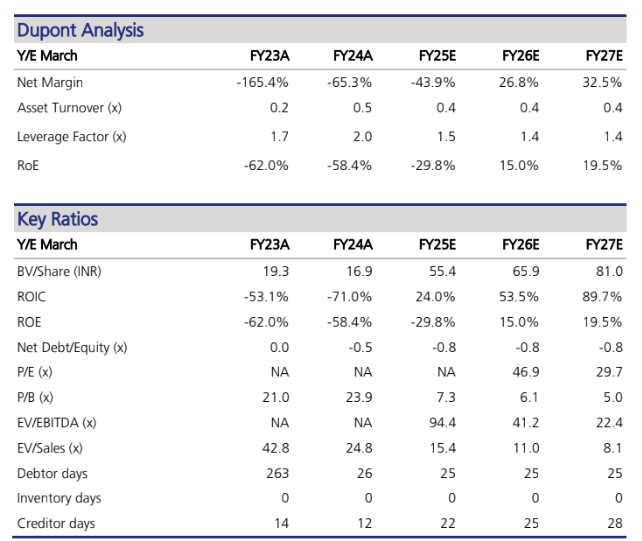
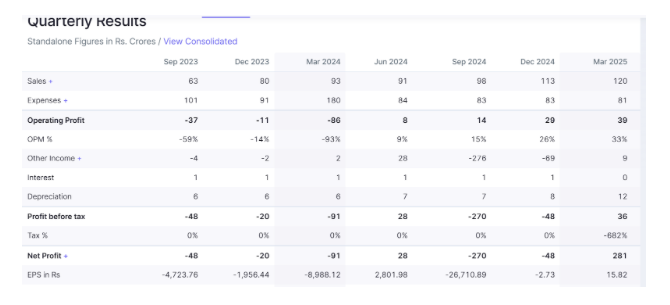
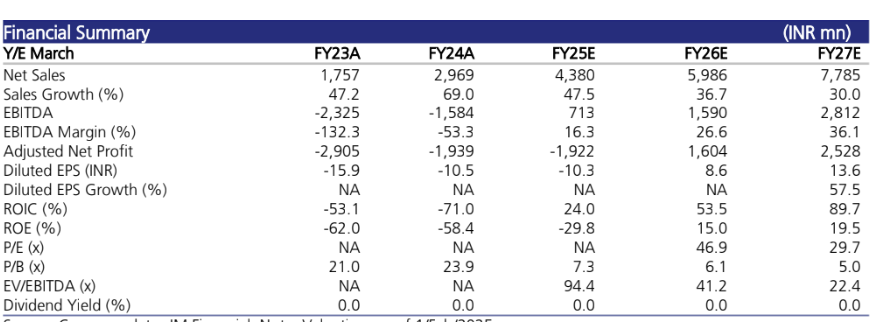
Quarterly P&L: Consistent growth in quarterly revenues and turned EBITDA profitable since September 2024 with growing EBITDA margins and solid 30% + margins

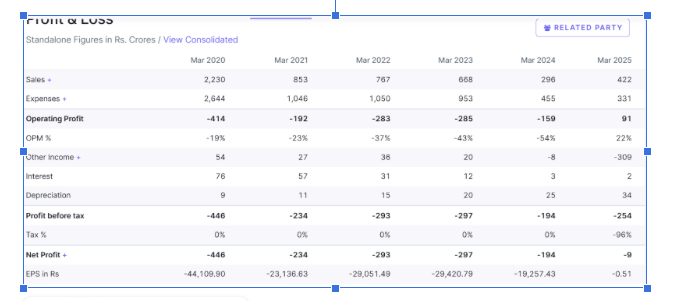
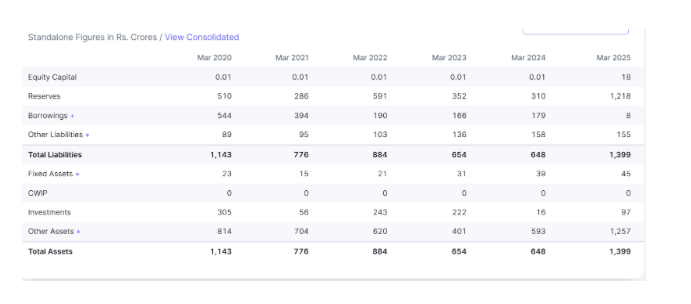
Yearly P&L: The company recorded high revenues in 2020 and 2021, during its private phase, when funding was readily available. Growth during this period was likely driven by easy access to capital—or possibly due to revenues being reported as Gross Transaction Value (GTV), although this is not disclosed elsewhere. Since then, revenues declined, which appears to reflect efforts toward cost optimization or adjustments in revenue recognition. However, over the past two years, revenue growth has resumed, culminating in a positive EBITDA margin of 22% in FY 2025.

Balance sheet: Asset light business model. No borrowings - sitting on INR 600+ crore of cash

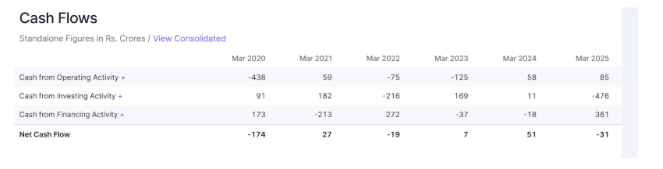
Cash flow: CFO positive since 2 years with good EBITDA conversion due to extremely low working capital requirement. The company raised INR 550 crore through IPO in November 2024

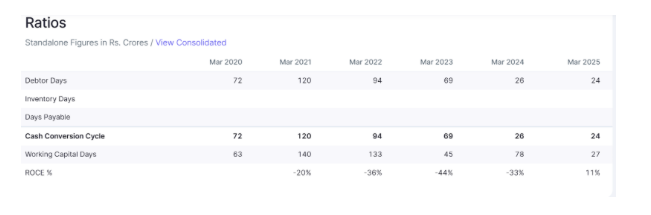
Working capital: Minimal debtor days and that has also improved recently post IPO

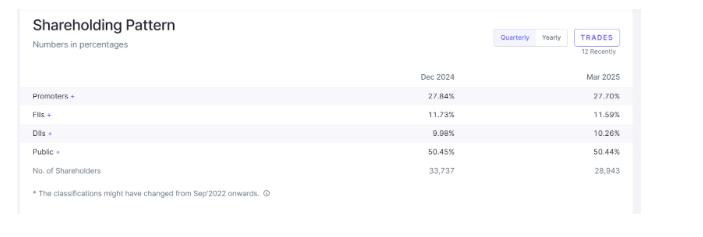
Shareholding pattern: Consistent shareholding pattern. No of shareholders decreased 20% indicating accumulation from institutions as can be seen from large bulk block deal that happened recently described later

RECENT TRANSACTIONS:

Large institutions such as ADIA, MIT, ICICI Mutual funds, MIT SBI Mutual funds entered at INR 420 price per share absorbing supply from VC/PE investors

NETWORK EFFECTS AT PLAY

Cohort Analysis

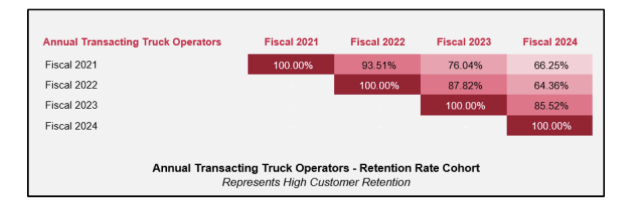
  • 2/3rd of the truckers continue using the platform after 4 years of onboarding indicating strong stickiness amongst users

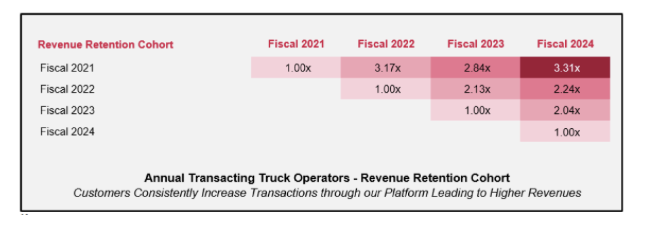
  • Trucking operators consistently increase their transactions. A trucker onboarded in a year provides 3 times more revenue after 4 years of its onboarding

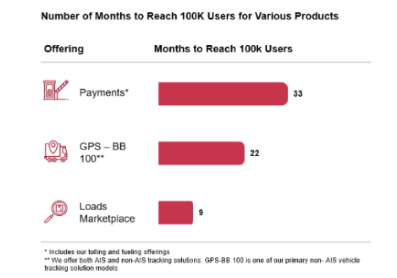
  • Time taken to scale new offerings is reducing which they were able to achieve this primarily due to the platform-led strong network effects playing out, valueadd of services for the customers and the strength of omnichannel sales and distribution strategy

As a result of the Network Effects and typical of platform tech, growth in revenues and cost optimisation is leading to exponential growth in EBITDA and CFO

COMPETITION:

Except for the vehicles financing segment which has traditional established players, BlackBuck is a clear category creator and leader in trucking digital marketplace. Even for these vehicle financing player, Blackbuck is just distributor and not competitor as it does not do much lending on its own but partners with the banks. Further, this is not a material part of the business.

MANAGEMENT STRATEGY (AS PER DRHP)

Expand distribution and truck operator base: Focus on attracting new truck operators in underrepresented markets like Gujarat, Karnataka, and Tamil Nadu.

Invest in core verticals:

  • Enhance the fuel sensor product and improve customer experience in telematics.
  • Leverage India’s trucking industry growth (8-9% CAGR from FY 2024-2028) to expand payment and telematics offerings.
  • Vehicle tracking penetration expected to grow from 40-45% in FY 2024 to 65-70% by FY 2028.

Grow loads marketplace and vehicle finance:

  • Invest in product and technology to grow the loads marketplace.
  • Expand freight brokerage offering to more cities across India.
  • Vehicle financing launched in FY 2024, facilitating over INR 253 crores in loans across 52 districts.
  • Invest in new verticals and data science: Focus on expanding into new business areas and enhancing data science capabilities.

Q4 FY 2025 CONCALL SUMMARY:

:small_orange_diamond: 1. Financial Performance & Growth

  • FY25 revenue: ₹462 Cr (↑46% YoY); Contribution margin: ₹429 Cr (↑49%)

  • EBITDA: ₹139 Cr (↑10x YoY), driven by recurring, high-margin platform revenues

  • Growth expected to continue due to macro tailwinds and market share gains

:small_orange_diamond: 2. Market Share & Segment Split

  • Tolling market share: 37% → 45.5% in FY25

  • Telematics share: 30–45%

  • Core biz (tolling + tracking) = 85% of revenue; rest from growth segments

:small_orange_diamond: 3. Future Growth Drivers

  • Big runway in tolling, telematics, fuel sensors, load brokerage

  • Growth backed by infra push, rising fleet size, and tech stack

  • Confident in platform advantage and cost leadership

:small_orange_diamond: 4. User Engagement & Platform Metrics

  • 7.7 lakh monthly transacting truckers (↑18% YoY)

  • 27% growth in multi-service users

  • App usage: 44 mins/day; tolling share also rose

:small_orange_diamond: 5. Cost Efficiency & Strategic Investments

  • Costs stable; strong operating leverage

  • Telematics devices: designed in-house, manufactured externally

  • PPI license to enhance CX and margins over time—not immediate revenue

  • Confident vs OEMs due to price, tech control, and dealer reach

RISKS

  • High dependence on business partners in payments offerings. One of the FASTag Partner Banks contributed to 33.51% of total revenue in Fiscal 2024
  • Users and usage plateau: There are about approx. 12.5mn (expected to grow to 14-15mn truckers by 2028) truckers in India and currently only 1mn truckers are on its platform . There is still lot of headroom to grow
  • Revenue is dependent on shippers continue to ship and continue to use their platform. Therefore, marco headwinds in the economy will lead to reduce logistics and thereby reduced usage in their platform and their revenue
  • Although the current supply is being absorbed by Mutual funds and other FIIs. It appears that there is still some holding of early stage backers who most likely will sell at the next rise and if there are no takers at that price and there will be pressure on the share price

CATALYST:

  • Limited adoption and growing profitably - There are still many truck operators that are not on digital platform. Today, a large part of India’s trucking is informal — unorganized and offline. BlackBuck can onboard more small truckers, digitizing payments, load-matching, tolls, and insurance. Management guidance is high double digit growth for next 3 to 5 years
  • Not just market share capture but Blackbuck is also expanding its market size by introducing new products. As observed above, every new products launched is taking much less time to scale due to network effects
  • Operating leverage - Growth in revenue will translate more growth in profits as can be seen in the current quarters which is the evidence of operating leverage. Further, most of the EBITDA is converted into cash flow operations due to limited working capital
  • Network effects - 2/3rd of the truck operator are still active and transacting on the app after 4 years of onboarding and the revenue from such truckers are almost 2-3x after 4 years of onboarding
  • Limited competition - This was built on the back of large private funding - unlikely that there will be another player like this in the near future. If they win, there will be few players or they will be the only player dominating this trucking digital marketplace (Marketplace philosophy - Winners take all)
  • Lot of the supply/exit has been absorbed by large insitutional players such as ADIA/MIT/MFs etc.

Source: TheWrap, DRHP, Screener, Investor Presentation, Earnings Call Transcript

Disclaimer/Disclosure: Not a SEBI Registered Analyst. Hold position in Zinka Logistics

9 Likes

Now that there are annual toll concessions coming, revenues might reduce for toll booths. Along with this, free tolls for EV? How are we seeing these changes affect Zinka?

1 Like

This was exactly my doubt too…if the government implement yearly till plans or introduce GNSS or ANPR, the role Zinka plays dimishes… Maybe other opportunities will open but rolling the 3/4th of the business, this is a risk..

1 Like

If they can somehow collaborate with NHAI once they start rolling out GNSS and position themselves as a tech integrator for fleet operators (handling compliance, reconciliation, etc.) it may end up benefiting them in the long run.

GNSS will also take years to develop and roll out- the management must be taking steps to reduce this risk

1 Like

Another doubt is
NHAI aims to grow highway to 140k by 2037 which is 9-10% CAGR…
Assuming 5% vehicle growth and 5% inflation in toll payments,.the total GTV payments can grow around 20%CAGR plus some market share gain and VAS additions will gives us roughly 20-25% in tolling, assuming PMF fee, and system remains as it it now?

1 Like

They are not for commercial vehicles.

2 Likes

One major bet would be loads market place which, if successful could dwarf other segments… otherwise this would be a 15 to 20% growth buisness. But the major risk would be on the tolling business wherein if the government decides MLFF as the way forward, it would put major part of zinka logistics revenues at risk.

2 Likes

Are we seeing any Dreamfolks like situation here? Wherein the moat of the business dies.. Being a middleman here seems risky. Its seems like a ticking bomb, waiting for Govt to launch the incentives full fledged.

5 Likes

Please compare Dreamfolks EBITDA margin history and Zinka EBITDA margin evolution. They are poles apart.

Please also compare shareholding history of both businesses. In Zinka, institutions are loading while in other distributions taking place since past couple of quarters.

2 Likes

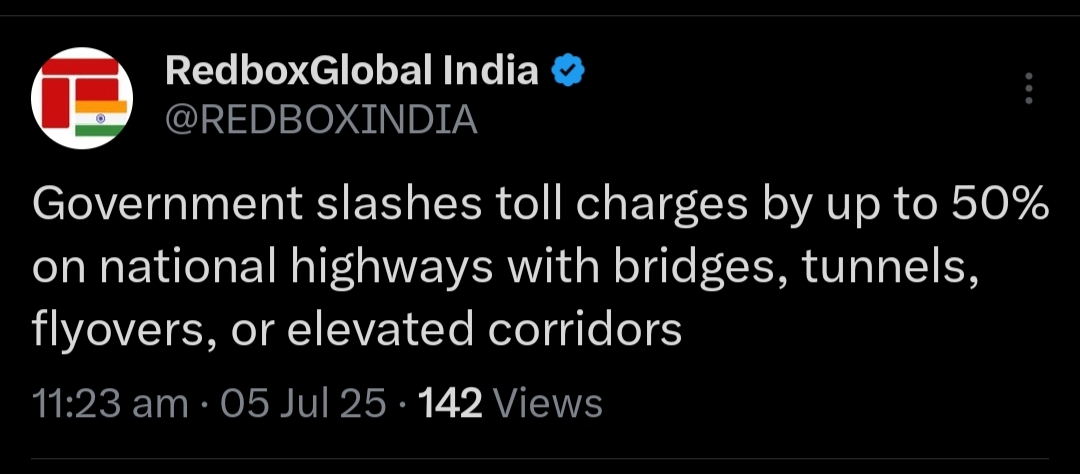
Toll charges slashed by 50%.

2 Likes

some revenue is % of GMV (volume-linked), while some is fixed per user/month (non-volume-linked).

  • Lower toll costs improve economics per trip for truckers, especially for small fleet operators (Zinka’s core customers).
  • More frequent trips : Higher adoptionof toll roads : Can lead to ncreased FASTag usage per truck/month
5 Likes

Lower tolls need not to lead to higher volumes… And the company has high market share already. The fact that government reduced it by 50% raises concerns over what can happen in the future…which in itself is a major red flag. Plus the impact from this reduction is going to be higher, and margin story may not play…

I was expecting fall in the price but thats not to the case. Wonder what I am missing

3 Likes