Hi everyone,
I’ve been digging into the macro data connecting the recent moves in Japanese Bond Yields and the persistent FII selling we’ve seen in India. I believe we are ignoring a massive liquidity risk building up in the system. Below are my thoughts in the form of an article:
For twenty years, the global economy has floated on a sea of cheap money provided by the Bank of Japan (BOJ). That era is ending, and the transition threatens to detonate a massive, leveraged position at the heart of the global financial system: the Yen Carry Trade.
The convergence of rising interest rates in Tokyo, aggressive protectionism in the United States, and a “nominal growth slowdown” in India has created a fragile triangular dynamic. If the situation in Japan deteriorates, we could witness a “Great Unwind” of global capital, a scenario where the liquidity that fueled global asset prices, including Indian equities, suddenly evaporates.
The Mechanism: The “Leveraged” Yen Carry Trade
To understand the risk, one must look beyond the simple flow of funds. The “Yen Carry Trade” involves investors borrowing Yen at near-zero interest rates to invest in higher-yielding assets like US Tech stocks, Emerging Market bonds, and Indian equities.
The systemic danger lies in leverage. Hedge funds and speculators do not just borrow what they invest; they amplify it. Estimates suggest that for every $1 of capital, hedge funds often carry $4 to $14 of exposure through derivatives. This creates a precarious structure where even a small appreciation in the Yen wipes out the profit margin, forcing immediate liquidation.
The “Short Squeeze” Nightmare:
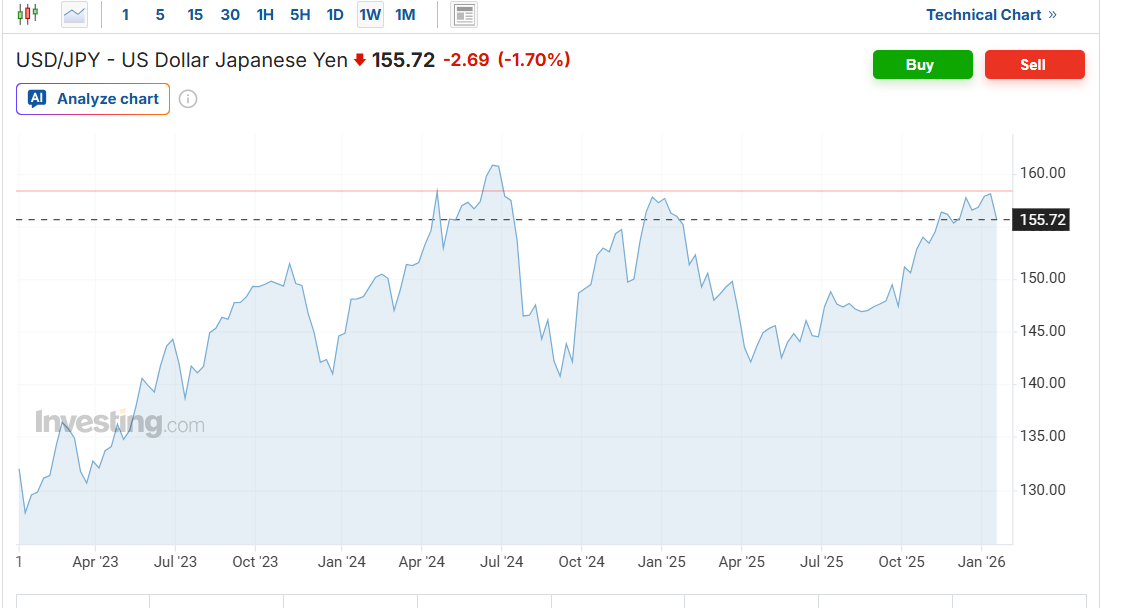
Investors borrowing Yen are effectively “short” the currency—they owe Yen back. If the Yen appreciates, their debt burden (in their home currency) explodes. This forces them to buy Yen rapidly to close their loans. This buying pressure drives the Yen higher, forcing more investors to cover their positions. This is the “Short Squeeze”—a panic-driven feedback loop that can move markets violently in hours, mirroring the mechanics of the 1998 LTCM crisis.
The Trigger: Japan’s 3% Threshold
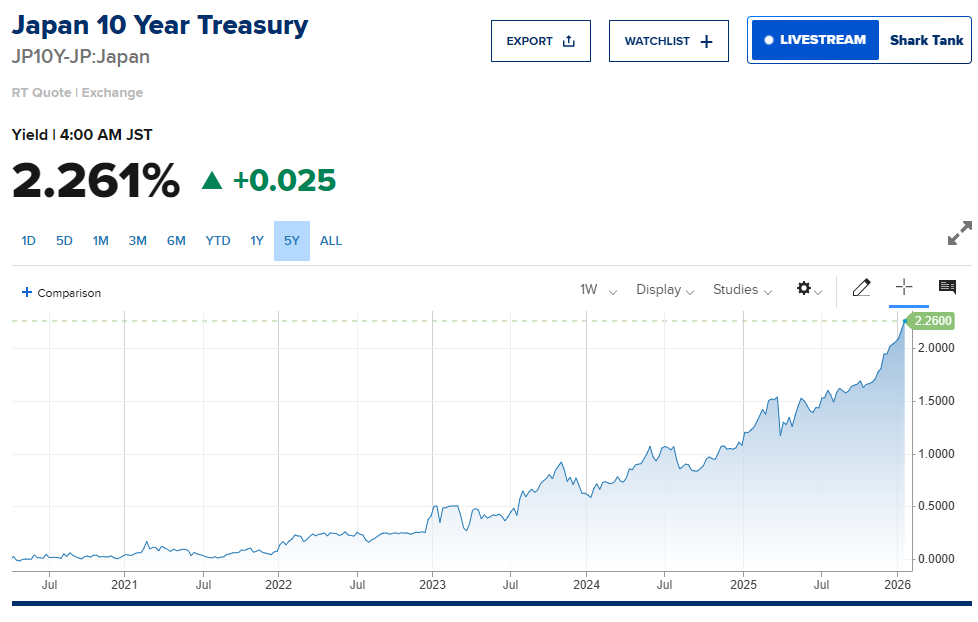
In 2026, the trigger for this squeeze is the Japanese Government Bond (JGB) market. Japan is battling structural inflation, with core CPI staying above 2% for over 43 consecutive months and recently hitting 3%, forcing the BOJ to hike rates to 0.75% in December 2025**, the** highest in 30 years. Simultaneously, the new Takaichi administration has pledged a massive ¥17.7 trillion ($112 billion) stimulus package to combat inflation’s impact on households. This dangerous mix—borrowing more (fiscal expansion) while rates are rising (monetary tightening)—has spooked the bond market. The yield on the 10-year Japanese Government Bond (JGB) has already spiked to 2.26%, a level unseen since the late 1990s.
The Danger Zone:
Financial stress tests indicate that if the 10-year JGB yield breaches 2.5% to 3.0%, it triggers a massive repatriation event. Japanese institutions, holding over $1.1 trillion in US Treasuries, would be forced to sell foreign assets to bring capital home to cover domestic losses and capture safe, high local yields.
The Feedback Loop: Repatriation and Appreciation
This is where the “Grey Rhino” event begins.
1. Repatriation: As Japanese insurers sell US Dollars to buy Yen, the Yen appreciates.
2. The Squeeze: The strengthening Yen triggers margin calls on the leveraged carry traders mentioned above.
3. Forced Selling: To pay back their Yen loans, global funds must sell their most liquid assets—Indian Equities, US Tech Stocks, and Gold.
4. The Spiral: This selling pressure strengthens the Yen further, triggering the next round of margin calls.
This “Feedback Loop” turns a local policy change in Tokyo into a global liquidity freeze.
The Catalyst: US Protectionism
If Japan is the spark, US trade policy is the fuel. By imposing 50% tariffs on Indian goods (textiles, gems, auto components), the US has weakened the ability of emerging markets to absorb shocks.
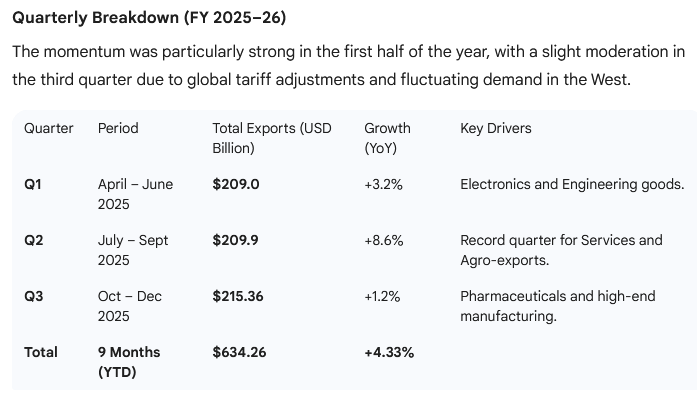
For India, this has resulted in a ballooning trade deficit ($25 billion in December 2025 alone) and severe pressure on the Rupee, which has depreciated to ~₹91 against the USD. A fragmented global economy, walled off by tariffs, lacks the coordination to manage a chaotic currency unwind.
The Victim: India’s “Nominal” Vulnerability
India appears robust on the surface, but the timing of this potential shock is perilous. The delayed impact of the RBI’s 2024-25 tightening is squeezing the economy. Nominal GDP growth—the cash value of the economy—is projected to slow to 8.0% for FY26, the lowest (ex-COVID) in two decades.
Why India is the “Canary in the Coal Mine”:
-
The Earnings Trap: Companies pay debts and wages from nominal revenue. A slide to single-digit nominal growth implies corporate earnings growth could stagnate at 10-12%, insufficient to justify high valuations.
-
The FII Exodus: Foreign Institutional Investors (FIIs) are already fleeing. In 2025, they pulled out $18.4 billion. They are selling because the “India Trade” is yielding low returns in USD terms due to Rupee depreciation.
-
No Buffer: India’s traditional buffer—strong domestic consumption—is currently stressed, and with the US export engine stalling due to tariffs, the economy lacks the shock absorbers to handle a sudden global liquidity freeze.
-
Contagion Channel: When the Yen squeeze hits, global funds will treat India as a “source of liquidity.” They will sell Indian stocks not because they dislike India, but because they need cash to cover Yen debts in Tokyo.
Endgame: The Cascade of 2026
The risk facing investors is not a simple market correction, but a systemic liquidity event.
● The Spark: JGB Yields hitting 3%.
● The Fire: A leveraged Short Squeeze on the Yen.
● The Fuel: A self-reinforcing Feedback Loop of repatriation and appreciation.
● The Damage: A synchronized sell-off in US Treasuries and Indian Equities.
The critical number in global finance right now is the yield on the 10-year Japanese Government Bond.
If it stays below 2.5%, the global system may muddle through the US tariff regime. However, if it crosses 3%, the “Tokyo Tremor” will trigger a cascade that no domestic policy in New Delhi can easily fix. The era of easy global money is ending, and for an India currently battling a nominal growth slowdown and protectionist headwinds, the transition poses the single largest risk to the growth story in 2026.
Disclaimer: It is a complex scenario with known unknowns & unknown unknowns, therefore I could be wrong as well.