
Company: Swastika Castal Ltd
Sector: Castings
Exchange: BSE SME
Basic Details
• Market Cap: Rs 75 crores
• Issue Price: Rs 65
• Current Price: 91
• Listing Date: 28 July 2025
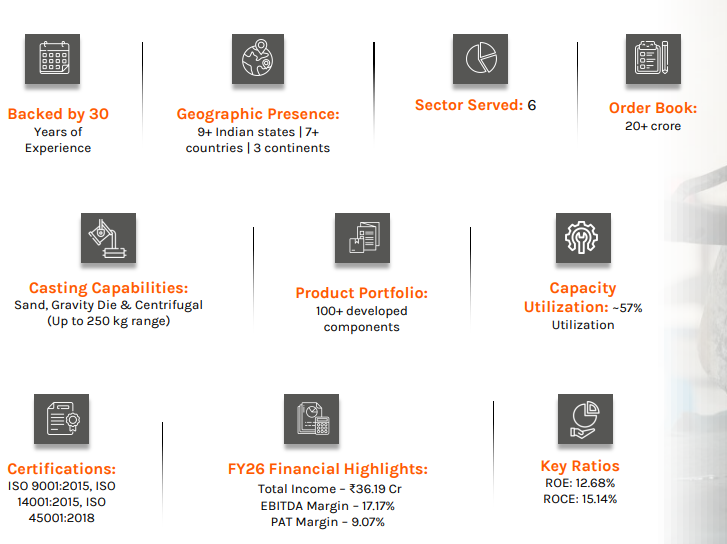
Swastika Castal Limited, incorporated in 1996, is a Vadodara-headquartered manufacturer of high-precision aluminum castings. The company specializes in multiple casting processes including sand casting, gravity die casting, and centrifugal casting, enabling it to cater to diverse industrial applications requiring structural strength, dimensional accuracy, and durability. A nano small company based out of Vadodara into Aluminum castings- Sand Casting, Centrifugal Casting and Gravity Die Castings.
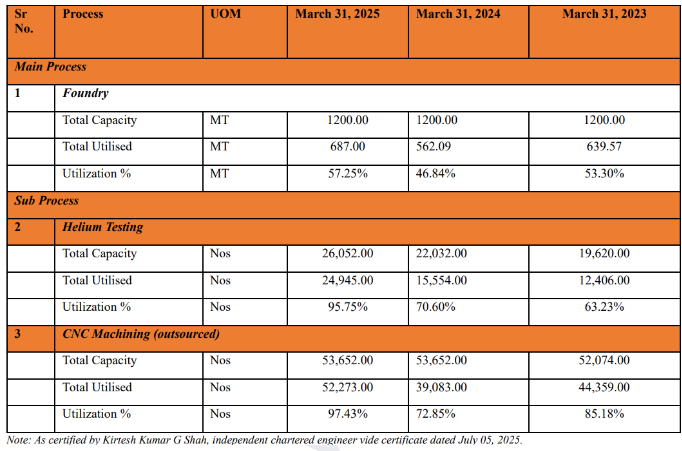
Utilization and Capacity:
Let’s dive deep into what these castings really are and what’s GIS and substations are at large:
A substation does one job: take power in at one voltage, switch/protect/measure it, and send it out — possibly at another voltage. There are two main types of Substations- AIS and GIS.
A GIS is basically a sealed aluminium plumbing system carrying very high voltage, with the live parts sitting inside metal tubes filled with insulating gas(SF6) instead of open air. Almost every part Swastika makes is one of these five things:
The equipment to do that is the same in both worlds (breakers, disconnectors, current/voltage transformers, busbars, earthing switches). What differs is how you insulate the live parts from each other and from ground.
Air-Insulated Switchgear (AIS) — the traditional outdoor yard you see from the highway: steel lattice towers, porcelain insulators, conductors strung in open air with big gaps between them.
Air is a weak insulator. To stop the voltage jumping across, you need large physical clearances — at 400 kV you’re talking several metres between phases and to ground.
Consequence: AIS sprawls over acres. Cheap to build per bay, but land-hungry and fully exposed to weather, dust, salt, pollution. Where the aluminium goes: mostly connectors, terminals, clamps (joining conductors to equipment), operating-mechanism boxes/gearboxes, and structural supports. The live parts themselves are bare conductor in open air, so there is no gas-tight enclosure to cast. Low casting intensity per bay.
Now Gas-Insulated Switchgear (GIS) is totally different in the physicality of it — the same equipment, but every live part is sealed inside an earthed aluminium tube/chamber filled with insulating gas (SF₆ historically; increasingly clean-air or fluoronitrile mixtures). The gas is a strong insulator — SF₆ is roughly 3× the dielectric strength of air. So you can shrink all those metres of air clearance down to centimetres of gas.
Why GIS is gaining traction globally?: (Excerpts from Hyusong GIS)
- GIS occupies ~10–20% of the footprint of an equivalent AIS. It’s sealed, so it shrugs off weather, pollution, salt and altitude. But it’s far more expensive per bay (a Powergrid GIS bay has gone from ~₹6 Cr to ~₹14–15 Cr). The enclosure system is the structure — every compartment is a cast/fabricated aluminium pressure vessel. High casting intensity per bay.
- Enhanced insulating properties and reduced long‐term operational costs by means of a sealed metal enclosure filled with SF6 gas which assures first‐rate reliability, thus making it suitable for highly populated and urban areas.
- Personnel safety is ensured by an earthed enclosure, numerous interlocks, and lockout devices. Greater stability is provided during earthquakes and the perfect enclosure protects from loss or damage from salt, dirt, weather, and lightning. While the SF6 gas insulation prevents deterioration, the partition of the gas prevents accidents from occurring.
- Virtually eliminates long‐term maintenance costs and contamination of critical components by means of SF6 gas‐filled metal enclosures, automatic monitoring of operating mechanisms, and the SF6 gas system.
- Installation time and costs are reduced since the system is shipped in a completely assembled bay or by unit.
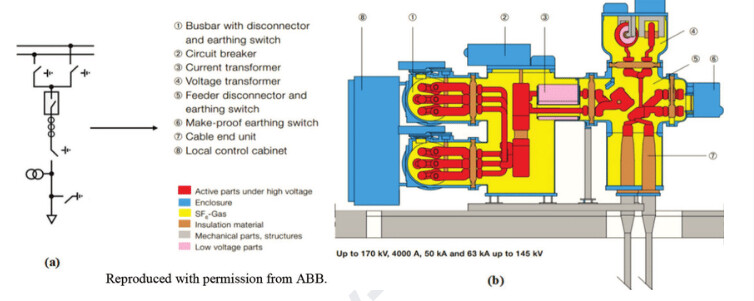
Anatomy of a GIS bay (so the component list makes sense): A bay is one complete switching circuit. Trace the current through these functional blocks.
- Busbar — the common high-voltage rail all bays connect to. Runs as a horizontal aluminium tube with the conductor suspended inside on insulators.
- Busbar disconnector + earthing switch — taps the bay off the busbar; can be opened for isolation, and earthed for safe maintenance.
- Circuit breaker (CB) — the muscle. Makes and breaks load and fault current. Contains the fixed/moving contacts and the arc-quenching mechanism, driven by a spring/hydraulic operating mechanism.
- Current transformer (CT) — a toroid around the conductor pipe that measures current for metering and protection.
- Line/feeder disconnector + earthing switch — isolates and earths the outgoing line side.
Voltage transformer (VT) — taps off a small voltage signal for metering/protection. - Cable end unit / bushing — the exit interface to the outgoing cable or overhead line.
Plus, threaded throughout: flanges at every joint, support insulators holding the conductor centred inside each tube, field-grading shields at high-stress points, a filter / desiccant bowl keeping the gas dry, and a pressure-relief / exhaust path for fault conditions."
For a broader level understanding- Check the below diagram and understand Enclosures in a GIS.
How many bays per GIS/substation?:
- Small distribution/urban substation: 2–6 bays.
- Typical medium transmission substation: 6–20 bays.
- Large grid/utility hub: 20–50+ bays.
(Exact count depends on topology — N-1 redundancy, number of incoming/outgoing circuits, transformer count.)
Where does Swastika come into Play?:
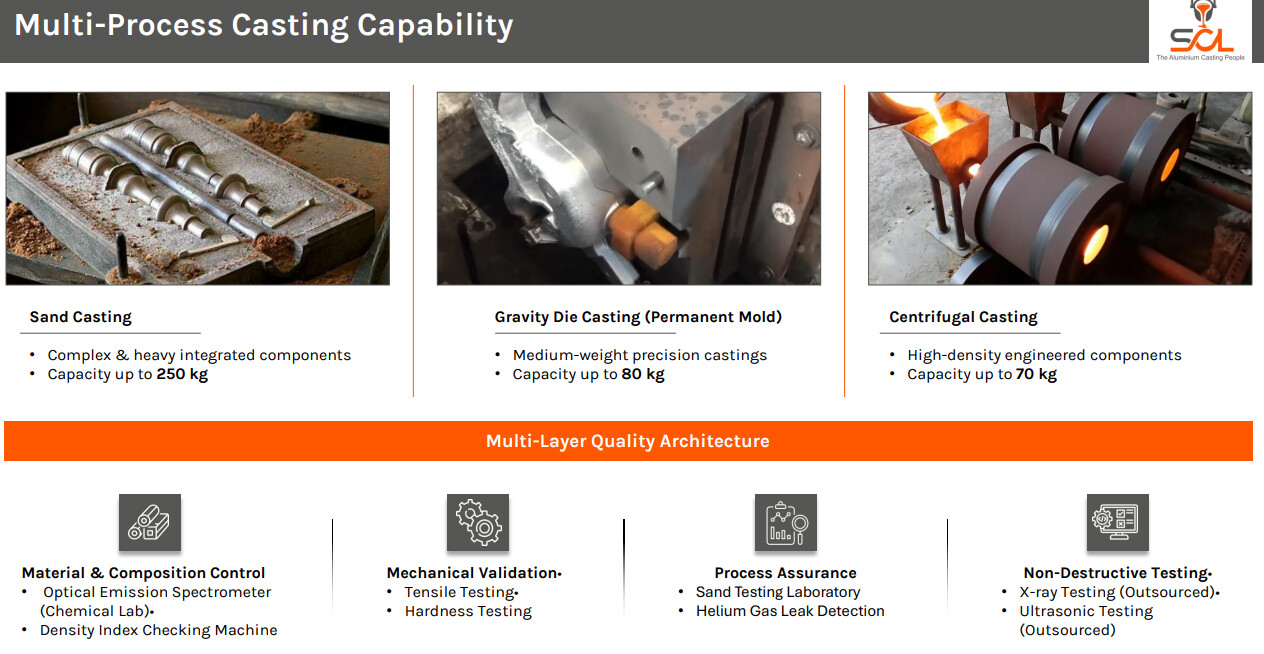
1.Power Products:- They cast and machine the aluminium hardware that the OEM (Siemens, Hitachi Energy, Hyosung, GE) bolts together into a Gas Insulated Switchgear bay. Three processes in-house — sand casting (up to ~250 kg), gravity die casting (up to ~80 kg), centrifugal casting (up to 70–90 kg) — plus in-house heat treatment. CNC machining, surface treatment and X-ray are outsourced.
Swastika largely focuses on Centrifugal and Gravity Die Castings- pure play Aluminium. Sand Casting is limited and largely if any clients specifically asks for it.
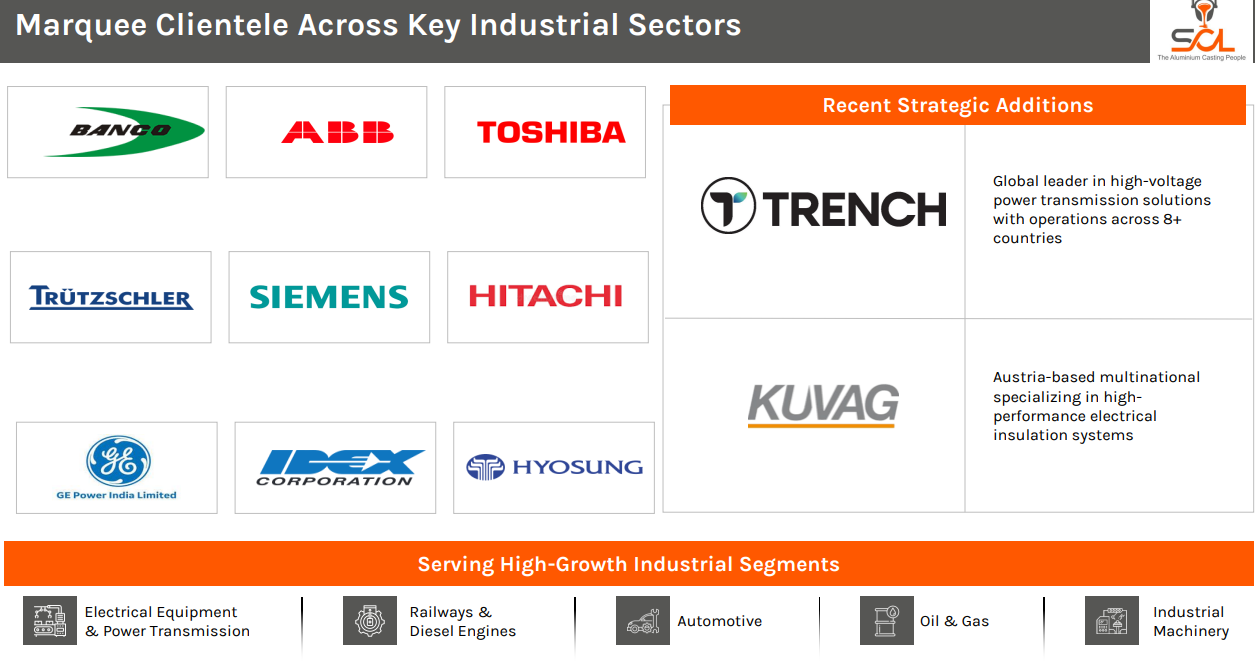
What exactly do they do in Power Castings?- They’re largely on the trasmission and distribution side of the industry and a direct supplier to Siemens, Hitachi, ABB, Toshiba and Hyusong ; currently not present in the power generation part; they supply critical castings that go into Gas Insulated Substation. Attaching the product portfolio pics taken from the PPT available on the exchanges:
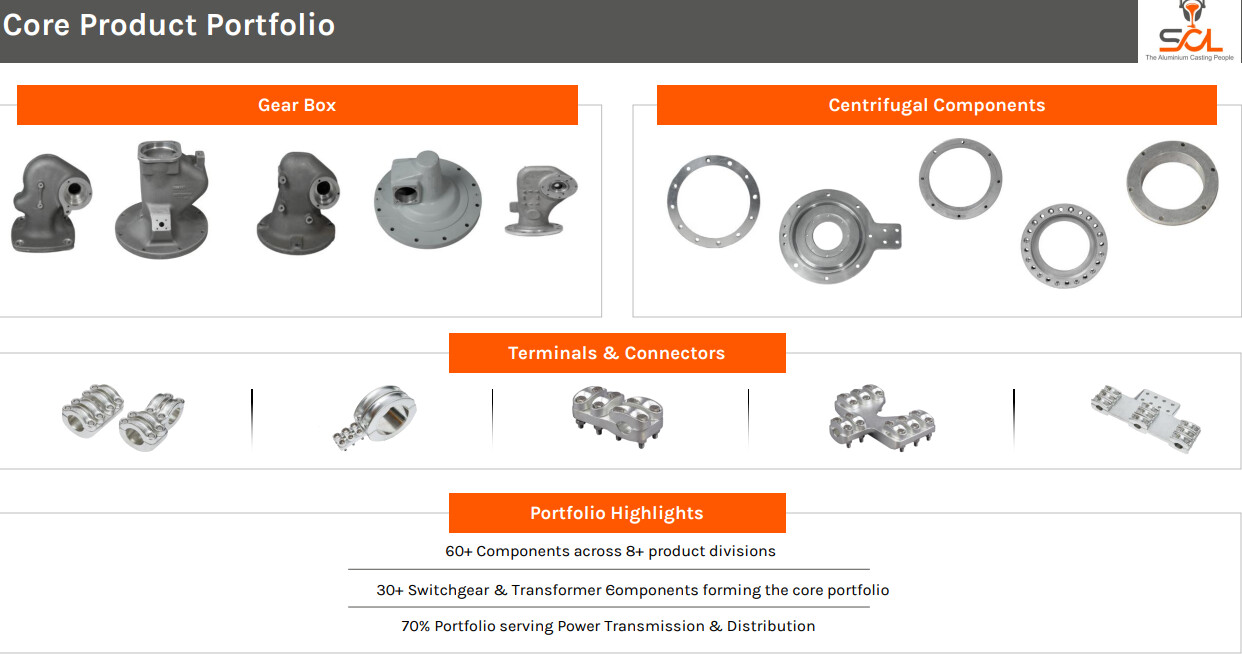
The key GIS/AIS products swastika makes are: (Can be skipped- source DRHP)
| Name of Components | Divison | Sector Used In |
|---|---|---|
| Adapter rings | Gas Insulated Switchgear | Transmission and distribution of power |
| Corona shield | Gas Insulated Switchgear | Transmission and distribution of power |
| Term plate spaded | Gas Insulated Switchgear | Transmission and distribution of power |
| Housings | Gas Insulated Switchgear | Transmission and distribution of power |
| Housings | Air Insulated Switchgear | Transmission and distribution of power |
| Base lower section | Gas Insulated Switchgear | Transmission and distribution of power |
| Bottom plate bracket | Gas Insulated Switchgear | Transmission and distribution of power |
| End plates | Gas Insulated Switchgear | Transmission and distribution of power |
| Extension housings | Gas Insulated Switchgear | Transmission and distribution of power |
| Filter bowl | Gas Insulated Switchgear | Transmission and distribution of power |
| Gear boxes (housings) | Air Insulated Switchgear | Transmission and distribution of power |
| Reducer housing | Gas Insulated Switchgear | Transmission and distribution of power |
| Top covers | Air Insulated Switchgear | Transmission and distribution of power |
| Conductors | Gas Insulated Switchgear | Transmission and distribution of power |
| Exhaust cylinder | Gas Insulated Switchgear | Transmission and distribution of power |
| Fixed support | Gas Insulated Switchgear | Transmission and distribution of power |
| Flange | Gas Insulated Switchgear | Transmission and distribution of power |
| Movable side support | Gas Insulated Switchgear | Transmission and distribution of power |
| Rings | Gas Insulated Switchgear | Transmission and distribution of power |
| Shield | Gas Insulated Switchgear | Transmission and distribution of power |
| EARTHING SWITCH for different customers | Gas Insulated Switchgear | Transmission and distribution of power |
| Supports | Air Insulated Switchgear | Transmission and distribution of power |
| Fixed contact holder | Gas Insulated Switchgear | Transmission and distribution of power |
| Mobile contact holder | Air Insulated Switchgear | Transmission and distribution of power |
| Piston | Switchgear | Transmission and distribution of power |
| Terminal pads | Air Insulated Switchgear | Transmission and distribution of power |
| Adapter for breaker | Gas Insulated Switchgear | Transmission and distribution of power |
| BELL cranks | Gas Insulated Switchgear | Transmission and distribution of power |
| Contact support | Gas Insulated Switchgear | Transmission and distribution of power |
| Covers | Gas Insulated Switchgear | Transmission and distribution of power |
| CT PIPE s | Gas Insulated Switchgear | Transmission and distribution of power |
| Drive housings | Gas Insulated Switchgear | Transmission and distribution of power |
| TERMINAL FLANGE s | Gas Insulated Switchgear | Transmission and distribution of power |
| Drive side cover | Switchgear | Transmission and distribution of power |
| Tubes | Gas Insulated Switchgear | Transmission and distribution of power |
| Flat cover | Gas Insulated Switchgear | Transmission and distribution of power |
| Flange machined | Gas Insulated Switchgear | Transmission and distribution of power |
| Tank head machined | Gas Insulated Switchgear | Transmission and distribution of power |
| Flange tank | Gas Insulated Switchgear | Transmission and distribution of power |
| ALUMINIUM conductors | Transformer | Transmission and distribution of power |
| MOUNTING flanges | Transformer | Transmission and distribution of power |
| Casting gear housing | Switchgear | Transmission and distribution of power |
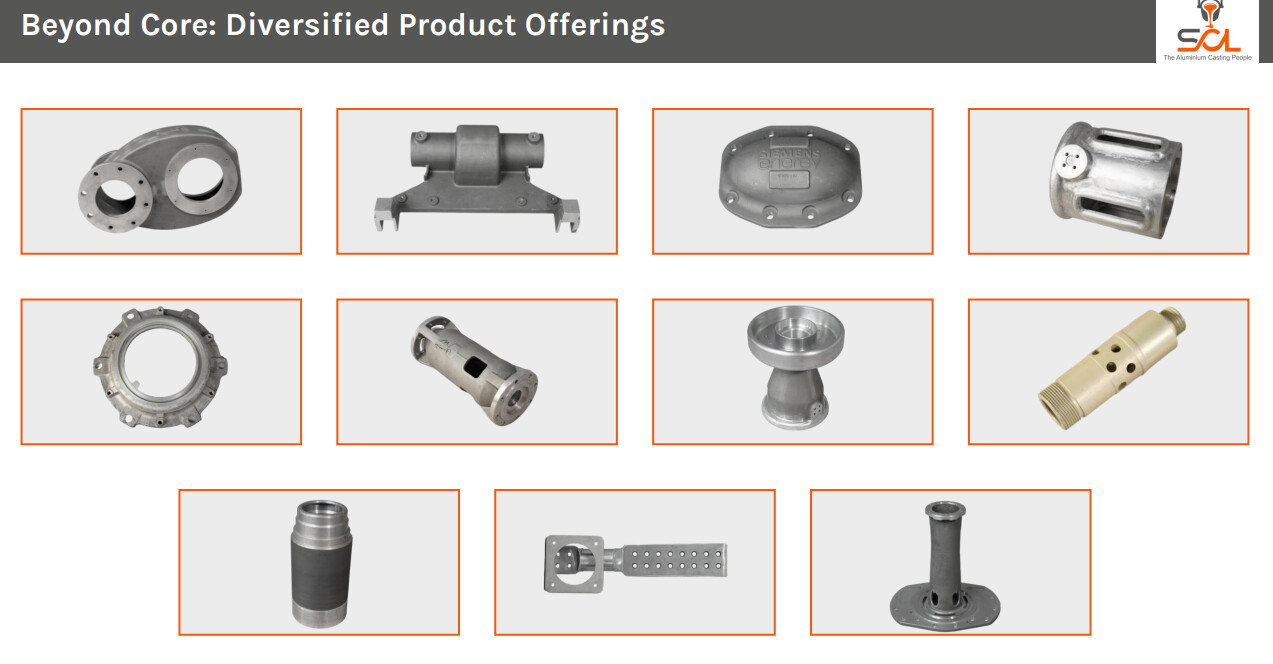
- They also do some products for the Oil and Gas, Automobile, and Railways but these are very small portion of the business at the moment. The company however doesn’t want to stay dependent upon its power portfolio only. The key products in the segment includes:
| Name of Components | Divison | Sector Used In |
|---|---|---|
| Fans | Motor | Railway / Ship |
| CAST TANK LH and RH | Radiator | Automobile |
| Body 2, 4, 6, 8,10,12 inc | Pressure Relief Valves | Oil & Gas |
| Covers for 2, 4, 6. 8,10,12 inc | Pressure Relief Valves | Oil & Gas |
| Inlets for 2, 4, 6. 8,10,12 inc | Pressure Relief Valves | Oil & Gas |
| Outlet for 2, 4, 6. 8,10,12 inc | Pressure Relief Valves | Oil & Gas |
| Pallets | Pressure Relief Valves | Oil & Gas |
| Adaptor | Pressure Relief Valves | Oil & Gas |
| SUCTION tubes | Pump | Fire Fighting Pump |
| Central manifold al | Pump | Fire Fighting Pump |
| Machining of piston | Compressor | Power generation |
| Gearing head | Tap chenger | Railway |
| Cover | Tap chenger | Railway |
| Large case machining - re-2130135-2 | Tap chenger | Railway |
| Mounting frame | Tap chenger | Railway |
| Selector housing | Tap chenger | Railway |
| Small case | Tap chenger | Railway |
Answering the top “Why” in your mind?:
-
Why Aluminium as metallurgy?:- The enclosure shall be aluminium alloy with high corrosion resistance, low electrical losses and negligible magnetic losses. Aluminium is non-magnetic and highly conductive, so induced currents flow with minimal loss, and the enclosure still provides magnetic shielding for the world outside. Second reason is that the enclosure holds gas at ~5–7 bar and must barely leak. HV switchgear runs closed pressure systems with leakage under 0.5% per year, the IEC maximum, at roughly five times MV pressure. So the cast
enclosure niche is inherently an aluminium niche, and the competition is (i) other
aluminium casters and (ii) fabricated (welded) aluminium — with casting winning on
complex geometries (breaker housings, tees, multi-way junctions, drive housings) and
fabrication winning on simple straight bus. Swastika can’t do Busbars as it needs extrusion vs casting setup. -
What is the process like?:- Scrap and Aluminium Ingot processing, Casting, Heat Treatment (Each casted item in furnace for 8-12 hours at 500+ degrees), Machining, and Helium Leak Testing along with CMM Measurements of the products. Centrifugal casting is preferred as it provides superior density, Mechanical Strength and Product quality.
Few other processes include:
- Silver Plating
- Painting
- Anodizing
- Copper Spraying
Testing setup involves:
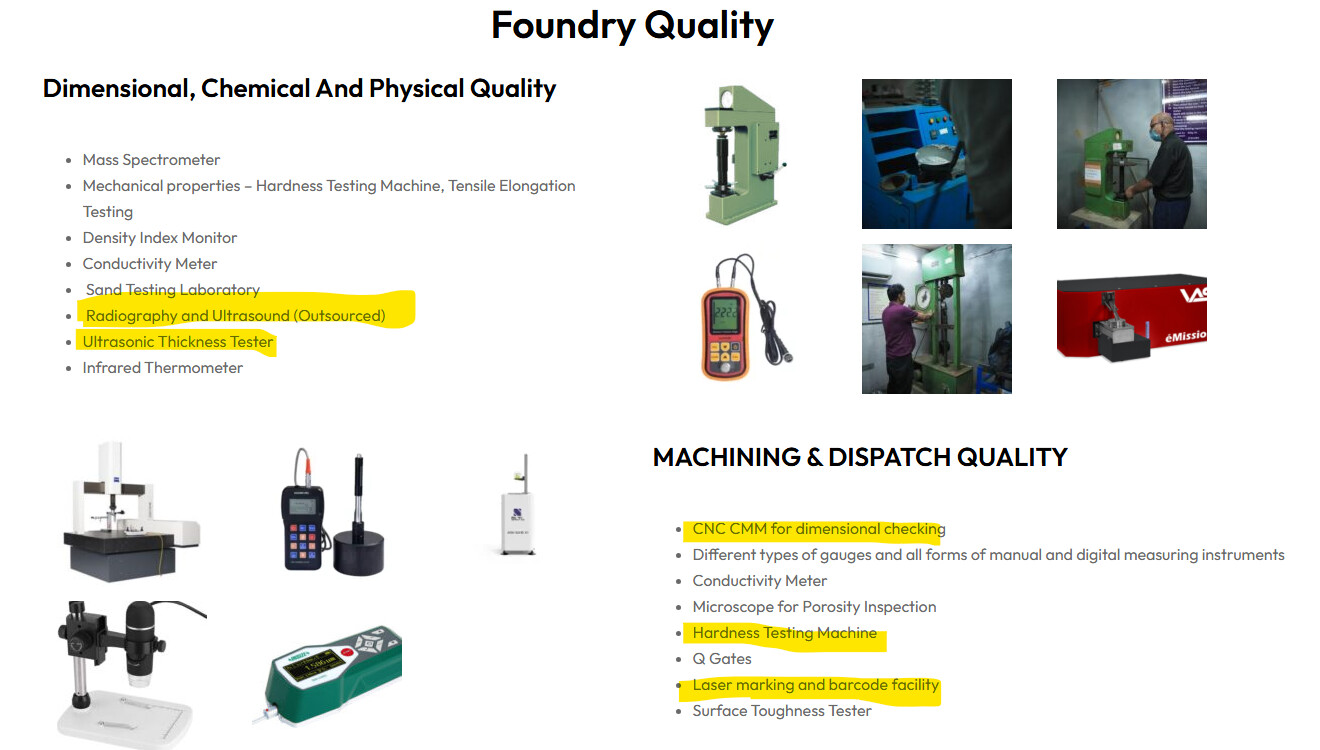
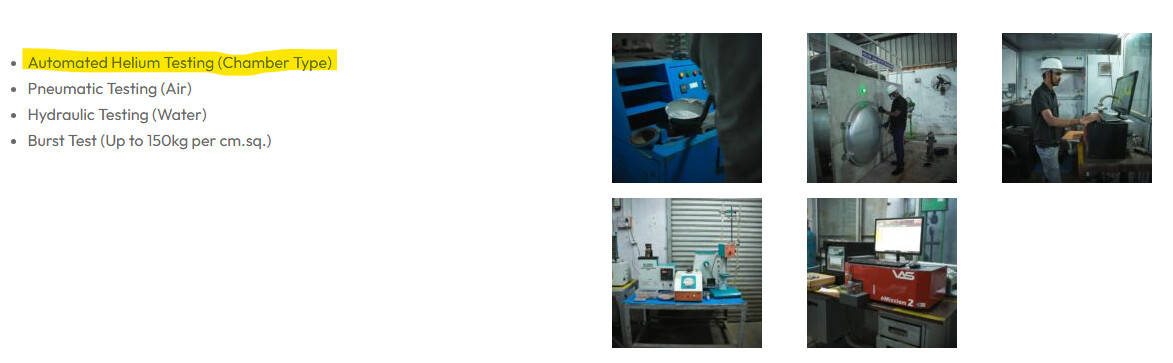
Also for each of their product that is in touch with the gas flowing through a GIS- Helium Leak Testing is required. They have four such chambers currently. Overall Helium Leak Test and Heat Treatment facilities are bottlenecks- with some machining capacity being already added. Below is the picture from their website:
“We utilize helium gas leak detectors to identify and locate even the smallest leaks in systems or components. Helium, with its small atomic size and inert properties, is an ideal tracer gas for leak detection, allowing us to ensure the integrity of critical products such as vacuum chambers, valves, and hermetic seals.”
“We also offer X-ray and ultrasound testing, which are outsourced to highly specialized partners to guarantee the most accurate results. These non-destructive testing methods are essential for inspecting internal structures of materials. X-ray testing identifies defects such as cracks or voids, while ultrasound testing uses high-frequency sound waves to detect subsurface flaws or measure material thickness.”
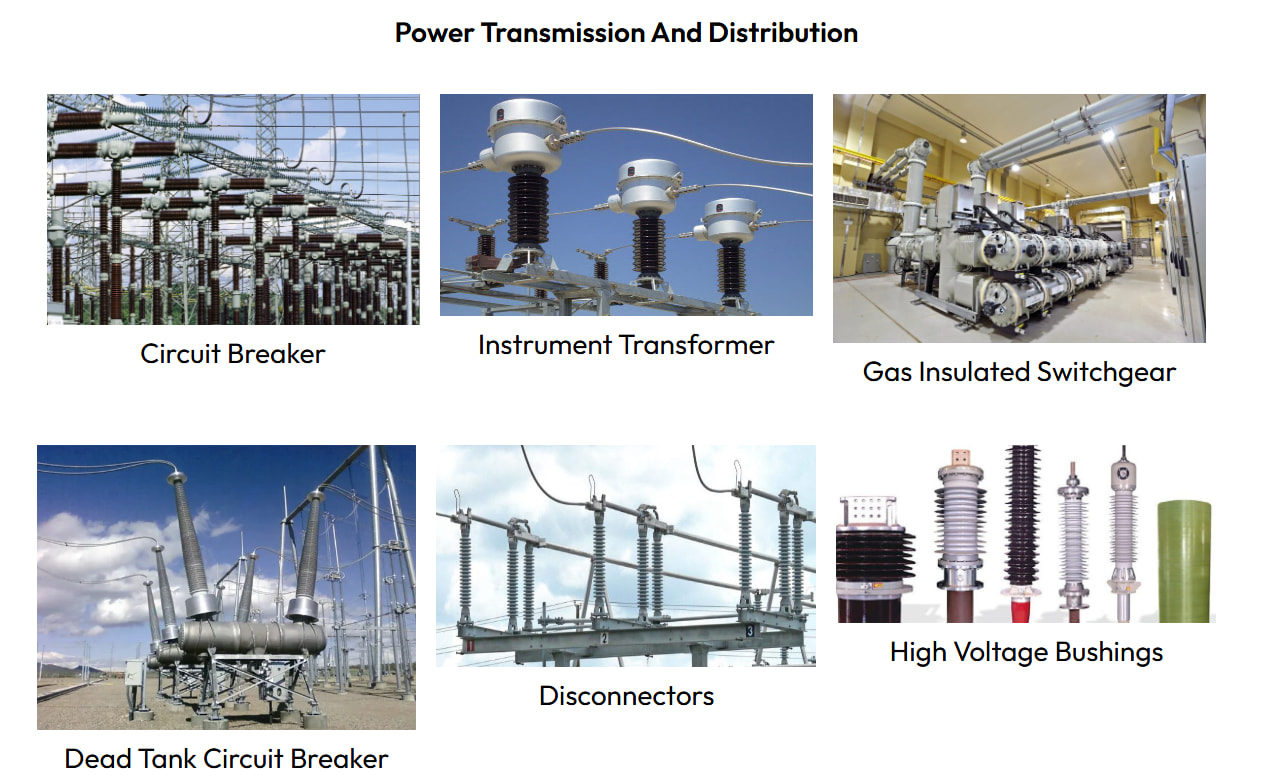
These castings have relevance beyong GIS- few more use cases shown in the picture below: Instrument transformers, Circiut breakers, Dead Tank Circuit Breaker, Disconnectors, and High Voltage Bushings.
-
Approval cycle with OEMs:? material spec sign-off → first-article inspection → full dimensional + metallurgical validation (spectrometer chemistry, density index, tensile, hardness) → NDT (X-ray/ultrasonic) → then the part goes into the OEM’s own type test (dielectric, thermal, mechanical endurance, internal-arc) under IEC 62271-203. Only after the
platform passes with your casting in it are you a qualified source. Swastika mentioned that a new supplier can take as long as 2-3 years just for commercial supply to these OEMs. -
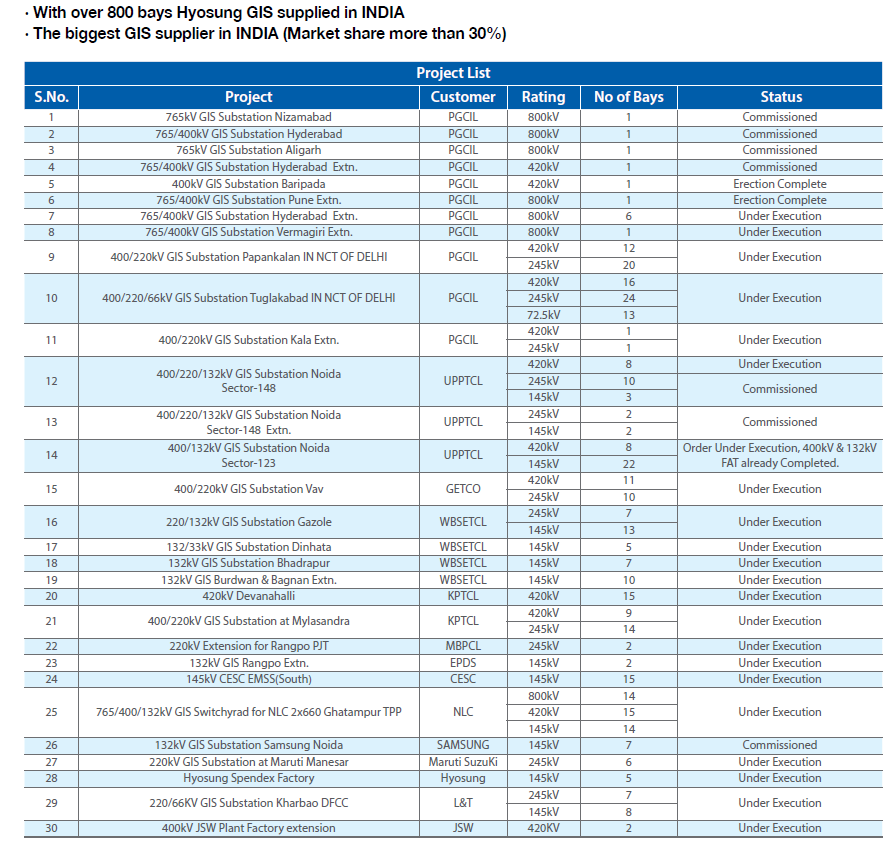
Who’re the clients??: They’re approved supplier to Hitachi and Siemens globally. Trench is global giant which they’ve recently onboarded. Hyusong has approx 30% market share in Indian GIS market and is a global leader in GIS. Below are the installments of Hyusong in Indian GIS market.
- IPO Details?:
- Initial Public Issue of 21,64,000 Equity Shares of face value of ₹ 10/- each of the company for cash at a price of ₹ 65/- per Equity Share (including a share premium of ₹ 55/- per Equity Share) aggregating to ₹ 1406.60 lakhs (“The Issue”), out of which 1,10,000 Equity Shares of face value of ₹ 10/- each aggregating to ₹ 71.50 lakhs will be reserved for subscription by the Market Maker to the issue (the “Market Maker Reservation Portion”)
- No Anchor Portion, No Pre IPO.
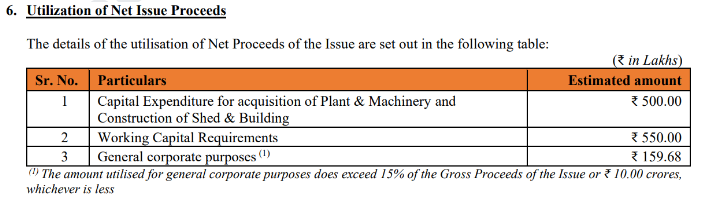
- Where did they spend IPO Money?

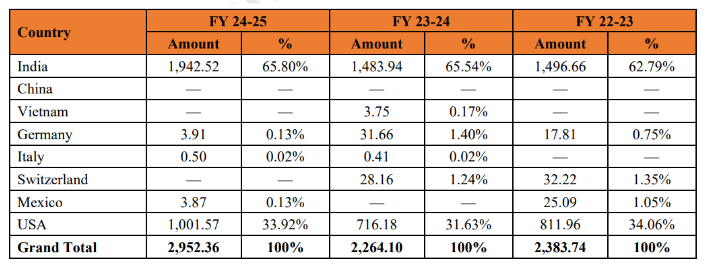
- Geography Wise Exposure?: USA is significant portion to the revenues. With newer geographies opening up- this should get diversified i feel.
- Tailwinds in the sector?:
-
India’s transmission super-cycle: The National Electricity Plan (Transmission)
frames an investment opportunity of over ₹9.15 lakh crore in transmission to 2032, to
evacuate 500+ GW of renewables. Physically that means ~191,000 circuit-km of new
lines (network from ~5 to 6.48 lakh ckm) and over 1,274 GVA of new transformation
capacity by FY32. Substations — and therefore switchgear — are the concentrated content
part of that spend with relevance to Swastika. Power Grid alone did ₹35,540 cr capex in FY26 and has a ~₹3.06 lakh crore pipeline through FY32. -
HVDC: The HVDC market is expected to grow from ~$15 bn to ~$31 bn by 2035,
with a ~₹1 trillion Indian HVDC pipeline over 2–3 years. HVDC converter stations use
large volumes of GIS and HV components. -
Localisation / China+1 / export: OEMs are actively regionalising switchgear supply
chains and localising in India which pulls castings to domestic suppliers. Also, not a lot of utilities want Chinese components on their grids.
- Why any technological changes in Gas (SF6 gas phasing out) doesn’t impact Aluminum Castings?:
- The aluminium enclosure is a pressure envelope, and it is agnostic to what gas is inside it. SF₆ → clean-air → fluoronitrile, the casting stays. If anything, clean-air designs need higher pressure or a larger diameter to match SF₆’s strength, so the casting can get bigger. The SF₆ phase-out is therefore not a threat to casting demand — it’s a re-qualification event that favours whoever is already qualified on high-pressure housings
- Clients and their demand?:
-
Hitachi Energy India (a key GIS OEM): record order backlog of ₹29,555 crore as of
March 2026, up 53.6% YoY, on FY26 revenue of ₹8,148 crore (+27.6%) and PAT of ₹988
crore (+157%), with a ₹2,000 crore greenfield transformer facility being built in Gujarat
and data centres a named growth segment. Globally they’re pushing the technology envelope: a first 1100 kV GIS order for China’s ultra-high-voltage system, manufactured at their Xiamen high-voltage switchgear facility, and the world’s first SF₆-free 550 kV GIS for State Grid China.
Moreover Hitachi Energy is investing ₹2,000 crore to build a new Large Power Transformer (LPT) manufacturing facility in Karjan (Vadodara), Gujarat. Vadodara itself is a power equipment OEM hub and Swastika has facility in Karjan only. -
GE Vernova T&D India (GIS/AIS/HVDC OEM): order backlog ₹21,456 crore as of
March 2026, ~3.5x FY26 revenue of ₹6,206 crore, including 800/420/245 kV GIS from a
private Gujarat developer, an Adani HVDC terminal station, and AIS/GIS exports to
Europe, the Middle East and Africa. GE Vernova is also investing ₹55 crore in a
Vallam, Tamil Nadu facility to make disconnectors and dead-tank-breaker drives in
India for the first time. -
Siemens Energy is coming up with an expansion in their Goa factory- GIS and Blue GIS (SF-6 Free) which goes live in December 2026. Siemens global have committed €2 billion ($2.3 billion) to expanding transformer and switchgear factories by 2028. Historically the Aurangabad GIS plant relied on cast-resin bushings and large cast aluminum housings for GIS supplied from the main plant in Berlin (SCL can gain localisation portion here as well)

But the caveat here probably isn’t proportinately linking these OEMs and their Order Books to Swastika growth in immediate future. The direct link is on the GIS only order book of these OEMs which flows down to Swastika’s numbers and that at very small scale for now.
Where exactly Swastika is currently and what the future holds for the company?:
-
Value content per bay: Swastika’s current capability allows them to make metal enclosures for Power equipments till 465 KV GIS as per my research. They supply limited components to these substations as of now with higher value parts still not being manufactured by Swastika for these OEMs. Swastika currently is largely doing Adapter Ring-145KV, Terminal Adapter, Term Plate- Spaded/Tested, CT Spacer, Tube 250mm Machined + Painted, Aluminium Alloy Casting Front Flange, and Contact Support.
They can climb up the ladder and get into higher margins and realization products for the power transmission system such as Current Transformer Housing, gear housings, Conductor pipes, terminal flanges, drive housings, Core Support Flange, Cross Housing PO Line, Busbar Housing, and Brackets etc and Pressure housings (busbar, CT, cross, mechanism), tank heads.
-
Aerospace and Defence: The company is already bidding for some defence projects in government tenders via Gem Portal. They have the capabilities to design and get into some parts but this is a long and small shot for now as things stand.
-
Automobile: Probably not the best space to be as a casting company as Auto is high volume game and margins are lower vs other sectors along with a lumpiness in the business nature. I think not the place where Swastika would like to focus upon.
-
Oil & Gas and Railways: An optionality where they already have some supplies as written above in the product list. It can scale gradually as validation and PTR works out slowly.
-
Gain more geographies from these OEMs: Textbook and probably the easiest move to expand and gain more share with a client as relationships mature and more volumes keep flowing to them. Read below discussion during the concall about the same.
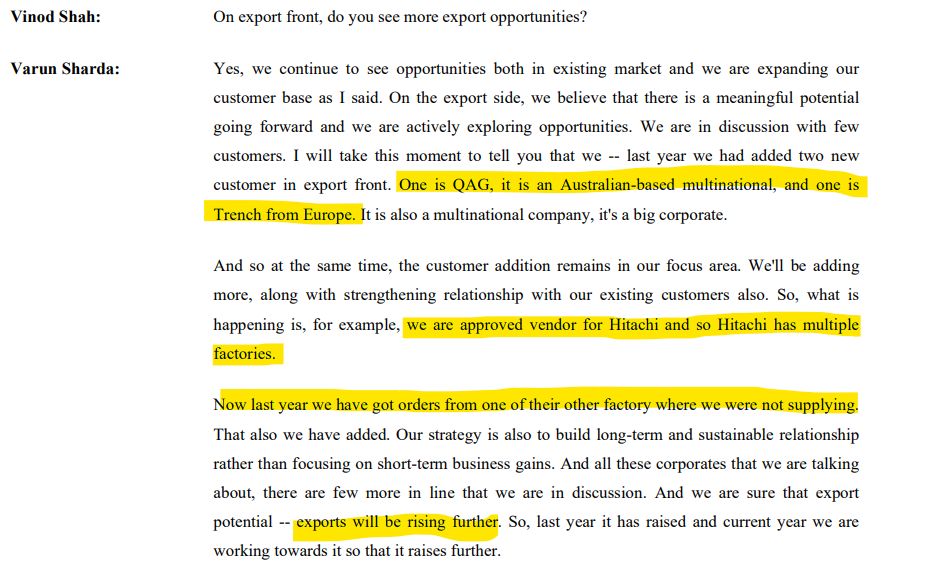
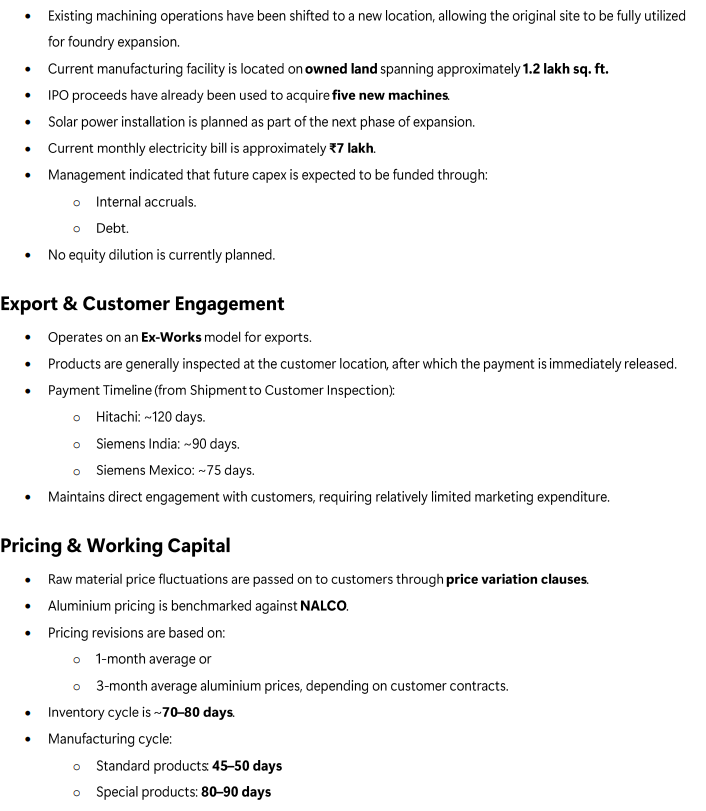
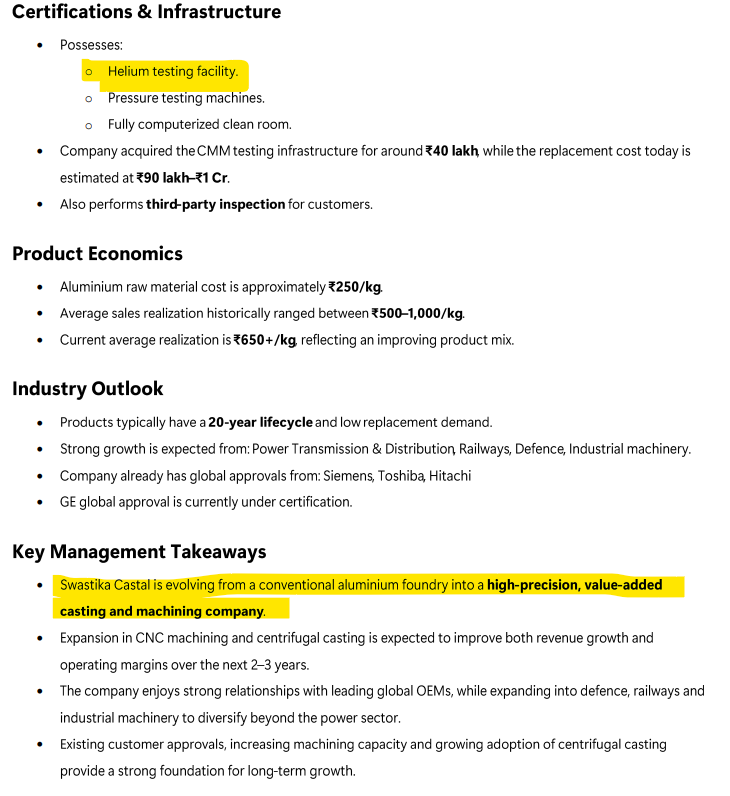
I had the opportunity to meet the management last year and also recent plant visit in Vadodara- Attaching the notes from the visit for everyone’s understanding: (Notes attached)

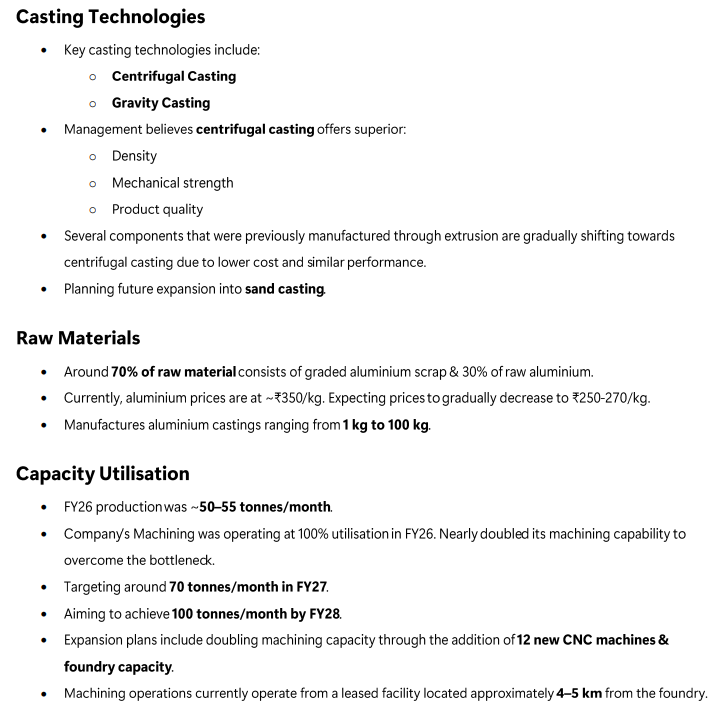
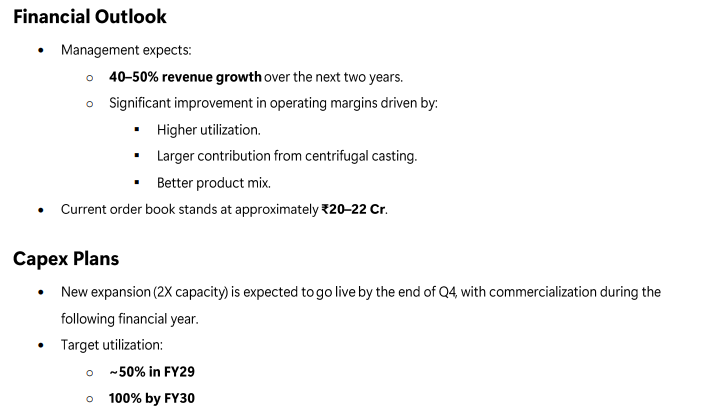
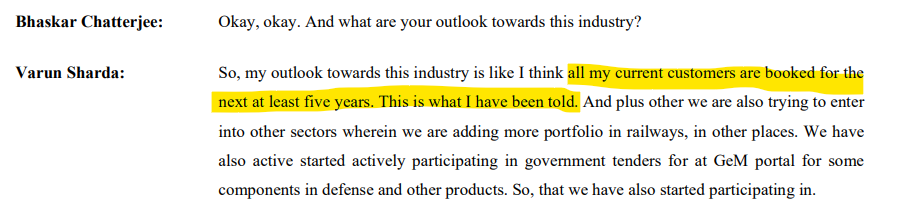
From the latest concall- Management on the clients order books for visible future.
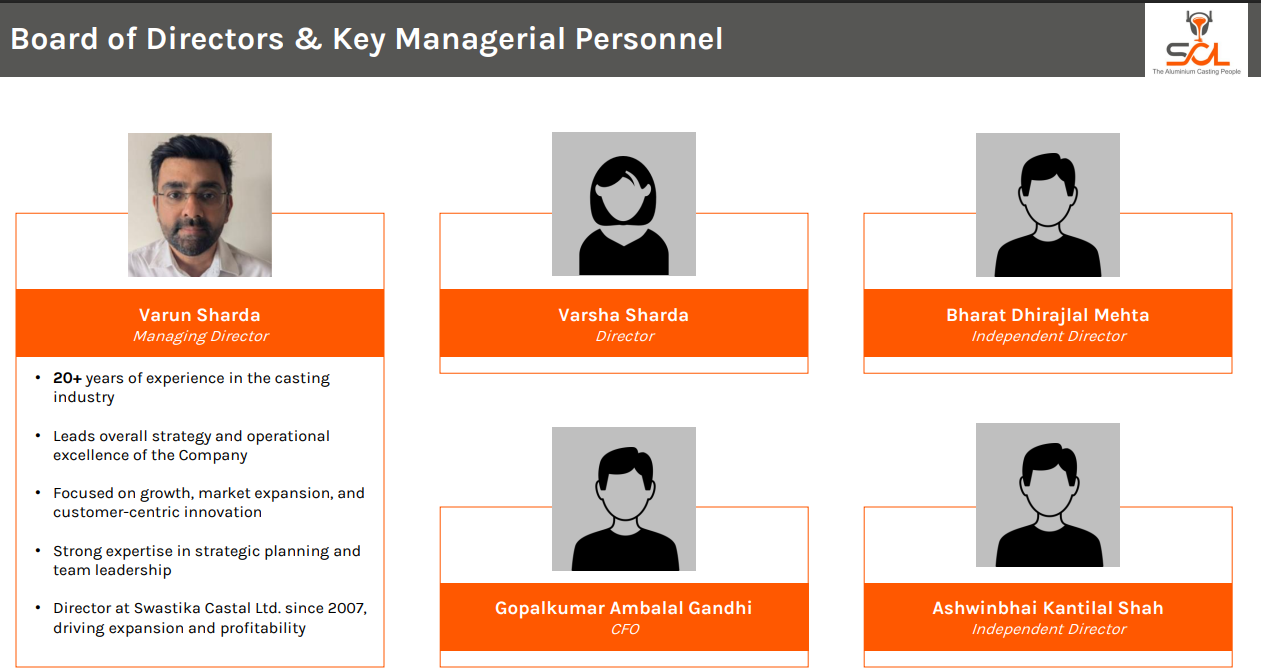
Management: Mr. Varun runs the show day in and day out while his brother Mr. Anuj Sharda takes cares of business development and marketing.
My Take and Understanding:
A not much to lose sort of bet where n number of optionalities may come into play given the tailwinds and sort of client approvals they have. A few large orders can change the trajectory and throw them in a league of biggies. Taural India (Largest Energy focused- now diversified player in India) has shown that the scale can be big and fast if the will(along with capital :) ) is there.
Taural India is an integrated aluminium casting manufacturing company established as a joint venture (tie-up) with Thoni Alutec, a leading German-Polish market leader in aluminium sand casting. Taural India signed a new Memorandum of Understanding at the World Economic Forum in Davos. Following this, they commissioned a second massive, 30-acre aluminum casting manufacturing facility in Supa, Maharashtra Taural India Bets on Exports, Localisation to Reach Turnover of ₹1,000 crore – Outlook Business
Attached below Taural’s financials from Tofler:
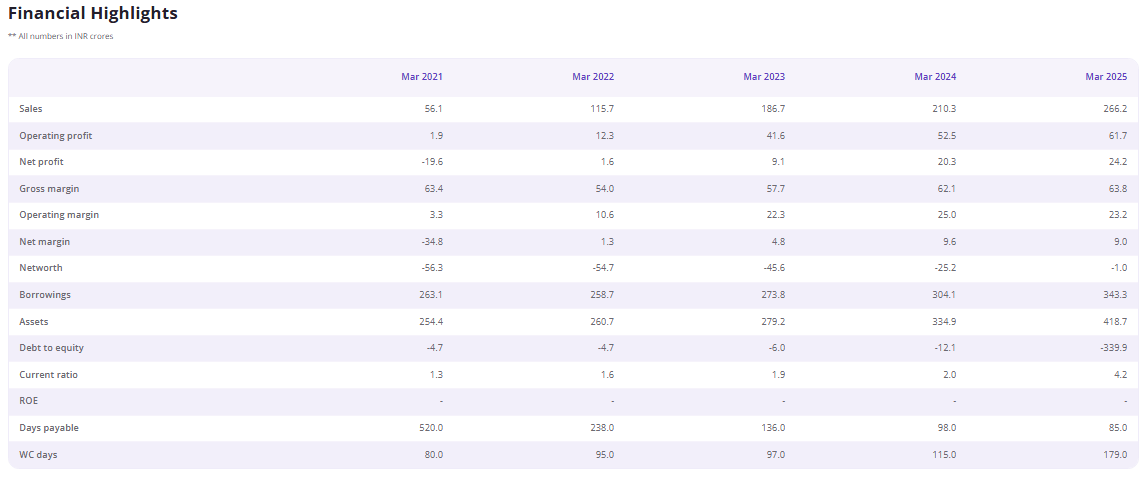
Swastika has a leader ahead to look upto what the heights may look like. The massive tailwinds, specialized products, A massive lever to grow Content per client, Content per bay and per substation is there for the taking. Global factory approvals, the metallurgical know how, the proven track record of supplying these OEMs is a decent entry barrier to be replicated even if not the strongest of the lot. The diversication beyond Power sector is another big optionality that can play out being a pure play Aluminium Component player.
If above things make sense- the company is at 70-75 Crores Market cap and 2x P/S. Margins should expand as they keep growing volumes, keep increasing in size and keep adding more value added products in the portfolio.
Risks: The most important part
- Working capital may stay stretched as exports keep gaining market share. Receivables are at 13 Crores on a topline of 35 Crores for FY26.
- Client concentration is high since OEMs are limited- Loss of a single client can send them years back.
- Diversification is yet to be seen beyond Power products.
- Company has existed for decades but the scale is still very small- something to know.
- Entry barriers are limited to approval cycles and a bit of capital requirement (Although that’s the case with many large Power equipment players tbh) and price competition from China always exists globally.
Disclosures: Invested, transactions in last few months!
Disclaimer
SME stocks carry higher risks due to their smaller size, limited operating history, and relaxed regulatory requirements. This analysis is for educational purposes only and should not be considered as investment advice. Always conduct your own research or consult with sebi registered financial advisors before making investment decisions.