Stallion India Fluorochemicals : Aggressive Capex

Stallion India Fluorochemicals Limited

About the company:

  • Stallion works in the fluorochemicals space, dealing with refrigerant gases, specialty gases, semiconductor gases, next-gen refrigerants (HFOs), and even liquid helium.
  • Their gases find applications in a wide range of industries, including automotive, pharmaceuticals, fire safety, defence, power, solar, and semiconductors.
  • So far, their focus has mainly been on formulation, blending, debulking, and distribution. Now, they’re moving into backward integration, manufacturing R-32, to cut down on imports and boost margins.

Customers:

  1. OEMs: BlueStar, Voltas, Daikin, LG, Amber, etc. (approved vendor).
  2. Aftermarket Service Providers & Distributors: which together form 80% of refrigerant sales.
  3. Industrial Users of Speciality Gases: across auto, pharma, defence, fire safety, power, semiconductor, solar, and fibre optics industries.

Details of expansion plans:

1. Rajasthan (Bhilwara) R-32 Plant

  • Products:
    • R-32 (refrigerant gas): base molecule.
    • Will also support HFO blends (R-410A, 404A, 454B, 513A, etc.) since all need 50-60% R-32.
  • Capacity:
    • Stage 1: 5,000 tons.
    • Stage 2: Another 5,000 tons (total 10,000 tons).
  • Start Date:
    • Land already acquired; construction in progress.
    • Commercial production expected mid-2026.

2. Andhra Pradesh (Mambattu) - HFO & Specialty Gas Facility

  • Products:
    • HFO refrigerants & blends (next-gen, low GWP, e.g., 454B, 513A).
    • Semiconductor gases (helium, argon, other high-purity gases).
    • Hydrocarbon handling facility also included.
  • Capacity:
    • Originally a 5-tank facility, scaled up to a 10-tank facility.
    • Also includes a semiconductor gas facility similar to Khalapur.
  • Start Date:
    • Construction ongoing in 2025.
    • Expected completion by Oct 2025; operations in late 2025/early 2026.
  • Benefits:
    • Close to Southern OEM hub (Voltas, BlueStar, Daikin, etc. nearby).
    • First mover in HFO blending before industry shifts in 2026-27 due to global quotas.

3. Maharashtra (Khalapur) - Semiconductor & Specialty Gases

  • Products:
    • Semiconductor gases, liquid helium, high-purity specialty gases.
    • Designed to handle 300-bar cylinders (latest global standard, vs. 200-bar earlier).
  • Capacity:
    • Full blending + debulking facility for semiconductor gases.
  • Start Date:
    • Civil work completed, machinery ordered.
    • Expected commissioning by late 2025.
  • Benefits:
    • Semiconductor ecosystem in India & globally is expected to grow at a strong double-digit CAGR.
    • Higher entry barrier (takes 2-3 years for customer approval once product is qualified); sticky revenue

Management:

Shazad Sheriar RustomJi started this business as a first-generation entrepreneur when he was 22 years old. He has been running and growing it successfully for the past 32 years.

Market Information:

  1. In developed products, the aftermarket is 80-85% and OEMs are 15%.
  2. In new products like HFO, OEM requirement is almost 80% or 90% and the aftermarket is 10%.
  3. As per management, India has a production capacity of 30,000 tons per year in R-32. 15K tons are used internally, and the rest is exported.

Risks:

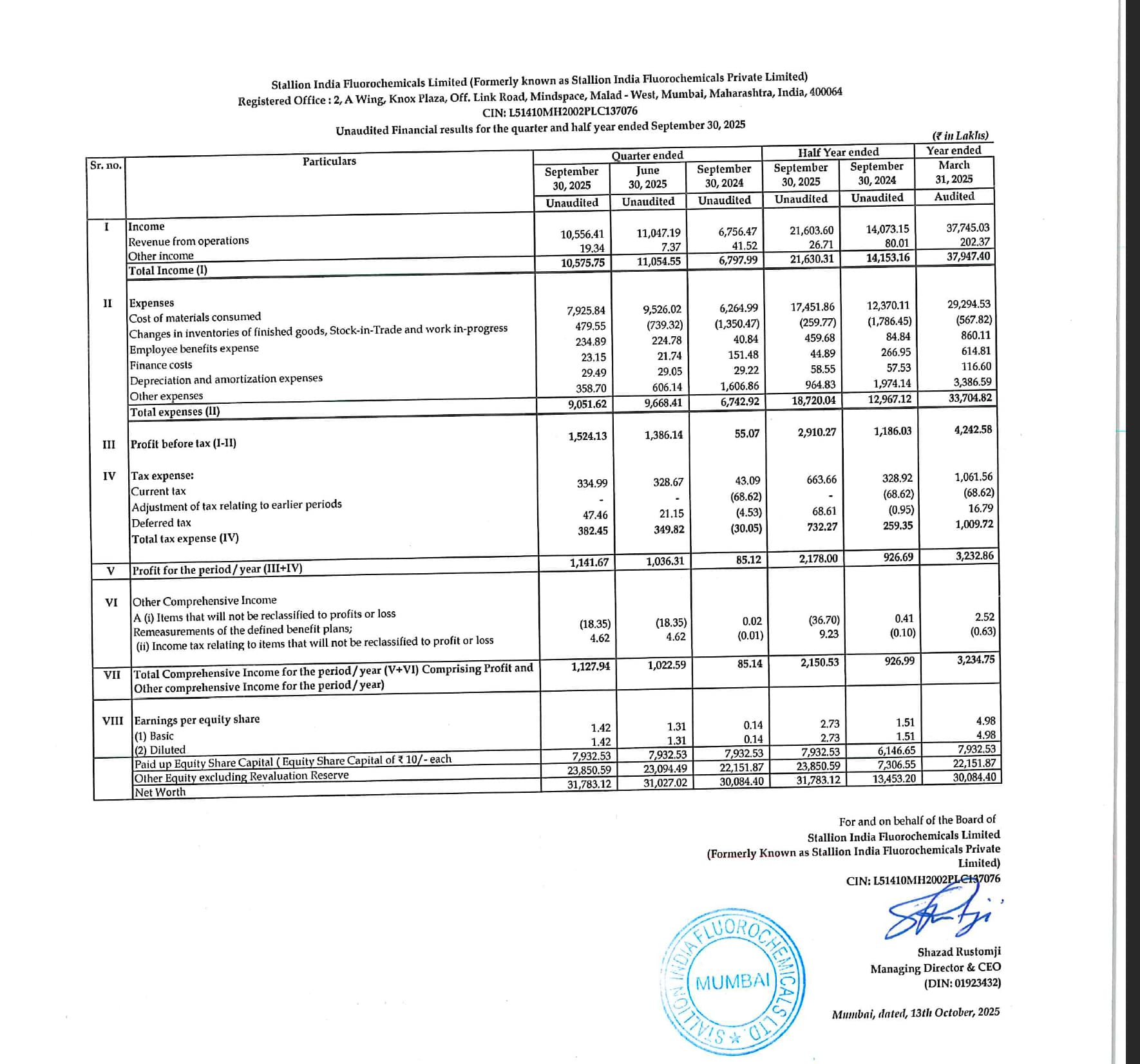
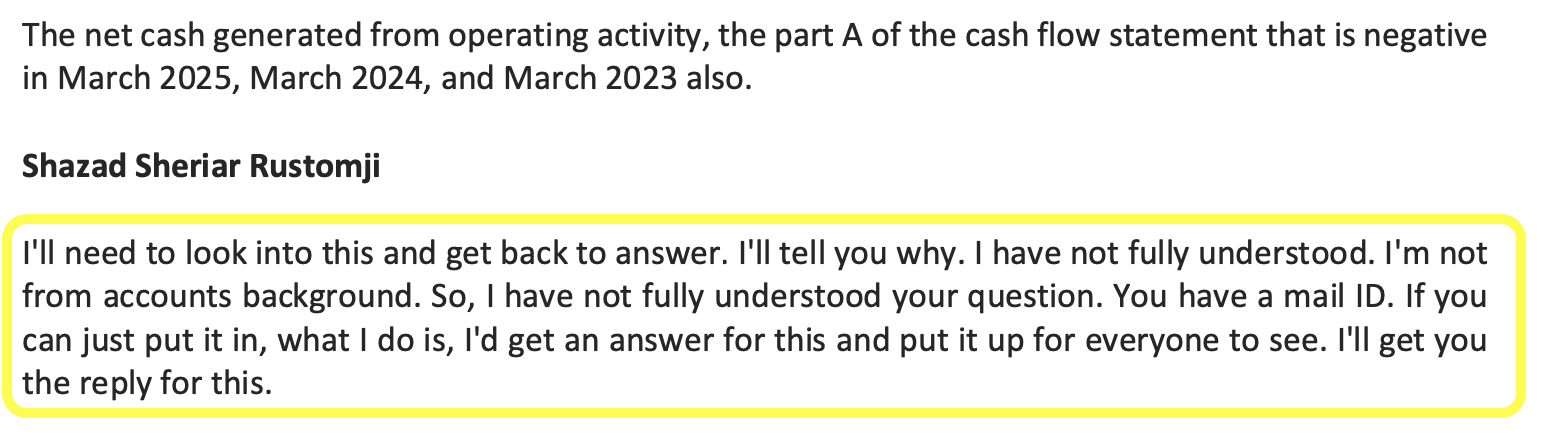
  1. Negative cash flows in the last three years
  2. The company has never done molecule manufacturing, needs to be seen if they can execute.
  3. A lot of company money is tied up in inventory and receivables, and with such aggressive plans, it might face a cash crunch.
  4. Management gave a below response when asked about negative cash flow
Investment Thesis:

  1. Increase in PAT margins to 17-18% because of backwards-integrated manufacturing.
  2. The company has an ambitious target of 2500 cr topline by 2030.
  3. Even if the company achieves 2000 cr topline at 15% Net Profit Margin, with a modest PE of 20, it will have 6000 cr MCAP. Roughly 6x from here. A 43% CAGR return in 5 years.

Thanks to @satishwe for sharing this company idea.

Current MCAP: 1154 cr
Disclosure: Invested with a small allocation

21 Likes

HFO Adoption: Where Does India Stand?
Present Status:

India is still primarily using HFCs (such as R-32, R-134a, and R-410A), but HFO usage is emerging, especially in commercial/industrial projects and some OEM offerings.

The government completed the phase-out of HCFCs by January 1, 2025, and India’s HFC demand is currently low, but expected to accelerate rapidly with cooling demand growth and regulatory phase-downs.

Policy and Timeline:

India ratified the Kigali Amendment and is obliged to phase down HFCs in a staged manner:

Freeze HFC consumption in 2028 at a projected level

Reduction steps: 10% by 2032, 20% by 2037, 30% by 2042, and 85% by 2047.

To meet these targets, wider HFO adoption is expected during the 2025–2035 period, with explicit policies and incentives under development.

Coming to pricing

Pricing:
HFO-based refrigerants are currently priced much higher per kg relative to HFCs like R-410A or R-134a. For example, HFO-1234yf sells at roughly $75-80 per kg, about 10 times more than common HFCs ($6-8/kg), though prices are expected to decline as technologies mature and patents expire.

The price gap narrows over time with increased scale and competition, and long-term cost savings arise from improved energy efficiency and regulatory compliance.

The use of HFC dont have any restriction as of now and pricing for HFOs aren’t very attractive.
Since the company is mostly into after sales market of 80 % and only 20 % market of OEM. Wide adoption of new blends and HFOs has to be tracked closely.

Also the capex plans are bit aggressive and cut to cut. Delays and cost escalation will have negative implications wherein the CFO from operations is already negative. Very surprised my self that the prkmoter had to revert back for a simple cash flow related query. For them its more important as funding day to day activities requires real credit/cash.

They are aligned with global upcycle or if i may revival of the fluorochemicalscycle. The same has been observed from management commentary of Gujarat Fluro/SRF/Navin fluorine .

SF6 Uses and Market:

  • SF6 is primarily used as an insulating gas in electrical power industry applications such as gas-insulated substations, large voltage transformers, and circuit breakers.
  • It also finds usage in medical applications like eye surgery.
  • SF6 is used in plasma etching processes in semiconductor manufacturing for making silicon wafers.
  • SF6 has multi-application uses beyond the electrical sector, including in eye operations and other specialized industrial uses.
  • The SF6 gas market in India serves sectors including power transmission, medical, and semiconductor manufacturing.

Helium Uses and Market:

  • Helium is used extensively in semiconductor manufacturing units, fiber optic cable manufacturing, medical applications (MRI machines), scientific research, and deep-sea diving by the Navy.

  • It is critical for ultra-low temperature environments and serves as a carrier or shielding gas in testing and manufacturing processes.

  • Helium is used in fiber optics production, medical imaging, scientific laboratories, and defense applications for breathing mixtures.

  • The growth of semiconductor, solar, fiber optics, and advanced cooling sectors in India is expected to drive demand for helium significantly.

  • The Indian market for helium is presently nascent but expected to grow robustly alongside India’s developing electronics and semiconductor manufacturing ecosystem.

  • SF6 gas in India is primarily imported (>90%) from China, Taiwan, and the US. Domestic manufacturing at industrial scale is currently not available.

  • Helium gas has limited manufacturing and supply capabilities in India through specialized companies, but the market also relies on imports.

  • Import substitutes for SF6 are emerging globally (e.g., clean air switching tech), but India’s market still depends on SF6 for electrical insulation.

  • For helium, domestic extraction from natural gas fields and processing exists, but cannot meet entire demand.

Above are certain responses by perplexity ai pro.

THANKS

10 Likes

Thanks a lot for sharing a detailed feedback. The growth prospect looks promising, yet I am keen on understanding the reason behind negative operating cash flow. From the numbers, it looks like a good chunk of it stuck in receivables and inventory, therefore increasing the cash conversion days. At the same time, they are quite ambitious in growing the earnings by 30% YoY (probably this is still a conservative figure) on a currently lower margin business, of course with a prospect to improve the margin to 24%. In my view, they will have to rely on taking debt (most likely) to grow above the current sustainable growth rate.

Under those circumstances, I want to understand if they will have good cash-flows to pay off the recurring interests by optimizing on inventory and receivable days.

P.S. I have recently started learning about this business therefore I am still in initial phase of analysis

2 Likes

Yes.. company looks promising and the tone of promoter was very confident in the call.

Execution and business risks are there, but need to monitor it. If executed properly, this could be a multi bagger in making.

If we add revenues from all the proposed plants…it comes no where to 2500 cr by FY 2029. Expecting more clarity from management on the same in next call (will put up this question in next concall)

6 Likes

Let them get ready with R32 plant, its a hope trade as of now, have seen stocks pumped just based on agressive news and unrealistic growth targets and distributed there after.

11 Likes

We all know the India Semicon story is getting started and there are no doubts in the growth story , but this news provides the much needed validation on the gases sector growth story - semicon gases.
Stallion as an ancillary player also should benefit from such large players investing capital. While Linde is a large player and will be supplying majorly where volumes are large, smaller fabs and related industries with lower volume requirements could choose Stallion.

Stallion India Fluorochemicals – Core Gases & Facilities

  • Produces refrigerant and industrial specialty gases, including:
    • SF₆ and CF₄ (used as insulating gases)
    • Offers a wide blend mix: R-32, R-152a, R-410a, R-134a, R-404a, R-245fa, R-1234yf, R-227ea, R-1233zd, R-23, R-508B, R-407C, R-454B, R-507, R-407F, etc.
  • Key segments served: semiconductors, automotive, pharma, fire-fighting, HVAC, refrigeration, aerosols, glass manufacturing
  • Facilities located in Khalapur, Ghiloth, Manesar, Panvel. Capex underway for semiconductor & specialty gas debulking/blending in Khalapur

Linde’s Dholera Facility Will supply bulk gases like oxygen, nitrogen, and argon which are critical for semiconductor fabs. Stallion doesnt not supply any of these, so there is no direct overlap or competition here. Stallion has strategically positioned itself here by planned expansion into semiconductor-grade specialty gas blending to align with ecosystem growth.

Note : I am not an expert on gases or this sector, above are only my views based on what the company and other sources have mentioned publicly. In the posts above members have mentioned concerns regarding cashflows and execution capabilities of Stallion, we have to be watchful of these while investing in this business.

DSCL : Invested and biased , added more around 130/-

19 Likes
  1. GST has been reduced on AC from 28 % to 18 %. Though in a hot country like India AC should be classified as essential appliance but this move will help in raising the overall demand.
  2. GST on electronic devices has also been reduced , this will help the industrial gases part of stallion.
  3. Lot of news flow on semicon and chips. Need to track for real execution on ground for scale and progress.
  4. Stallion is agressive capex play along with cash flows getting better.

disc : invested from lower levels

5 Likes

Has the company responded regarding the negative cash flow?

Found this one where stallion is discussed for few minutes.

Few points from the video,

  • In R32, Stallion focused on selling at lower prices and focus on large volume sales. Due to this they can snatch domestic market share from Navin Fluorine and SRF, since those companies mainly focus on export markets for better price realisation.

  • Domestically, Stallion India should perform well because:
    • They already have a strong distributor network across India.
    • They sell aggressively at lower prices.

  • Once their R32 plant comes on-stream, stallion could capture around 10–18% domestic market share from Navin and SRF.

  • Overall, Stallion India is migrating well from a trading model to a manufacturing model. In the future, it may also enter other fluoro derivatives and possibly even fluoropolymers.

Good news about anti-dumping duties (ADD):

  • SRF Limited –Last year, SRF filed an anti-dumping duty application against Chinese suppliers of R134A. That application has now been approved. So, whether the R134A is supplied by Chinese manufacturers or traders, ADD has been imposed. The duty ranges from $4.4 to $4.5 per kg, depending on the exporter.This is positive for SRF and will help its domestic performance in the coming quarters.
10 Likes

Stallion results looks good YoY, Profits up 10x , OCF and CFO improved, Working capital issues persist.


The Helium gas seems to have some geopolitics playing.

Industry & Geopolitical Context
• Helium : Strategic choke-point resolved: Until 2022, China imported 95 % of helium from U.S.-controlled firms. Domestic extraction (7 plants since 2023) cut that to < 5 % by end-2024, ending the U.S. leverage that earlier restrained China from deploying rare-earth export controls.
• Rare-earths weaponisation: With helium independence achieved, China in 2025 began curbing rare-earth and magnet-grade oxide exports, prompting Western industrialisation programs.
• Indian response: GOI placed fluorochemicals, rare gases, and semiconductor inputs under import-substitution priority; PLI frameworks under discussion for high-purity gases by FY26.
• Market growth: Indian fluorochemicals and specialty gases forecast 18-20 % CAGR (FY25-30) driven by HVAC, pharma, defence electronics, data-center cooling, and chip fabrication.

Thanks to @GourabPaul for digging on this.. I am not sure if the grade/variant of helium that Stallion could produce is same or different. Any Chemical experts could comment and correct me on this.

Coming back to Stallion on Helium play,

Value-Chain Layer Current Capability Impact
Molecule Manufacture (R-32) New Bhilwara Plant (2026) Cuts imports, secures feedstock for HFOs (50–60 % R-32 content)
Blending / Formulation Existing pan-India plants OEM and after-market distribution
Specialty / Helium Gases Khalapur + Mambattu High-margin semicon, data-center cooling
Backward Integration into HF & MDC Planned phase after 2026 Enhances cost stability
Forward Integration (OEM supply) Approved with major AC and fire-safety OEMs Stable volumes
15 Likes

Stallion India q2 fy26 Con-call notes :

Yet another high quality con-call from Mr.Shazad , this is 3rd consecutive con-call and hat-trick of sorts for me when it comes to learning, a master class on gas business by the MD & CEO.

  • Achieved 50% of the guidance of 430 crs for full year in H1 so far, while H1 is weaker compared to H2.
  • Bilwara : 10,000 Metric Tonne R32 manufacturing facility will provide backward integration and strategic control over the most critical raw material, ensuring cost competitiveness and supply reliability for the company. The plant is still under development.
  • Mambatu: Its the first operational site and will enhance the blending and debulking capacity for HF4 refrigerants and specialty gases while also adding semiconductor and helium processing capabilities.
  • Kalapur : Expanding the Kalapur facility to strengthen the footprints in liquid helium and high purity semiconductor gases targeting India’s emerging electronic solar and fiber optic industries. These sectors are expected to grow at double digit CAGRs through the next decade.
  • With six facilities, four operational and two upcoming, a robust pan-India distribution network and expanding product portfolio spanning over 40 gases and blends, Stallion India Fluorochemical is well positioned to capture the opportunities arising from India’s industrial transformation.
  • Company remains committed to building a fully integrated fluorochemical facility with sustainability and scale to deliver enduring value.
  • Phase 1: would not be fully backward integrated in the second phase it would be fully backward integrated so in the first phase stallion would use AHF and MDC for manufacturing R32.

Some background reg Kigali Amendment:
It is a 2016 global climate accord under the Montreal Protocol, signed in Kigali, Rwanda, to phase down the use of hydrofluorocarbons (HFCs) refrigerant gases with high global warming potential. It requires each country to cap and gradually reduce HFC production and imports based on an average of baseline years (for India, 2024–2026) starting in 2028, aiming for an 80–85% cut by 2047. The policy encourages industries to shift to low-GWP alternatives such as HFOs (hydrofluoro-olefins) and natural refrigerants, driving changes in companies like Stallion India Fluorochemicals that are investing in next-generation eco-friendly gases.

  • On the replication quota that the Indian government will allocate : The government will design India’s refrigerant quota framework in 2027 and apply it from 2028.No notification or modalities exist right now; only the broad Kigali Accord structure guides expectations.Baseline quota = average of FY24–FY26 import + production + consumption; that average fixes each company’s entitlement. Quotas will be tradable, similar to carbon credits, and can be exchanged both within India and internationally.Entities without quota must purchase rights from holders. Example, Daikin in Europe expanded by buying Solvay, mainly for its refrigerant quotas. Future valuation of companies will incorporate the monetised value of these quotas once the regime begins.

  • On Helium gas : Its a naturally available product no one can manufacture it. It can only be refined to get the needed purity. Largest natural sources are USA, Qatar and Russia.Helium is a small and light weight molecule and hence cant be transported in gas form as it will get expensive to do that. It will be transported in liquid forms in special isotanks and helium will be in liquid form at ‐257°C only. These vacuum tanks have a layer of liquid nitrogen which is at -200°C this slows down the evaporation rate of helium and allows it to be in liquid state for that 1 month of transit.It’s used for instruments, in fiber optic manufacturing, semiconductors, MRI machines, in the navy where you go for ultra deep sea diving.The iso tank that carries the liquid helium costs about 10 crore rupees just the empty iso tank. Semiconductors need 6 N handling at purity that is 99.99999 %. The plant has been revamped and will only be having 300 bar systems an upgrade from 200 bars , that gives 50% extra capacity to transport.

  • On HFC : The company currently sources MDC (methylene dichloride) domestically, as there is a glut of supply in India, while Anhydrous Hydrofluoric Acid (AHF) will be sourced both locally and internationally, excluding China, using swap deals and other arrangements already in discussion. Stallion’s original 2023 plan included a 15,000-ton AHF plant, a 35,000–40,000-ton sulfuric acid plant, and a 10,000-ton R-32 plant, with extensive reports and quotations completed. That project was delayed about 1.5 years due to IPO timelines, causing them to defer AHF integration. The current Bhilwara phase will only commission the R-32 facility (10,000 TPA in one phase instead of two 5,000-TPA steps) within 9 months. The 2nd phase will later add AHF and MDC manufacturing, which could add about ₹500 crore in revenue at the same 20 % PAT margin, since in-house production will replace higher-cost purchases and enhance profitability.

  • On Semiconductor Gases : Stallion’s current R-32 project is the foundation for entering HFO manufacturing by 2028, since R-32 is the key component in HFO blends and will remain vital for India’s refrigerant industry for the next two decades. Backward integration into AHF will follow, giving control over a restricted raw material and enabling production of 2,000–3,000 tons of electronic-grade AHF for the semiconductor sector. MDC will also be integrated later because both are required for R-32 and the precursor to CTC (Carbon Tetrachloride), which in turn feeds HFO production. Together, these steps create a fully integrated fluorochemical chain like Stallion’s global peers. After R-32, the company plans small 2,000–3,000 TPA semiconductor-gas molecules to extend into the fluorine specialty space. Such products will undergo a two-year qualification process with semiconductor customers like Tata, but successful approval will secure high-margin, low-competition business. Diversifying across fluorochemical segments—HFOs, helium, and semiconductor gases—will also balance cyclicality, providing steady growth even if one segment faces downturns.

  • Semiconductor-gas qualification will begin only after the new facilities are operational, because qualification requires proof of purity and reliability. These 3 are the prerequisites:

  1. Testing capability – the company must build its own in-house semiconductor-grade lab capable of 6N purity (99.99999 %) testing, since no Indian lab can do this today; the lab will be NABL-accredited and use imported standards.
  2. Plant capability – production systems must maintain that purity level.
  3. Cylinder and raw-material quality – helium will be Stallion’s own product; other gases such as silane (SiH₄) or NF₃ will be sourced from qualified suppliers and further certified internally.
    Once Stallion manufactures such gases itself, in-house qualification will yield the real profit.
  • On HFO quotas, quotas are fixed once allotted and only decrease over time, hence Stallion is securing capacity now. The quota regime will push manufacturers from high-GWP refrigerants (like R-32, GWP ≈ 600) to lower-GWP HFOs/HFO blends (GWP ≈ 150–300). Companies wanting to expand output must either switch to low-GWP gases or buy quota from existing holders, shrinking total GWP and forcing industry transition.

NOTE : once India’s refrigerant quota regime starts under the Kigali framework, the total GWP cap will apply to all fluorocarbon products, including HFOs. So even though HFOs aren’t being phased out globally, their production or import in India will still consume part of a company’s allocated GWP quota, making them effectively regulated under the same system.

  • On the Bhilwara expansion timeline, the project to take 9 months as Stallion removed long-lead units (AHF, sulfuric acid) from the first phase; R-32 construction alone would normally take 12–15 months but can be completed faster with double shifts.

  • On R-32 : India’s current R-32 demand is around 16-18,000 tons per year, while domestic manufacturing capacity after Stallion’s plant comes online will total 30–40,000 tons. Oversupply is not a concern as exports form the main profit driver and the air-conditioning and refrigeration market is expanding 15–20% annually, which will quickly absorb capacity. Globally, all next-generation HFO blends contain 50–60 % R-32, so as HFO use rises, R-32 demand will rise too. Also China controls 85–90 % of global capacity and effectively sets world prices: if China raises its price, global prices rise. Because China is shifting earlier to HFOs, its R-32 capacity will contract one phase before India’s, tightening supply.

Expansion and Integration Roadmap

Facility Focus/Capability Capex & Timeline Revenue/Margin Potential
Bilwara, Rajasthan (Upcoming) 10,000 metric ton R32 manufacturing facility. Focuses on backward integration and strategic control over critical raw materials. Requires a minimum of 200 crores in capex. Timeline is compressed from 18 months to 9 months by removing AHF/sulfuric acid plant work. Expected to be operational by July 2026. Company is funding initial work through internal accruals. Peak revenue potential is between 500 to 700 crores by FY28. Expected PAT margin of 22-24% for this manufacturing activity.
Mambatu, Andhra Pradesh (Upcoming) Enhances blending and debulking capacity for HF4 refrigerants and specialty gases, adding semiconductor and helium processing capabilities. Project scope enhanced 2.5 times. Revised capex increased from 20 cr to 20–30 cr (funded by internal accruals). Expected commissioning is February. Expected year-1 revenue is 50 cr. The target customer base is 100% domestic.
Kalapur Facility (Expansion) Strengthens footprints in liquid helium and high purity semiconductor gases targeting electronic, solar, and fiber optic industries. Original capex outlined was about 30 cr. Expected to be operational by January. Plants are being completely redesigned to handle 300 bar helium systems (upgraded from 200 bar) to reduce transport costs by 50%. Expected year-1 revenue is 50 cr.

Note : Please refer to the concall recording and company transcript for full info, I am not from this industry and might have made some errors in understanding the business.
DSCL : holding and no transactions in recent months.

19 Likes

An interesting report from Prabhudas on R32:

2 Likes

7 Likes


Promoter has sold 2% stake at average of ~280/- going by the dates of transaction ( also ₹45.74cr/16.2L shares ≈ ₹282/share).
I find this as an strong positive intent by promoter to speed up execution timeline with his own money rather than diluting or taking debt.
Since the loan is given at 0% interest, as a retail shareholder I would not have much complaints.
Tax considerations at LTCG rates promoter already lost 12.5% or ~5.8 Cr by this transaction.

10 Likes

looks fishy..
be careful guys !!!

@Shani Can you please explain what you feel fishy here ?

Found one of twitter handle (the opportunisinvester) Stallion vidya fluro chemical
So the promoter sold a large qty of shares
He says he will invest money back in the company as an interest free loan.

I did put this company in my red list long back.

Retailers should understand that when a promoter sells his shares the fund goes to his personal account and not to the company’s account..
The promoter and the company are different entities this is called the duality principle.

Almost no promoter sells his shares and gives that money back to company as int free loan.
This makes zero financial sense

  • he earns no interest on loan
  • he has to pay capital gain taxes
  • also he doesn’t get dividend because he sold his shares..

Good promoters usually go for qip
Preferential or debt route.

Now no need to abuse me…I have only shared my views..you can have your views and I can have mine,I just copy paste,may be useful for some one

9 Likes

Companies shouldn’t work based on favors by promoters.
All fund raising should be done professionally.
Selling stake is not an issue but coming up with such explanation creates lot of doubts.

10 Likes