
Sahajanand Medical Technologies Limited
About Company
Sahajanand Medical Technologies Limited (SMT) is a leading Indian multinational medical device company founded in 2001. They specialize in the research, development, manufacturing, and commercialization of technologically advanced Class III and Class C/D medical devices (the highest risk and most stringently regulated category of medical devices, usually implantable).
The company is a pioneer in the Indian MedTech space. Notably, they were the first company globally to receive European CE certification for a biodegradable polymer-based paclitaxel-eluting stent (Infinnium) in 2005. Today, they have a massive global footprint, selling products in 77 countries, and are uniquely positioned as one of the few companies from an emerging market competing directly against global giants like Abbott, Medtronic, and Boston Scientific in the highly consolidated cardiovascular device market.
Class III and Class C/D medical devices?
-
Class III and Class C/D refer to the regulatory classifications for the highest-risk, most complex medical devices. Because medical devices vary wildly—from simple bandages to artificial hearts—regulatory agencies worldwide categorize them by risk level to ensure patient safety.
-
Different regions use different naming systems for their risk categories:
-
Class III: This is the classification used by the United States (FDA) and Europe (MDR) to denote the highest-risk medical devices.
-
Class C and Class D: This is the classification system used in India (CDSCO).
-
Class C represents moderate-to-high risk devices.
-
Class D represents the highest risk devices.
-
What is the business model of the company?
SMT operates a vertically integrated, R&D-driven MedTech business model focused on “cost arbitrage combined with clinical excellence.”
-
R&D & Clinical Validation: Unlike generic pharma, MedTech is IP-led. SMT invests heavily in R&D (approx. 8-9% of revenue) to develop proprietary technology. Crucially, they invest in massive, global clinical trials (like the TALENT trial published in The Lancet) to prove their products are as safe and effective as those of global MNCs.
-
Cost-Advantaged Manufacturing: They manufacture entirely in-house across India and Thailand. By leveraging the lower labor, R&D, and manufacturing costs in these regions, they produce high-quality devices at a fraction of the cost of their Western peers.
-
“House of Brands” Strategy: They build strong, recognizable product brands (e.g., Supraflex Cruz, Hydra) that are endorsed by Key Opinion Leaders (KOLs) and top cardiologists globally.
-
Go-to-Market Strategy: They use a tiered distribution model:
-
Direct Model: In key European markets (Germany, Spain, UK, France), they establish their own entities and sales teams to directly engage hospitals and win government tenders.
-
Hybrid Model: In markets like India, Brazil, and Mexico, they use their own sales force alongside local distributors to penetrate large hospitals.
-
Distributor-Led Model: An asset-light approach for 39 other countries, maximizing reach with minimal overhead.
-
How does the company make money?
SMT generates revenue through the sale of consumable cardiovascular implants and related surgical accessories to hospitals, clinics, and government healthcare systems.
-
B2B Sales & Tenders: In developed markets like Europe, they make money by winning large Group Purchasing Organization (GPO) contracts and government tenders, offering top-tier clinical outcomes at competitive prices.
-
Direct Hospital Sales: In India and emerging markets, their sales teams sell directly to large hospital chains (e.g., Narayana Hrudayalaya).
-
Recurring/Volume-based Revenue: Because these are consumable, single-use devices used in life-saving procedures (like angioplasties or valve replacements), revenue is highly recurring and scales directly with the global increase in cardiovascular disease and aging populations.
What are the products and services the company makes?
SMT’s product portfolio is divided into two primary high-barrier-to-entry verticals:
1. Vascular Intervention (VI) Devices: Used to treat blockages in blood vessels (Coronary Artery Disease).
- Drug-Eluting Stents (DES) - Supraflex & Supraflex Cruz:
Their flagship product. It is a highly flexible, ultra-thin metallic mesh tube coated with a drug (Sirolimus) and a biodegradable polymer to keep coronary arteries open. Coronary artery disease, the most common type of heart disease, is a condition characterized by narrowing of the coronary arteries that carry blood to the heart.
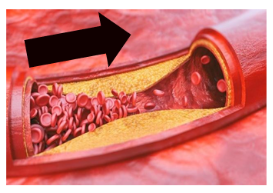
1. The Problem: “Clogged Pipes” (Coronary Artery Disease)
-
What is happening: Over time, fat and cholesterol from our diet can stick to the inside walls of the blood pipes (arteries) that feed the heart.
-
The “Gunk”: This sticky build-up is called plaque. (The bottom image in the first picture shows a clean red pipe slowly getting clogged by yellow gunk).
-
The Result: When the pipes get narrow or blocked, the heart doesn’t get enough blood. This causes chest pain (angina) and can lead to a heart attack.
2. The Solution: “Clearing the Pipe” (Angioplasty & Stents)
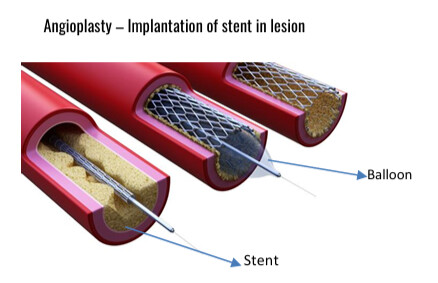
To fix this without doing major open-heart surgery, doctors use a clever, minimally invasive procedure:
-
The Balloon: Doctors thread a tiny, deflated balloon into the clogged pipe. Once it reaches the blockage, they inflate the balloon. This squashes the yellow gunk against the walls, opening the pipe back up.
-
The Stent (The Cage): Just squashing the gunk isn’t enough; the pipe might collapse again. So, they leave behind a tiny, expandable metal cage called a Stent (shown in the middle picture). This cage acts like a scaffold to permanently prop the pipe open so blood can flow freely.
3. The Company’s Product: The “Supraflex Cruz”
SMT’s flagship product, a specific type of stent called the Supraflex Cruz.
-
It has medicine on it (Drug-Eluting): When you put a metal cage in the body, the body tries to heal over it, which can accidentally cause scar tissue to clog the pipe again. To prevent this, SMT’s stent is coated in a special medicine that slowly releases into the pipe to stop scar tissue from forming.
-
It is highly flexible: Blood vessels aren’t perfectly straight; they are twisty and curvy. The bottom image shows that the Supraflex Cruz is incredibly bendy (“highly deliverable”), making it much easier for doctors to navigate it through complex, twisty pipes to reach the blockage.
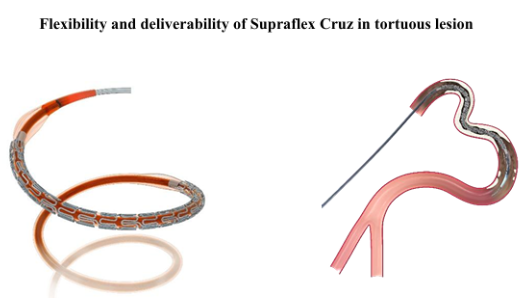
They have tested it on thousands of people in massive medical studies (with names like TALENT and TUXEDO). The studies proved that SMT’s stent is highly safe and effective, even for very elderly patients (80+ years old) with complex heart issues.
B. Coronary Drug-Coated Balloons (DCB) - Sironity:
A balloon that delivers an anti-proliferative drug to the artery wall and is then removed, leaving no metal implant behind.
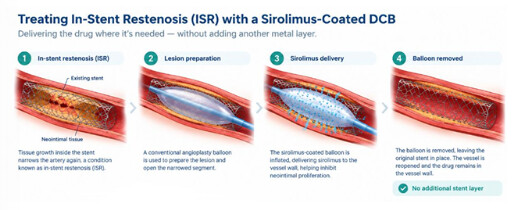
The Problem:
Sometimes, a metal stent (the wire cage used to prop an artery open) gets clogged again because the body grows scar tissue inside it.
It’s a team player, not a replacement: The balloon does not replace regular metal stents. Metal stents are still the main tool doctors use. The balloon just gives doctors a special option for specific cases where leaving metal behind is a bad ide
How the Balloon fixes it:
Instead of shoving a second metal cage inside the first one, doctors use this balloon.
-
They insert the balloon into the clogged stent and inflate it.
-
The balloon squashes the blockage and presses the medicine directly into the artery walls.
-
The balloon is then completely removed.
Clinical Applications
1. Fixing clogged stents (In-stent restenosis/ISR): As mentioned before, if an old metal stent gets clogged, major medical guidelines officially recommend using this balloon to clear it. It delivers the medicine without stacking a second metal cage inside the first one.
2. Tricky new blockages (De novo lesions): Doctors also use it for brand-new blockages in places where a metal cage just won’t fit well. This includes very tiny blood vessels or places where a blood vessel splits into two branches.
Testing and Approval:
-
Proving it works: SMT is currently doing a 1-year study on 164 patients in India to track how safe and effective the Sironity balloon is.
-
Approved for use: The Indian government’s medical regulator (DCGI) officially approved the Sironity balloon for use in 2025.
The Result:
The medicine stays behind to stop the scar tissue from growing back, but no extra metal is left permanently inside the heart. It is also very useful for clearing blockages in blood vessels that are too small for a metal stent.
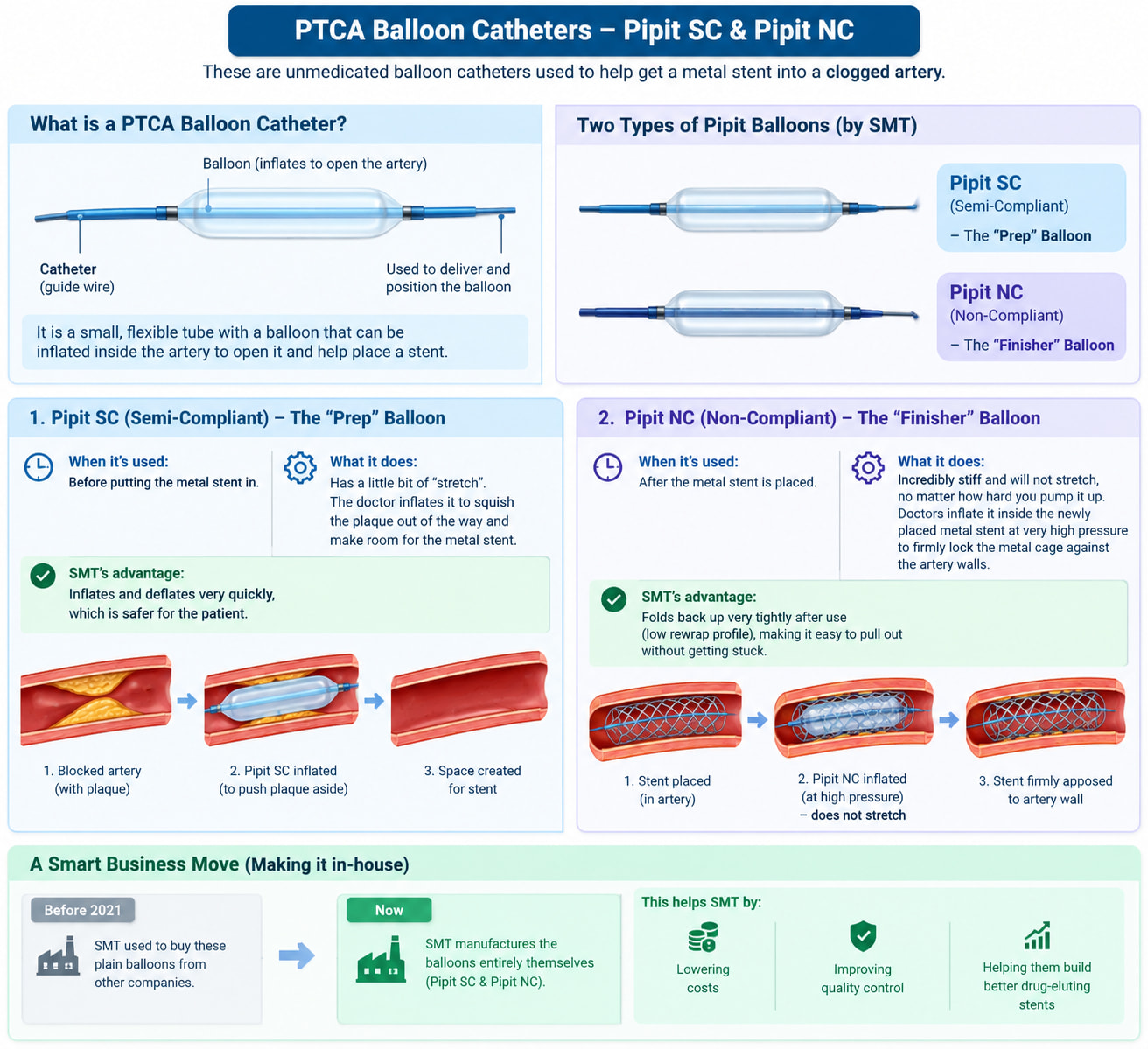
C. PTCA Balloon Catheters - Pipit SC & Pipit NC:
These are the standard, unmedicated balloons doctors use as “tools” to help get a metal stent (the wire cage) into a clogged artery. SMT makes two different types of these tool balloons, under the brand name Pipit:
1. The “Prep” Balloon (Pipit SC - Semi-Compliant)
-
When it’s used: Before putting the metal stent in.
-
What it does: This balloon has a little bit of “stretch” to it. The doctor inflates it to squish the plaque out of the way and make room for the metal stent.
-
SMT’s advantage: It inflates and deflates very quickly, which is safer for the patient.
2. The “Finisher” Balloon (Pipit NC - Non-Compliant)
-
When it’s used: After the metal stent is placed.
-
What it does: This balloon is incredibly stiff and will not stretch, no matter how hard you pump it up. Doctors inflate it inside the newly placed metal stent at very high pressure to firmly lock the metal cage against the artery walls so it fits perfectly.
-
SMT’s advantage: It folds back up very tightly after use (low rewrap profile), making it easy to pull out without getting stuck.
A Smart Business Move (Making it in-house):
The last paragraph explains that before 2021, SMT used to buy these plain balloons from other companies. Now, they manufacture the balloons entirely themselves. This saves them money, improves their quality control, and helps them build better drug-eluting stents.
2. Structural Heart (SH) Devices:
Used to treat structural defects in heart valves and tissues.
A.Transcatheter Aortic Valve Implantation (TAVI) - Hydra:
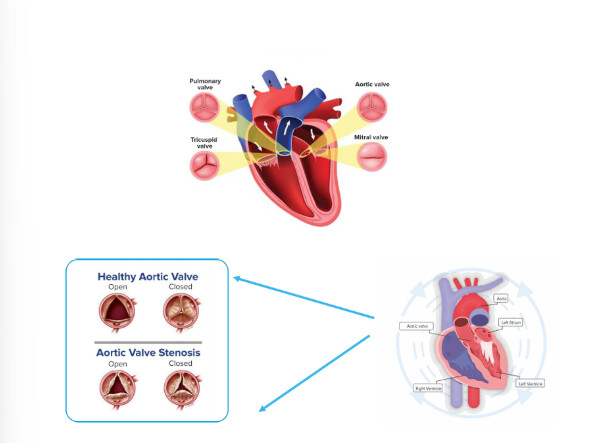
1. The Problem: A “Stiff Door” in the Heart
The heart has valves that act like one-way doors to keep blood pumping in the right direction. Sometimes, the main door (the Aortic Valve) becomes hard, stiff, and narrow. It won’t open all the way, so the heart has to work dangerously hard to pump blood.
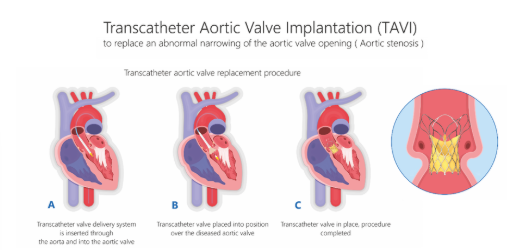
2. The Old Fix vs. The New Fix (TAVI)
-
The Old Way: Open-heart surgery (sawing the chest open to replace the valve). This is very hard on the body, especially for elderly patients.
-
The New Way (TAVI): Doctors use a long, thin tube to slide a folded-up artificial valve through a blood vessel in the leg all the way up to the heart. They expand the new valve right inside the old, broken one. No open-heart surgery required.
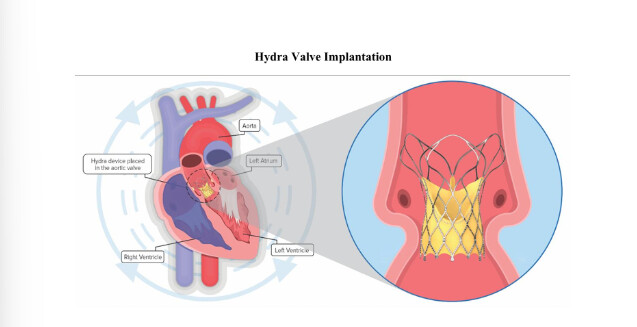
3. Hydra Aortic valve design
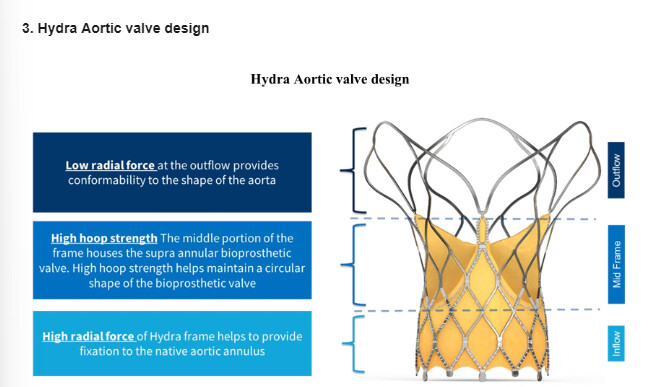
The Hydra TAVI has three sizes (22, 26 & 30 mm) to treat annulus range from 17 to 27mm. Hydra has two rows of radiopaque markers (total six) for accurate implant positioning and alignment. Hydra has a large frame size of minimum 15F for future coronary access
4. SMT’s Product: The “Hydra” Valve
This is the specific artificial valve SMT makes for this procedure.
-
What it’s made of: A flexible metal cage with real animal tissue sewn inside to act as the new “flaps” of the door.
-
Smart Design: The bottom grips tightly so it doesn’t move, the middle stays perfectly round so the flaps work smoothly, and the top is soft so it doesn’t damage the blood vessel.
-
The “Undo” Button: Its best feature is that it is “re-capturable.” If the doctor opens the valve but realizes it isn’t in the perfect spot, they can fold it back up into the tube, move it, and try again.
The Proof:
Just like their stents, SMT has run long-term clinical trials (like the GENESIS studies) proving the Hydra valve is highly safe, successful, and lasts for years in patients.
B.Occluders - Cocoon:
The Problem: “A Hole in the Heart”
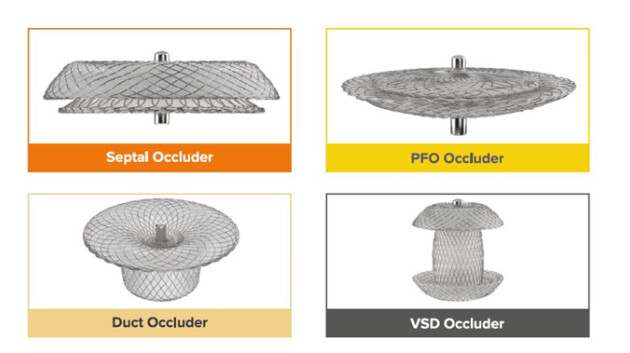
Sometimes, people are born with a hole in the wall dividing the chambers of their heart, or an extra blood vessel stays open when it should have closed after birth. This causes blood to leak into the wrong places. The diagrams show different types of these holes (like ASD, VSD, PFO, and PDA).
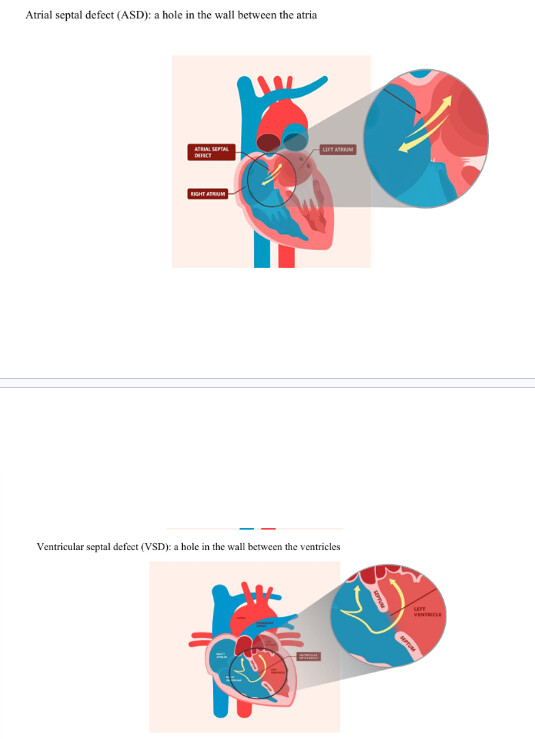

To fix this without open-heart surgery, doctors use a device called an Occluder.
-
How it works: It acts like a tiny, double-sided umbrella or plug. Doctors slide it up to the heart through a vein in the leg. Once it reaches the hole, it pops open, gripping both sides of the wall to plug the leak.
-
The Healing: Over time, the body grows natural heart tissue right over the plug, sealing the hole permanently.
3. SMT’s Product: The “Cocoon”
SMT makes a family of these plugs called the Cocoon (shown in the middle image, shaped to fit different types of holes).
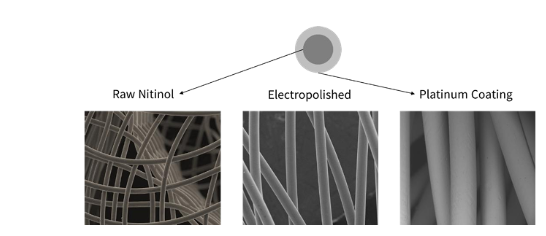
What makes the Cocoon special? (The Platinum Coating)
is a self-expandable double disc device made up of platinum covered nitinol. The wire mesh and platinum coating provide superior bio-compatible properties when compared to only nitinol and prevents corrosion of the nitinol wire frame in long-term implants.
-
No Allergies: Many people are allergic to nickel. The platinum coating hides the nickel, preventing dangerous allergic reactions.
-
No Rusting: It stops the base metal from corroding over the years.
-
Easy to See: Platinum shows up incredibly well on X-ray screens, allowing the doctor to see exactly where they are placing the plug.
The Proof: A major study of over 4,000 patients proved the Cocoon works with a high success rate, and exactly as promised—causing zero nickel allergies and no damage to the surrounding heart tissue.
3. Other products
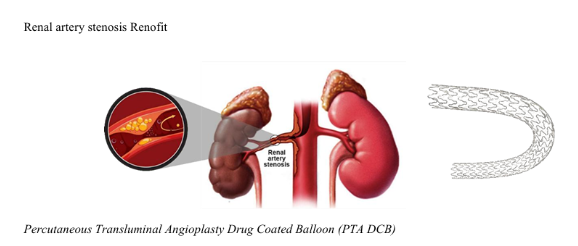
Renofit
Based on the image, here is a short and simple explanation of two products SMT makes for blood vessels outside of the heart:
1. The “Kidney Stent” (Renofit)
-
The Problem: Just like the pipes feeding the heart can get clogged with gunk (plaque), the specific pipes feeding blood to your kidneys can also get blocked (shown in the diagram). This restricts blood flow and can damage the kidneys.
-
The Solution: Renofit is a tiny metal cage (stent) specifically designed to be placed inside these kidney arteries. A balloon expands the cage to prop the pipe open permanently, ensuring the kidney gets the blood it needs.
2. The “Leg Balloon” (Peripherics - PTA DCB)
-
The Problem: The long blood vessels that run down into your legs (peripheral arteries) can also become narrow or blocked with plaque.
-
The Solution: This is a medicated balloon specifically for the legs.
-
How it works: Just like the medicated balloon they make for the heart, the doctor inflates this balloon in the leg to squash the blockage and press medicine directly into the walls of the blood vessel. The medicine stops scar tissue from growing back, and the balloon is completely removed, meaning no metal cage is left behind in the leg.
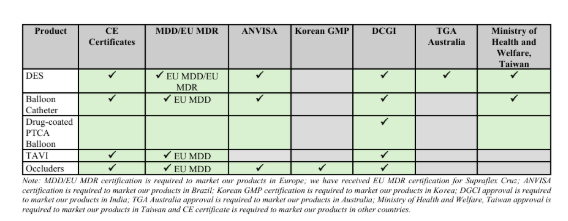
Regulatory Framework
Product Pipeline
following products in our R&D pipeline.
1. “Heavy-Duty” Specialty Balloons
-
The Problem: Standard balloons work for most clogged arteries, but sometimes the “gunk” (plaque) is rock-hard (calcified), completely blocked, or located in a tricky spot like a “Y-shaped” fork where a blood vessel splits into two.
-
The Solution: SMT is creating a line of specialized, heavy-duty balloons. For example, they have created a “POT” balloon that is specifically shaped to perfectly fit metal stents into those tricky “Y-shaped” forks without blocking the side pathways. They are currently waiting for final government approval to launch it.
2. The Upgraded Heart Valve: Hydra Elevate
-
What it is: This is Version 2.0 of their artificial heart valve (the TAVI valve we discussed earlier).
-
What’s new: They added an “external skirt” around the outside of the valve.
-
Why it matters: Think of this skirt like weather-stripping on a door. It creates a perfect seal so that no blood accidentally leaks around the edges of the new valve, and it allows the valve to easily fit into different shapes and sizes of human hearts.
-
The Status: The Indian government has officially approved the Hydra Elevate. Furthermore, the government is actually giving SMT a financial grant (₹6.97 million) to help fund real-world studies tracking how well the new valve performs in patients.
Revenue Segmentation
Based on the latest data for Q1 FY2026 (Three months ended June 30, 2026):
Product-Wise Segmentation:
-
Vascular Intervention (VI) Devices: 60.40% (Historically their core cash cow).
-
Structural Heart (SH) Devices: 16.05% (This is a high-growth, premium pricing segment).
-
Others (Traded goods, Peripheral devices): 23.55%.

Geography-Wise Segmentation:
-
Europe: 37.69% (Their largest market, showcasing strong global acceptance of their clinical data).
-
Rest of World (RoW): 38.47% (Emerging markets, LATAM, APAC).
-
India: 23.84% (Despite being an Indian company, >75% of their revenue is international, highlighting their status as a global MedTech player).

Current Manufacturing Capacity
SMT operates three highly integrated manufacturing facilities. Annualized capacities based on Q1 FY26 data:
-
Surat (India):
-
Stents: 780,000 units
-
Catheters: 660,000 units
-
Drug-coated PTCA balloons: 56,000 units
-
-
Hyderabad (India):
-
Stents: 180,000 units
-
Catheters: 600,000 units
-
TAVI devices: 6,000 units
-
Occluders: 12,000 units
-
-
Nonthaburi (Thailand):
-
TAVI devices: 3,600 units
-
Occluders: 30,000 units
-
Note: SMT currently holds a ~25% market share by volume in India for DES and has achieved high capacity utilization in older facilities, while newer facilities are scaling up.
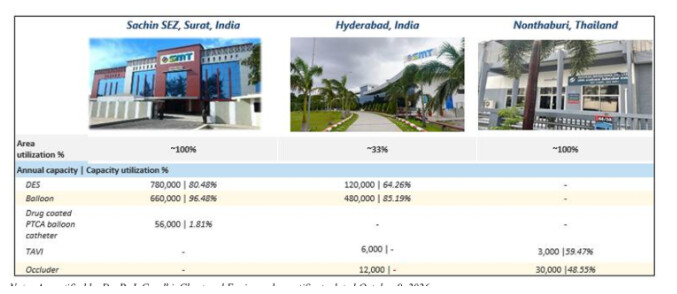
Future Manufacturing Capacity & Capex Spend
From an analyst perspective, SMT is in a highly advantageous capital cycle.
-
Available Headroom: They do not need massive, debt-fueled CapEx to grow. Their state-of-the-art Hyderabad facility is currently operating at only 33% utilization of available space. This allows them to seamlessly scale up operations to meet future demand without significant additional capital expenditure.
-
Government Grants for Capex: Instead of relying solely on internal accruals or debt, SMT is utilizing Indian Government schemes (MISRID / PLI schemes). They have received grant approvals of ₹86.70 million, ₹19.30 million, and ₹10.30 million to fund vertical integration.
-
Strategic Focus: Future manufacturing investments are focused on vertical integration and automation. They are moving the production of balloon catheters, polymer tubing, and complex nitinol processing (laser cutting, electropolishing) entirely in-house. This will drastically improve their raw material gross margins.
Primary Raw Materials and Sourcing
Because Class III medical devices require extreme precision and biocompatibility, the raw materials are highly specialized.
Primary Raw Materials:
-
Metal Alloys: Cobalt-chromium tubes (for DES) and Nitinol (a nickel-titanium shape-memory alloy used for TAVI frames and Occluders).
-
Active Pharmaceuticals: Sirolimus and Paclitaxel (anti-proliferative drugs to coat the stents/balloons).
-
Biological Materials: Bovine (cow) pericardium tissue (used to create the leaflets for the Hydra TAVI valves).
-
Specialty Plastics/Polymers: Medical-grade plastic tubing and biodegradable polymers.
Sourcing & Supply Chain Risks:
-
Highly Import Dependent: A staggering 84.01% of their raw materials (as of Q1 FY26) are imported.
-
Key Geographies: They source primarily from specialized vendors in Germany, China, the Netherlands, and Ireland.
-
Supply Chain Strategy: They rely on several single-source suppliers for critical components, which is a known industry risk. To mitigate this, SMT maintains a healthy 3 to 4 months of raw material inventory. Furthermore, their aggressive push toward vertical integration (processing their own nitinol and extruding their own plastics at the Hyderabad plant) is a direct strategic move to de-risk this imported supply chain and lower dependency on foreign vendors.
Research and development (“R&D”)
The company operates two research and development (“R&D”) facilities located in India and Thailand. In India, the primary R&D center is situated in Surat, Gujarat and is recognized by the Department of Scientific and Industrial Research (“DSIR”), Government of India. The Surat R&D facility is ISO 13485:2016 certified and in Thailand, operates a facility in Nonthaburi, which is certified under Thai GMP and holds CE certifications.R&D and clinical team is composed of qualified professionals, comprising 156 professionals (including four consultants) as of June 30, 2026.

As on the date of this Red Herring Prospectus we have been granted over 119 patents granted globally, with an additional 78 patent applications in the pipeline and five design registrations in India.
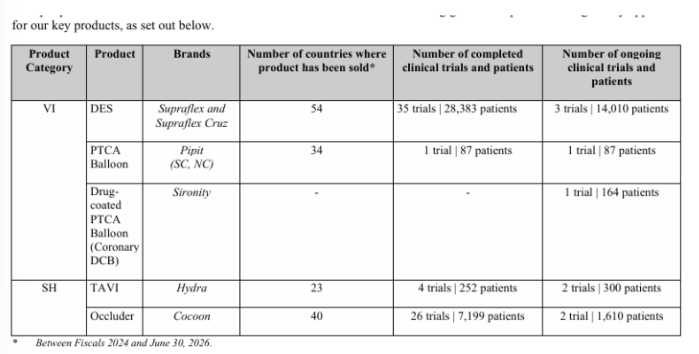
**Industry Structure**
Industry Analysis: Global and Indian Cardiovascular Medical Devices (MedTech)
Total Addressable Market (TAM) & Projections
-
Global Medical Device Market: Valued at $540.3B in 2025, projected to reach $729.8B by 2030 (6.2% CAGR). Cardiovascular devices constitute the largest segment at 12.5% of the global market.
-
Global Cardiovascular Devices TAM: Estimated at $26.3B in 2025, scaling to $37.8B by 2030 (7.5% CAGR).
-
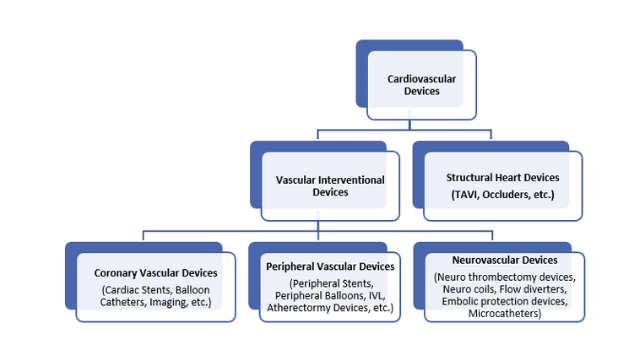
Vascular Interventional Devices (e.g., Stents/DES, Catheters, Balloons): $14.2B in 2025 to $20.7B by 2030 (7.9% CAGR). APAC dominates with a 58.6% revenue share.
-
Structural Heart Devices (e.g., TAVI, Occluders, LAA closures): $12.1B in 2025 to $17.1B by 2030 (7.1% CAGR). North America holds a 42% share but faces decelerating growth (-0.02% CAGR projected).
-
-
Indian Cardiovascular TAM (Hyper-Growth):
-
Vascular Interventional: $382.6M (2025) to $542.4M (2030) at a 7.2% CAGR.
-
Structural Heart: $53.3M (2025) to $152.0M (2030) at a massive 23.3% CAGR.
-
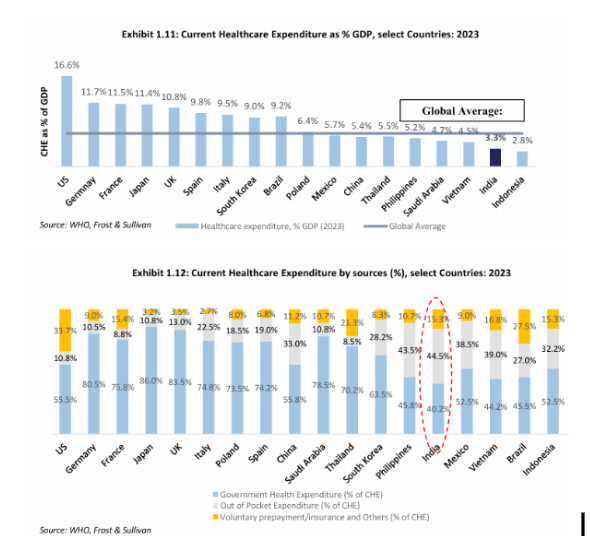
OVERVIEW OF THE INDIAN MEDICAL DEVICE ECOSYSTEM
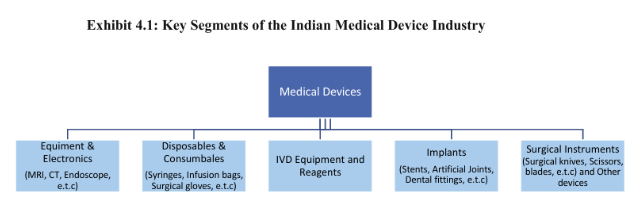
The Indian Medical Device market31 is the fastest growing segment in the Indian healthcare market, and it is estimated to reach USD 50.1 Bn by 2030 at a growth rate of 26.9% from its estimated value of USD 15.2 Bn in 2025.32 The Indian Medical device market was estimated to contribute 1.65% of the global medical device market as of 2023, and India aims to reach 10-12% in global market share within 25 years. Export of medical devices from India increased from USD 2.3 Bn in 2020 to USD 4.01 Bn in 2025 at a CAGR of 11.8%, and it is projected to reach USD 20.0 Bn in 2030 at a CAGR of 37.9% between 2025 and 2030.33 The major export countries for Indian Medical devices are the US, Germany, China, Singapore, France, Türkiye, Brazil, The Netherlands, Iran, and Belgium. India exported most medical devices to the US (USD 668.9 Mn) in 2023, followed by export to Germany (USD176.2 Mn), China (USD145.6 Mn), and the Netherlands (USD 106.5 Mn).
Classification of Medical Devices in India
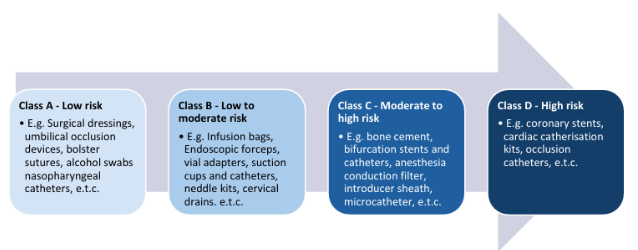
Medical devices are categorized into one of four classes under the MDR – based on increasing risk from Class A to Class D. Class A devices are low-risk devices such as surgical dressings, umbilical occlusion devices, bolster sutures, alcohol swabs, and nasopharyngeal catheters. Class B devices are low to moderate risk devices such as infusion packs, endoscopic forceps, vial adapters, suction cups and catheters, Sengstaken- Blakemore tube, feeding tubes, and gastrointestinal tubes. Class C devices are moderate to high-risk devices such as anesthesia conduction filter, introducer sheath, microcatheter, imaging catheter colonic stents, and pancreatic instruments. Class D devices are high risk devices such as coronary stents, cardiac catheterization kits, cardiovascular, intravascular diagnostic catheters, and occlusion catheters.
Product Segmentation of Cardiovascular Devices Market
Disclosure:- Not Invested