Reproducing key extracts from the presentation made by me in VP Kolkata meet last Sunday:
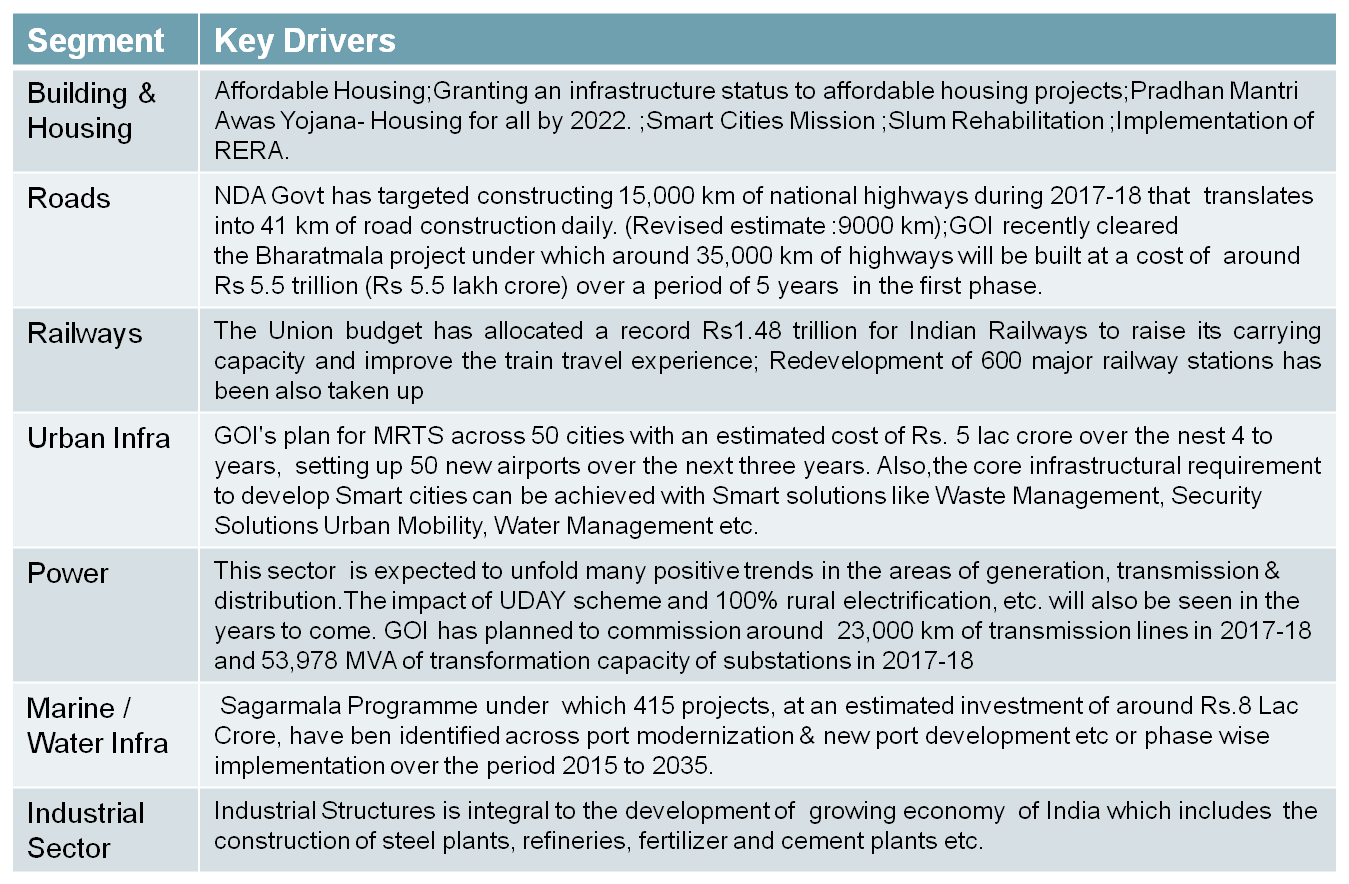
Construction is the 6th -largest economic segment in India, accounting around 8 % of the country’s GDP in FY2016-17, the second-biggest employer (after agriculture), with about 35mn people engaged, and the second-largest recipient of FDI after the services sector.
FM in Budget 2018 continued to put a strong thrust on infrastructure development by increasing Government’s estimated budgetary and extra budgetary expenditure on infrastructure to Rs. 5.97 lakh crore against estimated expenditure of Rs. 4.94 lakh crore in 2017-18
Key Positive Policy Announcements in last few years:
Premium rescheduling for stressed projects
Bidding of tenders only after 80% land has been acquired
5:25 scheme which allowed longer tenor amortisation of the loan (upto 85% of economic life) say 25 years with periodic refinancing of balance debt say every 5 year
100% exit for developer after two years of project completion both for pre-2009 and post- 2009 projects
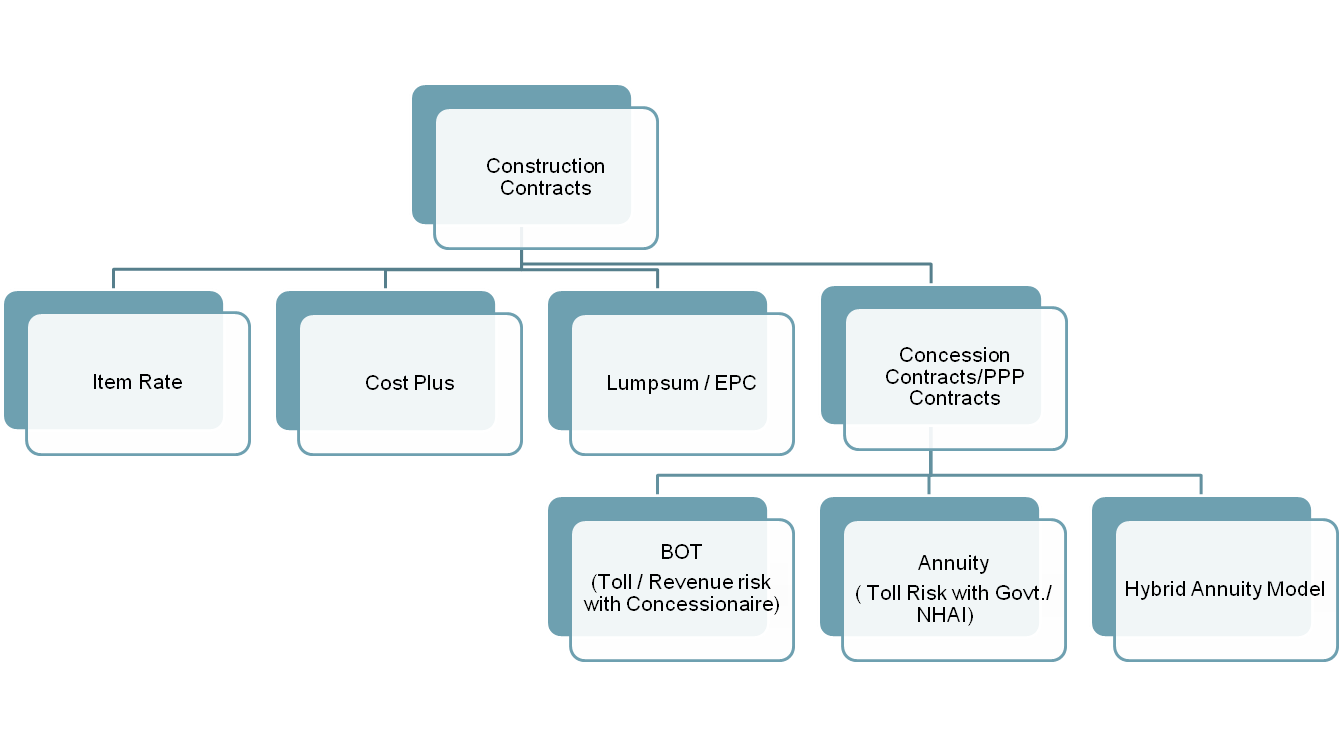
Cabinet approves Hybrid Annuity Model (HAM) for construction of highways
Government’s decision to pay 75% of arbitration amount to construction companies which have won arbitration awards against PSU .(HCC has been a key beneficiary)
Aggressive Bidding in Projects: Aggressive bidding in earlier BOT Projects had put majority of the grand old names in the sector in Financial Distress. This remains the major risk for all the players in Infra Sector also and key monitorable. Delay in Execution of the Projects: Project delays are quite normal in construction Projects (e.g. due to delay In LA etc) which result into imposition of Penalties by Client, increased interest Burden and overhead. Delay in Payment by Client: This results in High Working Capital Requirement and consequential higher Interest Cost Excess Leverage : BOT Projects require significant amount of debt funding. Hence any deviation from planned execution will lead to ill effects of leverage . Political Risk/ Influence : Public Sector being the client in majority of the cases , one has to live with it.
Discl: I am not a SEBI Registered Investment Advisor/ Research Analyst.I am invested in some of the Companies mentioned in this Presentation .
Will post more insights into the industry; Views invited
Construction, Development, Real Estate and Property Development are great sub-sectors. Problem is finding the undervalued asset. I am in a few names, but all of them are sitting quite high. But, the theme is good and finding good options is the name of the game. CHD Developer and Anant Raj are two names that are low priced and have not moved much, but then they are small caps so risky.
What is the breakup of BOT v/s EPC projects ?
Do younger players with healthier balance sheets stand a chance in bidding for BOT against distressed biggies like HCC, Ramky etc. ?
On what basis are projects awarded?
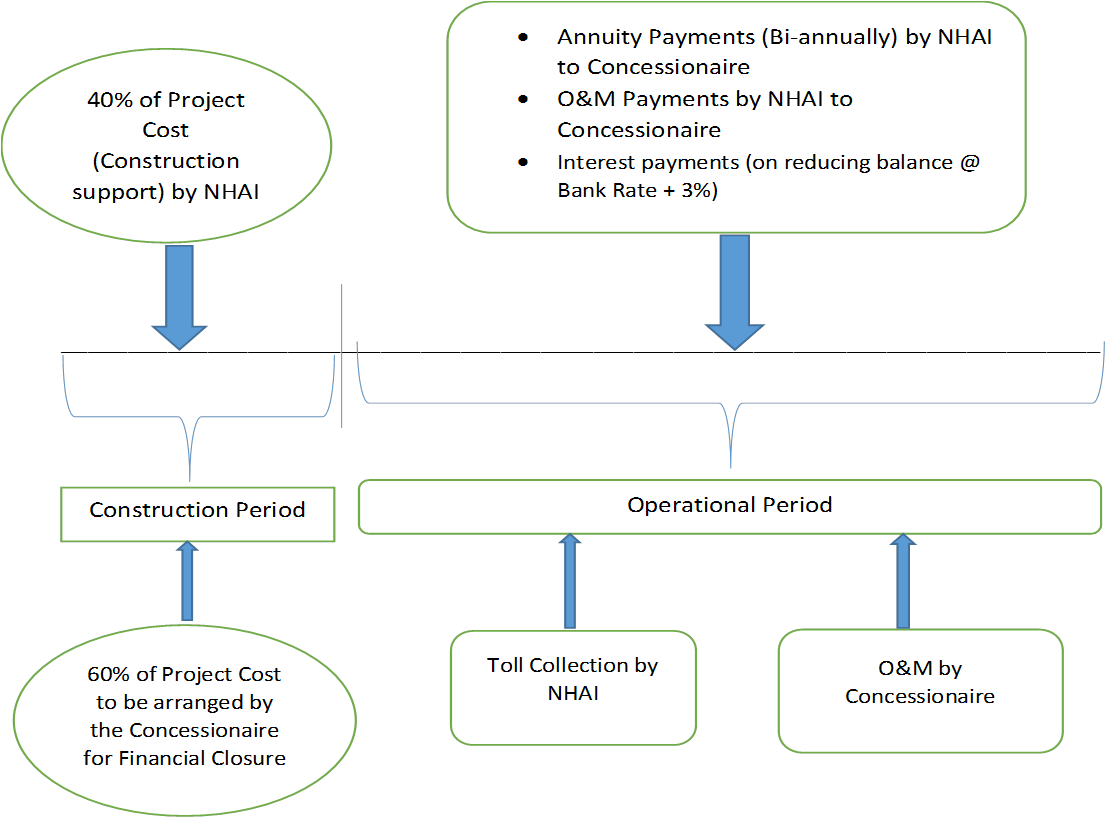
Since BOT was not successful in India due to inherent gaps in its model and implementation, NHAI is now resorting mostly to EPC Contracts and Hybrid Annuity Model (HAM). HAM is a much better model than BOT since the toll (revenue) risk is not with Developer and much lower equity requirement (since 40% of the cost is funded by Govt.)
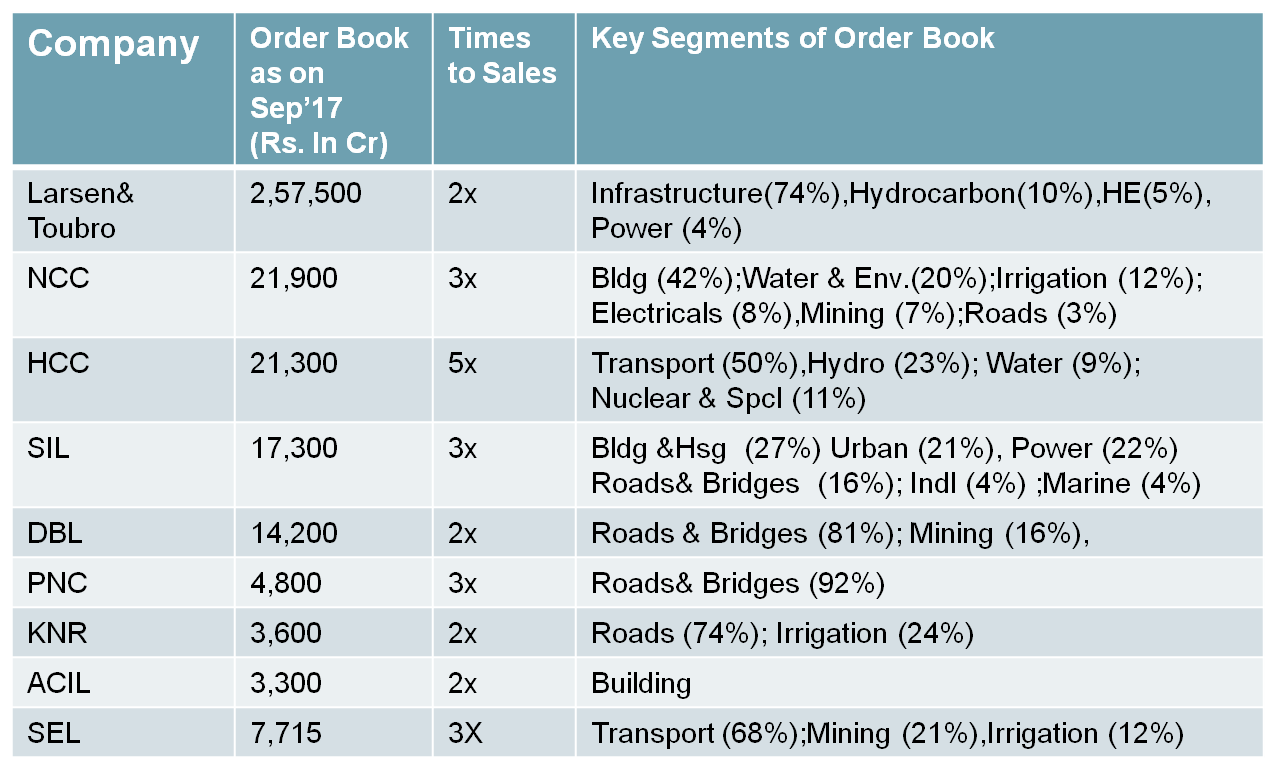
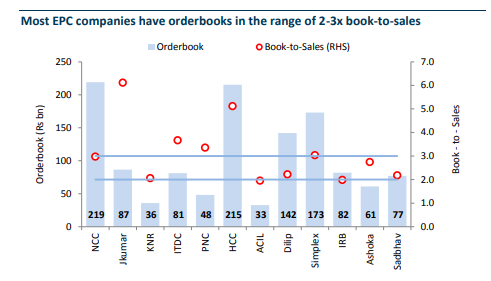
Most of the new contracts are being awarded to newer players like Dilip Buildcon , PNC who have much better balance sheet and execution capability.
In HAM Bids are awarded to the developer quoting lowest NPV for project life cycle cost. Project life cycle cost is defined as NPV of the quoted bid project cost plus NPV of the operations and maintenance(O&M) cost for the entire operations period.
The Infra sector has moved up well and expected to continue their journey well into the 2X territory from a Capitalization size by this time next year. The number of construction projects are huge, backlog is good, sales is a bit slow/sluggish, and of course rates are rising, but they will improve as our rate structure environment start improving. Cement stocks, Real Estate stocks, Construction stocks, Land banks, Engineering companies have started to move, although with the flash-crash on 21/9/2018 is really showing confidence.
Why JKumar again!!! Locked in 20% lower circuit yesterday!
BMC issue in 2016!
Shell company in 2017!
And now SEBI doubting authenticity of documents submitted by JKumar pertaining to an order 10 years back!
What happened: SEBI has passed an interim order asking exchanges to appoint an independent auditor to conduct a forensic audit on J Kumar Infraprojects.
Attended the concall, key takeaways: See comments section
All the deaths in West Asia are so sad, and our heart goes out to the families who have lost their dear ones. World is looking forward to peace, but it is impossible to ignore the financial implications. Now, reconstruction will commence in the cash-rich West Asia.
I am unable to see the Economic Times article on the subject. So, has anybody seen that or done independent research on companies which may participate in infra in West Asia?
To my mind, L&T always figures in such situations. NBCC also seems to be expanding or at least trying to, there. What about KEC International, Afcons and any others?
Can the big Indian builders participate? From the net it appears that Ashoka Buildcon has in February 2026, its joint venture secured a SAR 717 million (approx. ₹1,600 crore) contract for the “Diriyah II” hotel construction project in Riyadh.
Sobha Limited (NSE:SOBHA): Through its Middle Eastern arm, Sobha Realty, the group is a dominant player in the UAE. In January 2026, it made a “landmark entry” into Abu Dhabi with a massive master-planned community near the new Disneyland Abu Dhabi. It also has major ongoing projects in Dubai, such as Sobha One, with handovers scheduled for late 2026.* * Shapoorji Pallonji Real Estate: The group recently completed its first international residential development, Imperial Avenue, a 45-story luxury tower in Downtown Dubai. It has announced further plans to develop over 20 million square feet of housing across the UAE and is targeting projects in Saudi Arabia and Kuwait.
Significantly, there has been more damage in UAE than it has let out. Middle East-Related Stocks Rally Up to 7% Amid Ceasefire Between the U.S. and Iran
Disclaimer: Made investments in L&T, NBCC and KEC recently.
Sir aapne jo companies mention ki he wo residential buildings developers he and current conflict in west asia has heavily damaged buyers sentiments to make a big ticket purchase. if we talk about UAE specifically it was considered safe heaven for real estate investing because of investor friendly authoritarian regime, liberalisation and secularism. in UAE real estate foreign money contribution is very big and due to recent war like situation the confidence of investors has shaken up and everyone is rushing to sell their flats so there is lot of supply and demand is very very low and this is visible in recent crash of prices per sq ft. and lastly you mentioned about damage and reconstruction so the damage to infrastructure except oil and gas infrastructure in west asia countries except Iran and israel,lebanon is like a glass of water in ocean means very low damage. definitely the whole energy economics has changed but like the media exaggerate damage to infrastructure{except energy} in UAE,saudi. in reality no big\major damage to any other infrastructure.
if anyone is interested in this theme for investment purpose then i will suggest defence exporters and energy infrastructure epc firms.