MosChip Technologies <> a semiconductor play in India

Semiconductors are used everywhere you look. Smartphones. Laptops. Big ass servers. Companies who bet on this small piece of electronic, have made a fortune [read: NVIDIA, Qualcomm, ARM, TSMC etc.]



Very soon, we’ll have semiconductor chips implanted in humans. So, clearly this is a very big market.

But — if you are an Indian investor, how do you get a bite into this sector? There are several stocks that you can invest in, one of which is MosChip Technologies.
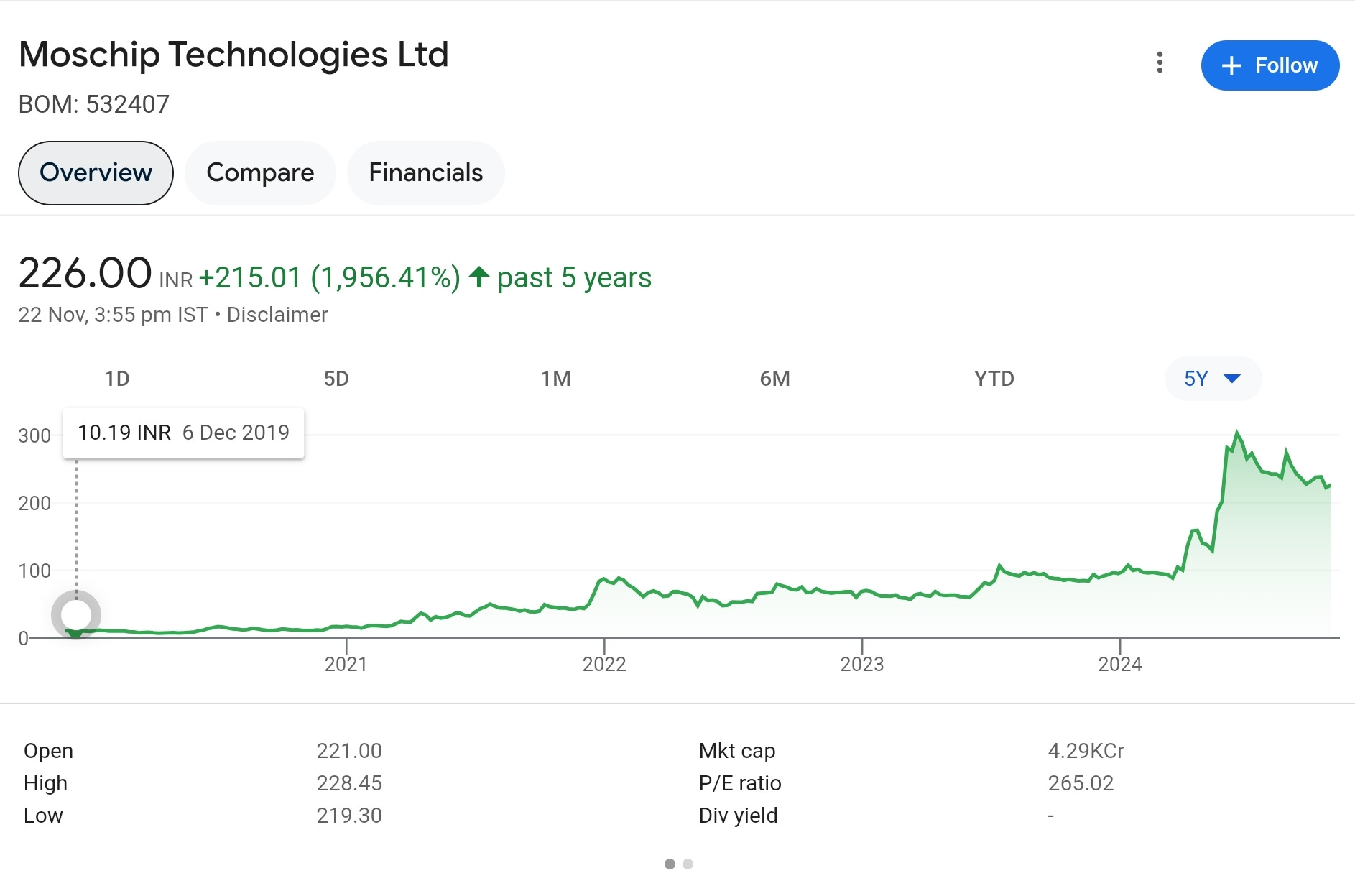


Stock movement of MosChip in the past 5Y [Source: Google Finance]

In the past 5 years, the stock has delivered multi-bagger returns, with majority of the rise happening in the last 2 years.

Even with this insane rise, the market capitalization of the company is only INR 4,250 CRORE — which means there could be more room to grow if the company can scale the business. However, at a P/E of 250+, the stock is trading at a VERY expensive valuation.

Can MosChip grow earnings? Can it capture more market share in the semi-conductor space? Let’s find out!


The Business

At the very core, MosChip is a semiconductor and system design company which is engaged in the development & manufacturing of integrated circuits (ICs) and various IoT solutions.

It works with globally acclaimed chip design companies in areas of aerospace, defence, consumer & industrial applications.

It has 2 business segments — (i) Semiconductors (ii) Software, System Design & Product Engineering.
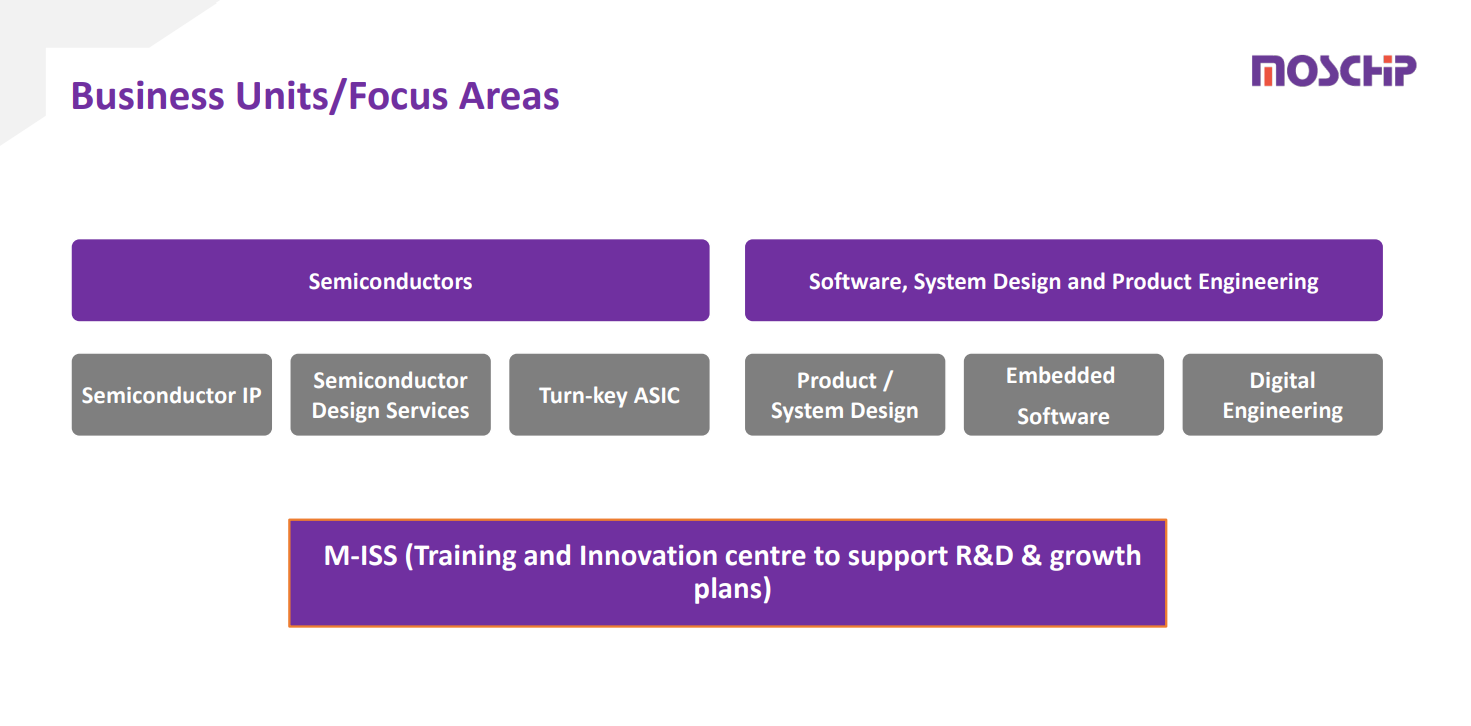


Business units of MosChip [Source: Investor PPT]

I. Semiconductor business

This business can be split into 3 categories:

  • Semiconductor Intellectual Property (SIP) — in which it offers a range of semiconductor IP blocks for design and verification to customers.
  • Semiconductor design services — offering end to end design solutions which includes chip design, verification, PCB Board design etc. It masters the science behind ASIC, SoC, RTL Design.
  • Turn-key ASIC — it offers ASIC platforms and design solutions from RTL to volume production to meet the needs of various industrial domains.

Bursting the jargons:

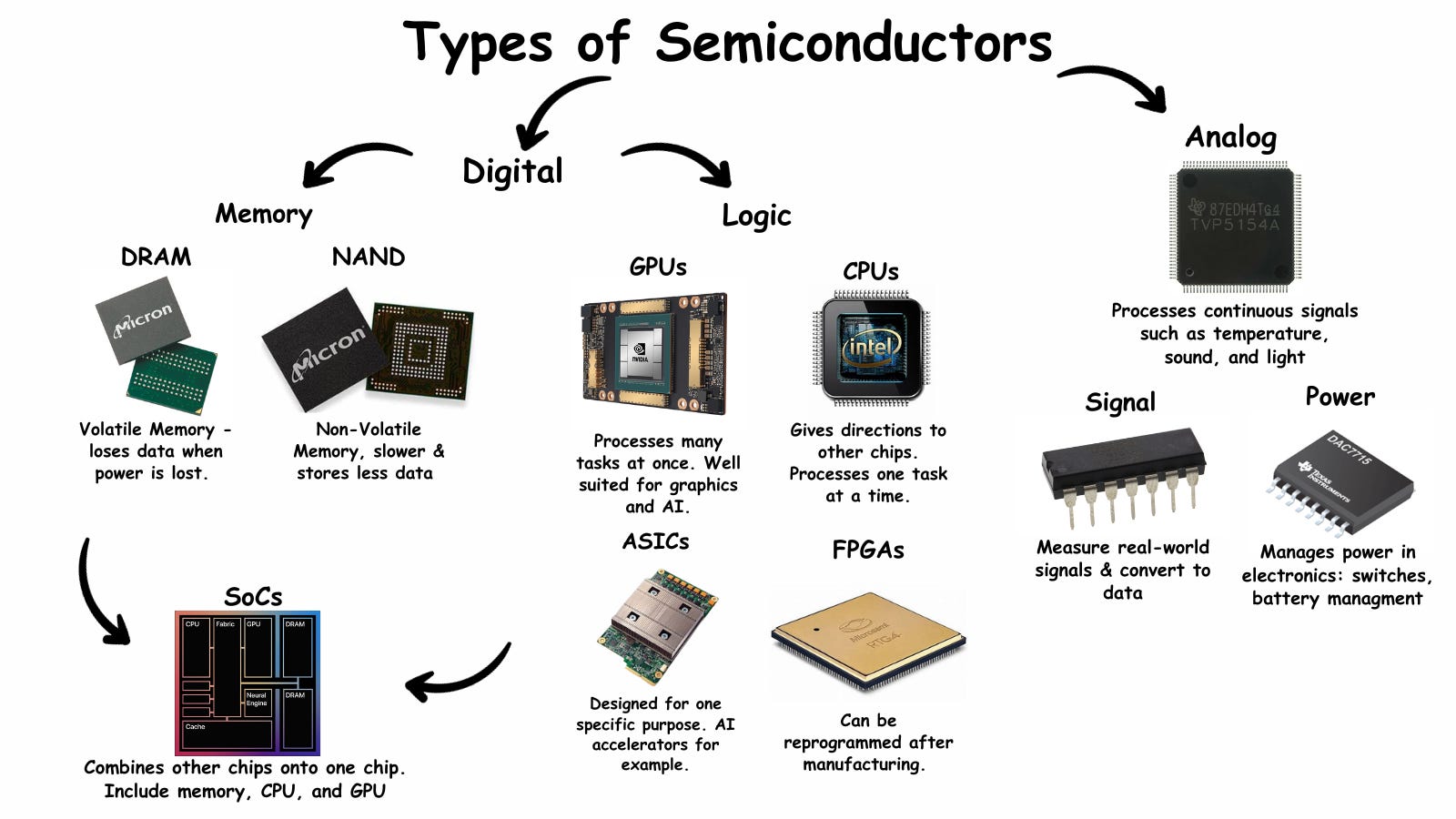
  1. Semiconductor IP — this refers to the design specifications, source code or other information necessary for manufacturing semiconductor chips & integrated circuits (ICs). MosChip probably licenses it’s Semiconductor IPs to other companies to produce semiconductors.
  2. ASIC [Application Specific Integrated Circuit] — is a custom designed semiconductor chip made for a specific function. An ASIC combines various circuits in one chip, allowing it to perform a specific task faster than a less focused circuit. MosChip probably designs & sells ASICs to their clients.
  3. SoC [System on Chip] — is a technology which integrates all the components of a system into a SINGLE CHIP. SoCs reduce the space taken up by semiconductors, allowing for smaller products. Both ASIC + SoC are integrated circuits with different functionalities.
  4. RTL Design — RTL is a way to describe the behaviour of a circuit. RTL design is essential for designing + verifying complex digital systems like micro-processors.

I use the word ‘probably’ above — because reading the annual report, I wasn’t very sure what the business model is exactly. If anyone reading this blog has a more accurate understanding of the b-model, please correct me!

II. Software & Systems Design Business

MosChip offers solutions at every stage of the product lifecycle including hardware design, software design, embedded systems and various software engineering solutions.
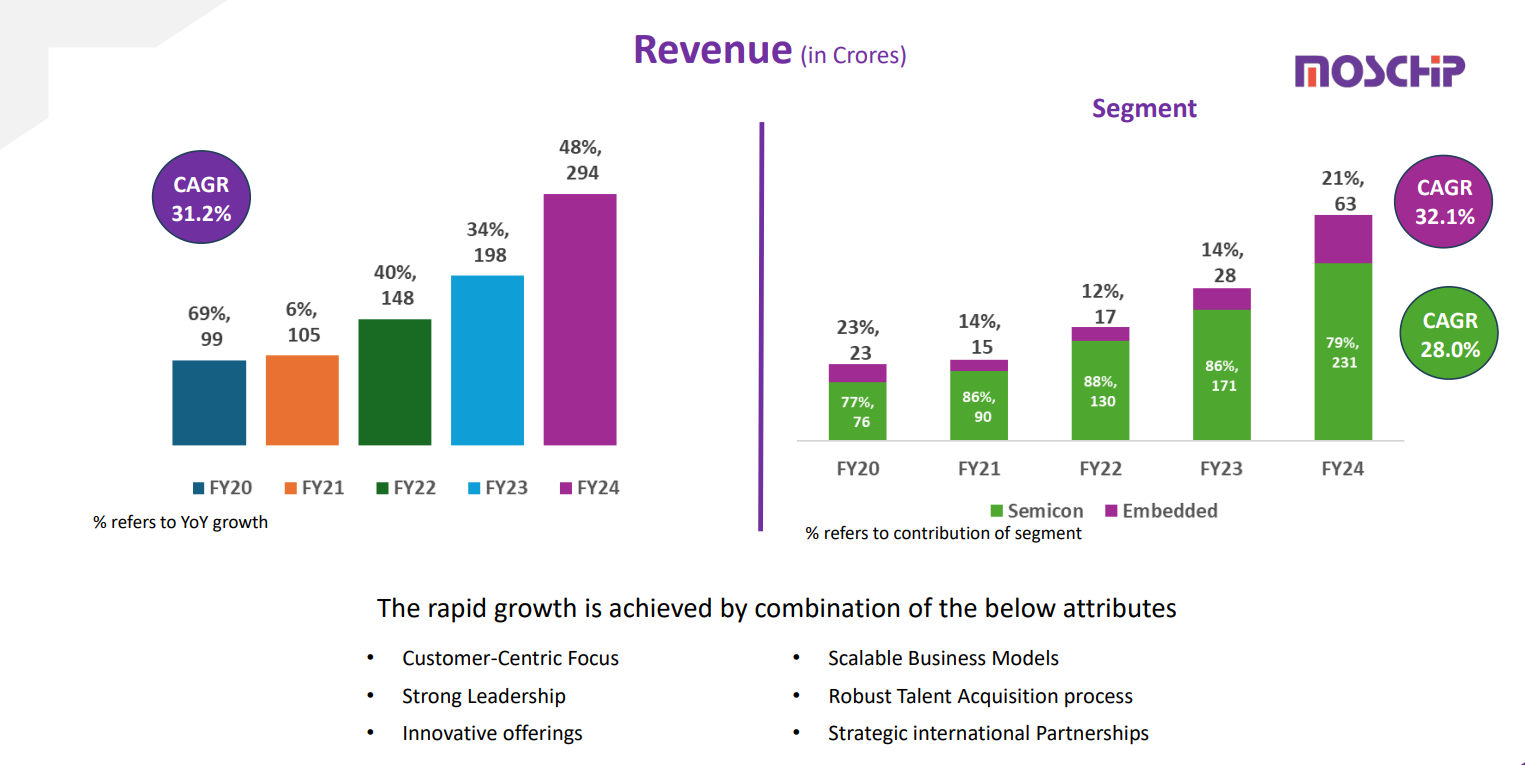


Revenue mix between the 2 business segments. ‘Embedded’ in this image refer to Software & Systems Design business. [Source: Investor PPT]

MosChip’s FY24 annual report also mentions that it provides various AI/ML solutions — however I am not sure how much it is contributing to overall revenue at this point.


The Tailwinds

One of the most critical aspects for a technology company — especially in the semiconductor domain which requires precise engineering and technical knowledge — is hiring the right people and the ability to retain them.

The management highlighted that there has been no leadership attrition in recent years. MosChip employs > 1,300+ employees with a median age of 28 years — which means they have a good mix of youth / experience in their workforce to drive innovation.

MosChip has a dedicated training centre [Institute of Silicon Systems] to enhance skill-sets of employees related to silicon, semiconductors and software.

Some of the other tailwinds are:

  • Customer relationships / partnerships — 10 out of top 20 semiconductor companies are MosChip’s customers. Major customers being CDAC [Centre for Development of Advanced Computing] , Samsung & TSMC.
    • The Company has entered into partnerships with leading semiconductor companies like AMD-Xilinx, Altera, Intel, Lattice Semiconductor & Microchip — which enables it to gain early access and expertise on their latest platforms.
    • It entered into a partnership with Tenstorrent to work on cutting edge RISC-V solutions, leveraging MosChip’s expertise in design services.
  • Order book — the company has not published any information about it’s order book, but let’s take a look at some of the recent deals it has secured.
    • CDAC HPC Processor ‘AUM’ — MosChip has obtained a INR 509 CRORE contract with CDAC for development of a high performance computing SoC [System on Chips]. The SoC will be based on ARM’s architecture and TSMC’s 5 nano-meter technology node. The contract will last for 4 years.
    • Smart Energy meter IC — MeitY approved MosChip’s application under the Semiconductor DLI scheme [Design Linked Incentive] for the development of a smart energy meter integrated circuit (ICs). MosChip will supply the ICs to CDAC. This market is expected to grow to 60 million units in India and 2 billion units globally by 2028. [Order size not disclosed]
    • Won a contract from an ASIC company headquartered in Japan for design services. [Order size not disclosed]
  • Acquisitions + Growth drivers
    • Investments — MosChip’s strategy is to continue to grow in design services. The management wants to invest in building emulation expertise and developing expertise in emerging areas (AI/ML/IoT/Automotive applications).
    • Acquisitions — MosChip has acquired various companies between 2016 to 2019 to expand their semiconductor capabilities. Last year it acquired Softnautics which brought new customers, enhanced it’s technical expertise and expanded it’s service offerings.

This shows that the management is not shy to make acquisitions to grow the business. However, the company has a goodwill of INR 195 CRORE in it’s books — which signals that it is overpaying for it’s acquisitions, which is a little concerning for an investor.


Points of Concern

There is very little information about MosChip on investing forums, so I couldn’t find a lot of perspectives from industry insiders on this stock. However, the biggest cause of concern is the PE at which the company is trading [250+] which means that earnings do NOT support the current price levels.

So, either the stock should correct significantly OR there has to be major expansion in profits. Some of the other concerns are:

  • Employee turnover — if MosChip is unable to retain talent, it could adversely impact the business. If you look at the average employee rating on Naukri.com or Glassdoor — the average rating is 4.0 out of 5 stars, which is decent. However, investors should keep an eye out for that attrition ratio.
  • Difficulty in scaling up — Semiconductor business is highly competitive and capital intensive in nature. MosChip is quite small in scale and might face challenges in maintaining it’s competitive edge + growing margins.
  • Execution challenges — developing advanced SoCs using 5nm technology [for CDAC] is technically challenging. Delays is executing such projects could impact MosChip’s reputation and financials.
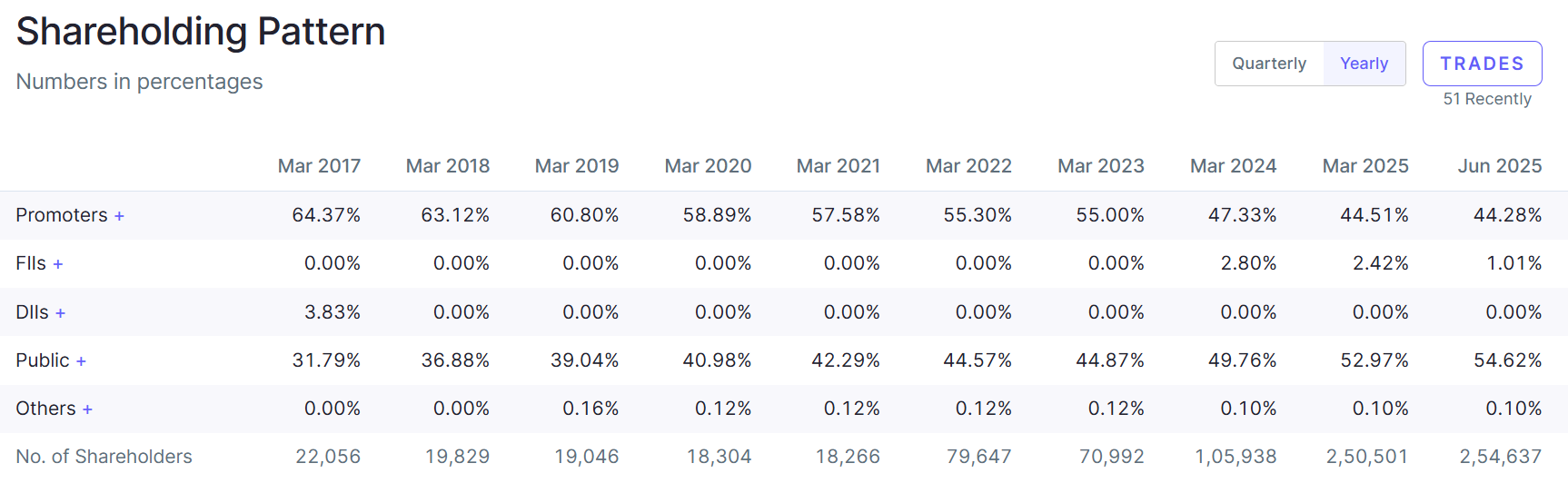
  • Declining promoter holding — the shareholding % of promoters has been declining over the years [as the stock has been skyrocketing]. This could mean several things.
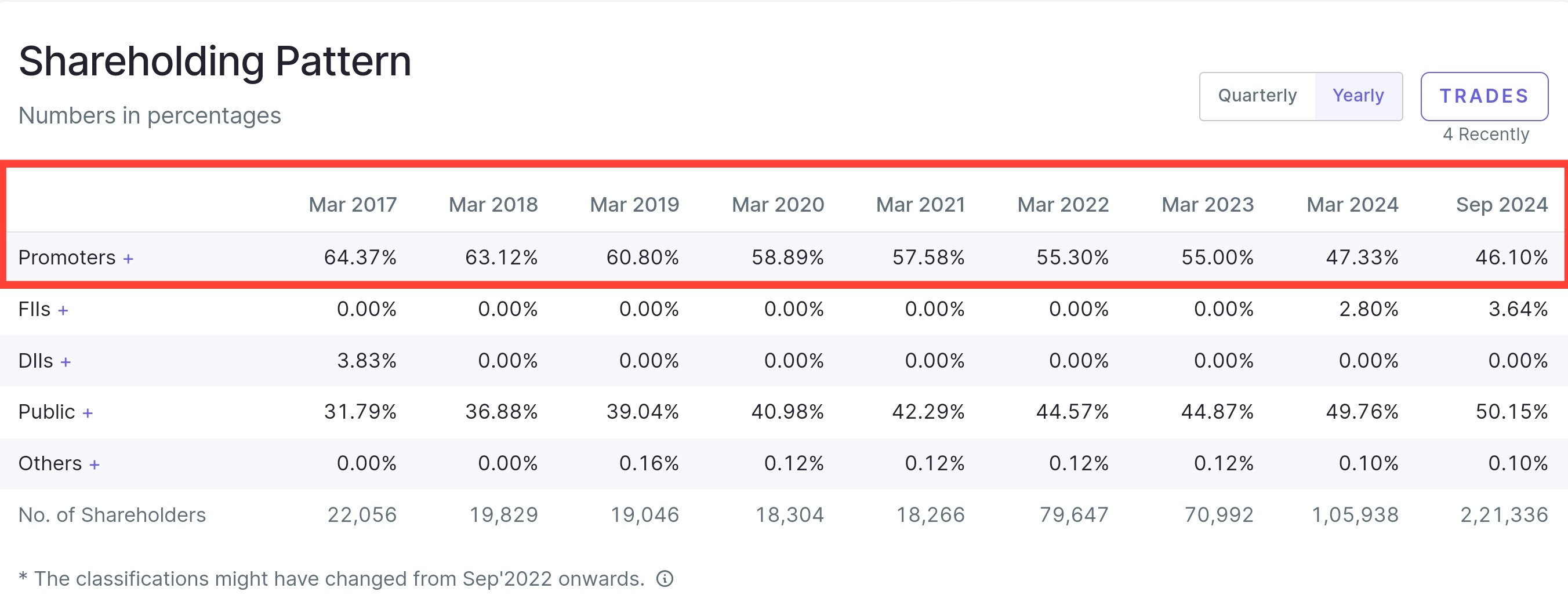


Shareholding movement of MosChip [Source: screener.in]

  • Maybe the promoters wanted some liquidity and so they’re selling stock.
  • Or the promoters think that the stock price is overvalued, and hence they want to book some profits at these levels.

Conclusion

Semiconductors are an essential part of our lives now, and India is realizing that it cannot depend on countries like China / Taiwan for it’s semiconductor capabilities.

Various programs like India Semiconductor Mission and Design Linked Incentive (DLI) scheme have been launched to boost advanced chips to be ‘Made in India’ and provide financial support to companies investing in semiconductors.

Worldwide semiconductor sales is expected to reach $1 TRILLION by 2030. In India, the semiconductor industry is forecasted to surge to $100 billion by 2032. MosChip could benefit from this growth.

Some unanswered questions still remain:

  1. Business: What is MosChip’s share in the semiconductor design market? Who are it’s major competitors? Can it compete with the likes of TSMC in the future? Does it have plans to get into chip manufacturing in the future? Which product / service contributes the most to revenues?
  2. Forecast: What is the size of the order book? What is the revenue / profit guidance for the next few years? What is the baseline profit margin to be considered?
  3. Employees: Does it really need 1,300+ employees?

At the current price point, I just don’t see any upside unless there is a multi-billion dollar order win. However, because it operates in the semiconductor space, it is a company that should be in your watchlist. Would be interesting to keep a watch on the business updates and see how the company shapes up in the future.

Disclosure: Not invested, looking for a MAJOR correction to build positions in the stock.
21 Likes

I can’t find the recent concalls of the company, although being in mainboard.
why?

1 Like

Thanks for providing the details about the company in a very simple and non technical language. Recently i have started tracking the company but still there is hardly any information available to even take a small tracking position. The stock price has corrected but still the PE is very high, although company is growing at a scorching pace. The business model of the company, the order book information, tariffs impact etc is still not clear. Waiting for FY25 annual report to get more information. If you can share more insights, it will be great

2 Likes

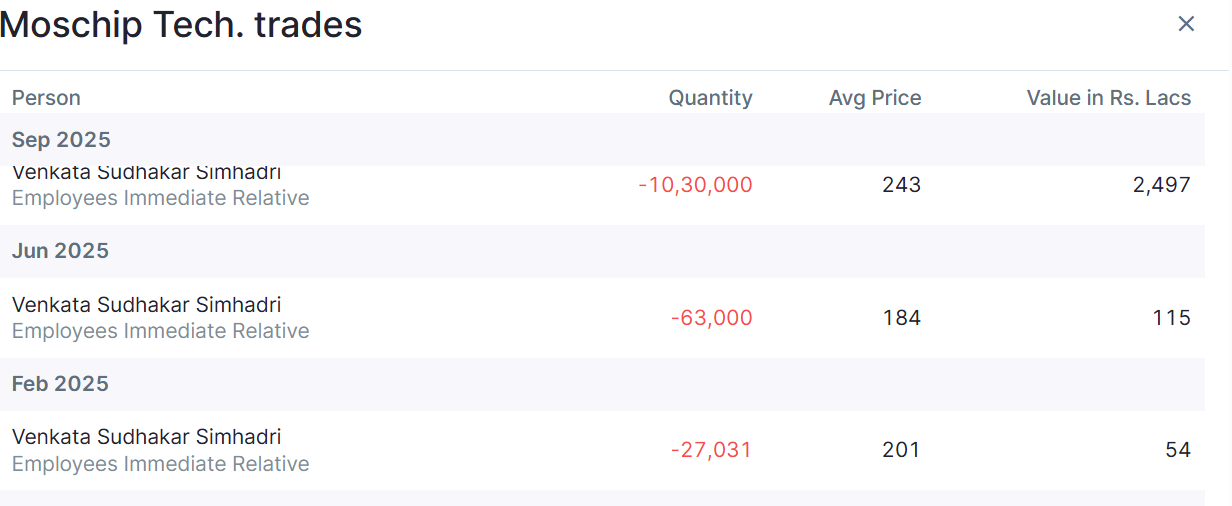
Also, when everyone is excited about this space , why promoters are selling ?

2 Likes

I am seeing the same person selling. Dont think she is directly involves in the company. People have mamy reasons to sell and lets be fair, Moschip has deluvered golden returns, maybe she wants to build her dream house :)

3 Likes

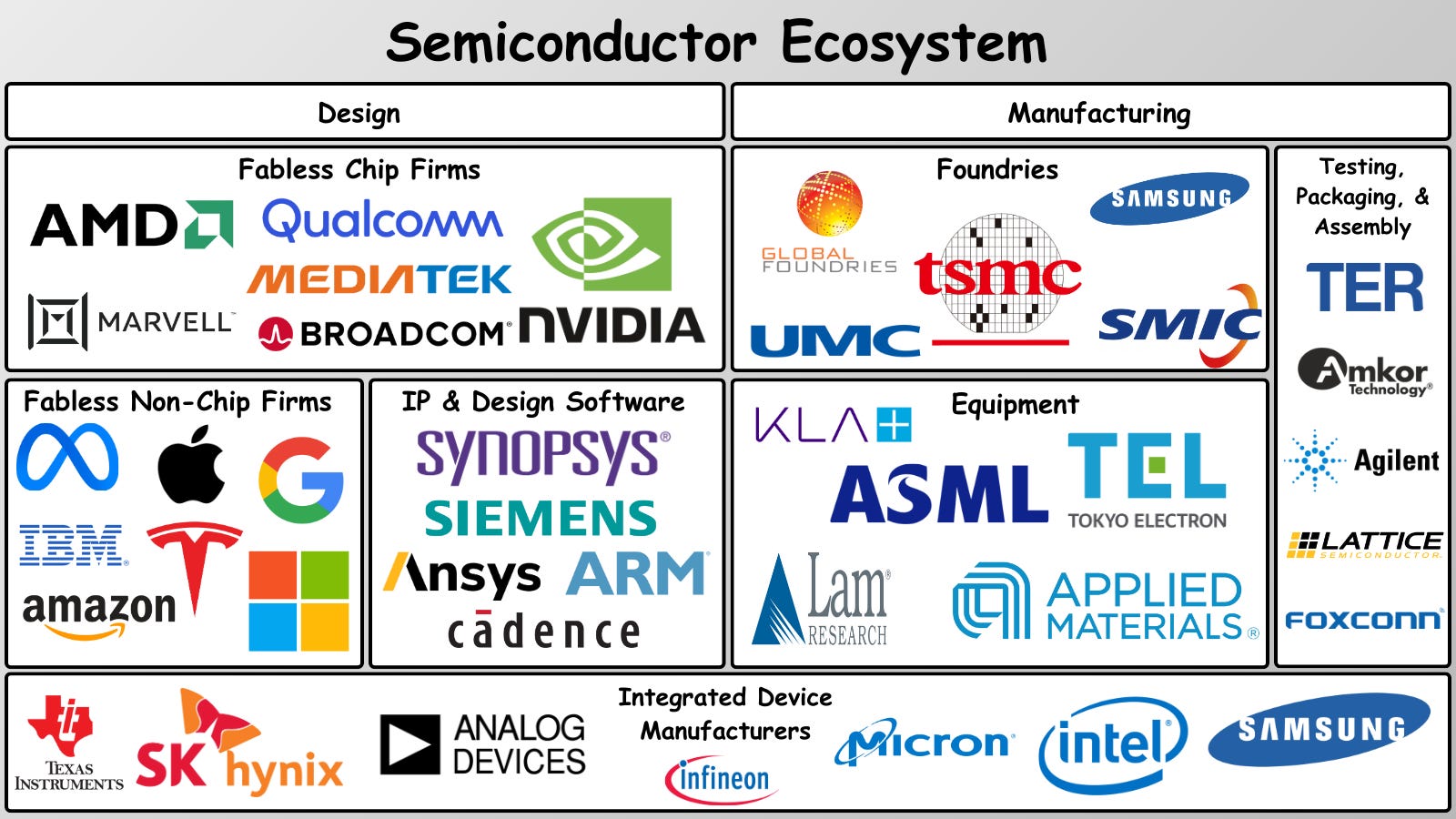
Before we talk about MosChip and it’s recent business updates, I wanted to run through a quick overview of the players in the semiconductor space, which would give us some idea where MosChip fits in the ecosystem and the global competitive landscape.

I came across one of the best articles written on an overview of the semiconductor industry by Eric Flaningam — which for a newbie like me, was key to understand how the industry is structured.

As an investor, if you can spend time studying an industry in which your target company exists, it can enhance your understanding of the business model many folds — which is key in conducting fundamental analysis.


|580x326.25

Categorisation of different segments in the semiconductor industry.

For our purposes, we can categorise chip companies into the following broad categories:

  1. Design companies — companies which design the semiconductor chip, but don’t manufacture the chips themselves, also known as fabless chip companies.
  2. Foundries — firms which manufacture the chips based on the designs provided by fabless companies.
  3. Integrated device manufacturers — companies which design + manufacture their own chips.
  4. Equipment manufacturers — companies that manufacture the equipment that is used in the design and manufacturing of semiconductors.

MosChip is in the business of design — of semiconductors, software & systems. The design of semiconductors is a complex process, which involves various steps like:

  • Identification of the design requirements of the chip + intended function
  • Laying out the logic design
  • Simulating semiconductor performance (hardware / software)
  • Testing for errors, bugs etc.

The software used for design is called Electronic Design Automation (EDA), and once the design is complete — it is sent to foundries like TSMC, Samsung etc — to convert that design into a physical chip.

For designing chips, there are 3 architectures — Arm (licensed by the company ARM), x86 (developed by Intel) and RISC-V (an open source alternative).


Business Updates

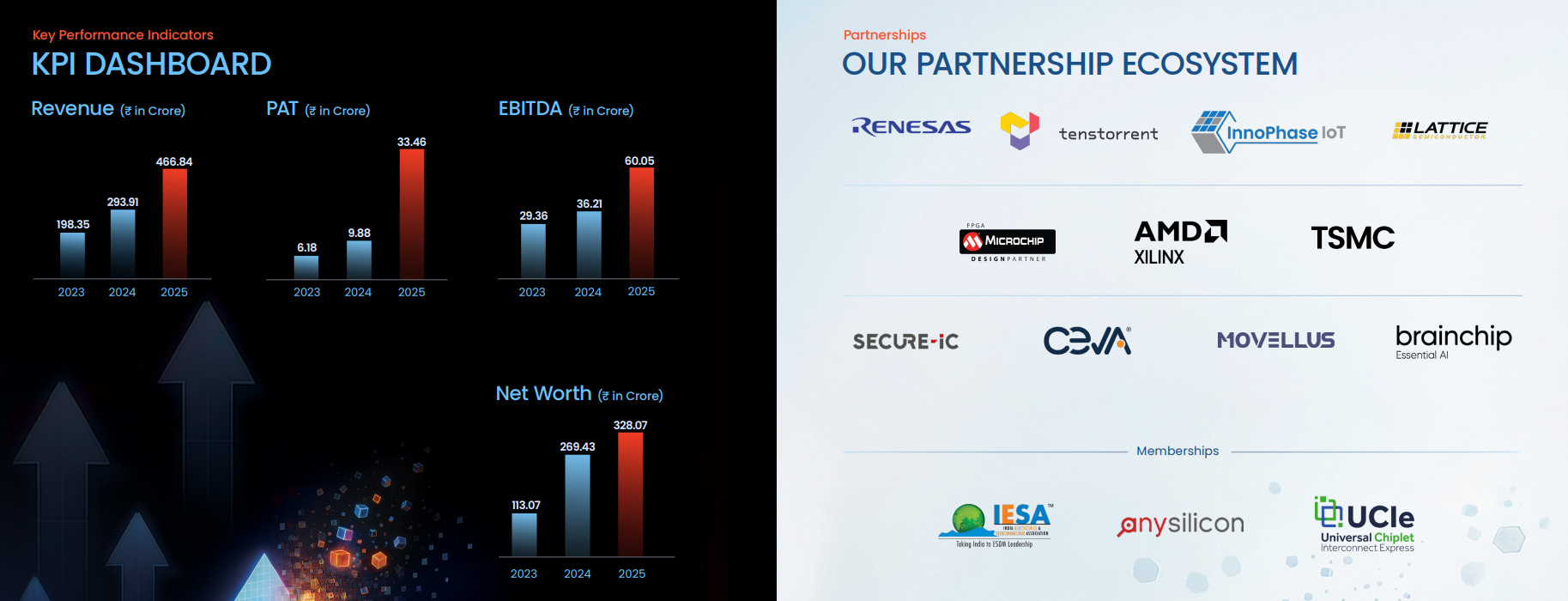
FY25 was a good year for the company, with increase in topline by 59% YoY. Operating profit margins remained stable at 12%. Q1FY26 was also a decent quarter.

Due to lack of management guidance, we don’t know the revenue target for FY26. But, if you extrapolate the Q1FY26 revenue, a 20% YoY growth for FY26 looks probable. Now, this isn’t explosive growth - which is what you’d expect with a company operating in the semiconductor design space commanding a PE of 130+.


FY25 Performance + Partnerships.

Summary of the business model

MosChip operates two business units viz. — (1) Semiconductor design (2) Software & System Design.

  • Semiconductor design contributes 80% of total revenues, and the company offers design services like ASIC design, SoC design, FPGA design, IP services etc.
    • MosChip has been involved in more than 600 SoC tape-outs. A tape out is the final step in the design process, where the design files are sent to a foundry (like TSMC) for manufacturing.
    • Operating margins from semiconductor design is around 23% [a slight decrease from FY24 margins of 25%]


|724x407.25

Different types of chips that exist.

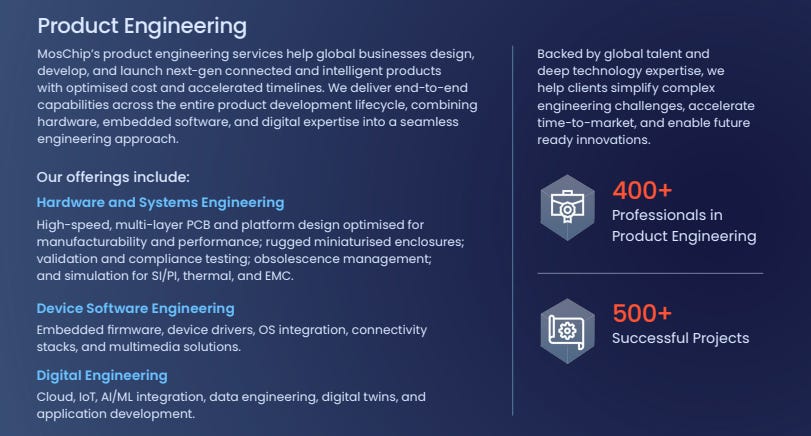
  • Software & system design contributes 20% to the topline. MosChip helps businesses with their hardware and software design needs.
    • Operating margins from this segment is around 6% [a sharp decrease from FY24 margins of 10%]. Why have margins decreased? Is it change in sales mix? Or increase in project costs? Management doesn’t provide any commentary.


|668x359.1220715166461

Services under Software & Systems design.

  • Costs — the major costs incurred for running this business are:
    • Manpower costs — MosChip hires 1400+ engineers, which are essential in delivering design services to clients. The quality of skilled engineers, is what differentiates a design company.
    • Electronic Design Automation — the software used for semiconductor design, this is probably the licensing cost of the EDA tool.
    • Outsourcing services — despite having 1400+ engineers, the company still outsources various activities to external consultants / agencies. This cost has increased from INR 16 Cr in FY24 to INR 129 Cr in FY25 — is it because of increase in revenues? Or development of a new design? We don’t know.

What’s next for MosChip?

If you look at the companies operating in the semiconductor space, most of them are valued at >$50B — and sadly none of them are Indian companies. India is playing catch-up with the rest of the world, when it comes to investing in semiconductor manufacturing.

With programmes like the ‘India Semiconductor Mission’ the government plans to create a full supply chain from design to fabrication, testing and packaging in India.

For this the government has approved 10 semiconductor projects, with a total investment of $18.2B — which includes two semiconductor fabrication plants and multiple testing and packaging factories.

Coming back to MosChip — what we are interested to understand, is whether it can become a chip design behemoth in the next 10 years? Can it generate exponential returns for it’s shareholders?


|616x432.7370441458733

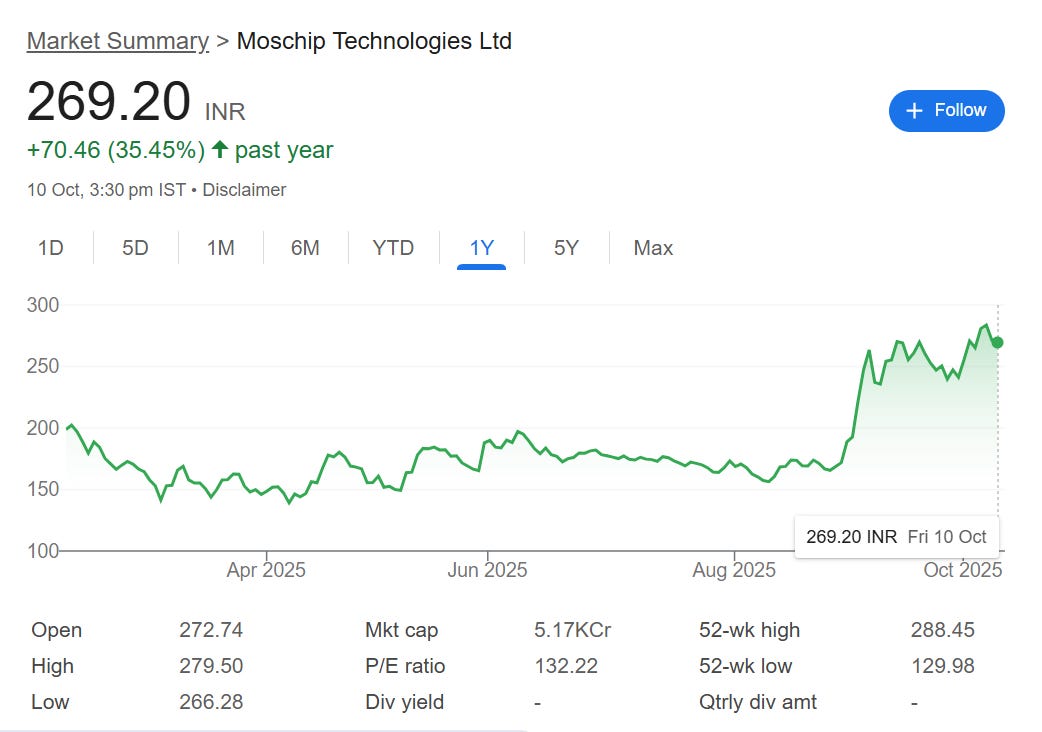
Stock performance of MosChip [Source: Google Finance]

Although the P/E ratio of the company has halved from 250+ to 130+, it still looks quite expensive at current growth rates.

What are the initiatives that should fuel growth in the coming years?

  • CDAC HPC Processor ‘AUM’ — MosChip has obtained an INR 509 CRORE contract with CDAC for development of a high performance computing SoC [System on Chips]. The SoC will be based on ARM’s architecture, co-developed with Socionext on TSMC’s 5 nano-meter technology node. The contract will last for 4 years.
  • Smart energy meter integrated circuit (IC) — MosChip is involved in the design of a smart energy meter IC which will be used by Electricity Energy Meter OEMs. MosChip will supply the design of the ICs to CDAC.
  • Aims to grow emulation expertise — the management wants to build emulation expertise in MosChip. Emulation is the process of using hardware to imitate the behaviour of a chip or a system before it is physically fabricated. It is much faster than software simulations, and helps engineers fix design errors quickly, reducing cost of physical prototypes.
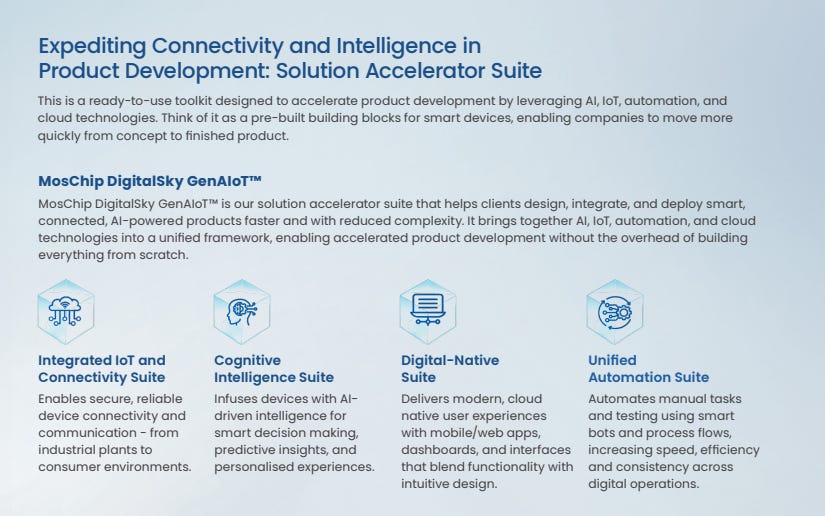
  • Digital Sky GenAIoT — MosChip is also working on a solution suite, that helps clients design, integrate, and deploy smart AI powered products faster and with reduced complexity. It brings together AI, IoT, Automation and Cloud technologies — enabling accelerated product development.


|724x452.8290909090909

Conclusion

In the absence of any clear guidance from the management, it is difficult to predict the growth trajectory of the company going forward. I have no idea, how much the above initiatives are going to contribute to the top-line. Will these new initiatives expand margins? We don’t know.

Can it compete with global design players like Qualcomm, AMD, MediaTek, Broadcom or even Indian players like Tata Elxsi, HCL Technologies, Sasken? Only time will tell.

MosChip has partnerships with leading foundries (TSMC) providing it early access to cutting edge chip technologies. It has strengthened relationships with EDA & IP vendors. It is training its employee base via MosChip Academy of Silicon Systems, a way to build and retain talent.

However, there are risks in the form of customer & geographical concentration. Promoter shareholding has slightly decreased YoY.


Shareholding pattern of MosChip.

The management hasn’t given any forecast on future revenues. No commentary on Order book. We don’t know who the biggest clients of the company are [most probably AMD / Microchip among others]. No quarterly calls. Investor PPTs are very basic.

Without clear guidance, all you can do is shoot arrows in the dark and wait for more information to emerge. And that’s what we’re going to do. Keep close tabs on the company.

Because it is among the very few small cap stocks operating in the semiconductor space, and that alone warrants a close watch on the business!

Disclosure: Not invested, waiting for a steep correction in prices

10 Likes

I feel this is a long long shot, looking at how TSMC’s evolved over long history and investments required to build a scale of TSMC.

Shouldnt it be easier to calculate till 28 if we include HPC,Vidyut chip and Existing design business ?

Last time you were right on correction, what are the issues you think could be cause of correction this time ?

D- Invested

3 Likes

Hi All,
I was going through a company called Sancode Technologies Ltd BSE - SME: 543897.
This company has announced that they have got HLCA approval from Odisha Gov to set a OSAT facility in Khordha . Digging deeper I tried to find out where the approval order came from and searched in the invest in Odisha website but the data was not available and some news article came up saying that another company called ASP semicon has got the approval. Where can I find out the approvals list or press release for HLCA approvals from Odisha gov.
Stock showed up in the screen for all time high list. If any one could point me in the right direction . it would be helpful.
Thanks in advance .
Disc- No holding.

Edit :
Found a reel https://www.instagram.com/reel/DVC1cotCUdd/
which says ASP Semicon got the order