Picking up where this thread left off on 30 May. Two things have happened since: the FY26 audited numbers landed (26 May, detailed filing 2 June) and there’s a new MoU on 7 July that materially changes the REM discussion — including one structural detail I think this thread needs to look at hard. Q1 FY27 is not out yet, so the “wait for June quarter” call is still pending. All figures below are from the exchange filings; converted from ₹ Mn to ₹ cr. CMP ~₹1,194–1,236, m-cap ~₹4,300–4,460 cr, as of end-July 2026.
First, the FY26 P&L — the “nothing changed” read was right, but for a different reason than the headline suggests
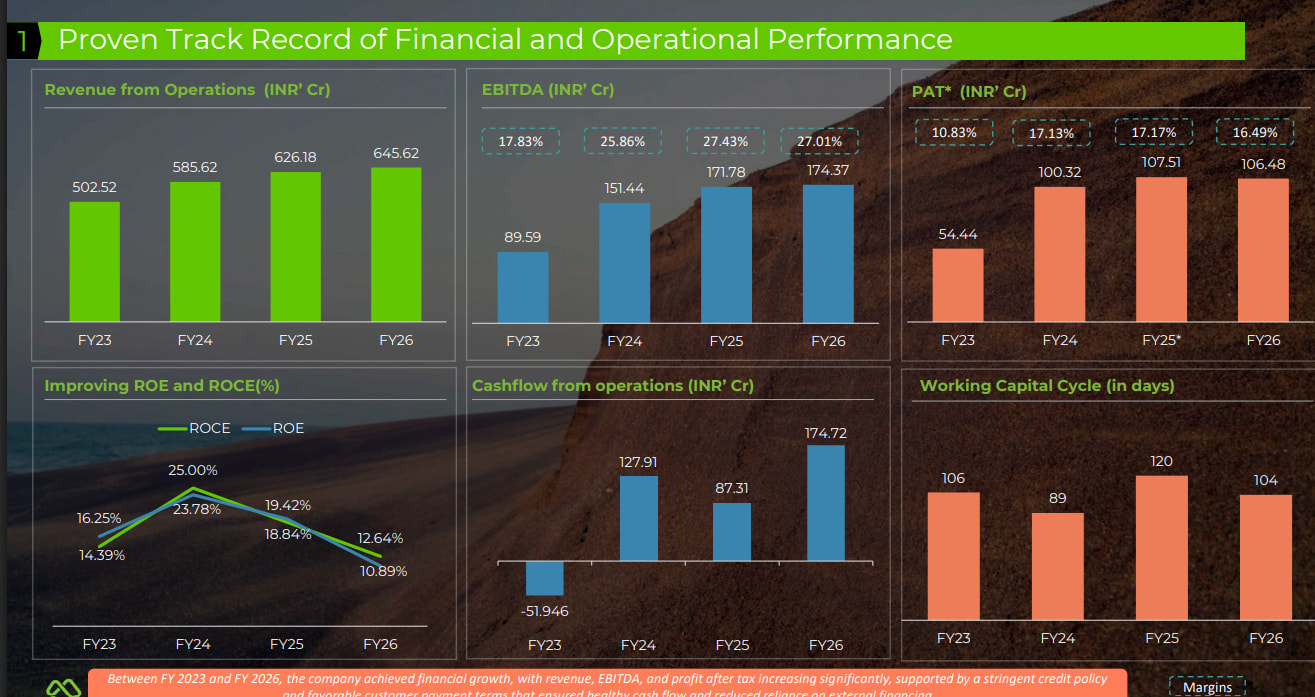
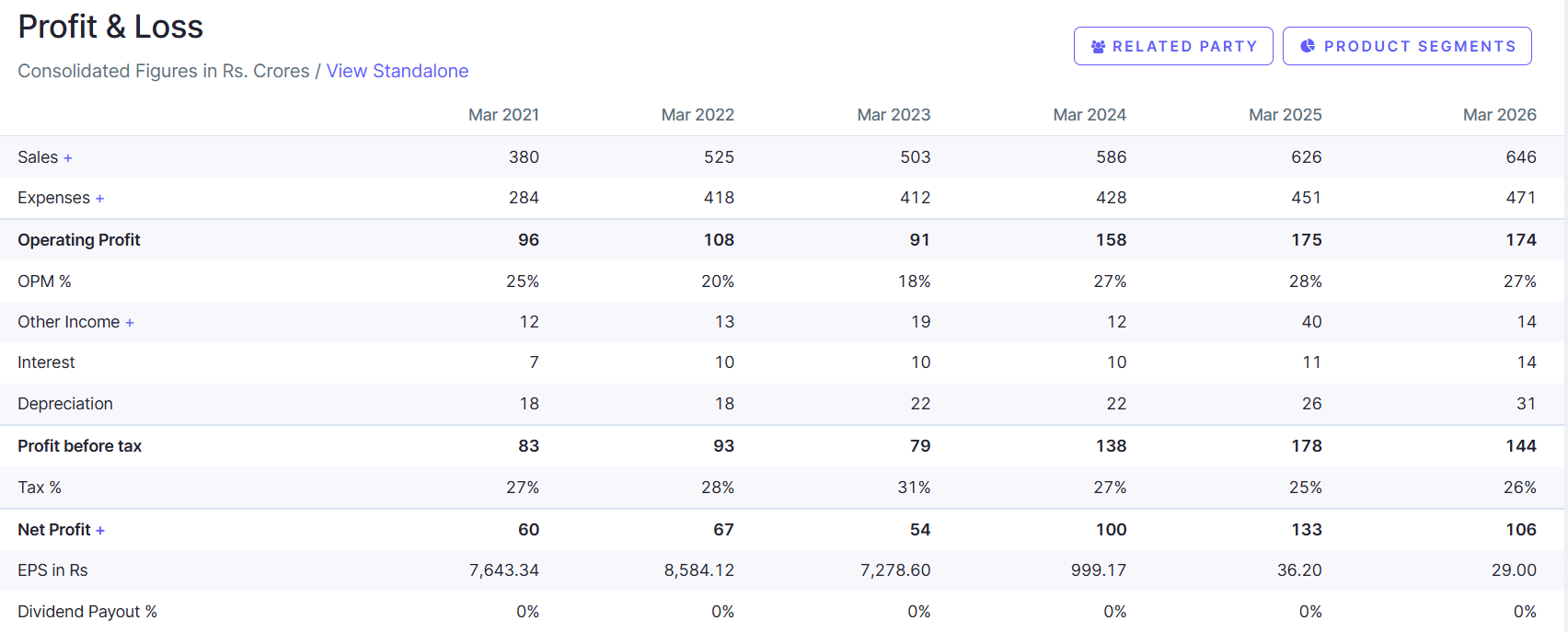
The headline said consolidated PAT fell 20.1%, ₹133.30 cr → ₹106.48 cr. That number is misleading in Midwest’s favour and against it, so it’s worth doing properly:
| Consolidated |
FY25 |
FY26 |
| Revenue |
626.18 |
645.62 |
| Reported PAT |
133.30 |
106.48 |
| Exceptional item (loss of control of a subsidiary) |
+25.79 |
— |
| PAT ex-exceptional |
~107.51 |
106.48 |
So FY25 contained a ₹25.79 cr one-off gain from loss of control of a subsidiary. Strip it out and FY26 PAT is flat — down about 1% on revenue up 3.1%.
(One caveat on my own arithmetic: the ₹25.79 cr is disclosed as an exceptional item within PBT, and I’ve deducted it from PAT without adjusting for tax, so treat “~₹107.5 cr” as approximate. The conclusion doesn’t rest on it — the operating line says the same thing independently: operating profit ₹175 cr → ₹174 cr, OPM 28% → 27%.)
That is the more useful framing than “profits fell 20%”. The business didn’t decline. It just didn’t grow at all, on a consolidated basis, in the first full year after listing. The earlier point in this thread — that there isn’t much that has changed in the P&L — was exactly right, and the arithmetic backs it harder than the headline did.
Standalone tells a better story — revenue ₹369.74 cr → ₹421.77 cr (+14.1%), PAT ₹88.47 cr → ₹97.63 cr (+10.3%) — which means the drag sits in the consolidated entities, not the core granite operation.
The quarter that matters for the ramp question, though, is Q4 FY26: standalone revenue ₹117.78 cr, down ~18% YoY; standalone PAT ₹25.57 cr, down ~31%. Consolidated Q4 PAT ₹37.02 cr vs ₹48.47 cr. That is the quarter in which commercialised quartz was supposed to be visible. It wasn’t.
Where the IPO money actually is — this answers the quartz-ramp question better than any commentary
From the FY26 filing: the October 2025 IPO raised ₹451 cr total — ₹250 cr fresh issue plus ₹201 cr OFS (price band ₹1,014–1,065; listed 24 October 2025). Deployment as at 31 March 2026:
-
₹164.94 cr of proceeds still unutilised.
-
Earmarked: ₹128.52 cr for the Phase II quartz processing plant, ₹54.33 cr for debt repayment.
-
Consolidated borrowings down ₹236.6 cr → ₹171.8 cr; cash and bank over ₹200 cr.
-
CRISIL is the monitoring agency and files quarterly (latest for the quarter ended March 2026, filed 15 May).
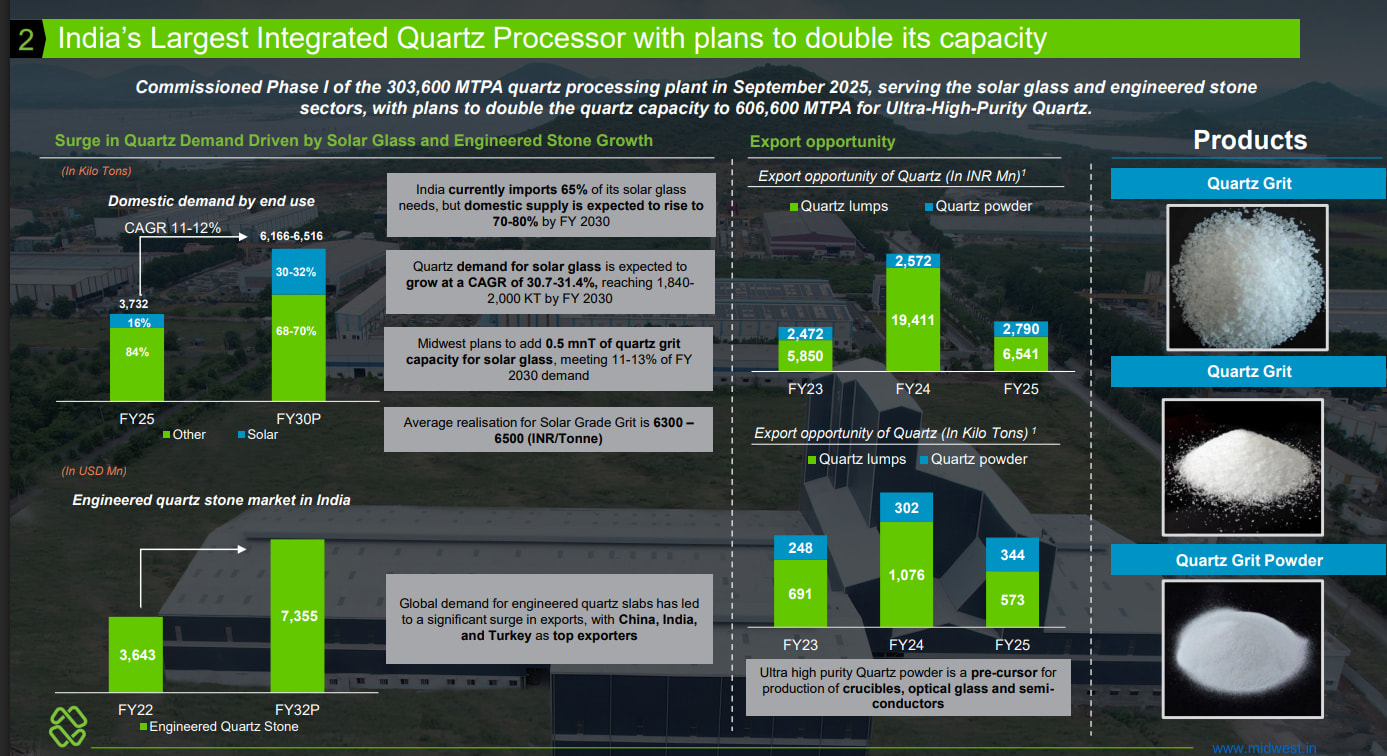
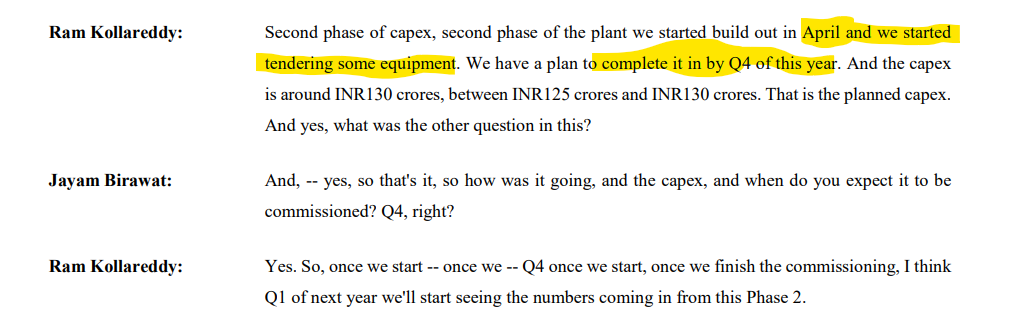
Roughly five months after listing, the large majority of the money earmarked for Phase II was still sitting undeployed. That’s neither good nor bad on its own — it’s a ₹130 cr plant, not a cheque you write in one go — but it does mean Phase II at 80% utilisation from FY28 requires the spend to be visibly moving by now. The CRISIL monitoring report is the cleanest place to track it quarterly, and it’s a filing, so no need to wait for a concall. If Phase I “stabilisation” ate six months and Phase II capex is still largely unspent, the FY28 utilisation assumption in the opening post deserves a haircut until proven.
The KMML pilot, with the actual terms
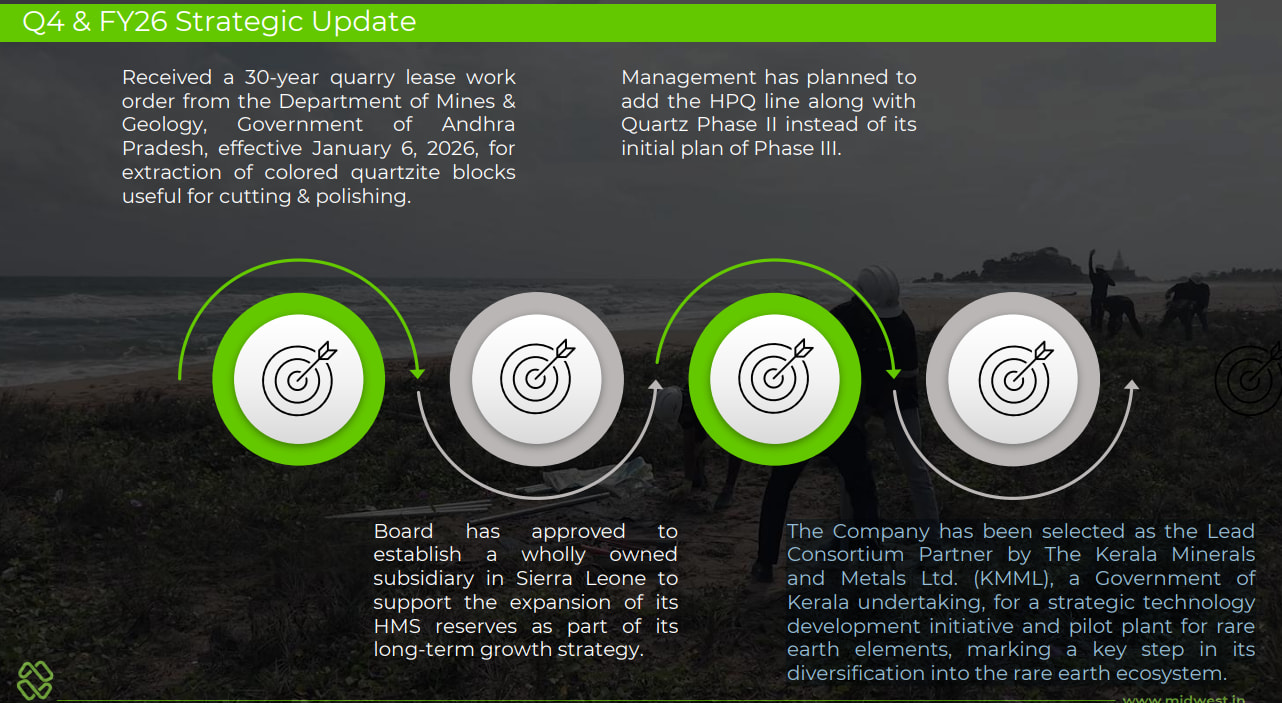
The 6 May announcement is more specific than “selected by KMML,” and the specifics cut both ways:
-
Midwest is Lead Consortium Partner and funds 100% of the capital for the pilot.
-
KMML provides up to 50 MT of monazite tailings, 2 acres of land on lease, power, water, and facilitates statutory clearances.
-
Commissioning targeted within 6 months of receiving approvals, extendable by 3 months.
-
On success, KMML commercialises through a JV, with Right of First Refusal to Midwest.
-
Financial size: explicitly not quantifiable at this stage.
50 MT of feedstock is pilot scale in the truest sense. And note the asymmetry: Midwest carries 100% of the pilot cost, and what it earns for that is a right of first refusal on a JV that doesn’t exist yet, subject to approvals in a state this thread has already flagged for policy delay. It’s a genuine foot in the door — India has very few private players anywhere near monazite processing — but it is not, on these terms, something to capitalise into a valuation yet.
The new one: the PERMINAS MoU, and who exactly captures the upside
7 July 2026: Midwest Limited, along with Midwest Energy Limited and NFTDC (the Non-Ferrous Materials Technology Development Centre, under the Ministry of Mines) signed an MoU with PT Perusahaan Mineral Nasional (PERMINAS), Indonesia’s state-owned strategic minerals enterprise — covering the rare-earth value chain in Indonesia: exploration, mining, processing, extraction, refining, and magnet production. A joint working group will oversee it. No monetary commitment disclosed.
Here is the part I’d like this thread’s view on. The company’s own filing discloses that Midwest Energy Limited is a promoter-group entity — i.e. this is a related-party arrangement (stated as at arm’s length).
So the rare-earth optionality that is arguably holding up a ~40x multiple is being built by a consortium in which an unlisted promoter-group company sits alongside the listed one. That raises a question no amount of MoU flow answers:
When the Indonesian rare-earth value chain eventually generates economics, which entity books them — Midwest Limited, or Midwest Energy Limited?
I’m not alleging anything. Midwest Energy has its own history and there may be a perfectly sound reason it is the vehicle with the relevant capability. But minority shareholders of the listed company are being asked to pay for REM optionality, and the structure as disclosed does not make it obvious that the listed entity is where that optionality lands. If anyone has the concall transcript detail or the RHP related-party section on how work and revenue are to be split between Midwest Ltd and Midwest Energy, that would be the single most valuable addition to this thread right now.
Governance and shareholding housekeeping
-
Company Secretary churn. Mr. Rohit Tibrewal resigned as CS & Compliance Officer effective 30 April 2026, personal reasons; Mr. K. Achyutanand Reddy appointed 26 May 2026. Losing the compliance officer roughly six months after listing isn’t a red flag on its own, and the replacement looks properly credentialled — just worth logging on a newly-listed company.
-
The promoter “stake drop” is not a sale. On 22 April 2026, Kollareddy Rama Raghava Reddy’s holding went 64.10% → 60.21%, which looks alarming in isolation. It was a gift of 14,08,851 shares (3.90%) to Mrs. Kollareddy Ranganayakamma, an immediate relative — an exempt inter-se transfer under Reg 10(1)(a)(i). Aggregate promoter/promoter-group holding is unchanged at ~77.13%. Promoter group has also been a net buyer via creeping acquisition (Reg 10(5) filing, Dec 2025).
-
No new encumbrances created in FY26 (Reg 31(4), filed 24 June).
-
Auditor MSKA & Associates LLP, unmodified opinion on both standalone and consolidated.
On the FY28–29 EPS of ₹100–120 in the opening post
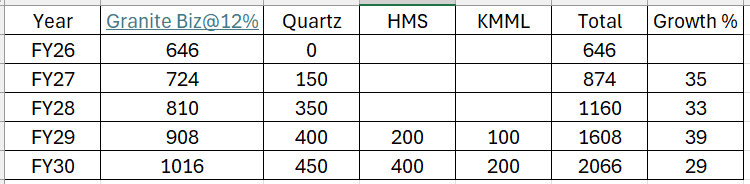
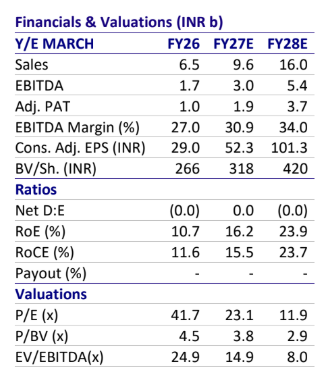
Worth making the arithmetic explicit, because it’s the crux of whether ~40x is cheap or dear. On roughly 3.62 cr shares, FY26 consolidated PAT of ₹106.48 cr is about ₹29.4 EPS. So ₹100–120 EPS in FY28–29 implies PAT of ₹362–435 cr — a 3.4x to 4.1x in two-to-three years, from a base year in which consolidated profit was flat.
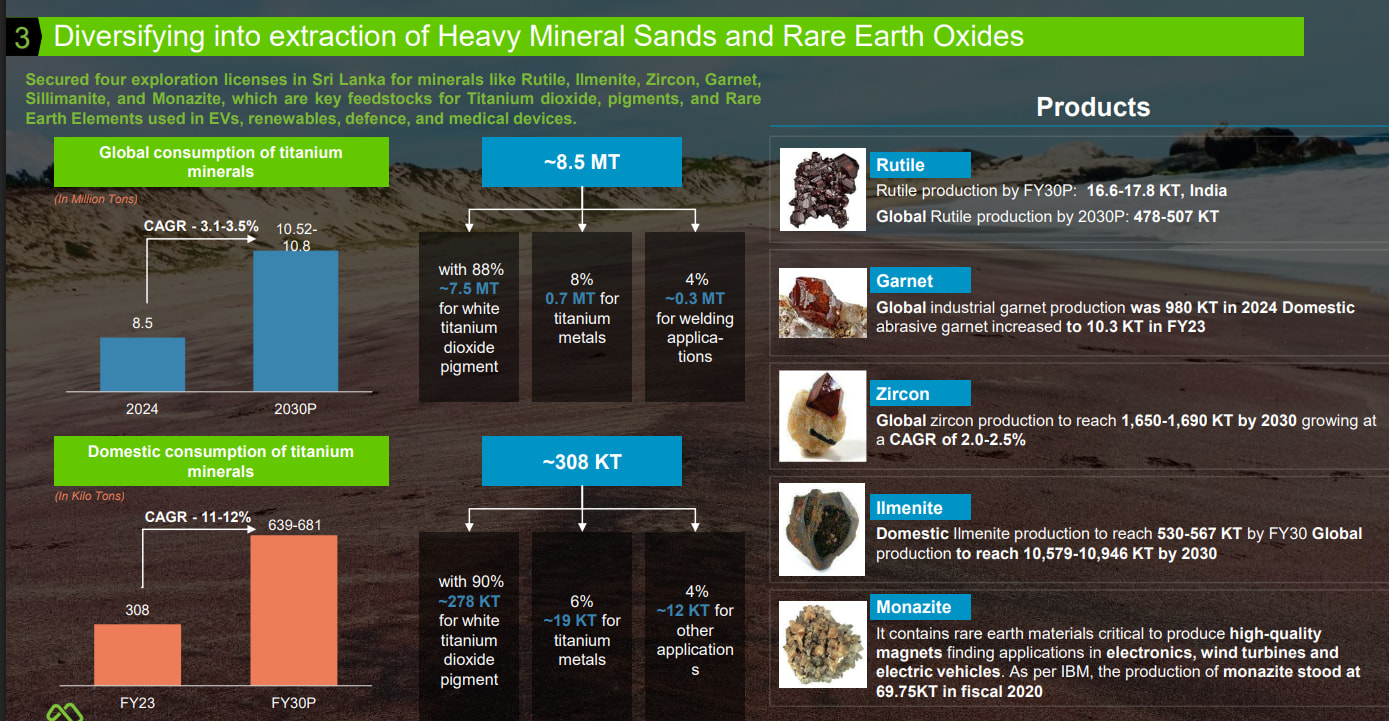
That isn’t impossible for a company adding two genuinely new segments off a small base. But it requires quartz Phase I+II to run near full, HMS to clear Sri Lankan licensing and build out, and REM to move from a 50 MT pilot to commercial — essentially all three, roughly on schedule. The FY26 result is the first data point, and it came in flat with Phase II capex mostly unspent. The “wait and watch” conclusion this thread reached in May looks well-judged on the evidence rather than merely cautious.
For what it’s worth, the ₹1,050 accumulation level discussed in this thread has been tested since — the 52-week low is ₹1,048.5, against ₹1,194–1,236 now and a 52-week high of ₹1,859.9.
Open questions for the thread
-
Midwest Ltd vs Midwest Energy — does anyone have clarity from the RHP or a concall on how rare-earth work and economics are meant to be divided between the listed company and the promoter-group entity? This seems to me the highest-value unknown in the whole thesis.
-
Phase II quartz capex — has anyone tracked the CRISIL monitoring reports quarter-on-quarter? If the June-quarter report shows the ₹128.52 cr still largely unspent, the FY28 80%-utilisation assumption needs revisiting.
-
Sri Lanka HMS licensing — the regulatory update was expected June 2026. Has anything actually been filed or said? I don’t see a disclosure.
-
Q4 FY26 standalone down 18% YoY — was that granite realisation, China demand, shipping, or quartz cannibalising the reporting? The 27 May concall transcript is filed; if someone has read it, that answer would be useful here.
-
The China concentration — raised earlier in this thread and never answered. Given black galaxy exports concentrate there, does anyone have the country-wise revenue split from the annual report?
Q1 FY27 results aren’t out — trading window closed 29 June and I don’t see a board-meeting intimation yet, so likely mid-August. That’s the print that settles the ramp question.
Disclosure: not invested, no transactions in the last 30 days. I’ve worked off the filings rather than the concalls, so anyone who has done the transcripts should correct me where the management commentary contradicts the above. Nothing here is a recommendation.