
good traction on listing in NSE so far Krishna defence with 15 cr turnover today
4 Likes
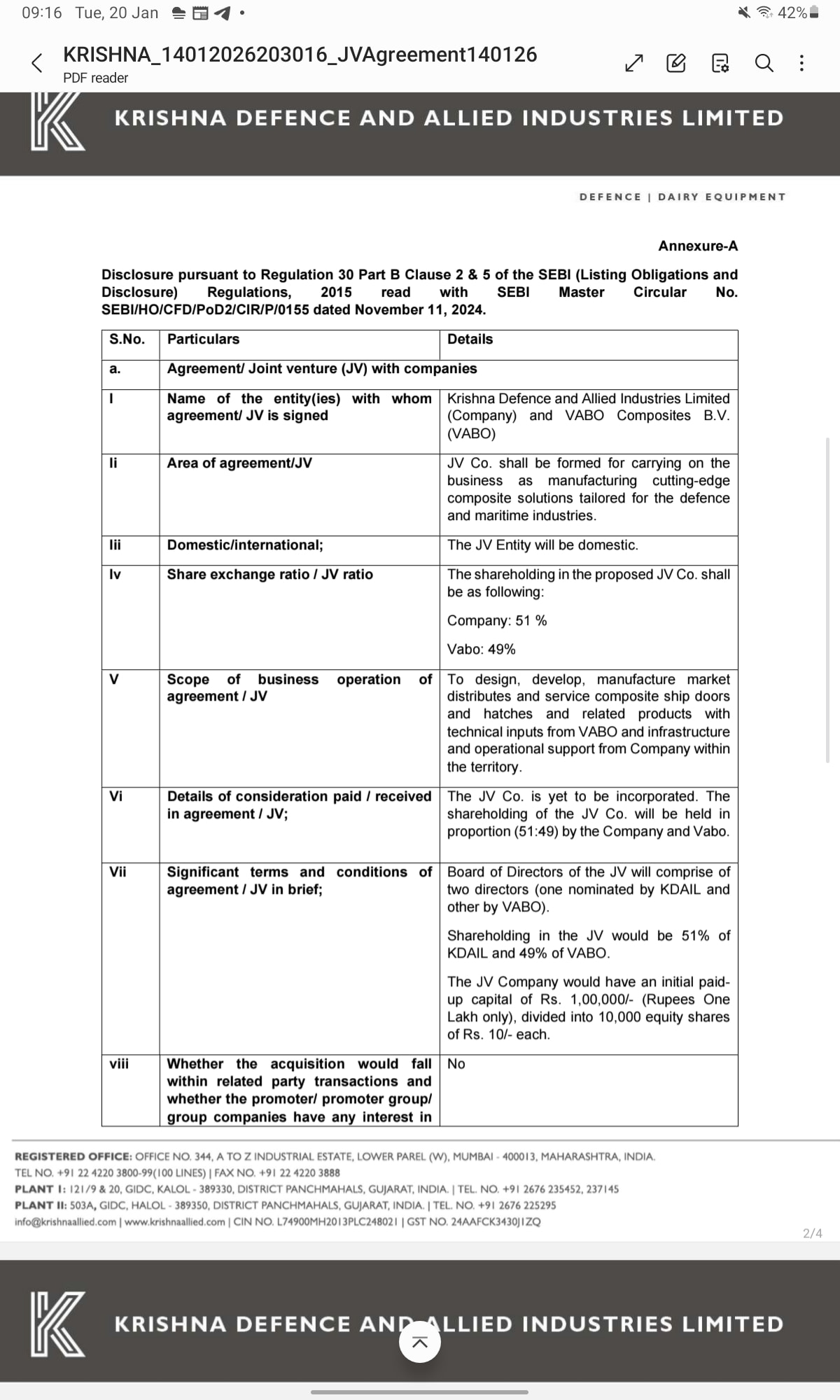
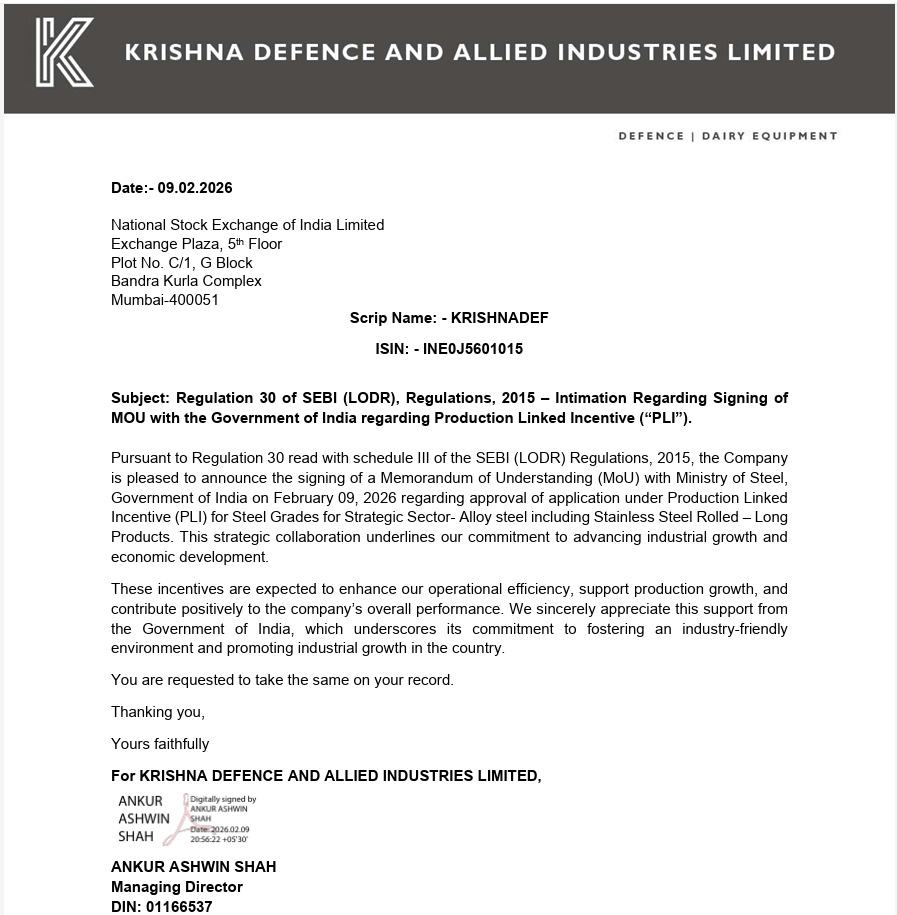
PLI approval for Steel grades for strategic sector - Alloy steel including Strainless Steel Rolled - Long products.
3 Likes
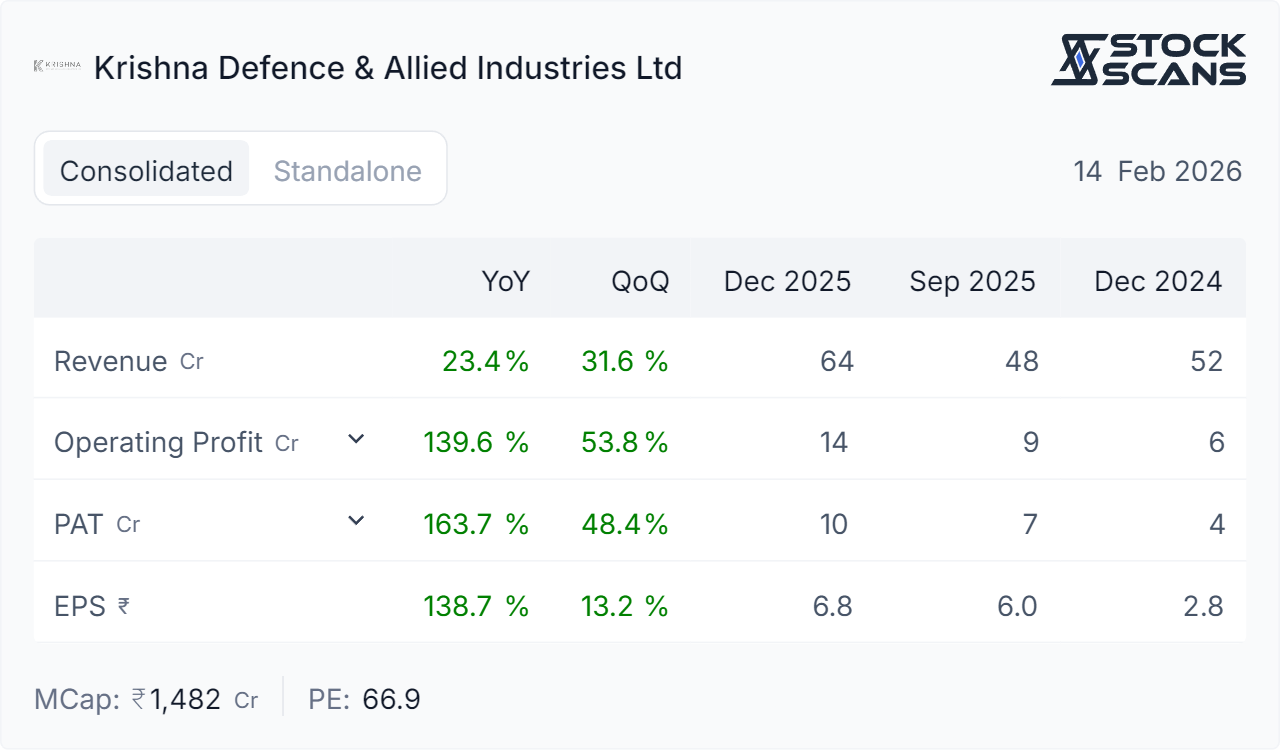
Krishna defence posted stellar Q3 results and the management is guiding for 30-40% CAGR growth with sustained margins (22-23%) in coming few years.
Still the response from the market has been muted compared to other defense stocks.
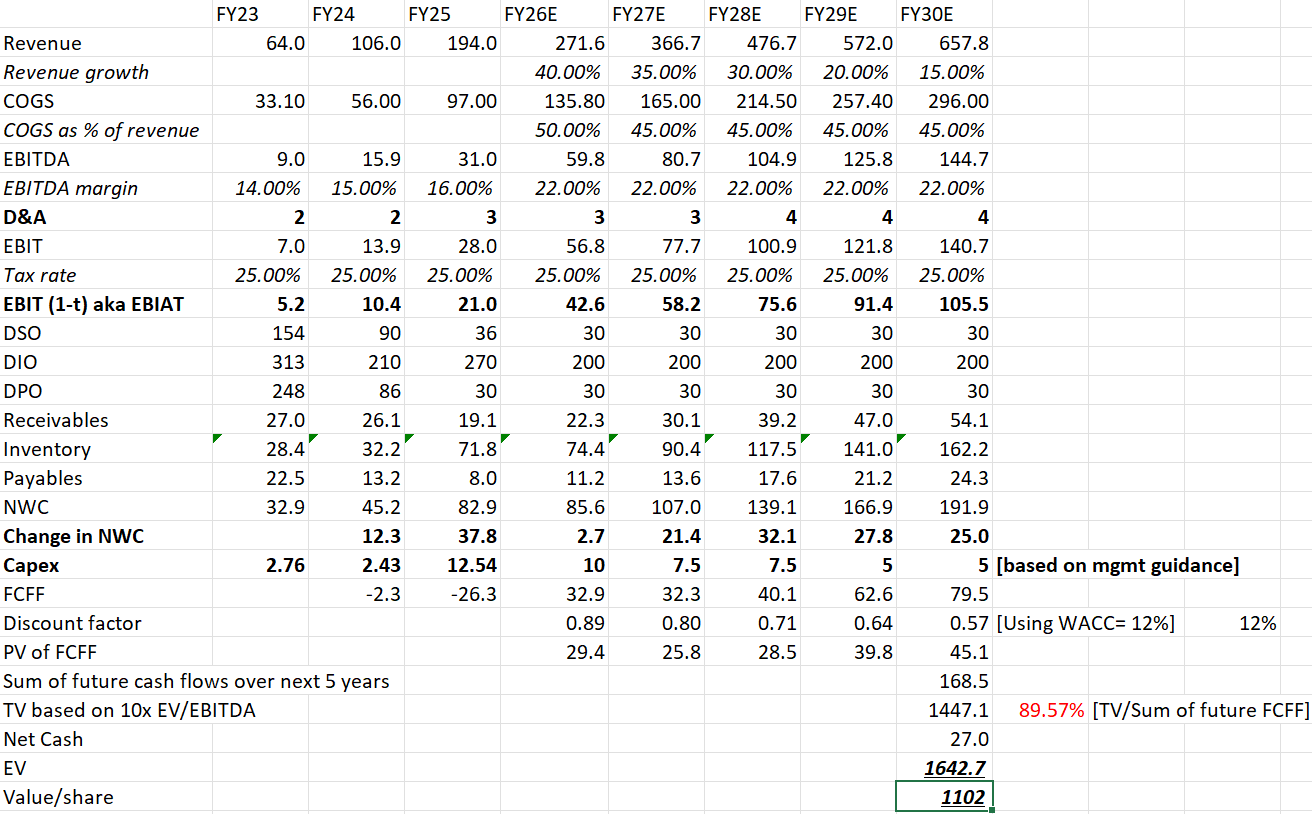
Here is a DCF valuation I attempted with a conservative (considering defense stocks recently are commanding very high EV/EBITDA) 10x EV EBITDA exit multiple for terminal value after 5 years.
5 Likes
they need to win some concrete orders. they are very well laid the foundations for the next moves. they are covering all bases design company stake, defence electronics,PLI,tech transfers from DRDO
still they need to report some orders to move up
this is personal view
2 Likes
I have been doing some digging around. I did their balance sheet analysis. Here are key points.
-
Krishna Defence operates with structurally long working capital; inventory days were about 270 in FY25 (range ~210–340 over FY21–25), versus ~120–180 days that you would typically like to see in defence manufacturing.
-
This means a significant portion of capital remains locked in raw material/WIP/finished goods for close to 9 months before getting converted to sales and then cash, effectively depressing cash returns on capital.
-
The cash conversion cycle has been in the ~250–300 day range in recent years , still implying roughly 8–10 months to convert an outlay on working capital back into cash.
-
Debtor days have improved meaningfully to roughly one month recently, so the main issue is inventory/WIP intensity rather than slow collections; the operating cycle risk is concentrated in production and stocking.
-
High inventory days together with long CCC mean that as the company grows, it needs proportionately more cash tied up in working capital; the business model is inherently cash‑consumptive at the current structure.
-
Operating cash flow has been negative in 3 of the last 4 years despite rising revenues and profits, because the increase in working capital each year has more than absorbed the accounting profits.
-
As a result, growth is not self‑funded: the company has relied mainly on fresh equity (and some internal accruals) rather than debt to finance expansion, working capital and capex.
-
Promoter holding has reduced over the last few years, and equity has effectively been used as currency at high valuations, which is dilutive for long‑term minority shareholders if future ROIC does not rise meaningfully.
-
The company is also making strategic investments/capacity additions in allied areas; while this can build long‑term capability, the underlying cash to fund these is largely coming from external capital rather than surplus operating cash.
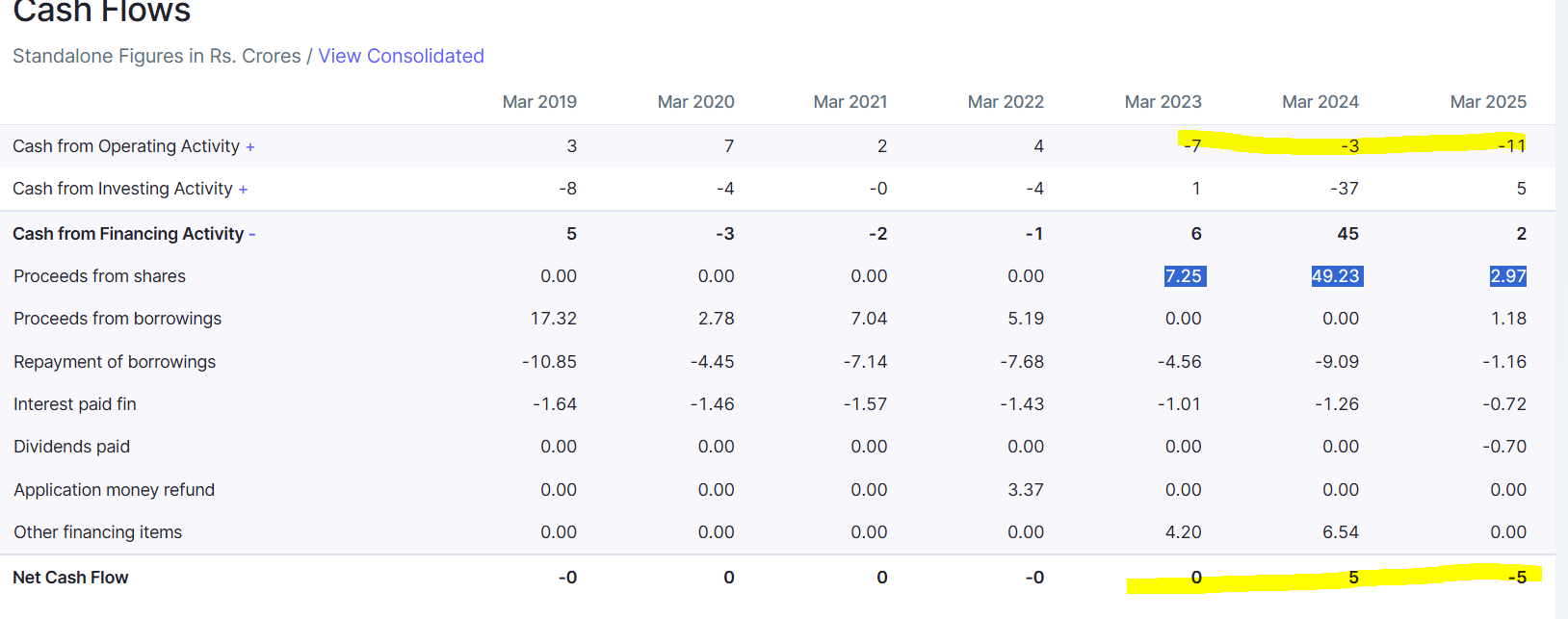
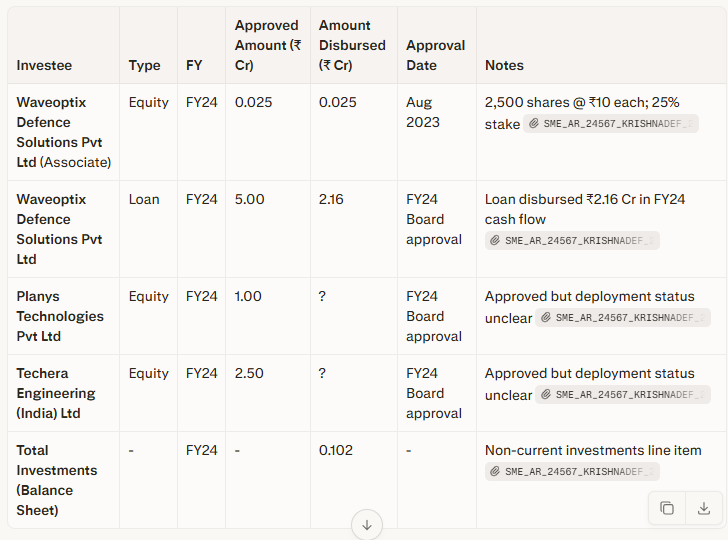
- Overall, the business is profitable at the P&L level but not yet self‑sustaining in cash‑flow terms; until working‑capital intensity comes down and CFO turns consistently positive, growth will likely continue to depend on external equity.
Krishna Defence’s growth outlook remains मजबूत with management guiding for ~30% CAGR, supported by strong defence sector tailwinds. However, the balance sheet suggests that this growth is currently working-capital intensive and not internally funded .
At FY25 revenue of ~₹194 Cr and a working capital intensity of ~1.3–1.5x sales, incremental growth requires disproportionately high capital. Over the next 3 years, scaling revenue to ~₹425 Cr would require ~₹325 Cr in additional working capital, along with ~₹100 Cr in capex. This implies a total funding requirement of ~₹425 Cr.
Against this, internal cash generation is limited. Even assuming ~15% PAT margins and an optimistic 50% cash conversion, cumulative internal cash flows may only amount to ~₹75 Cr. This leaves a funding gap of ~₹350 Cr , which is significant relative to the current market cap (~₹1,500 Cr).
As a result, equity dilution of ~20–25% appears likely if the company sustains its targeted growth trajectory without meaningful improvement in working capital efficiency.
The key risk-reward hinge lies in execution:
- If working capital normalizes (WC/Sales → ~0.8x), dilution risk reduces materially.
- If not, growth will likely remain externally funded , impacting per-share returns despite strong topline expansion.
In the near term, favourable sector sentiment may overshadow these concerns. However, over the medium term, cash flow conversion and working capital discipline will be critical drivers of valuation sustainability .
Note: tracking position. Used different AI to research.
20 Likes
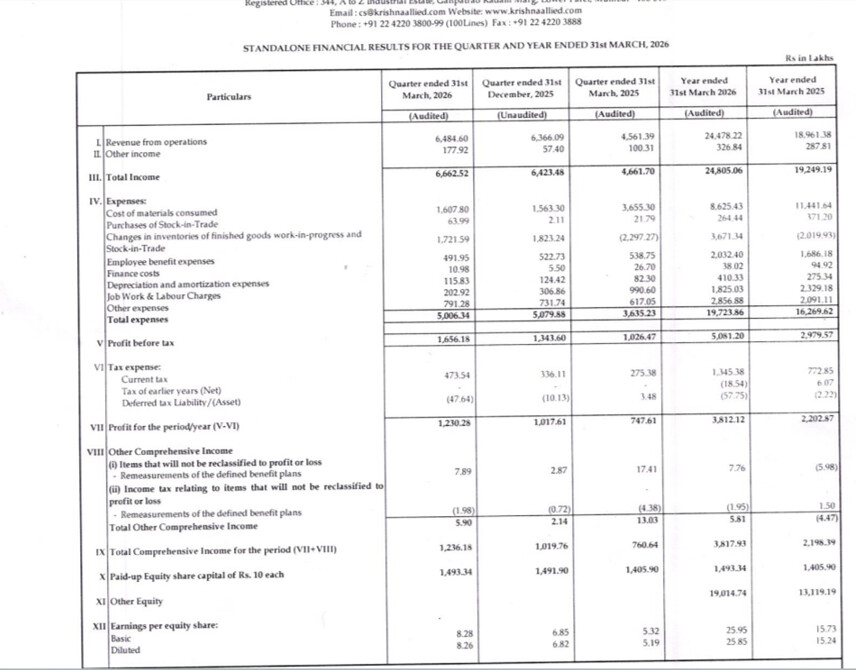
Good results..
- 41% increase in revenue
- Operating margin steady YoY and some improvement sequentially
- Good cash flow generation: 86 cr vs -11 cr
8 Likes
This order for 6 submarines may be a great trigger for Ship Building and Defense companies having Naval warship / submarine related products
Hoping Krishna Defense gets some meaningful jump in its orderbook in next few months.
Centre okays ₹70,000-crore deal for six made-in-India submarines | India News
2 Likes