Kautuk's Ledger - It's Accrual World

Hello everyone

Before I specify what this thread is about, a little about myself and my current portfolio:

I am Kautuk. I play drums.

My current portfolio composition is as follows:

Debt - 80% (ICICI Pru Ultra Short Term Fund)

Equity - 20%

Equity weight

Indian Energy Exchange - 100% of equity portfolio

This thread will mostly be a combined effort of myself and the members of the forum to dissect an annual report and separate the wheat from the chaff :). Topics include:

  • Complex Accounting Concepts including but not limited to Deferred Tax, Goodwill Impairment, Acquisition Accounting and Share Based Compensation
  • What are the different parts of an annual report and how to identify parts that actually matter as far as accounting is concerned
  • How to judge the quality of management and more importantly the quality of the auditors based on a standardized checklist
  • What are the most significant accounting assumptions that directly affect the reported profits and how to judge the adequacy and reasonableness of those assumptions
  • How to evaluate corporate governance using AI
  • And other topics that we discover as we ride the tide

I don’t want this to be an Accounting 101 thread. I want this to be as practical as possible, citing extracts from actual annual reports with actual examples.

A lightweight for today:

Financial Statements Disclosures

This is one of the metrics that I use to judge quality of management and the quality of auditors. Indian Accounting Standards (“Ind AS” hereafter) classifies two types of disclosures:

  1. Mandatory : Ones that have to be provided in the financials statements, no questions asked.
  2. Voluntary: No mandatory requirement by law but encouraged

There are hundreds if not thousands of disclosures required in financial statements. So the big question, how to identify missing disclosures even if you don’t come from an accounting background?

NotebookLM is the answer. You can create a notebook in Notebook LM, upload the latest annual report of the company you are researching on and then upload the following pdf:

ICAI Ind AS Disclosure Checklist.pdf (6.4 MB)
(Note: This publication is a copyright of the Accounting Standards Board of the Institute of Chartered Accountants of India and I don’t claim to have produced a single page of the aforementioned pdf. This document has been procured from the Institute’s website, i.e. a public source.)

After having uploaded the the disclosure checklist pdf and the annual report, you can run the following prompt:

“You are a partner in the auditing and assurance division of one of the big 4s with 20 years of experience. You have been appointed with a task to ensure compliance with disclosure requirements as per Ind AS. I want you to first identify each and every mandatory disclosure from the Ind AS Disclosure checklist and then go through each and every page of the annual report of company X. Give me an Ind AS wise list of all disclosures that are mandatory but whose disclosure is not available in the financials statements of Company X. Also give me a list of voluntary disclosures that the company made and did not make. Double check your findings. For some standards like Borrowing Costs, which requires disclosures if borrowing costs have been capitalised, if annual report contains no information, write that no information about borrowing costs made and hence borrowing costs should not have been capitalised”
(Note that the prompt is just a draft. It can always be more detailed albeit better)

After NotebookLM, gives you the result, here is how to evaluate those results:

If the company is not making mandatory disclosures that are required by law and the auditor has not reported the non-disclosure, it raises a serious credibility on the quality of auditors and the intent of the management.

If company is making mandatory disclosures and even making voluntary Disclosures - Everything’s fine. High quality with good transparency.

Posts will not be linear. Expect weeks of gaps between two posts. I am currently working on “Sai Life Sciences” because of a very peculiar management compensation, complex revenue recognition, Investments carried at costs despite such investment making continuous losses, Cancellation and reissuance of ESOPs just before the IPO, change in Nomination and Remuneration Committee just before compensation plan was altered for the CEO.

The most important point is Investments carried at cost. High risk area. Last time, someone did that, it resulted into a huge scandal. That someone was Brightcom Group. If ykyk.

Until next time:)
9 Likes

thanks @kautuk
i do something similar with uploading forensic analysis textbooks to see if there’s any potential red flag.
this checklist approach seems more surgical than mine. will definitely add it to my workflow.

Hi Kautuk
I read your write-up on Deep Industries and it was great work. I reached out to you through DM also. I understand your work was not as appreciated.

Unfortunately, we can just be red signal not barricades.

I tried doing this on Ugro but did not work much. I also warned one of my close friend on stallion fluoro company but when share prices goes up no-one listens.

I reach out here to collab on Time Techno. Couple of years back I had researched the company. I had declined this as fishy. However, stock did fine. Later few MFs, some popular fund managers and respected/popular investors entered or talked about it.

Few days back again I looked at it to understand. Here were my findings couple of years back:

  1. Auditor seem to be not renowned – audited Allied Digital, Mukka Protein
  2. 50% of revenues and profits not audited by main auditor

Inspired by your Deep work on Deep Industries I tried again. I would call upon you or anyone else who can help in uncovering in more pin pointed structured way of finding issues.

I found more, not sure if these are good findings to stay away, Your help on structuring it further would be helpful

  1. MD & CFO are same for several years
  2. Eerily auditors re-appointed have similar/overlapping names (Khandelwal)
  3. One of the independent auditor was reclassified to non-independent
  4. 50% of revenue and profits continues to be not audited by main auditors
  5. There are several subsidiaries and related party transactions (loans etc.)
  6. Large write-off of 44 crores (50% of revenues) at battery subsidiary, worth noting that the annual report disclosure is in image format for this subsidiary
  7. For a Rs 5,500 Cr revenue company with several-entity international structure, not renowned auditor
  8. USD14 million loan to related parties at Ikon investments and some write-off on interest receivables and some expected credit losses. Some write-offs of amount due from subsidiaries
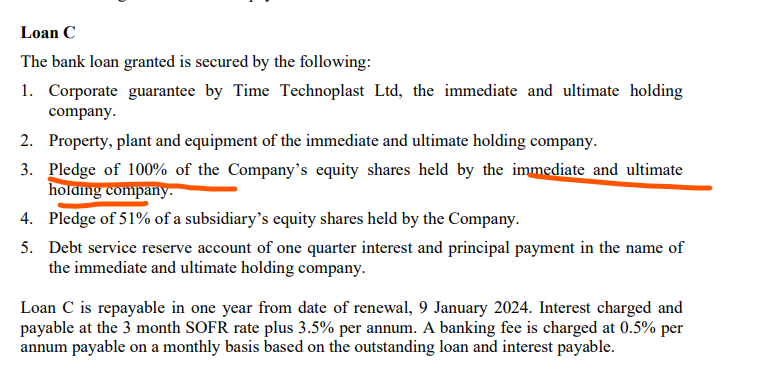
  9. Time Techno is providing pledge on its stake held in these subsidiaries for some loans taken. So we account for subsidiaries’ revenues and profits but they may be taken over by lenders if any difficulties in paying back. Most of the subs I checked are in losses.

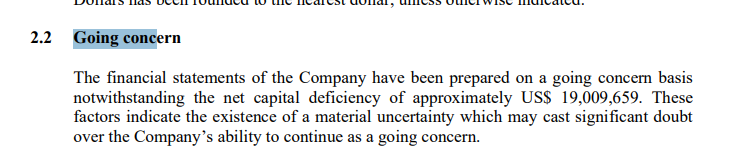
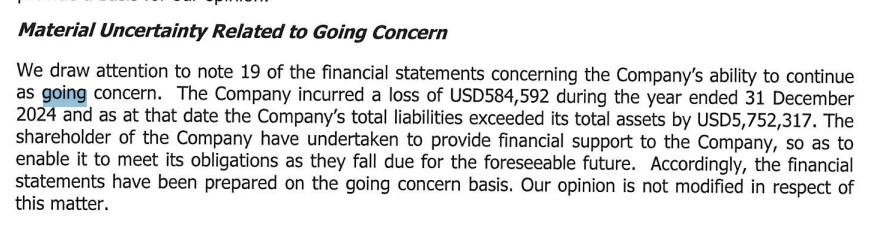
  1. Going concenr issues at couple of subs: GNXT

and Ikon

Please not this is not buy or sell recon. This is just a learning exercises to asses companies better.

4 Likes

Hi Mr. JP

First and foremost, I feel your pain of being the only one who is screaming with his lungs that something is fishy for it to be downplayed because the “stock did fine”, some popular “investor” talked about it or some Mutual fund bought it.

Cognitive, specifically institutional bias, remains and will continue to remain predominant for longs and shorts alike.

I would be delighted to collaborate with you on Time Technoplast because its like taking a kid to a candy store. (Jk:))

The most important thing in cases like these, i.e. Time Technoplast, in my humble opinion would be to study the Standalone financial statements. Standalone and not Consol. Why? Because consolidation is a fugazi. In companies like Time, with heavy related party transactions and loss making subsidiaries, the auditors have to report material events in the audit report. But since in consolidation, all intra group things get eliminated, they are not required to report such events or matters in the consolidated audit report.

Take for example Sai Life Sciences. In the standalone financial statements, there are huge investments in loss making subsidiaries. The auditors rightfully included a key audit matter in the Standalone audit report that the company has not impaired these investments despite their loss making status.

Now in consolidation, since this investment will entirely get eliminated from the balance sheet, the auditors don’t need to report such a key matter in the Consol Audit Report.

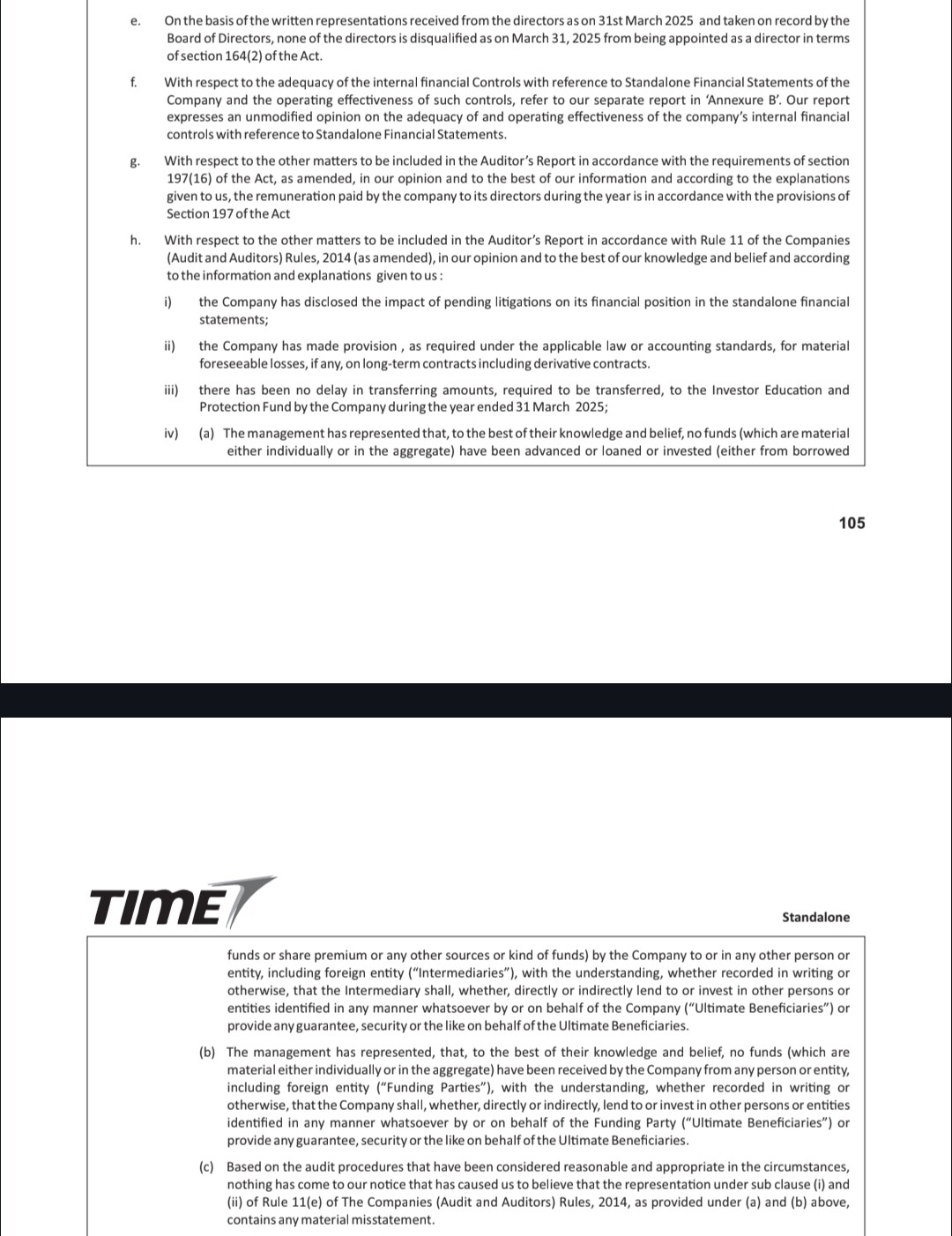
Another important document to read regarding loans provided and investments made is the CARO report, specifically clause (iii) of Para 3 which entirely talks about Loans, Investments and Guarantees.

You could come to know a lot about the audit quality of some serious issues are absent in the audit reports or annexures like CARO.

I would start with the auditors like you mentioned. Similar surnames, resignation and the newly appointed auditor audits only two publicly known companies!

Next since Time Technoplast is Acquisition heavy, reading the actual NCLT Scheme of Arrangment would be of great use (helped me with Deep Industries). All docs available on the Tribunal’s website.

Also, out of context, but I really recommend two books if you are interested in such things:

  1. Financial Shenanigans by Howard Schilit - Talks about tricks management use to inflate revenues, under-report expenses, manipulate operating cash flow and how to find them in notes to accounts. The book is not heavy on technical accounting language and is accounting beginner friendly.
  2. Fooling Some of the People All of the time by David Einhorn - Investments carried at cost ;)
5 Likes

Not a detailed post per se but something I’d like to share.

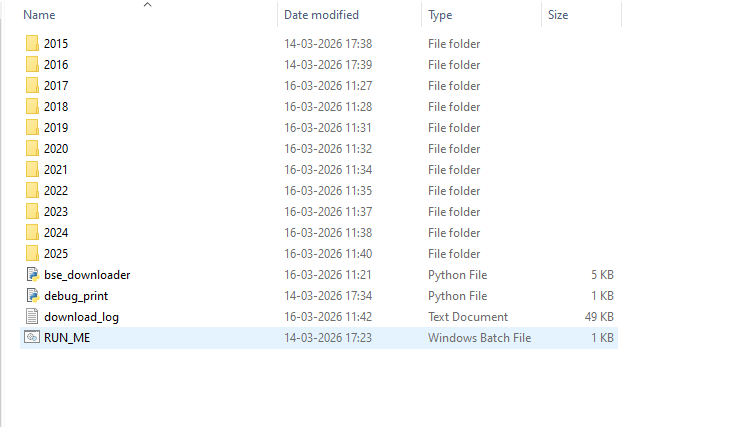
I asked Claude to do some code in order for me to just enter the company’s name and/or BSE Code and it will download all BSE filings, arrange it systematically on my desktop for all available years.

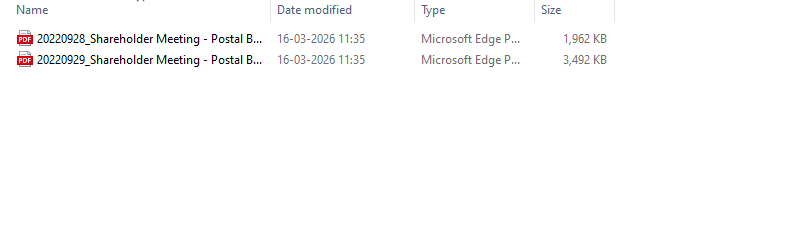
Results attached herewith:


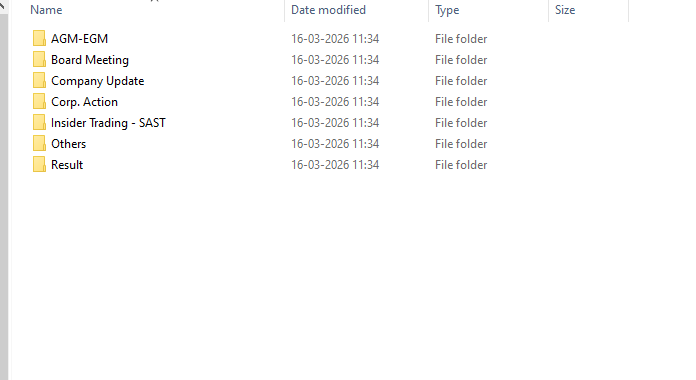
This is a great tool to be very honest. No need to dig deep into the BSE website to find that document on the reason for auditor resignation. Just run the code, all circulars get downloaded, upload the whole bulk on NotebookLM and ask questions.

Saves a lot of time and more importantly NotebookLM was made to specialize in things like these. Going through hundreds of documents, line by line and providing inputs which will easily be missed by the human eye. All Board Meetings, all AGM votes, everything in one folder!

Anthropic for the win!

5 Likes