Jupiter Wagons Ltd (previously CEBBCO)

Latest news:

  • JV debarred for fake localization: On September 8, 2025, it was reported that the Indian Railways debarred Jupiter Wagons’ joint venture with Slovenia’s Kovis for six months, starting September 20. The JV had allegedly falsified claims about the local origin of brake discs in a tender with the Modern Coach Factory.

Will this leads to mangement quality…in question?

7 Likes

Company announced the launch of its new 10 ft and 20 ft containerised Battery Energy Storage Systems (BESS) with the first 10ft BESS being supplied in partnership with GMMCO, a CKA Birla Group company .
The company is driving decarbonisation in the field of entertainment, and hospitality sectors.
and will continue working with GMMCO, with plans to roll out more such sustainable solutions .
Jupiter wagons 2.pdf (1.4 MB)

3 Likes

Earning call, promoter interview and promoter’s tweet links below.

Get a feel that the management is trying best to send out the message that all is well. They got hit by a double whammy of wheel set shortage and the labor disruption and are now on recovery path.

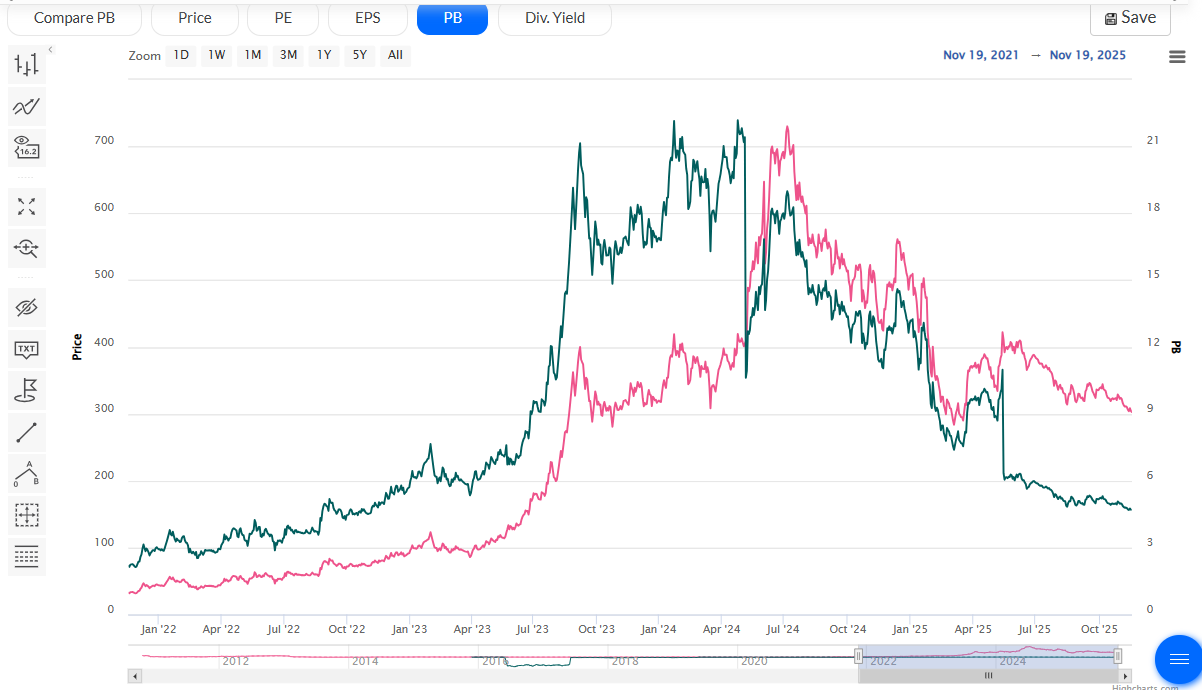
It also looks like it is bottoming out. On a price to book basis, it seems to be attractive (source trendlyne). Titagarh’s trend also seems similar. So, I think we are getting close to bottom here.

The PE part for JWL will be a bit tricky. The TTM revenue will have a pressure because of Q1 low, unless Q3 and Q4 make up for it. So, considering for FY26, the valuation might have a bit of pressure and stock will likely move sideways as there any enthusiasm will be dampened due to high base prior to Q1 FY 26.

Links

Youtube Video description (from youtube site):
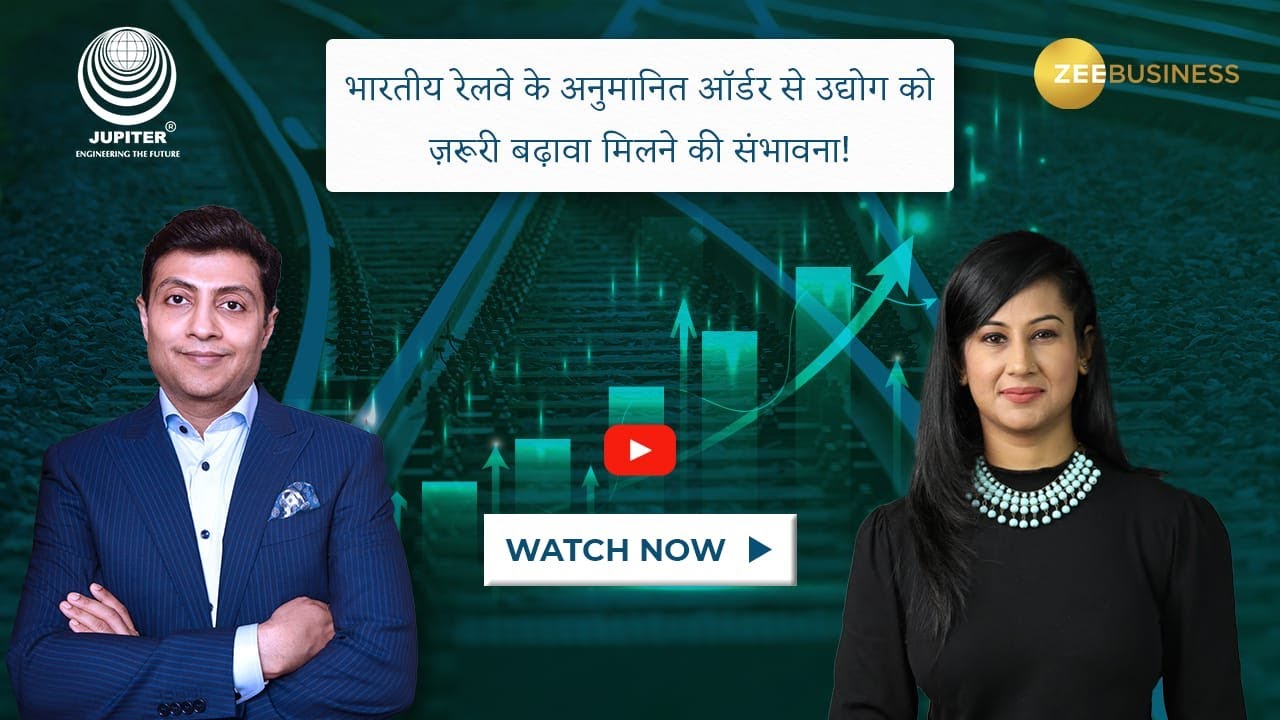
Vivek Lohia, Managing Director of Jupiter Wagons, joins anchor @Priyanka Uppal Anand on Corporate Radar, @Zee Business, to provide a detailed overview of the company’s recent performance, strategic pivot, and aggressive growth outlook.

Mr. Lohia explains that the temporary Q2 revenue dip was primarily due to a severe, but now resolved, shortage of wheels supplied by the Railways, confirming that production is back to normal, driving strong sequential improvement.

The wheelset business has achieved a robust 100% year-on-year growth following the stabilization of the supply chain. Furthermore, the Wagon Segment is showing consistent growth, with a major order book expansion expected from forthcoming substantial new wagon tenders from the Railways. These tenders are essential for the Railways to meet their announced revenue and growth projections.

A key highlight is the update on the new Odisha wheels and axles plant. It is expected to be fully commissioned by FY27 and is projected to deliver an incremental revenue of ₹2,000 to ₹3,000 crore. Crucially, this includes ₹1,000 crore from long-term committed export orders. Based on these foundational strengths and strategic investments, Jupiter Wagons is confidently targeting a total consolidated revenue of ₹8,000 crore by FY28.

Corporate Governance history of the Company is poor.

Disclosure : Not invested tracking for knowledge.

Please advise with pointers about goverance issues?

Jupiter Wagons acquired CEBBCO under an NCLT supervised stressed asset resolution in 2019 and later completed a reverse merger, leading to a indirect stock exchange listing in June 2022; therefore, financials and share price history prior to mid 2022 are not directly comparable with the current corporate structure.

Given that Indian Railways is by far the dominant buyer and operator of freight wagons in India (apart from some private sidings for coal, limestone, iron ore, etc.), wagon demand largely tracks IR’s procurement cycles.

The table below summarizes the number of wagons acquired and the total wagon fleet of Indian Railways by financial year (source: Indian Railways annual reports and statistical publications). As older wagons are scrapped or sent for heavy overhaul, the year-on-year change in the total fleet will not exactly match annual acquisitions.

FY Acquired Total
2003 2,14,760
2004 2,27,752
2005 2,22,409
2006 2,07,983
2007 2,07,723
2008 2,04,034
2009 15,261 2,12,835
2010 15597 2,20,549
2011 16,638 2,29,997
2012 18,357 2,39,321
2013 16,894 2,44,818
2014 9,326 2,52,833
2015 11,151 2,54,018
2016 13,412 2,51,295
2017 12,323 2,77,992
2018 8,015 2,79,311
2019 12,649 2,89,175
2020 15,443 2,93,077
2021 12521 3,02,624
2022 12,796 3,18,883
2023 22,790 3,15,791
2024 37,650 3,27,991
2025 41,929

After a long period of relatively modest net additions to the wagon fleet, and in anticipation of incremental demand from the Dedicated Freight Corridor, Indian Railways placed a record order for 79,800 wagons in July 2022, distributed among Titagarh, Texmaco, Jupiter Wagons, Modern Industries, Hindustan Engineering Industries, Oriental Foundry and Besco, with supplies scheduled over roughly three years (around FY 2023–26)

This has driven all‑time‑high wagon production and, for the listed wagon manufacturers, record revenues in FY 2024 and FY 2025. Policy changes under recent tenders, where wagon manufacturers source more inputs such as steel and wheelsets directly from RDSO‑approved vendors instead of receiving them from Railways, likely increase billed revenue per wagon even if margins per tonne of steel are not proportionately higher. Steel prices would also add to revenues, althought that might depend on nature of contract from railways and suppliers and any hedging.

Beyond this execution peak, volumes/revnues from Wagons are likely to normalize unless further large tenders are floated, for example if additional DFC‑related demand materializes. Otherwise, the sector could again go through a relatively lean phase until the next major railway capex cycle, which historically can be spaced out over a decade or more.

Some of these wagon manufacturers are also scaling up into higher value passenger rolling stock, which can partially offset any future moderation in pure freight wagon demand. Titagarh Rail Systems has already built a sizeable passenger business: it is India’s first private EMU/MEMU coach supplier, has won multiple metro contracts and, via a consortium with BHEL, holds the marquee contract to design, manufacture and maintain 80 Vande Bharat sleeper trainsets over 35 years. Texmaco Rail is preparing to enter the passenger mobility space, currently supplying interiors and components and actively planning a move into full metro and passenger coach manufacturing, including through JVs such as its alliance with RVNL and partnerships for aluminium wagons and coaches. Jupiter Wagons, while still predominantly freight focused, is building an ecosystem around passenger rail through brake systems, passenger coach accessories, metro coach tie ups and a large Vande Bharat wheelset order via its Jupiter Tatravagonka Railwheel subsidiary, which should gradually increase its exposure to the passenger segment as well.

3 Likes

Q2Fy26 Concall Analysis

Business Update:
Q2FY26:

  1. Financial performance:
    Consolidated P&L statement (in cr)
    |Column 1 | Column 2 | Column 3 | Column 4 | E | F|
    |— | — | — | — | — | —|
    |Particulars | Q2 FY26 | Q1 FY26 | Q-o-Q (%) | Q2 FY25 | Y-o-Y (%)|
    |Revenue | 785.8 | 459.3 | 71.10% | 1,009.00 | -22.10%|
    |Other Income | 10.3 | 16.9 | -39.30% | 9.7 | 5.60%|
    |Total Income | 796.1 | 476.2 | 67.20% | 1,018.80 | -21.90%|
    |Cost of Raw Material | 569.6 | 298 | 91.10% | 768.7 | -25.90%|
    |Employee Cost | 23.6 | 23.5 | 0.30% | 17 | 38.80%|
    |Other Expenses | 89.1 | 78 | 14.20% | 83.9 | 6.10%|
    |Total Operating Cost | 682.3 | 399.5 | 70.80% | 869.6 | -21.50%|
    |EBITDA (Excl. Other Income) | 103.6 | 59.8 | 73.20% | 139.4 | -25.70%|
    |EBITDA % | 13.20% | 13.00% | +20 bps | 13.8% | -60 bps|
    |Depreciation | 16.4 | 16.2 | 1.40% | 12.8 | 28.60%|
    |Finance Cost | 18.6 | 15.9 | 17.10% | 16.7 | 11.70%|
    |Share in Loss of JV | -0.5 | -0.6 | -15.80% | -0.5 | -5.10%|
    |PBT (before Exceptional Item) | 78.3 | 44 | 77.90% | 119.2 | -34.30%|
    |Exceptional Items | -10.4 | – | 0.00% | – | 0.00%|
    |PAT | 45.3 | 31.1 | 45.80% | 89.4 | -49.30%|
    |PAT % | 5.80% | 6.80% | -100 bps | 8.9% | -310 bps|

  2. Business & Operational Update:
    a. Wheelset supply has turned normal.
    b. Order book: 5538 cr (wagon: 11,000 to 12000 wagons, in value term: 60 to 70% of 5538 cr)
    c. Update on Jupiter Electric Mobility (JEM):
    i. BESS Segment:
    • JEM made strong progress in the (BESS) business this quarter by launching 10 ft and 20 ft containerised systems with modular air-cooled architecture and capacities ranging from 241 kWh to 3 MWh, addressing applications such as diesel genset replacement and solar energy storage. It has already delivered the first 10 ft BESS unit to Greenlit via GMMCO partnership, secured multiple fresh orders for both variants indicating volume scalability, and is now preparing to export the first 20 ft unit. Additionally, JEM is developing a liquid-cooled grid-scale BESS, which will help tap into the utility-grade market and significantly expand its product range and TAM.
    • key components like BMS(Battery management sys) and EMS are already indigenized and developed in-house, with only battery cells sourced from China. Management confirmed that BESS segment is already price-competitive with China, is receiving both domestic and export orders, and expects margin accretion as in-house BMS & EMS integration scales over the next 3–6 months, though exact realization per MW/container was not disclosed yet.
    • Present monthly capacity: 40 to 50 MW, enough to cater to present order book in this segment.
    • JEM (EV + battery/BESS) is seen as a high-growth segment with potential for 2,000–3,000% market growth in 2–3 years, especially as India transitions from imports to domestic manufacturing. Management confirmed that Jupiter Electric Mobility could surpass other divisions in growth due to strong industry tailwinds and entry of large players (Reliance, Adani, Tata).

ii. e-mobility segment:
• JEM is simultaneously scaling its electric commercial vehicle ecosystem. After launching its first showroom in Bengaluru in June 2025, it has already expanded to six more dealership locations — Hyderabad, Delhi, Ghaziabad, Pune, Ahmedabad and Trivandrum — signalling a deliberate distribution network build-up focused on logistics hubs across India.
• The showcased product — JEM TEZ, a 1.05-ton electric light commercial vehicle (LCV) designed for urban logistics & last-mile delivery, offers a certified range of 300+ km, directly targeting e-commerce-driven logistics demand — one of the fastest-growing EV adoption segments in India. Expecting to break even in FY26 itself and be EBITDA positive in FY27.
• JV with porter and e LCV segment: Management confirmed that the EV (eLCV) business is on track to meet the FY26 revenue target of ₹100 crore, with partnerships like Porter and others showing good traction, and guided that FY27 revenue will likely double, supported by new vehicle variants to be launched (lighter and cheaper 1-ton model + new 2-ton truck) and expected EBITDA breakeven next year.
d. Update about Jupiter Tatravagonka Railwheel Factory/wheelset:
• achieved major order wins, including
₹113 crore order for 9,000 LHB Axles (Rs 1.25 L per Axle) and a ₹215 crore LoI for 5,376 Vande Bharat wheelsets (Rs 4L per wheelset), reinforcing its leadership in the rail manufacturing segment.
• The company is rapidly developing a large-scale axle & wheel plant in Odisha with a planned investment of ₹2,500 crore, expected to produce 1 lakh wheelsets annually by 2027. (Estimated 4L*100000 = 4000 cr topline contribution from wheelsets alone in FY27, assuming full capacity gets consumed)
• Management claims in house axles and components manufacturing as differentiators from Titagarh as they are also starting wheelset manufacturing.
• Axle production to start in calendar year 2026 and whole line of wheelset in 2027.
e. Upcoming Railways Wagon Tender : Indian Railways is expected to release a large wagon tender (~50,000 wagons), but it has been delayed due to high existing wheelset order backlog; once the backlog reduces, the new tender for various wagon types is likely to be announced anytime, as per management.
f. Container Business: Management attributed the sharp growth to rising industry demand for specialized containers used in BESS and data centers, supported by marquee clients (GE, Tata, Reliance, Toshiba-Mitsubishi) and capacity expansion to meet both Indian and global demand, ensuring strong visibility ahead.
g. Except DAKO JV, company claimed all JVs to be profitable.

Management’s guidance about future business parameters:
Q2FY26:

  1. Revenue target: although refused to give any definite number, accepted that they would not reach the Q3FY25 guidance of 5000 cr topline by FY26

  2. EBITDA Margin guidance: margin will improve in H2FY26 as the current wagon execution consists of private orders and complex auto car having higher margins.

  3. Strategy:
    • Management confirmed that wagons currently form 60–70% of the order book, but by FY28 they plan to reduce wagon share to ~50% and increase revenue contribution from higher-margin businesses such as wheelsets, containers, and crossings. They clarified that these three segments (wheel, container, crossing) have the highest EBITDA margins and form the core focus for margin expansion via product diversification and integration.
    • Exporting whole wagon is not feasible due to its huge size, rather company is focusing on exportin components with higher margin like brake system, wheelset etc.
    • Wagon margins are also targeted to improve through forward & backward integration, even though wagon margins remain lower than other segments.
    • On aluminum wagons, the company is already present but sees very limited market size, hence the priority is shifting toward specialized wagons where demand and margins are better.
    • Jupiter is also exploring entry into the passenger coach/Vande Bharat business, potentially by FY27, leveraging existing supply capabilities (brake systems, wheelsets, brake discs) but clarified that margins here are competitive, not automatically higher than wagons — expansion is mainly to widen product portfolio & revenue base, not purely margin play.

  4. Commissioning of Stone India:
    • Stone India is expected to be commissioned by Q4 FY26, with certification trials currently underway, and management expects it to start generating significant revenue and turn PAT positive from FY27 onward.
    • Strategic Synergy: Stone India is an engineering company supplying railway electrical components (pantographs, brake systems, loco valves). Its acquisition helps Jupiter expand beyond wagons into high-value railway components, strengthening product integration and margin potential across the railway ecosystem.

1 Like

So many positives yet the stock is not moving. I am not able to comprehend the same.

1 Like

The stock will move when the execution is in early full phase.

1 Like

Management in their Q4FY25 concall guided for 8000-10000cr revenue by FY28. In a TV interview post Q2 results they have revised that to 7000-8000cr. Maybe they were too ambitious, but would rather like them not giving out such big numbers and just focus on execution at this point.

@SahilPatani , They have clearly highlighted the challenges in Q1 and Q2 on wheelsets which will result in that earlier guidance not being achieved so this isn’t a surprise downgrade.

But yes, avoiding guidance and delivering results should be the focus. Especially when achieving that guidance has good dependency on external factors (wheelsets from IR). In the long term, once the Odisha plant is online in FY27, this shouldn’t be so much of an external dependency anymore so more of a controlled dependency.

Disc: Invested

Temporary challenges in FY26 should not result in a revenue downgrade for FY28. Yes the same issues can occur in the future as well but its all an assumption until they clarify.

1 Like

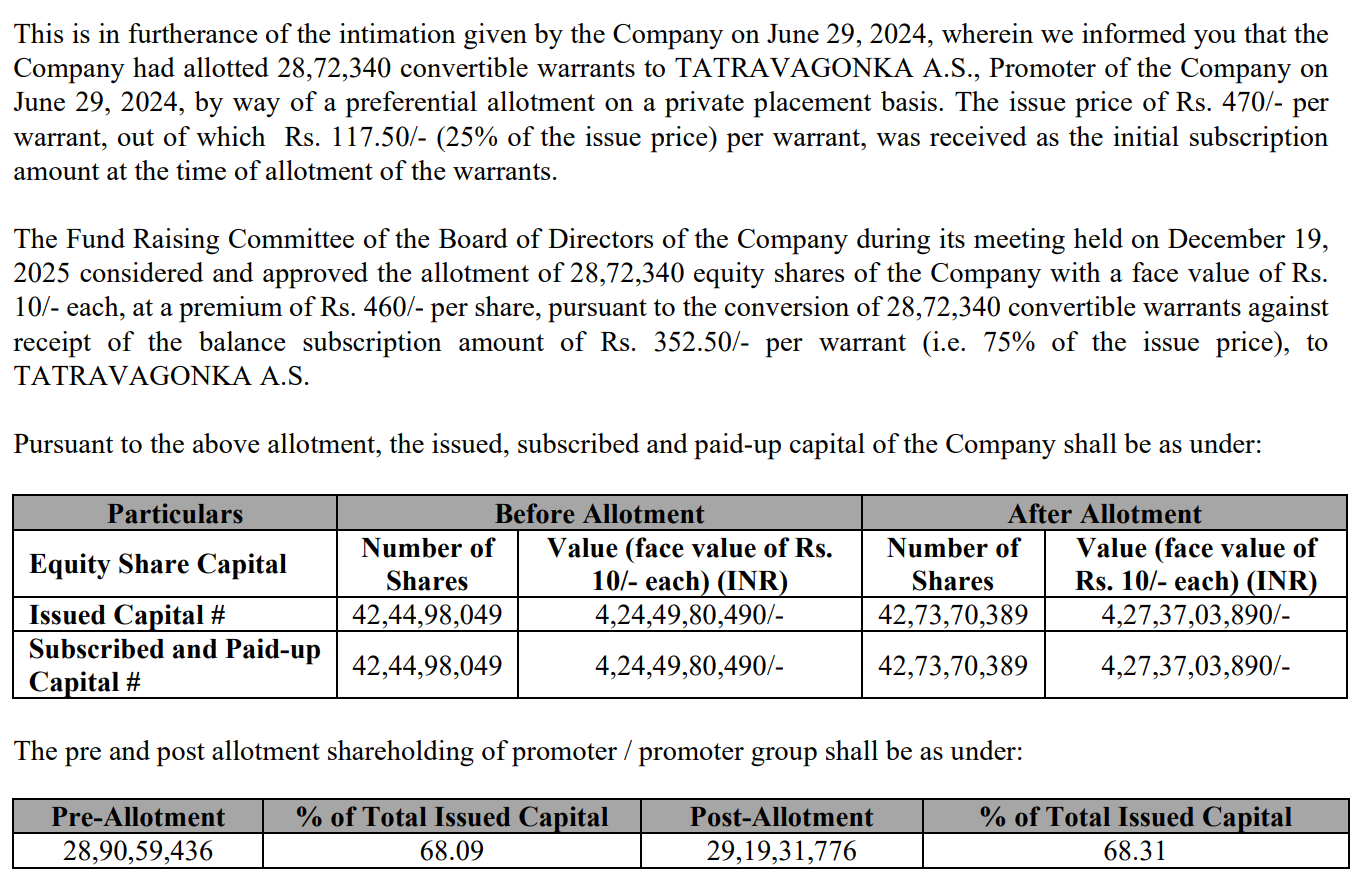
Promoters have converted warrants at premium of 75+% to the CMP!! This is in contrast to many other entities where warrants were cancelled on account of slump in prices.

7 Likes

Highlights the optimism and more importantly the confidence of promoters.

2 Likes

The writer conveniently forgotten about Texmaco Rail or conveniently ignored?

Or is there a reason? Boarders following the sector may update please.

JWL.pdf (212.3 KB)

JV role in the business. The Breakeven and scalable revenue on the business will be coming in FY28

Page 10 of 13 of the Q3 Transcripts :

Q So overall 2026-27 turnover and profitability, that will be better than 2025-26?

Vivek Lohia: Next 2027 and 2028 definitely, as per our anticipation, I think that will be one of the best years for Jupiter.

Q: I want one clarification. You said 2027 and 2028 meaning FY26-27 and FY27-28?

Vivek Lohia: FY27-28.

Q: Okay, meaning not 2026-27, it is 2027-28. Right now we are in 2025-26.

Vivek Lohia: This year as we said that our wheel new capacity will come in 2026 end or 2027 beginning. So till that capacity doesn’t come, this disruption will remain. So next two or three quarters we expect that the disruption will continue. But post that we are very confident that there we will have a very strong growth momentum. It’s not just wagons — our other businesses are also growing well, and we expect that growth to increase. Plus passenger business also we are now foraying into. So quite a lot of new opportunities will emerge.

1 Like
1 Like
1 Like