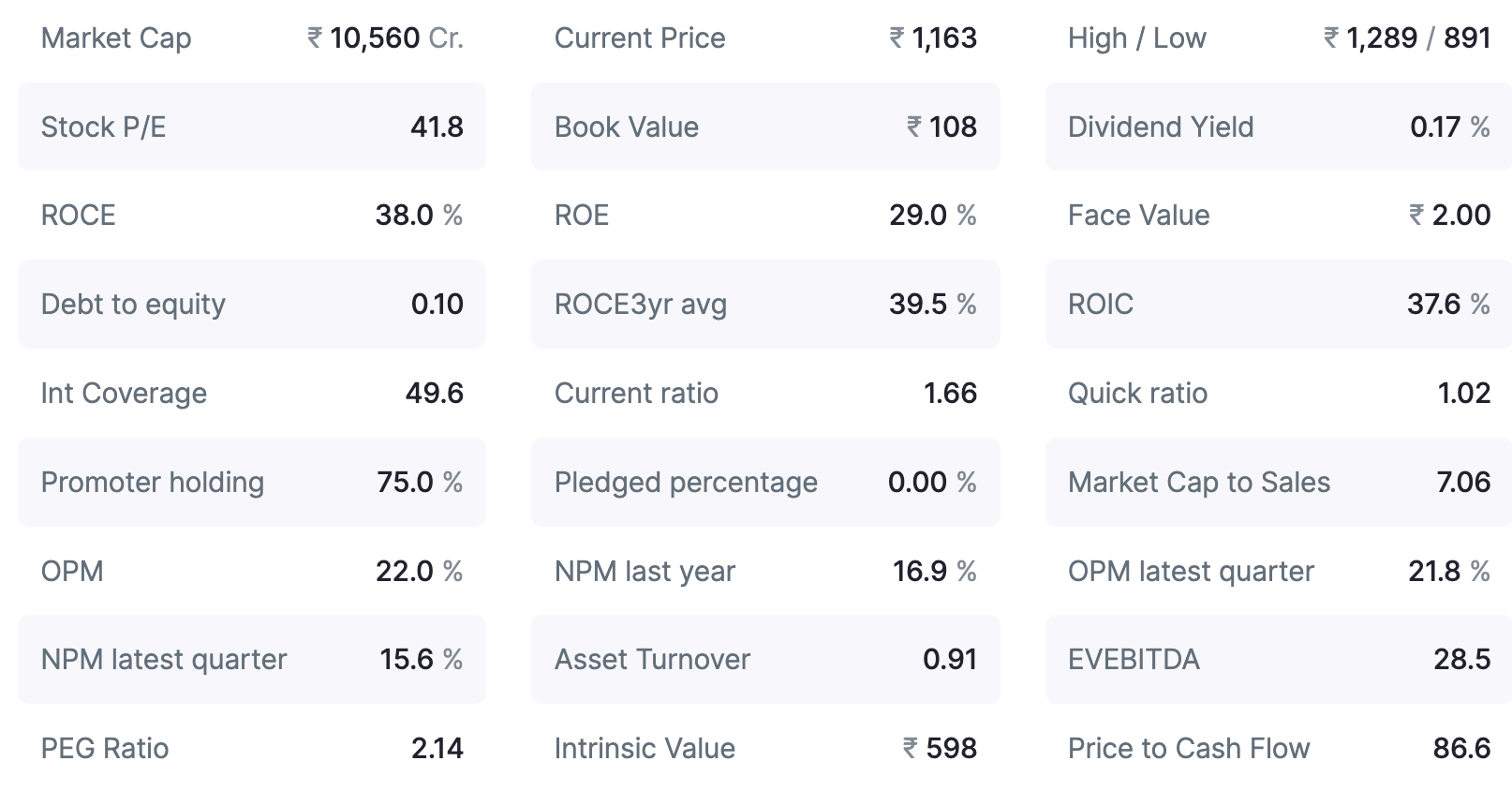
1. Company Overview & History
Founded in 1992 by Pavan Kumar Jain, Inox India Ltd. was established to make India self-reliant in the highly specialized field of cryogenic engineering. The company began its journey through a technical collaboration with Nippon Sanso (Japan) in 1993 for vacuum-insulated tanks. Over the past three decades, it has evolved from manufacturing standard 1-liter liquid nitrogen containers to executing massive turnkey projects, such as 15,000 m^3 LNG terminals.
Key milestones include:
-
2014 & 2021: Securing and delivering critical multi-process pipe transfer lines and cryolines for the ITER thermonuclear fusion reactor in France.
-
2023: Successful IPO listing on Indian stock exchanges.
-
2024–2025: Secured landmark contracts including the world’s largest liquid air energy storage (LAES) project in the UK and a 15,000 m^3 mini-LNG terminal in the Bahamas.
2. Manufacturing Facilities
Inox India operates a robust footprint to cater to domestic and global demand (with exports forming ~53-57% of revenue):
-
Kalol (Gujarat): The legacy unit (since 1992) with the highest capacity.
-
Kandla SEZ (Gujarat): Dedicated exclusively to export markets, enabling highly tax-efficient overseas dispatches.
-
Savli (Gujarat): A newly commissioned, state-of-the-art greenfield facility. It recently ramped up, adding Rs ~200 Cr to the top line in its first full year.
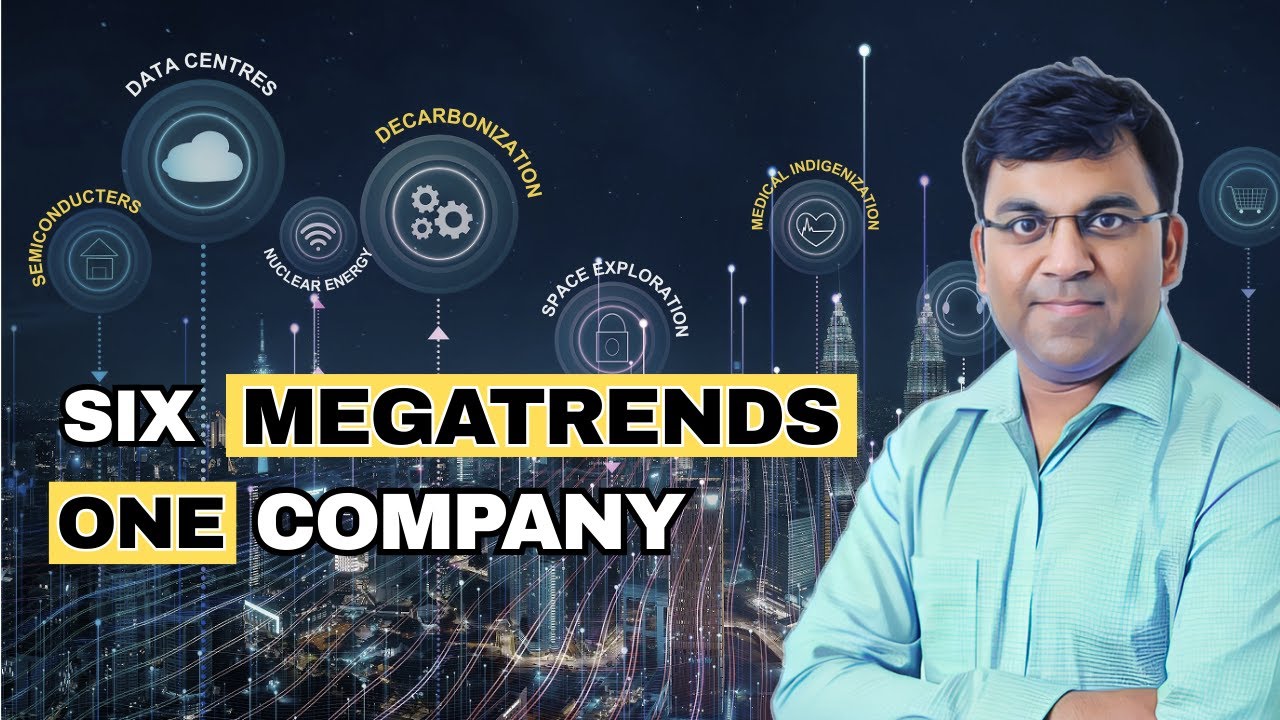
https://youtu.be/-aW81veglUo
-
Silvassa (Dadra & Nagar Haveli): Specialized manufacturing unit.
-
International Footprint: A manufacturing/service center in Brazil (INOXCVA Comercio) and a stock-and-sale facility in the Netherlands (INOXCVA Europe B.V.).
3. Business Segments, Products, & Optionality:
Inox India operates a highly diversified business model categorized into three primary high-growth segments and one emerging segment. The company’s product portfolio ranges from standardized micro-bulk units to highly complex, bespoke engineered systems.
A. Industrial Gases (IG) – The Cash Cow with Green Optionality
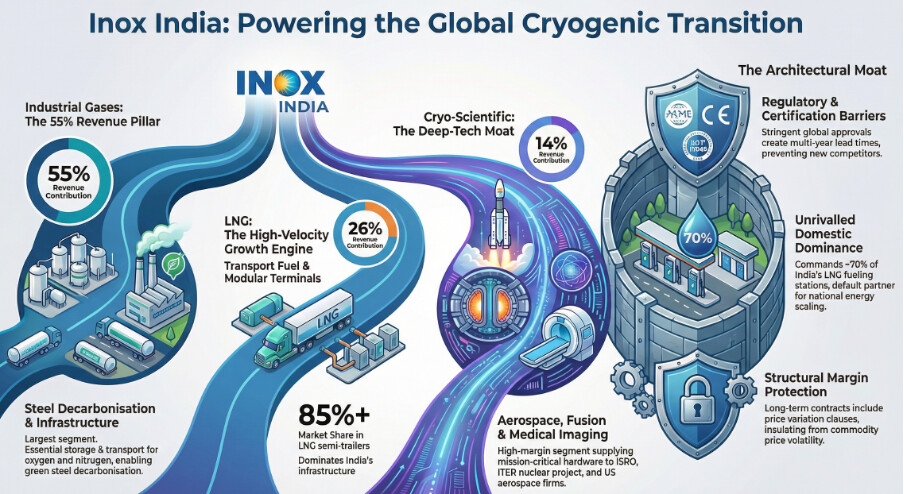
· Financial Contribution: This is the largest and most mature segment, contributing 55% to 9M FY26 revenues (and 59% in Q3 FY26 specifically).
· Core Products: Standardized and engineered storage tanks, transport trailers, microbulk units, and vaporizers for industrial gases like Oxygen, Nitrogen, Argon, Helium, and Carbon Dioxide.
· Growth Drivers & Steel Decarbonization: The baseline growth is tethered to massive domestic infrastructure scaling. India’s steel capacity is projected to expand from 180 million tonnes to 300 million tonnes by 2030, which necessitates a proportional scaling of Air Separation Units (ASUs) to supply high-purity industrial gases. Crucially, as the steel industry aggressively pursues decarbonization, a major shift is occurring in green logistics. Steel manufacturers are replacing diesel fleets with LNG-powered trailers for the transportation of finished goods, directly driving new equipment orders for Inox (recently evidenced by a strategic order from a major Central Indian steel plant).
· Emerging Optionality (Ammonia & Semiconductors): The company recently developed a liquefied Ammonia ISO container capable of storing 7N-grade high-purity ammonia. This unlocks a highly lucrative, niche supply chain for the rapidly expanding semiconductor and solar manufacturing industries.
B. Liquefied Natural Gas (LNG) – The High-Velocity Growth Engine
· Financial Contribution: The fastest-growing division, contributing 26% to 9M FY26 revenues.
· Core Products: Complete LNG infrastructure solutions including LCNG dispensing stations, vehicle-mounted fuel tanks, massive storage terminals, and marine fuel gas systems.
· Growth Drivers: Persistent LNG-diesel price spreads and the pressing need to reduce heavy-transport emissions (LNG produces ~25-30% less CO_{2} than diesel) are accelerating adoption. With government policies aiming for 1,000 LNG fuel stations and a projection of up to 500,000 LNG-fueled trucks by 2040, Inox is perfectly positioned as the dominant domestic infrastructure provider. The company is the first in India to secure the crucial IATF 16949 automotive certification for its cryogenic fuel tanks, solidifying its moat with heavy-duty truck OEMs.
· Emerging Optionality (Small-Scale LNG): Small-scale, modular LNG is emerging as a massive global market for off-grid power and island nations. Inox validated its global dominance here by securing its largest-ever order: a 15,000 m^3 mini-LNG terminal in the Bahamas, featuring the world’s largest shop-built, double-walled vacuum-insulated cryogenic tanks.
C. Cryo-Scientific Division (CSD) – The Deep-Tech Moat
Making of a Cryogenic Tank: https://youtu.be/QEbhGBMBDmc
· Financial Contribution: A high-margin, technology-intensive segment contributing 14% to 9M FY26 revenues.
· Core Products: Custom turnkey solutions for space research, nuclear fusion, superconductivity, and medical imaging (MRI cryostats).
· Growth Drivers:
o Space Exploration: Deeply integrated with ISRO, providing liquid hydrogen/oxygen tanks for launch pads and testing facilities. During Q3 FY26, the company secured a breakthrough order from a major U.S. commercial aerospace company for massive 1,000 tanks, breaking into the highly lucrative Western commercial space supply chain.
o Nuclear Fusion: Sustained partnership with the ITER project in France. Following the successful delivery of complex cryolines, Inox recently secured a Rs 145 Cr order for the critical refurbishment of the Cryostat Thermal Shield (CTS).
ITER Project: https://youtu.be/GQi-dBpuFXk
o Defence & Medical: Developing liquid oxygen (LOX) tanks for submarine Air Independent Propulsion (AIP) systems and partnering with government bodies to indigenize 1.5T MRI magnet cryostats.
D. Beverage Kegs & Others – The “Show-Me” Segment
· Financial Contribution: Currently the smallest segment, contributing 4% to 9M FY26 revenues.
· Core Products: Stainless steel beverage kegs and disposable refrigerant cylinders.
· Growth Drivers & Turnaround: The disposable cylinder business rebounded sharply following a favorable resolution to anti-dumping duties in the U.S. market. For the keg business, the Savli manufacturing facility is the only one in Asia to receive the stringent FSSC 22000 certification. While global scaling takes time, recent vendor approvals from global brewing giants like Heineken and AB InBev are expected to unlock European and American export volumes in the medium term.
The Ultimate Long-Term Optionality: Green Hydrogen & LAES
Beyond its existing order book, the company is heavily incubating technologies that serve as the backbone for next-generation energy grids:
1. The Hydrogen Economy: Liquid hydrogen offers the highest energy density for long-distance clean energy transport. Inox is actively building the supply chain, having already dispatched massive Liquid Hydrogen tanks to South Korea for mobility applications and securing orders from New Zealand. As heavy industries transition to Green Hydrogen, Inox’s cryogenic handling expertise provides unparalleled terminal value.
2. Liquid Air Energy Storage (LAES): Inox recently secured a landmark contract from Highview Power to supply massive vertical storage tanks for the world’s first commercial-scale LAES facility in Manchester, UK. This opens up an entirely new global TAM: using industrial-scale cryogenic tanks to store renewable grid energy for long durations.
4. Promoters, Management & Governance
-
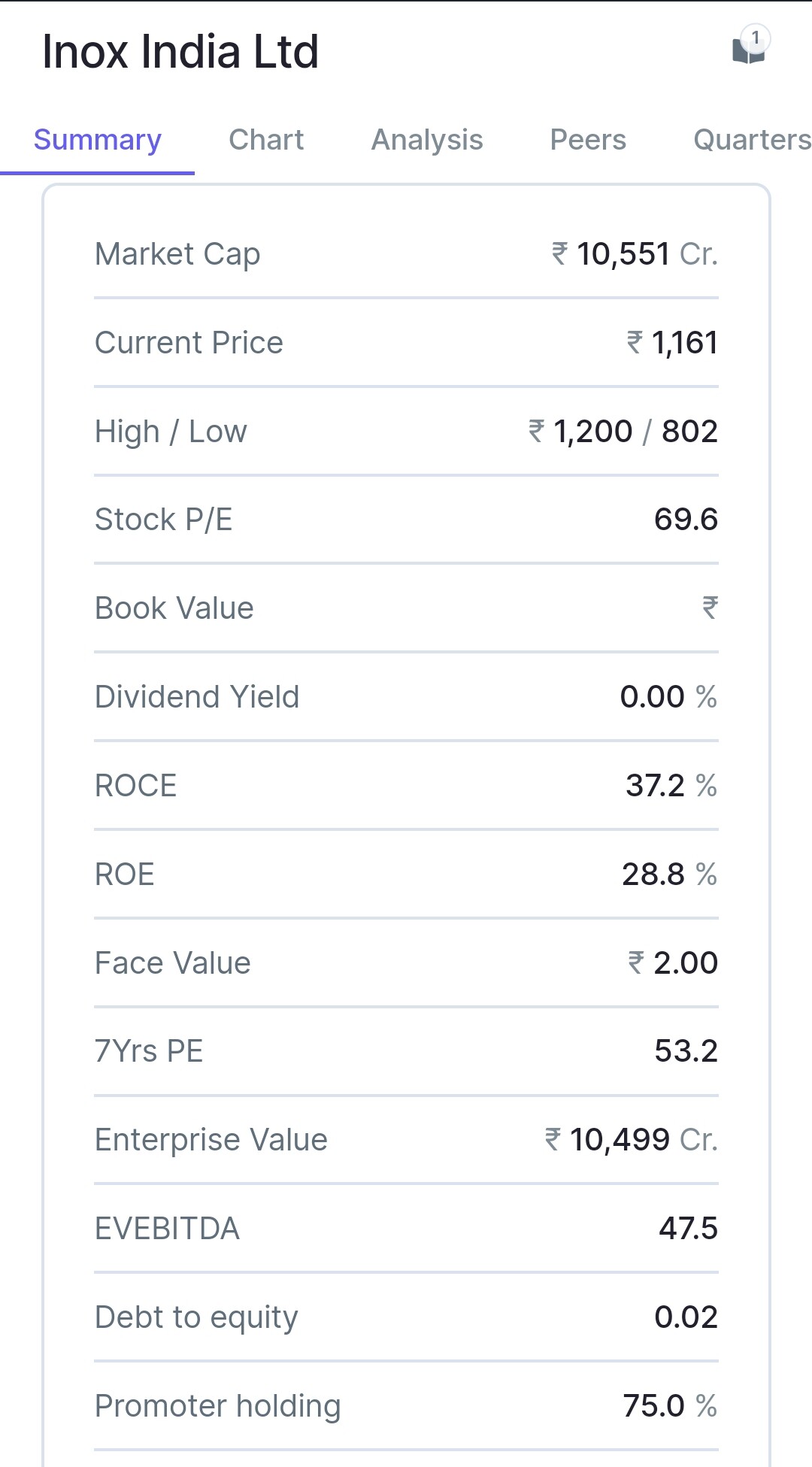
Promoter Background & Holdings: The company is backed by the Jain family. The promoter group strictly holds 75.00% of the equity. Following the recent demise of Late Shri Devendra Kumar Jain, a seamless transmission of 5.94% shares occurred to Siddharth Jain and Ishita Jain.
-
Pledging: There is zero pledging of promoter shares, signaling strong financial health and confidence.
-
Institutional Backing: FII/FPI holding stands at ~7.14%, and DIIs (Mutual Funds) at ~7.27%.
-
Remuneration & ESOPs: Key Management Personnel (KMPs) like Parag Kulkarni (Executive Director), Deepak Acharya (CEO), and Pavan Logar (CFO) have been granted ESOPs. The share-based payment expense dropped drastically to Rs 62.78 Lakh in FY25 (down from Rs 539.92 Lakh in FY24), meaning ESOP dilution is minimal and currently has a negligible drag on profitability.
5. Earnings Quality & Return Ratios
Inox India displays top-tier financial metrics typical of a high-moat capital goods manufacturer.
-
Quality of Earnings: Net cash flows from operations are consistently positive (Rs ~122 Cr in FY25). Profits are overwhelmingly backed by cash.
-
Other Income: Other income primarily comprises interest and mark-to-market gains on mutual fund investments and fixed deposits. For 9MFY26, other income was Rs 30.6 Cr. The company uses its surplus cash efficiently.
-
Return Ratios: * ROCE (Return on Capital Employed): Exceptional at ~34% to 38%.
-
ROE (Return on Equity): Stands at a robust ~26% to 29%.
-
ROIC (Return on Invested Capital): Given the net-cash status and low asset-turnover requirements for expansion, the ROIC is exceptionally high, underscoring pricing power.
6. Latest Quarterly Results Analysis (Q2 & Q3 FY26)
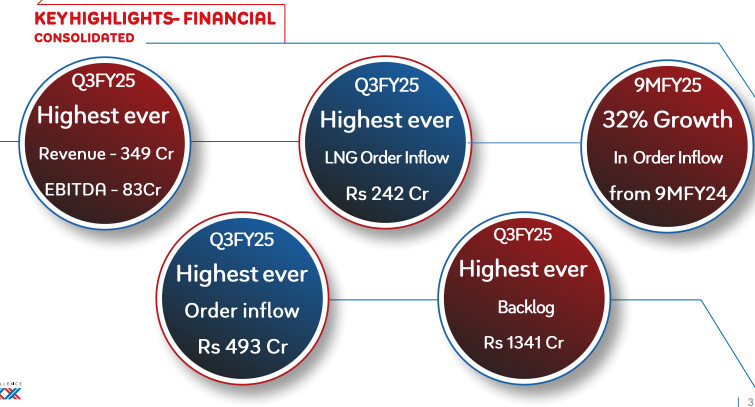
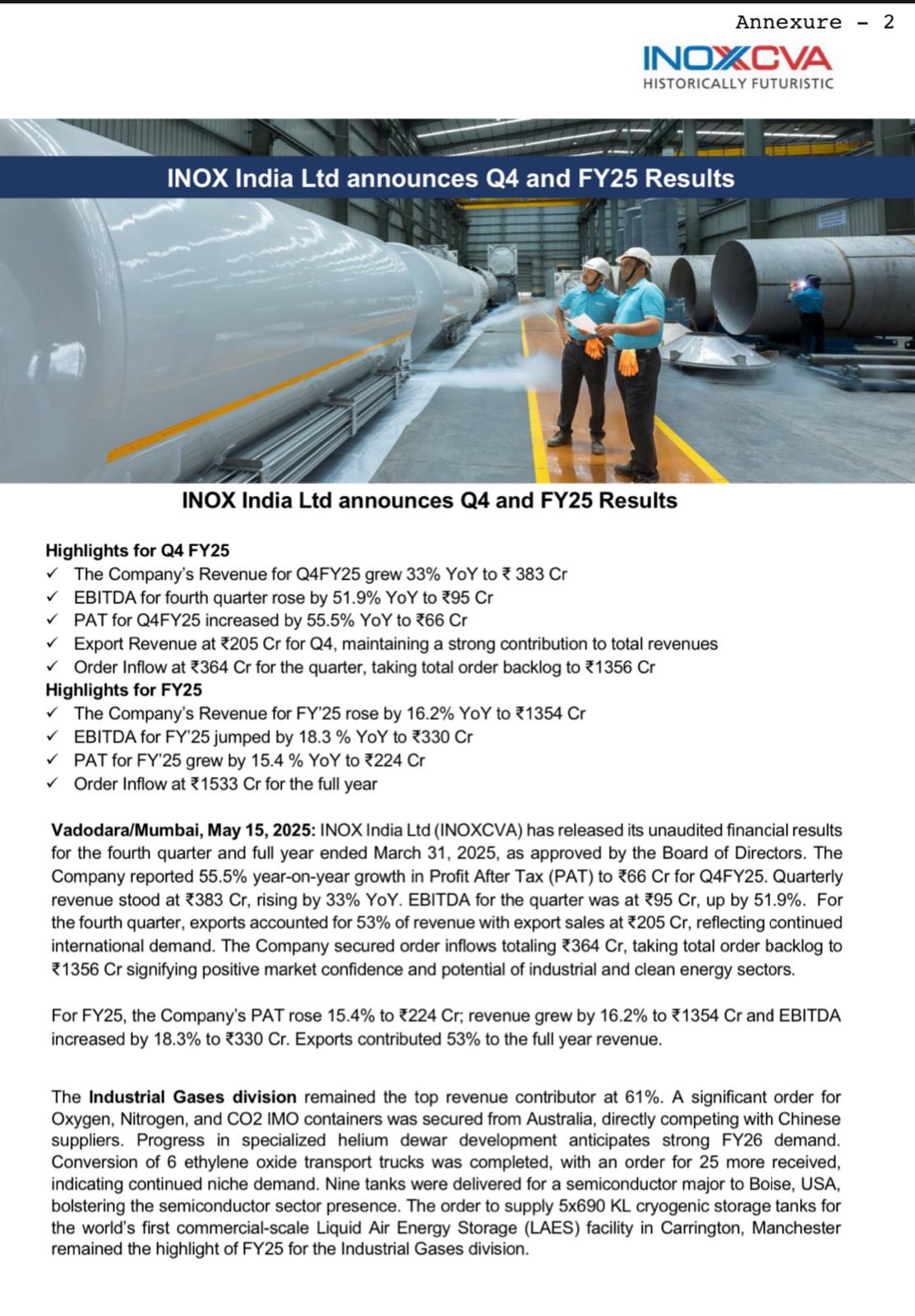
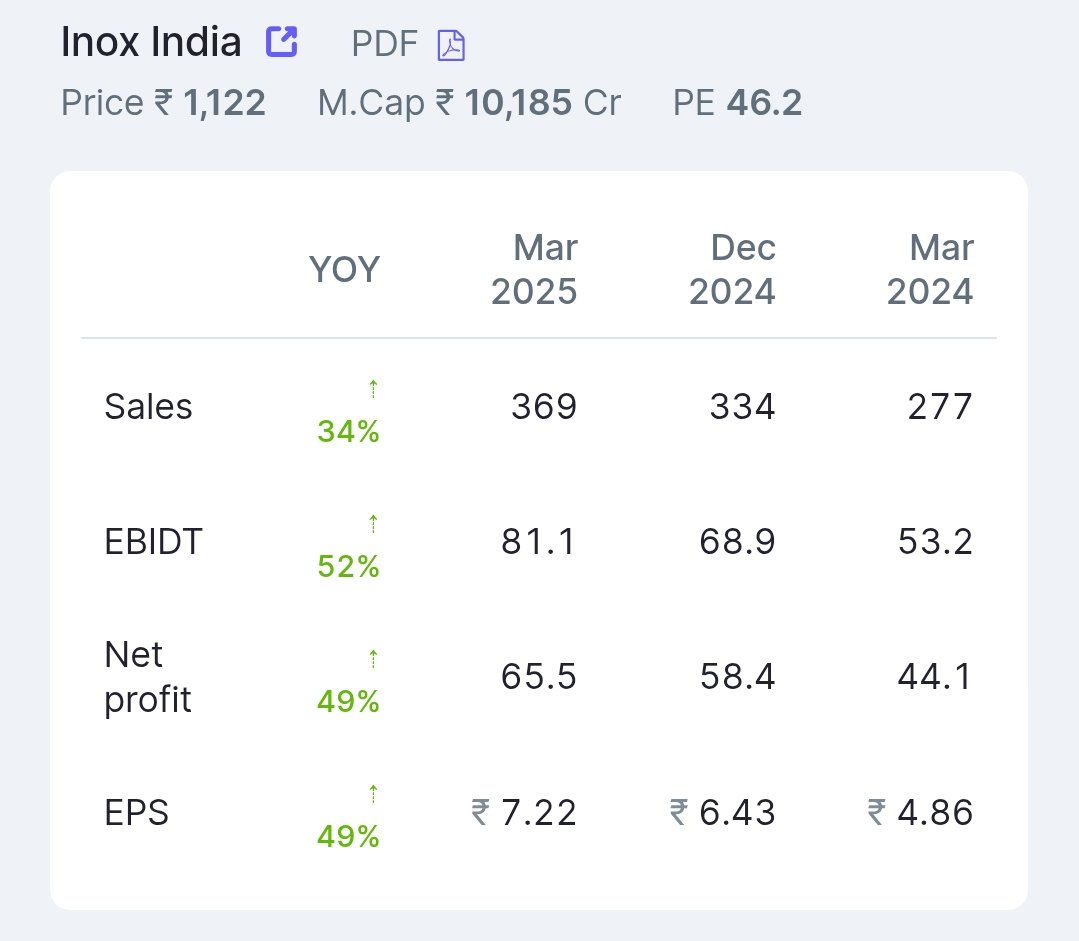
The company has demonstrated accelerating momentum across key financial metrics in the latest quarters, achieving its highest-ever quarterly revenue, adjusted EBITDA, and export revenue in Q3 FY26.
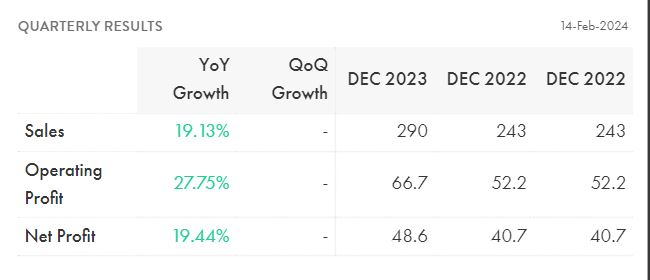
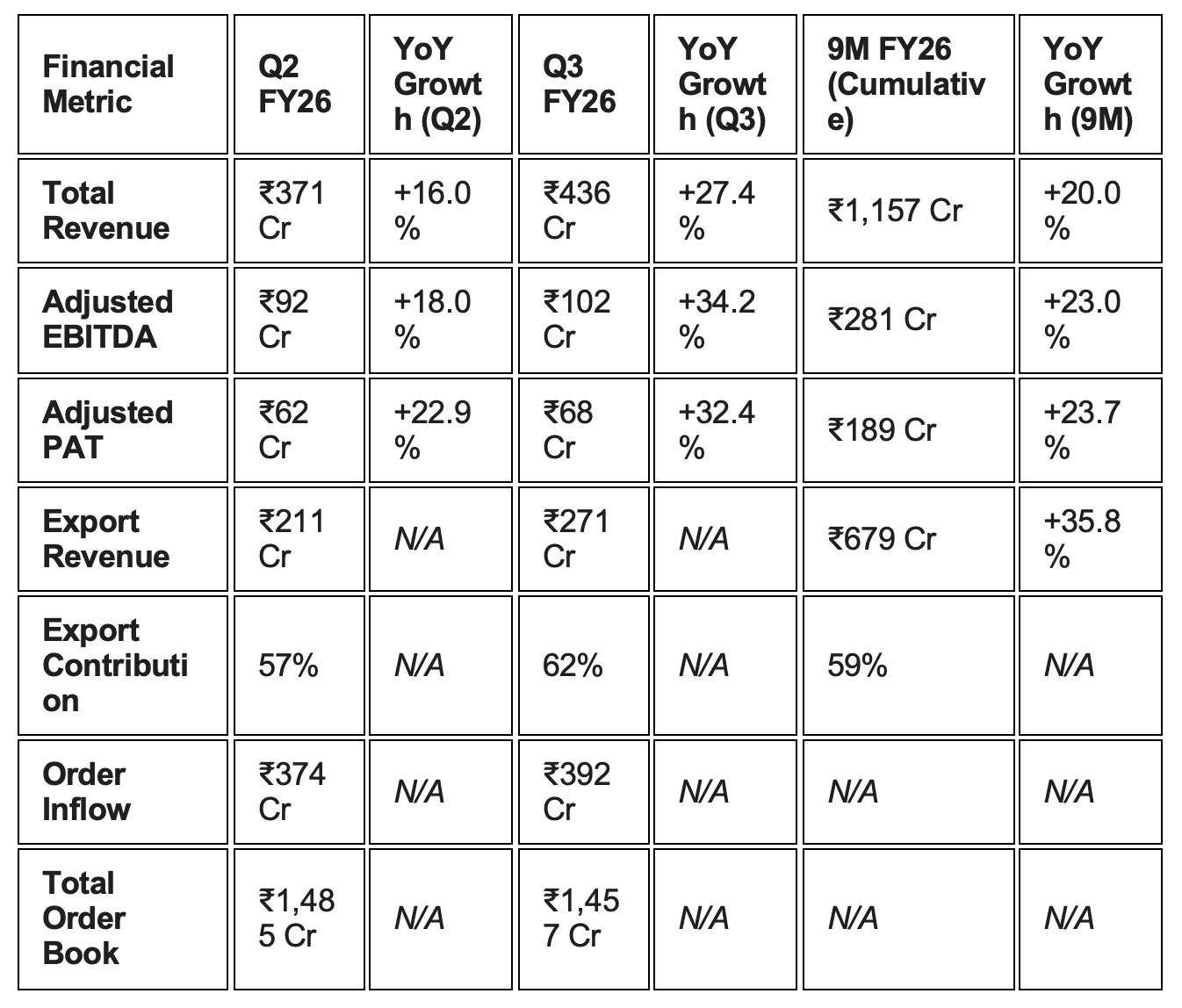
Below is the consolidated financial performance breakdown:
Key Takeaways from the Results:
· Accelerating Topline & Margin Expansion: Revenue growth accelerated from 16.0% in Q2 to 27.4% in Q3. Adjusted EBITDA outpaced revenue growth in Q3 (+34.2% YoY), indicating strong operating leverage and an improving product mix skewed toward high-value engineering.
· Export Dominance: Exports are increasingly driving the top line, with the export share expanding from 57% in Q2 to 62% in Q3. The 9M FY26 export growth of 35.8% YoY demonstrates exceptional global traction despite geopolitical supply chain complexities.
· Stable Order Visibility: The company maintains a healthy, replenishing order book. Despite executing a record ₹436 Cr of revenue in Q3, the robust order inflow of ₹392 Cr kept the total unexecuted order backlog highly elevated at ₹1,457 Cr, providing strong revenue visibility for upcoming quarters.
7. Working Capital, Cash Flows, & Future Prospects (Q2 / H1 FY26 Analysis)
Working Capital Dynamics:
-
Contract Assets (Unbilled Revenue): The company experienced a sharp increase in contract assets, expanding from ₹173.84 Cr in March 2025 to ₹313.44 Cr by September 2025. This elevation reflects the execution of complex, large-scale EPC contracts (such as the ITER and Bahamas projects) using the Percentage of Completion Method (POCM), where revenue is recognized prior to reaching specific billing milestones.
-
Trade Receivables: Collection efficiency demonstrated significant improvement, with trade receivables declining from ₹251.63 Cr in March 2025 to ₹193.57 Cr by the end of Q2 FY26. This indicates robust cash realization from previously billed invoices.
-
Inventory Levels: Inventory increased from ₹492.99 Cr in March 2025 to ₹567.97 Cr in September 2025. This buildup is a strategic necessity to support the execution of the expanding order book and upcoming scheduled deliveries.
-
Trade Payables & Borrowings: To fund the increased working capital intensity (specifically the surge in contract assets and inventory), short-term borrowings rose from ₹33.09 Cr in March 2025 to ₹90.50 Cr by September 2025. Trade payables also expanded from ₹138.24 Cr to ₹165.11 Cr in the same period, indicating extended credit terms with suppliers to optimize working capital.
Cash Flow Analysis (H1 FY26 vs. H1 FY25):
-
Operating Cash Flows (CFO): The company achieved a strong turnaround in cash generation, reporting a positive Net Cash from Operating Activities of ₹25.86 Cr in H1 FY26, a marked improvement compared to a negative ₹(6.74) Cr in H1 FY25. This was driven by robust operating profits (Profit Before Tax of ₹161.70 Cr) and strong collections of receivables (₹55.82 Cr inflow), which successfully absorbed the ₹139.60 Cr outflow into contract assets.
-
Investing Cash Flows: Net cash used in investing activities was ₹(38.07) Cr in H1 FY26, down from ₹(60.97) Cr in H1 FY25. The company directed ₹55.08 Cr towards the acquisition of Property, Plant, and Equipment to support capacity requirements.
-
Financing Cash Flows: Net cash generated from financing activities stood at ₹34.80 Cr in H1 FY26. This was primarily sourced from net short-term borrowing proceeds of ₹57.40 Cr, which were partially offset by a dividend payout of ₹18.15 Cr and finance costs of ₹2.87 Cr.
Future Prospects & Visibility:
-
Order Book & Inflows: The company secured order inflows of ₹374 Cr during Q2 FY26, pushing the total order backlog to an impressive ₹1,485 Cr. This provides high revenue visibility for the upcoming quarters.
-
Segmental Traction: The Industrial Gases segment secured a 1,500 m^3 cryogenic vessel order from a US customer and a 90 KL liquid hydrogen tank order for a European semiconductor facility. The LNG division won a critical regasification order for Abaco and Eleuthera in The Bahamas, building on their existing presence in the region.
-
High-Technology Endorsements: The Cryo-Scientific Division received additional refurbishment contracts from the ITER Organization for the Vacuum Vessel Thermal Shield (VVTS) and Cryostat Thermal Shield (CTS). This reiterates the company’s elite global positioning in fusion energy and complex cryogenic solutions.
-
Export Momentum: Exports remain a primary growth engine, contributing 57% to Q2 revenues (₹211 Cr). The strategic focus remains heavily geared toward capitalizing on the increasing worldwide demand for clean energy and high-technology cryogenic applications.
8. Capex & Acquisitions
-
Capex: The company recently finished a major expansion cycle with its Savli greenfield plant. Current capex is maintenance-oriented and modular, funded entirely through internal accruals.
-
Acquisitions: Inox has traditionally pursued an organic growth strategy. In the past, they established a US subsidiary (CVA), which faced headwinds and was subsequently liquidated. They rely on strategic expansions (like their Nordic investments) rather than aggressive M&A, ensuring high integration synergies.
9. Corporate Governance: RPTs, Red Flags & Litigations
-
Related Party Transactions (RPT): RPTs are strictly conducted at an arm’s length basis. The most significant RPT is with the promoter group entity INOX Air Products, where Inox India supplies tanks and equipment (forming ~10% of revenue). This provides a stable, captive revenue stream.
-
Red Flags: The balance sheet is impeccably clean (Zero Debt). There are no pledging issues, and management succession is actively managed.
-
Litigations/Contingent Liabilities: During Q3 FY26, an International Arbitral Tribunal passed an award regarding a past trade dispute linked to its liquidated US subsidiary (Cryogenic Vessels Alternatives Inc.). This resulted in a one-time expense provision of Rs 8.5 Cr in the quarter. This issue is now resolved, clearing an overhang.
10. Competition (China & Global)
-
Global Peers: Inox competes with entrenched western players like Chart Industries, Taylor-Wharton, and Cryofab.
-
Chinese Competition: Chinese manufacturers operate heavily in the commoditized industrial gas tank segment, competing aggressively on price. However, Inox effectively counters this through superior engineering standards, lower lifecycle evaporation rates, and stringent global certifications (which Chinese players often lack for western markets). A recent testament to this was Inox securing an Australian order for IMO containers, directly beating Chinese bids due to quality and safety supremacy.
11. Risk Factors Affecting Future Growth
-
Commodity & Logistics Costs: High reliance on specialized stainless steel. Extreme spikes in raw material or global freight costs can temporarily compress margins.
-
Pace of LNG Adoption: The investment thesis hinges partly on India’s transition to LNG trucking. Delays in government policy rollouts, CGD networks, or LNG fueling stations could push back domestic revenue realization.
-
Geopolitical Supply Chains: As an exporter to over 100 countries (forming ~55% of revenue), macroeconomic slowdowns in Europe/US or shipping lane disruptions (like the Red Sea crisis) pose timing risks to order deliveries.
12. The “Right to Win” (Competitive Moat)
Inox India’s “Right to Win” is deeply entrenched in severe barriers to entry, high switching costs for clients, and a near-monopolistic dominance in specialized domestic markets. The competitive moat can be dissected into the following core pillars:
A. Formidable Regulatory and Certification Barriers
Cryogenic engineering is a zero-margin-for-error industry. Storing volatile gases like liquid hydrogen or LNG at sub-zero temperatures requires immense precision; minor manufacturing defects can lead to catastrophic failures or massive evaporation losses.
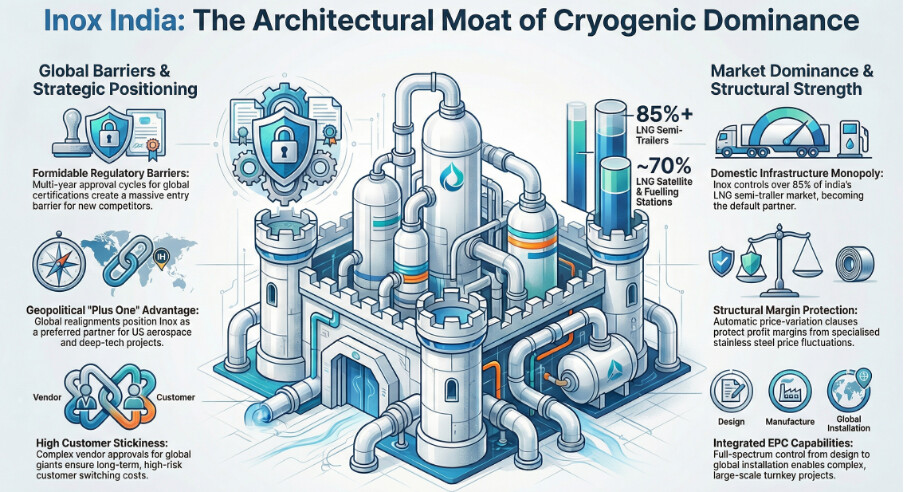
· *Global Approvals: Inox has spent decades acquiring and maintaining stringent global certifications, including ASME U&R (USA), CE & EN 13458 (Europe), DOT 39, and international maritime (IMO) approvals. New entrants cannot simply build a factory and start selling; the audit and approval cycle for these certifications acts as a multi-year barrier to entry.
· Niche Industry Pioneering: The company holds the IATF 16949 certification for automotive cryogenic fuel tanks—a critical requirement for supplying to heavy-truck OEMs—and is the only Asian keg manufacturer with the FSSC 22000 food-safety certification.
B. Geopolitical Vacuum and Elite Supply Chain Integration
Inox is aggressively capitalizing on global supply chain realignments (“China Plus One” and “Europe Plus One” strategies).
· The Aerospace & Deep-Tech Moat: The recent massive orders from a top-tier U.S. commercial aerospace company for 1,000 m^3 tanks validate this moat. Western manufacturers are capacity-constrained, and Chinese competitors are often locked out of critical U.S. space and defense infrastructure due to tariffs and security concerns. Inox effectively operates in a rarified global oligopoly for these mega-projects, demonstrating sufficient pricing power to win bids even when factoring in 21% to 25% U.S. import duties.
· Customer Stickiness: Securing vendor approvals from global brewing giants (Heineken, AB InBev, Molson Coors) and the ITER nuclear fusion project (France) takes years of prototype testing. Once integrated, these clients rarely switch vendors due to the high costs and risks associated with requalifying a new supplier.
C. Unrivalled Domestic Market Dominance
In the Indian market, Inox operates with market shares that resemble a monopoly in certain sub-segments.
· LNG Infrastructure: The company commands an estimated 85%+ market share in operating LNG semi-trailers (over 250 on the road) and approximately 70% market share in LNG satellite stations and fueling stations. For any domestic OEM or city gas distributor looking to scale LNG infrastructure, Inox is the default, and often the only, viable partner at scale.
D. Structural Margin Protection (Pricing Power)
A hallmark of a strong moat is the ability to protect gross margins against commodity inflation.
· Raw Material Pass-Through: Inox’s primary raw material is specialized stainless steel. Management has confirmed that large, long-term contracts feature built-in price variation clauses. If raw material costs fluctuate by more than ~3%, the pricing automatically adjusts. For fixed-price, short-term contracts, the company hedges by booking the raw material inventory immediately upon receiving the order. This insulates the bottom line from commodity super-cycles.
E. **Capturing the Steel Decarbonization Tailwind
As heavy industries globally pivot toward greener operations, the steel sector—a massive consumer of industrial gases—is undergoing a rapid transformation. Steel manufacturers are mandated to decarbonize, prompting a shift from diesel-powered logistics fleets to LNG-fuelled transport for moving raw materials and finished goods. Inox is uniquely positioned to capture value at both ends of this cycle: supplying the massive Air Separation Unit (ASU) tanks required for expanding green steel production, and providing the LNG fuel tanks and dispensing infrastructure required to decarbonize the steel industry’s heavy logistics footprint.
F. End-to-End Integrated EPC Capabilities
Unlike pure-play manufacturers, Inox controls the entire value chain. They provide bespoke design, engineering, manufacturing, on-site installation, and global after-sales service across more than 100 countries. This integrated model allows them to execute complex turnkey projects (like the Bahamas mini-LNG terminal) that smaller competitors simply cannot bid on.
----------------------------------------------------------------------------------------------------------------
A comprehensive summary of the Q3 FY26 earnings call for INOX India Ltd., followed by a deep-dive analysis & reading “between the lines” of the management’s Q&A session:
Executive Summary of Q3 FY26 Earnings Call
Financial Performance:
-
Revenues & Profits: The company reported its highest-ever quarterly revenue of ₹436 crores (+27% YoY) and highest-ever export revenue of ₹271 crores. Adjusted EBITDA stood at ₹102 crores (+34% YoY), and Adjusted PAT was ₹68 crores (+32% YoY).
-
Order Book: The unexecuted order backlog stands at ₹1,457 crores, heavily skewed towards exports (63%) versus domestic (37%). Order inflow for Q3 was ₹392 crores.
Key Segmental Highlights:
-
Industrial Gases: Secured a massive order from a leading U.S. aerospace company for two 1,000 m^3 cryogenic tanks. The disposable cylinders division received a bulk order of over 7 lakh units from a U.S. client.
-
LNG Solutions: Management highlighted dominance in India with an 85% market share in LNG semi-trailers (over 250 operating). The company is seeing traction in marine fuel tanks (European orders) and African LNG terminal tanks.
-
Cryo-Scientific (CSD): Achieved critical milestones for the ITER nuclear fusion project in France (cooling the Magnet Cold Test Bench to 4 Kelvin) and secured new refurbishment orders.
-
Beverage Kegs: Secured an inaugural order from Heineken for the European market and gained vendor approval from U.S. brewing giant Molson Coors.
Deep Dive Q&A Analysis: Reading Between the Lines
Analyzing the management’s responses during the Q&A reveals several unspoken strategic dynamics, hidden strengths, and subtle challenges.
1. The “Conservative” Guidance Masks Massive Upside
-
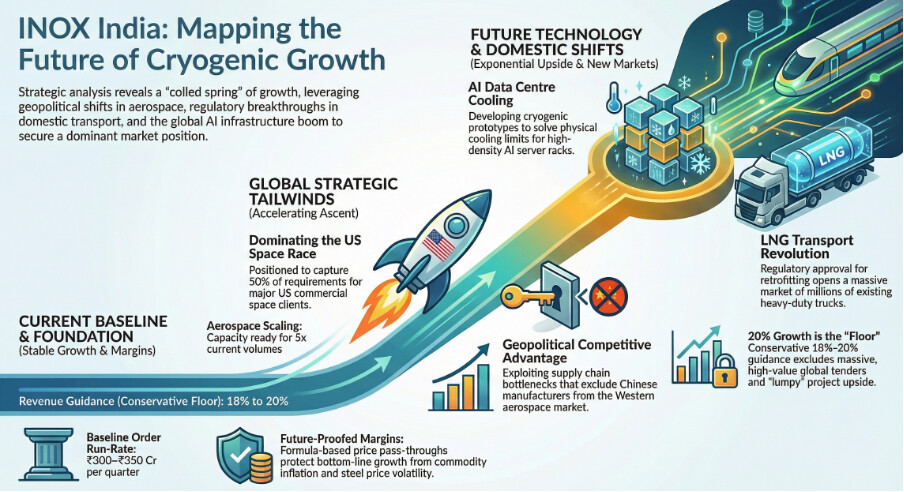
What they said: Management reiterated an 18% to 20% revenue growth guidance for FY27. However, when an analyst pointed out the massive industry tailwinds, the CEO admitted, “we are slightly conservative… lumpy orders are there which we can’t commit”.
-
Reading between the lines: Management operates with a strict “under-promise and over-deliver” philosophy. They are only guiding based on their recurring, baseline “run-rate” orders (approx. ₹300-₹350 Cr per quarter). Massive global tenders (like aerospace or lunar ISRO projects) are treated as pure upside. Investors should view the 20% growth as a worst-case floor rather than a ceiling.
2. The U.S. Aerospace Client: A Geopolitical Goldmine
-
What they said: Regarding a major U.S. commercial space client (implied to be an entity like SpaceX or Blue Origin), the CEO stated the client is “scouting all over the world” because few manufacturers can handle the scale. INOX expects to capture “at least 50% of their requirement” and is ready for “5x” the current volume.
-
Reading between the lines: The global supply chain for mega-cryogenic tanks is severely bottlenecked. Western manufacturers lack the rapid scaling capacity, and Chinese manufacturers are likely locked out of the U.S. aerospace supply chain due to severe geopolitical tariffs and security concerns. INOX India is fully exploiting this vacuum. Even with residual import duties of 21% to 25% factored in, INOX is winning the bids, proving they have immense pricing and competitive moats.
3. The Keg Division is Struggling, but Cryo is Subsidizing It
-
What they said: The Savli plant’s keg manufacturing capacity is around 300,000 units annually, but current utilization is only at 25% to 30%. The CEO acknowledged that order volume from global breweries “is not increasing to our expectation” despite recent approvals.
-
Reading between the lines: Penetrating the entrenched European and American beer keg supply chains is proving much harder and slower than INOX initially modeled. However, the management is smartly masking this underutilization by transferring overflow domestic and international Cryo-equipment manufacturing to the Savli plant’s Cryo Shop (which is already 70% full). The keg division remains a “show-me” story requiring patience.
4. A Hidden Catalyst: Data Center Cooling
-
What they said: The CEO confirmed they are in the final stages of developing a cooling system prototype with a German company for IT industry data center racks, expected to roll out in 6 to 8 months.
-
Reading between the lines: This is a massive, high-margin, unpriced optionality. With the global AI boom, traditional air/water cooling in data centers is reaching its physical limits. If INOX successfully penetrates the liquid/cryogenic cooling market for AI server racks, it transitions from an industrial capital goods company into a direct beneficiary of the AI infrastructure super-cycle.
5. Regulatory Tipping Points in Domestic LNG
-
What they said: PNGRB has recently allowed the use of LNG fuel tanks configured as pressure vessels, and INOX Air Products successfully registered the first such PESO-approved retrofitted truck. Furthermore, Indian Railways has placed orders for dual-power (LNG-diesel) engines.
-
Reading between the lines: The regulatory bottlenecks that have historically stalled India’s transition to LNG trucking have finally snapped. The successful registration of these tanks opens the floodgates for the “retrofitting” market, meaning INOX can sell to the millions of existing heavy-duty trucks on the road, rather than just waiting for OEMs to build new LNG trucks from scratch.
-
6. Bulletproof Margins Against Commodity Inflation
-
What they said: The CFO clarified that raw material (steel) inflation doesn’t affect their margins because large orders are strictly bound by formula-based price pass-throughs (adjusting automatically for fluctuations above 3%), and raw materials for fixed contracts are booked the moment the order is received.
-
Reading between the lines: INOX India runs a highly de-risked procurement model. They are immune to the commodity super-cycles that typically destroy capital goods margins. Combined with a favorable FX tailwind from a strong Dollar/Euro, INOX enjoys near-perfect structural protection for its bottom line.
----------------------------------------------------------------------------------------------------------------
Latest Presentation:
https://www.bseindia.com/xml-data/corpfiling/AttachHis/a88ebf8c-377e-416a-974c-acbff2418361.pdf
Latest Transcript:
https://www.bseindia.com/xml-data/corpfiling/AttachLive/d5084215-67e2-4d8d-b388-a6b70c8cdf1f.pdf
*Global Approvals:
In the highly specialized field of cryogenic engineering, manufacturing equipment is not just about holding cold liquids; it is about safely containing highly pressurized, volatile, and deeply frozen gases (like LNG, Liquid Hydrogen, or Liquid Oxygen) where even a minor structural flaw can lead to catastrophic explosions or massive thermal leaks.
Because of these extreme risks, global regulatory bodies enforce strict standards. Holding these certifications is a massive competitive moat because they are difficult, expensive, and time-consuming to obtain.
Here is a breakdown of why each of these specific certifications is critical for a company like INOX India:
1. ASME “U” & “R” Stamps (American Society of Mechanical Engineers)
· What it is: The ASME Boiler and Pressure Vessel Code is the global gold standard for the design, fabrication, and inspection of pressure vessels.
o The “U” Stamp certifies that a company is authorized to manufacture newly constructed unfired pressure vessels.
o The “R” Stamp (issued by the National Board of Boiler and Pressure Vessel Inspectors) certifies that a company is authorized to perform repairs and alterations on these vessels.
· Why it matters: Most cryogenic tanks are essentially giant, high-tech pressure vessels. Without an ASME U-stamp, a manufacturer cannot sell pressure vessels in North America and many other parts of the world. It guarantees to the buyer that the tank can withstand the intense internal pressures of expanding cryogenic gases without rupturing.
2. CE Mark & EN 13458 (European Standards)
· What it is: The CE Mark indicates conformity with health, safety, and environmental protection standards for products sold within the European Economic Area (EEA). EN 13458 is a highly specific European Standard titled “Cryogenic vessels - Static vacuum insulated vessels.”
· Why it matters: EN 13458 dictates the exact metallurgical requirements, design, fabrication, testing, and thermal insulation capabilities for static cryogenic tanks. Having this certification is a legal prerequisite for selling stationary cryogenic storage tanks to any European country, proving the tanks meet Europe’s rigorous safety and thermal efficiency (low evaporation) benchmarks.
3. DOT 39 (U.S. Department of Transportation)
· What it is: DOT 39 is a strict regulatory standard set by the US Department of Transportation specifically for non-reusable (disposable) seamless or welded steel cylinders.
· Why it matters: Inox India has a booming business in manufacturing disposable cylinders for refrigerants and industrial gases (exporting millions of units to the US). Gases transported on US highways must be in DOT-approved containers to prevent transit explosions. Without DOT 39, Inox would be legally barred from participating in the massive North American disposable cylinder market.
4. IMO Approvals (International Maritime Organization)
· What it is: The IMO is the United Nations specialized agency responsible for the safety and security of shipping and the prevention of marine and atmospheric pollution by ships. IMO regulations (such as the IGC Code) dictate how liquefied gases must be stored and transported by sea.
· Why it matters: When transporting LNG or liquid hydrogen across oceans, the tanks undergo immense stress from the ship’s movement (sloshing), corrosive saltwater, and maritime weather. IMO-approved cryogenic containers (often called IMO ISO tanks) guarantee that the vessels are safe for international shipping. This allows Inox to serve global supply chains and maritime fuel sectors without their containers being rejected at international ports.
The Competitive Moat
Together, these certifications form a “Right to Win.” A new competitor cannot simply build a cryogenic tank and sell it. They must undergo years of rigorous audits, metallurgical testing, and facility inspections by independent global bodies to earn these stamps. By already holding ASME, CE, EN, DOT, and IMO approvals, a company possesses a passport to instantly bid on major projects anywhere in the world.
----------------------------------------------------------------------------------------------------------------
**Capturing the Steel Decarbonization Tailwind
The steel industry is one of the most emission-intensive sectors globally, traditionally relying heavily on coal for production and diesel for logistics. As global and domestic mandates push for strict decarbonization and “Green Steel,” the industry is undergoing a massive, multi-decade structural transformation.
For Inox India, this “decarbonization tailwind” represents a massive, multi-tiered growth opportunity. Because cryogenic technology is the critical enabling infrastructure for storing and transporting clean energy, Inox India captures value at almost every stage of the steel industry’s green transition.
Here is a detailed breakdown of how Inox India captures this tailwind:
1. Greening the Logistics: The LNG Transition
A significant portion of a steel manufacturer’s carbon footprint comes from its supply chain—specifically, the thousands of heavy-duty commercial vehicles (HCVs) used to transport raw materials (iron ore, coal) and finished steel products.
-
The Shift: To cut emissions immediately, steel companies and their logistics partners are replacing traditional diesel fleets with Liquefied Natural Gas (LNG) trucks. LNG produces 25% to 30% less CO_2 than diesel and offers significant fuel cost savings over long-haul routes.
-
Inox India’s Capture: LNG must be stored at -162°C. Inox India monopolizes the infrastructure required to make this transition possible:
-
Vehicle Fuel Tanks: Inox manufactures the specialized vehicle-mounted cryogenic fuel tanks that go directly onto the heavy-duty trucks built by OEMs like Tata Motors and Ashok Leyland.
-
Dispensing Stations: They build the LNG and LCNG fueling stations where these trucks refuel, currently holding a dominant ~60% to 75% market share in India’s domestic station infrastructure.
-
Supply Chain: They manufacture the massive LNG semi-trailers (commanding an 85% market share) that transport the fuel from ports to the inland dispensing stations.
2. Expanding Core Production: ***Air Separation Units (ASUs)
To meet growing economic demands, India has set an aggressive target to expand its domestic steel production capacity from roughly 160 million tonnes to 300 million tonnes by 2030.
-
The Shift: Modern, highly efficient steel manufacturing relies heavily on industrial gases, particularly high-purity Oxygen for basic oxygen furnaces and Nitrogen for purging and blanketing applications.
-
Inox India’s Capture: This capacity expansion requires the construction of massive Air Separation Units (ASUs) adjacent to steel plants. Inox India is the primary supplier of the bulk cryogenic storage tanks, vaporizers, and distribution networks required to safely store and route these liquefied industrial gases into the steel manufacturing process.
3. The Ultimate Horizon: Green Hydrogen & CCUS
The final phase of true steel decarbonization moves away from fossil fuels entirely. This involves two highly advanced, cryogenics-dependent technologies: Green Hydrogen and Carbon Capture.
-
Green Hydrogen DRI: To completely eliminate coal, steelmakers are moving towards Direct Reduced Iron (DRI) processes powered by Green Hydrogen. Hydrogen is highly volatile and must be cooled to an extreme -253°C to become a liquid for viable industrial storage and transport. Inox India pioneered this space; they were the first Indian company to manufacture a trailer-mounted liquid hydrogen transport tank (jointly designed with ISRO) and offer end-to-end liquid hydrogen storage solutions.
-
Carbon Capture, Utilization, and Storage (CCUS): For legacy blast furnaces that cannot be immediately replaced, steelmakers are implementing carbon capture technologies. The captured CO_2 is often liquefied for transport and storage. Liquid Carbon Dioxide (LCO_2) requires specialized cryogenic pressure vessels and transport trailers, representing yet another direct product line for Inox India’s Industrial Gas division.
Summary: Inox India’s “Right to Win” in the steel decarbonization theme is based on its omnipresence. Whether a steel conglomerate decides to cut emissions today by transitioning its truck fleet to LNG, expands its core capacity requiring industrial oxygen, or invests in futuristic Green Hydrogen and Carbon Capture, they require highly engineered cryogenic tanks. Inox India serves as the indispensable infrastructure provider for all of these pathways.
----------------------------------------------------------------------------------------------------------------
An ***Air Separation Unit (ASU) is a specialized industrial plant designed to separate atmospheric air into its primary elemental components: Nitrogen (~78%), Oxygen (~21%), and Argon (~0.9%), along with other trace inert gases.
Because industrial sectors require these gases in massive volumes and at ultra-high purity levels, ASUs are critical infrastructure. While there are smaller-scale methods like Pressure Swing Adsorption (PSA), large-scale ASUs rely on a highly energy-intensive process called Cryogenic Fractional Distillation.
----------------------------------------------------------------------------------------------------------------
Compiled Notes from here & there, No Buy/Sell Recommendation
----------------------------------------------------------------------------------------------------------------