
2 Likes
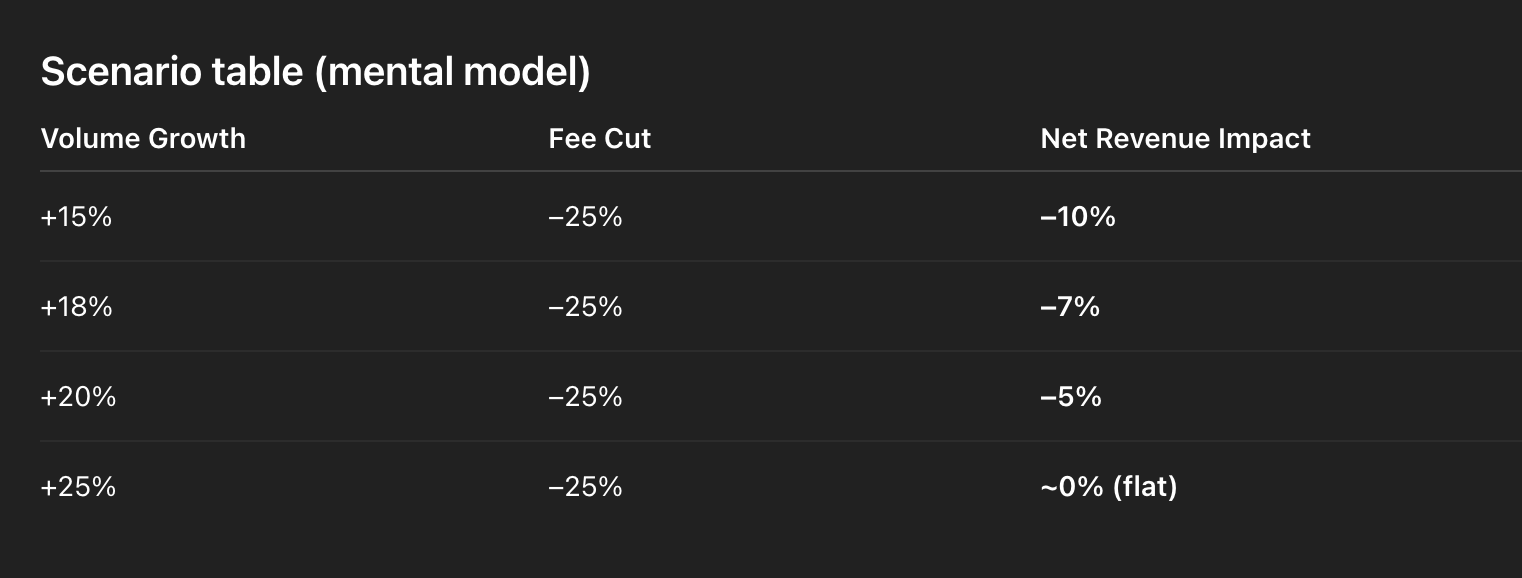
“IEX, the largest platform, has little incentive to reduce fees under the current structure, while the other exchanges lack the financial headroom to undercut pricing, according to the person quoted above”
- If other exchanges already lack headroom to undercut pricing, how will further reducing fee benefit them, won’t this further constraint them in case pricing war in ensued?
“Suggestions came in to replace the ceiling-based approach with a fixed transaction fee regime. The idea is that fixed fees would introduce greater transparency and predictability for market participants, while preventing exchanges from clustering at the upper limit”
- Which market participant is sitting on the edge due to 0.5 paise/unit charge levied by exchange on clearing price upwards of 3-4 INR/unit?
Bunkum in my opinion, but interesting to see that regulator is so obsessed with power exchanges fee and not with very apparent market flaws. rpsingh’s blog space - Red Flags in Market Clearing Price Discovery
3 Likes

Mr. RP Singh has also written a scathing opinion on market coupling. For some reason CERC’s action seems very enigmatic. rpsingh's blog space - Market Coupling: A Premature Reform Hijacked by Private Interests
If broadening the power market with more competition was an intended outcome, then leaving the upper threshold as is and letting the individual exchanges provide discounts would have probably worked better. In earlier con calls, IEX has mentioned that they will be able to withstand reduction in fees, but other exchanges cannot survive.
Anyway, we have to watch how the case against market coupling proceeds in the appellate tribunal.
3 Likes
Mr. RP Singh’s blog captures the core of the issue. Really does raise the question - who benefits from this whole chicanery and why is it happening? “Regulatory capture” summarizes the issue perfectly.
Since FY24, other income for IEX has been more than all the expenses, so even at zero transaction fee it can continue as going concern. But I am not sure what the regulator is trying to achieve with this constant fiddling around.
2 Likes
It was clear that Coupling couldnt be implemented by jan, so I had a hunch that CERC would try to reduce the price cap. But its just unclear why CERC wants to mess up the most stable part of power transmission in india. IEX and other power exchanges revenue would be around 600-700cr for the whole year which is a miniscule part of india’s power transmission. The real problem lies with discoms who run into tens of thousands cr losses due to inefficiencies.
3 Likes
Yes. This is just another example of the regulator instead of trying to facilitate the system is in effect increasing the friction. NSE & BSE are examples of exchanges that have been massively profitable however they have been able to ensure that the underlying stock markets work smoothly and seamlessly. The regulator has interfered but has by and large let them make their profits which the exchanges have invested into better infra etc. It is in the industry’s interest that the exchanges remain healthy and profitable so that they provide good service and products.
3 Likes
If Regulator comes up with some policy which hampers Player A and Benefits Players B & C, obviously Player A will raise concerns and challenge it in some way or the other.
Then in order to show that, we are unbiased, Regulator may come up with another policy which might be good for Player A, to keep them happy.
After that, Players B & C will complain, so there will be another flip flop which might benefit them.
This will go on for some time!! Nothing unpredictable.