
Per this Moneycontrol article difference between CEO and chairman was the reason behind chairman’s exit:
Sucheta Dalal’s article on the HDFC inbroglio.
3 Likes
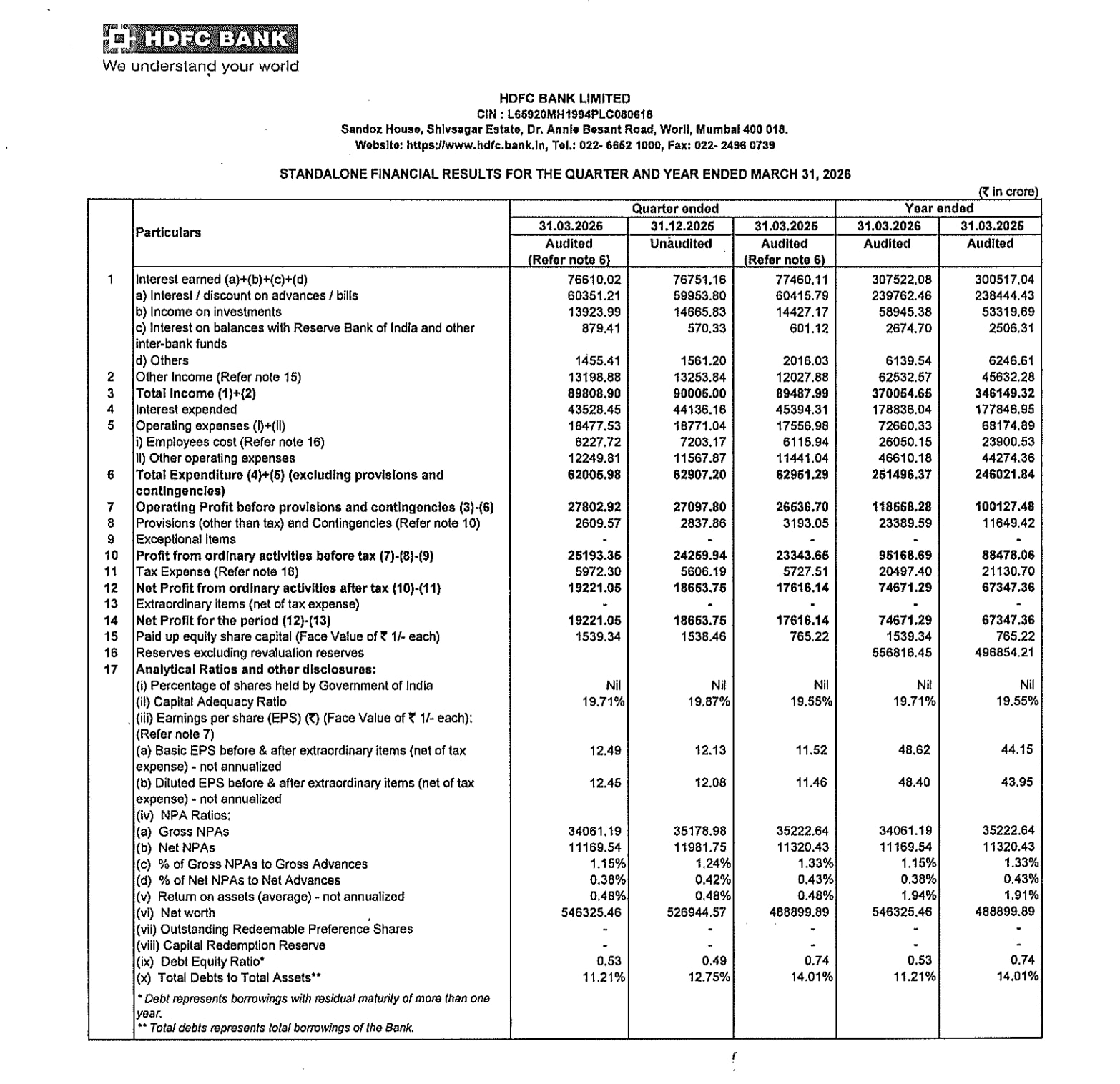
HDFC Bank is currently facing three key overhangs, but all of them look more transitional than structural. First, the AT1 bond mis-selling episode is largely a reputational issue, it hasn’t impacted capital, asset quality, or the core earnings engine.
Second, the post-merger integration with HDFC Ltd has temporarily compressed margins due to the addition of a lower-yield mortgage book and higher-cost borrowings. This has affected NIM and return ratios, but it’s a known, one-time adjustment as the balance sheet gets optimized.
Third, and most important, is the loan growth outpacing deposit growth, pushing the credit-deposit ratio higher and increasing reliance on expensive funding, this is the only issue that truly matters from a long-term perspective.
From a Warren Buffett-style lens, the key question is whether these problems impair the bank’s long-term earning power or just create short-term noise. So far, it clearly looks like the latter.
Deposit growth has already started improving, loan growth has been consciously moderated, and management is focused on bringing the balance back to a healthier range over the next couple of years.
The core moat strong deposit franchise, distribution reach, and disciplined underwriting remains intact. In the context of the current Indian market, this appears to be a classic case of a high-quality compounding business going through temporary dislocation. If execution holds, HDFC Bank is likely to come out stronger, making these issues short-term headwinds rather than red flags.
Coming to the valuations
Key Inputs:
Net Income: ₹70,792 Cr
Shares: 1530 Cr
Book Value/Share: ₹682
ROE (7-year avg): 14.86%
Assumptions:
Growth (Years 1–5): 10%
Growth (Years 6–10): 8%
Terminal Growth: 4%
Discount Rate: 12%
Core Logic:
Banks reinvest heavily, so Owner Earnings = Net Income × (1 − Growth/ROE)
Reinvestment needed ≈ 67%
Owner Earnings ≈ ₹23,000 Cr
Intrinsic Value = ₹680 – ₹900 per share
Current Price ≈ ₹800
9 Likes
some questions to think on
- whats the major reasons for slower depisit growth?
- Is slower deposit growth across the sector or any other largr bank outperforming by decent margin in this growth?
- As you mentioned, consciously moderating loan growth to possibly pritect margins…is this the best strategy? or should lower margins would have been fine with better loan growth, provided that growth is within the merits of the underwriting skill of the bank? I do not understand if with same underwriting parameters, loan growth can be better then why to let it go to protect margins if we are confident to improve deposit growth over medium term?
- Regarding reputation hit, I think all banks are hit with some issues or another from time to time. What matters most is trust of customers, specially Indian customers of the bank. Hope that is intact and with my limited understanding I feel that is intact.
Views invited
Disc: Not invested yet in hdfc bank but invested in other hdfc group companies. Not a buy/sell recommendation. Not eligible for any advice.
1 Like
Deposit growth has become slower mainly because people now have many more options for their savings. Earlier, most money would stay in bank accounts or FDs, but now a lot is going into mutual funds, stocks, gold, and property. For HDFC Bank, the challenge is even bigger because it has become such a large bank that even maintaining the same growth rate needs huge amounts of fresh deposits. The merger made this more visible because the balance sheet became much bigger overnight, when it merged with the sudden huge home loan book, more assets to fund. So: the need for deposits increased sharply.
This is not just an HDFC issue. The whole banking sector is seeing slower deposit growth because competition for deposits has increased. The difference is that HDFC’s merger made the gap between loans and deposits more obvious. Other large banks like ICICI Bank and Kotak Mahindra Bank look relatively better because they did not have this merger-related pressure.
South Indian Bank: loans +15.7%, deposits +14.7%
Karur Vysya: loans +16.9%, deposits +13.3%
Tamilnad Mercantile: loans +20.3%, deposits +14.9%
RBI data shows deposits are growing slower across the system
In FY25:
Bank deposits grew only 10.6%
vs 13% growth in FY24
Yes, in the current situation it makes sense. A bank can only grow safely if it has enough low-cost deposits to support that growth. If HDFC keeps growing loans aggressively without matching deposits, it will have to rely more on expensive borrowing, which will hurt margins and increase risk. It is better to slow down for a while, strengthen the balance sheet, and then grow again, rather than stretch too much now.
the moment, there is no major sign that customer trust has been damaged. Deposits are still growing, people are still using the bank, and its core strengths trust, reach, and underwriting discipline are still intact. So this looks more like short-term market concern after a large merger, rather than any serious damage to the business
RBI publicly said there are no material governance concerns on record
After chairman Atanu Chakraborty resigned: HDFC is a systemically important bank, it has sound financials, no material concerns on record regarding conduct or governance
4 Likes
Add to this competetion from newer banks and couple psus becoming better. I think this is a post covid retail investor awareness theme which will not change anywhere in medium term to long term. I see it changing materially only when these enlightened people either retire or gain financial freedom (or closer to it). I maybe wrong. Still, what it tells me that loan growth moderation is structural and not mere temporary for the banking industry as a whole.
All other banks like ICICI/Kotak/Axis already have their respective NBFCs like housing finance etc already a subsidiary of their bank so as a consolidated structure they were managing this balance well. (or should we say better?) This reverse merger in case of HDFC bank was unusual legacy issue where bank was a subsidiary of an NBFC because HDFC came into existence almost 2 decades before the bank. This looks somewhat similar to the IDFC situation. (of course asset quality of NBFC difference and quicker reverse merger in case of later due to better regulations in place currently). This makes be think that the valuation metrics that HDFC bank earlier enjoyed maybe because of this unusual structure which other banks lacked. This reverse merger was a mega reset. Fortunately asset quality of HDFC was good so no challenges on that front but does this mean that the valuation difference the bank enjoyed would never see reversion to mean? Views invited
All major private sector banks have seen their P/B ratio moderating from May 2025 High to March 2026 Low.
For ICICI Bank P/B ratio has corrected from 4.0 to 2.5 till March 2026 End. Same has happened with HDFC Bank, Axis Bank, Kotak Bank.
That means, all private banking stocks and hence Bank Nifty has seen its P/B correcting from > 3.5 to 2.0 or so. This looks like a wider phenomenon due to external geopolitical situations, rising inflation, probability of NPAs going up due to financial uncertainty.
In case of HDFC Bank, this correction could be slightly more but it looks inline with all large private banks.
Focus should be more on evaluating the P/B correction across Private Banks, Reasons, When P/B will move towards 3 or 5 Year Median P/B, NPA impacts, margin pressures in addition to Deposit growth.
This is my overall observation about private banking sector. I may be wrong in my views and analysis.
Hey I don’t get your formula.
Owner Earnings = Net Income × (1 − Growth/ROE)
I did it with a stock I own Emerald Finance
16 crore net income * (1 - 25% growth / 13.8% current ROE)
The result is -12.98. Doesn’t make sense. Help me and explain it please.
Edit - Sorry it’s off topic in this thread but I wish to learn.
1 Like
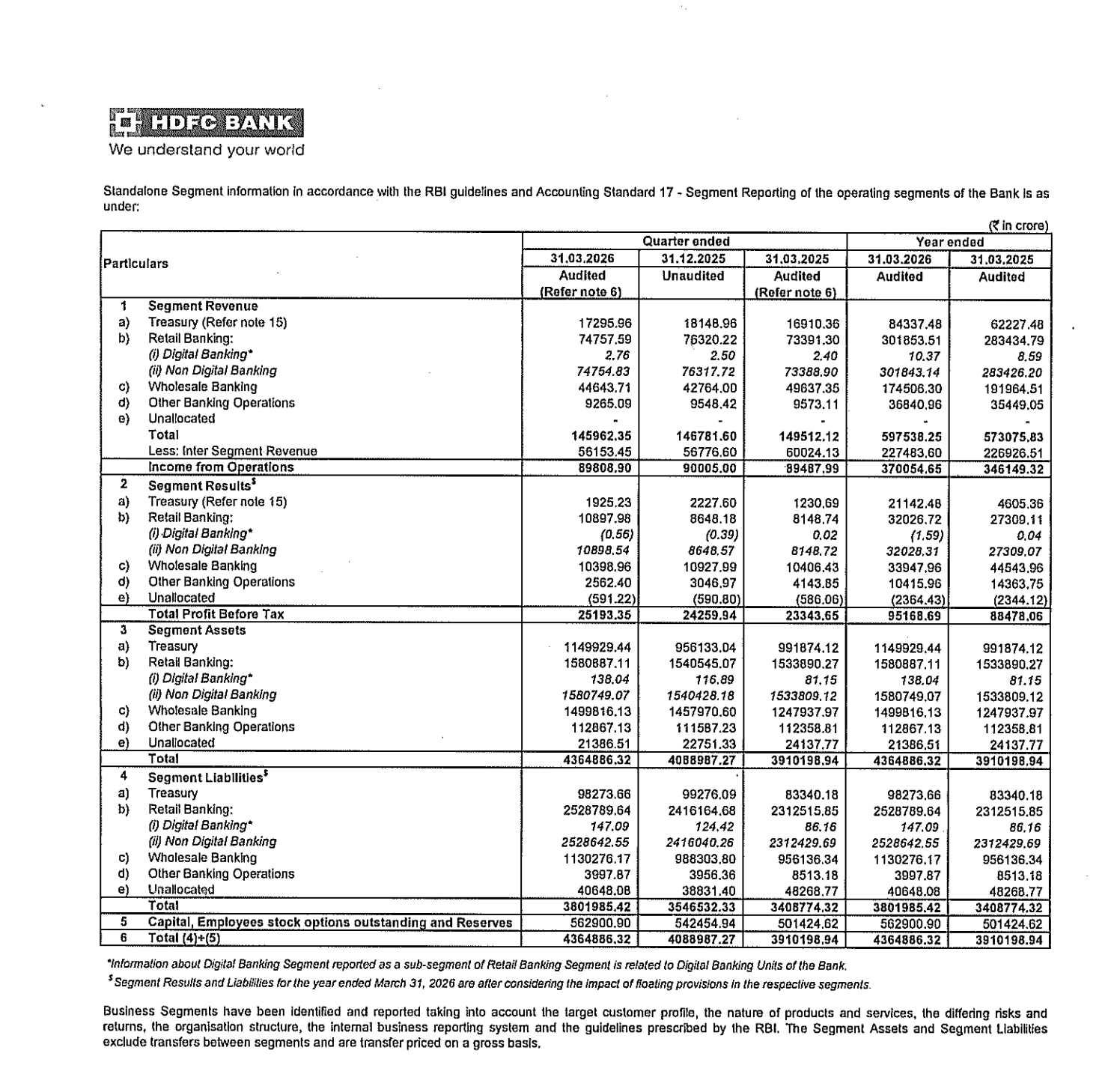
The report concludes that while the method effectively reimbursed MSRDC for an interest shortfall on savings deposits, it “fell outside the bank’s approved governance, resulting in regulatory breach” — and that this “exposed the bank to regulatory, operational and reputational risks.”
6 Likes
How bad is the hit ? Both subjectively (reputation) etc and objectively (numbers)..
Regards
seems to be mostly reputational. Numbers wise its all on the books, just not in the right place.
2 Likes
HDFC Bank concluded a three-month legal review by external law firms regarding concerns raised in Mr. Atanu Chakraborty’s resignation letter The review found that Mr. Chakraborty’s claims were not substantiated by any official records or witness interviews There was no evidence that he ever recorded any disagreement or raised concerns about his personal values and ethics during board meetings while he was in office.Dubai Matter: Although he later referenced a Dubai matter in public, the review found no contemporaneous evidence that he disagreed with any board decisions related to it.Mr. Chakraborty declined to be interviewed for the review despite multiple requests from the bank and the law firms.
7a35b900-8310-4856-a572-127184a8c751.pdf (414.0 KB)
The external firms identified no basis for the statements made in his resignation letter
3 Likes
That typical mentality of “Lets see if killing the messenger kills the problem at hand - at least for now - future administration/those in-charge will see it then”
Putting any significance to this document to arrive at a judgement of whether HDFC Bank and its management are free from any wrongdoing is at best wasteful at at worst indication of the very fault they were were freed from. Reasons:
- Accused commissioned self-review
- The Bank commissioned and paid Wilson Sonsini and Wadia Ghandy, set their terms of reference, and received their report, what’s more, the conduct implicitly in question is the Board’s, the same Board the report is submitted to.
- The law firm is a reputed institution, they didn’t lie but they the question they were retained to answer was framed by the interested party - Board of HDFC Bank. A board with nothing to hide could have let the resigning director, or a genuinely neutral third party, pick the reviewer and set the scope. HDFC chose the reviewer and scoped the review to its own records. That choice is itself data.
- The scope was formal records, the concerns raised were informal in nature.
- The review examined Board and committee minutes, agenda papers, and interviews. Chakraborty’s grievance was about “happenings and practices” — by definition the stuff that does not surface in minutes.
- So “we found no contemporaneous support in the minutes” is close to tautological: if the allegation is that things went wrong outside the formal / recorded process, searching the minuted process for proof is structurally incapable of finding it - worse, they (Board?) knew they won’t find it and hence that’s where the scope was set.
- The interview gap, inverted into evidence.
- The single most-quoted sentence in the filing is that the Bank “repeatedly requested” Chakraborty speak to the reviewers and the interview “did not occur.” HDFC Bank’s framing: he wouldn’t stand behind his own claims when offered the chance, so they’re empty. Flip it: why would a director who resigned over the board’s conduct submit to questioning by lawyers retained by, paid by, and reporting to that same board?
The instant thoughts that crawled through my mind as I read this:
- First-order version is "one visible failure implies hidden ones.”
- Second-order version, which this filing is a textbook case of, is watch how the institution responds to the accusation of a failure - the response is the governance signal.
- When you read a “free-from-blame”, read the scope first; a review that can only look where the problem isn’t will always come back clean.
- Reminded me of the classic fable that Charlie Munger often used to warn against evaluating data in the wrong place aka “Streetlight Effect” or the “Drunkard’s Search”.
A policeman sees a drunk man searching on the ground under a streetlamp. He asks what he lost, and the man replies, “My keys.”
After a few minutes of searching, the policeman asks if he is absolutely sure he dropped them there. The man replies, “No, I lost them in the park.”
Puzzled, the policeman asks, “Then why are you searching here?” The drunk man answers, “Because this is where the light is.”
The surgical approach: disqualify the messenger on procedure — you didn’t minute it, you didn’t show up - while leaving the message itself completely unexamined.
It is amazing how people at very high stature do very very dumb things in the name of self-preservation and inertia.
8 Likes
Good contra thinking but did you really expect in all seriousness that HDFC Bank will ask Atanu to pick someone to verify the claims? It’s a conflict of interest again. Neutral (probably someone appointed by RBI) would’ve been better
Another thing I didn’t understand is why wouldn’t he speak to the lawyers if he had concrete evidence about the “happenings and practices”? What will he lose if he speaks the truth since he has already spoken to the media about the same?
4 Likes
I have researched past Indian Cases of Self‑Commissioned Reviews..
| Company | What Happened | How They Responded | The Lesson We Learned |
|---|---|---|---|
| ICICI Bank (2018) | CEO Chanda Kochhar accused of conflict of interest in Videocon loans. | Board hired its own lawyers to review. Regulators later stepped in anyway. | You can’t be the judge in your own trial. Self‑reviews don’t shield against external scrutiny. |
| TCS (2024) | Concerns over board independence and governance practices. | Internal review done quietly, seen as narrow and reactive. | Optics matter as much as outcomes. Even if nothing is found, investors lose trust if independence looks compromised. |
| Infosys (2019) | Whistleblowers alleged CEO misconduct. | Board hired law firm & EY, but whistleblowers refused to engage. | A review without the accuser is like a courtroom without a witness. Credibility collapses when trust in the process is missing. |
| HDFC Bank (2025) | Director Chakraborty raised grievances about board practices. | Board hired Wilson Sonsini & Wadia Ghandy, scoped review to minutes. | Searching only where the light shines guarantees you’ll never find what’s lost in the dark. Defensive reviews erode trust even if no wrongdoing is proven. |
it’s about signaling transparency and independence. Companies that miss this point often face delayed but harsher consequences when regulators or markets lose trust.
5 Likes
All in all, the goings on at the bank leave a bad taste in the mouth. It is clear, by now, that there is a leadership vacuum at the top. The current CEO/ leadership team is just not the correct team to lead the bank. The CEO’s name has clearly come out in unsavory acts of interest adjustments, in direct contravention of the regulations. What the RBI’s actions will be on this matter remains to be seen. This, coupled with the HDFC Bank AT1 bond misselling case, clearly points to visible Governance gaps in the administration of the bank and maybe at a higher level of gross negligence /incompetence of the board. Publishing sugar-coated reports for self-certification will not cut it with investors or regulators. Whistleblower handle Madanlal Dahariya (@MDahariya) / X alleges other shady practices in the bank.
It does not take an Einstein to think that RBI will likely take a very, very dim view of this sordid saga. RBI, as the regulator, has to think about what message it sends out to the banking sector in particular and all the stakeholders, including the investors, by its action or inaction.
D: HDFC Bank is one of the largest and oldest positions in the PF.
4 Likes
From a practical, real world view point… assuming 100% transparent dealings in a big ,multi dimensional corporate is an utopian view.. especially in our country.. where several structural and habitual layers of aggrandizement, corruption, embezzlement and nepotism exist…That said.. I consider the recent episode of an erstwhile babu crying wolf… much lighter than the malice itself.. because most Civil services Babus squirm at the sight of ordinary mortals ( like corporate executives) earning more than them.. For me .. any large organization with say some 90 % plus transparent dealings is excellent in our socio political environs..
14 Likes
HDFC Bank , Is the market missing the bigger picture?
HDFC Bank has probably been one of the most discussed companies on this forum over the past few years. Most of the discussion has revolved around the merger with HDFC Ltd., the decline in NIM, weaker ROE, lower CASA and whether the bank deserves to trade at a lower valuation multiple going forward.
Firstly let me take you back to a similar situation that happened in America and how they tackled it and how warren buffett ones of the greatest investor of all time took advantage of the situation
A Lesson from History: Bank of America’s Recovery and Why It Matters for HDFC Bank
One of the biggest questions surrounding HDFC Bank today is whether the post-merger profitability pressure is temporary or whether the business has fundamentally changed. Looking through banking history, one case that stands out is Bank of America’s acquisition of Merrill Lynch during the 2008 financial crisis.
While the circumstances were different, the pattern is surprisingly similar. In both cases, a high quality banking franchise made a transformative acquisition that created years of pressure on profitability, leading investors to question whether the business had permanently lost its edge.
What happened at Bank of America?
In September 2008, Bank of America acquired Merrill Lynch for roughly $50 billion during the peak of the global financial crisis. The acquisition dramatically increased the size of the balance sheet and brought significant integration challenges. Investors were worried about capital adequacy, funding costs, earnings quality and execution risk. The market became extremely pessimistic, and Bank of America’s valuation collapsed.
Although the financial crisis itself was a major reason for the decline, the acquisition prolonged investor concerns because integrating such a large institution was far more difficult than initially expected.
How long did the recovery take?
The recovery was not quick.
-
2008–2010: Survival and capital rebuilding.
-
2011–2013: Balance sheet repair, lower-risk assets, improved funding profile and cost reduction.
-
2014–2016: Return of stronger profitability, improving ROE and a gradual valuation rerating.
In other words, it took almost 5 to 7 years before investors regained confidence that Bank of America had fully recovered.
This is an important reminder that large banking mergers rarely produce immediate benefits. Integration, funding optimization and profitability normalization often take several years.
What did management do?
Management did not try to grow aggressively immediately after the acquisition. Instead, they focused on fixing the balance sheet first.
Their priorities included:
-
Reducing expensive funding sources.
-
Improving deposit quality.
-
Selling non-core assets.
-
Strengthening capital ratios.
-
Improving operating efficiency.
-
Gradually rebuilding returns on equity.
Only after these issues were addressed did profitability begin to recover.
Warren Buffett’s role
One of the most interesting moments came in 2011, when investor confidence in Bank of America was at its lowest.
Warren Buffett, through Berkshire Hathaway, invested $5 billion in Bank of America. Instead of buying ordinary shares, Berkshire received preferred shares paying a 6% annual dividend, along with warrants allowing Berkshire to purchase 700 million common shares at $7.14 per share.
At the time, many investors believed Bank of America’s problems were permanent. Buffett took the opposite view.
His investment wasn’t based on the belief that the next quarter would be good. It was based on the belief that the franchise itself remained exceptionally strong despite temporary balance sheet issues.
Over the following years, Bank of America repaired its balance sheet, improved profitability and restored investor confidence. In 2017, Berkshire exercised its warrants, becoming the bank’s largest shareholder. The investment generated tens of billions of dollars in value.
How does this compare with HDFC Bank?
The situations are not identical. Bank of America’s problems were amplified by the global financial crisis and legacy credit losses, whereas HDFC Bank’s challenges stem from integrating HDFC Ltd and managing a significantly larger balance sheet.
However, there are some striking similarities.
| Bank of America (2008–2014) | HDFC Bank (2023–Present) |
|---|---|
| Major acquisition created integration challenges | Merger with HDFC Ltd created funding challenges |
| Profitability came under pressure | NIM and ROE came under pressure |
| Investors questioned future returns | Investors question whether margins can recover |
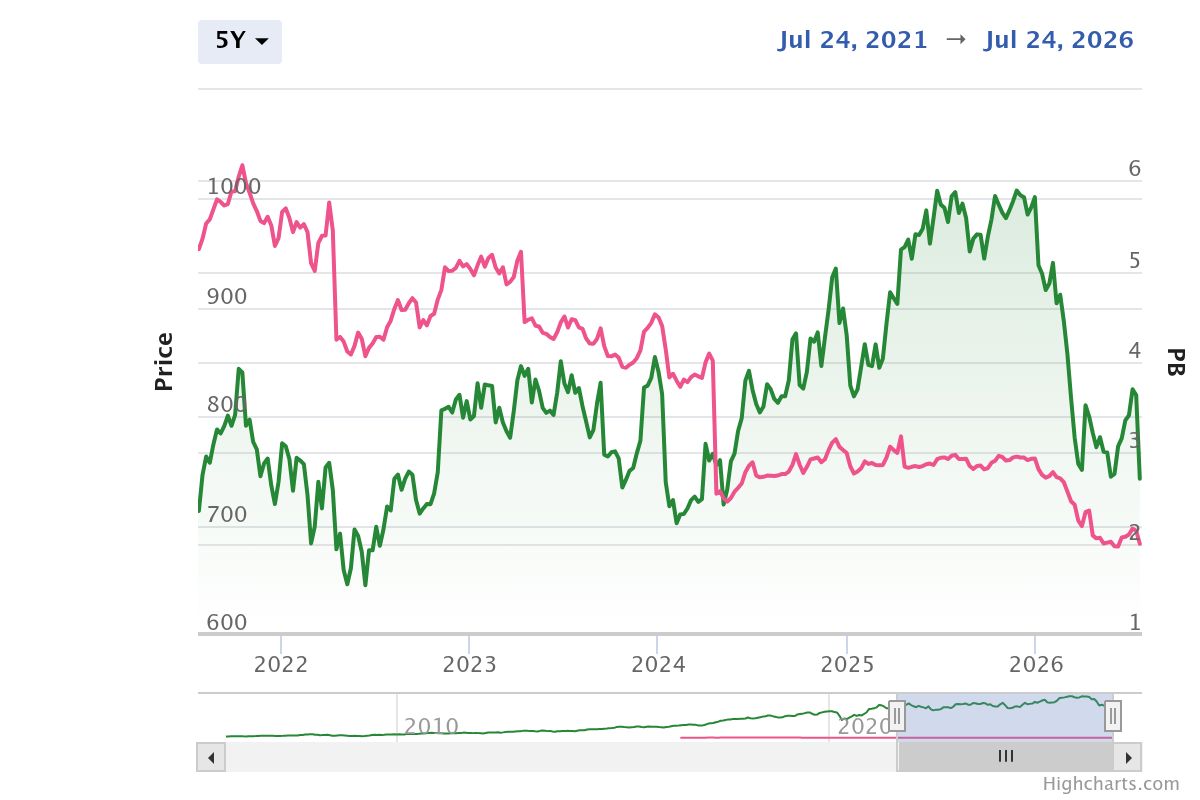
| Valuation compressed sharply | P/B has fallen to around 1.9x, one of the lowest levels in its history |
| Management focused on repairing funding and capital | Management is focused on deposits, CASA, lower borrowings and funding normalization |
Why I think the comparison is useful
The biggest lesson from Bank of America is not that HDFC Bank will necessarily follow the same path. Every banking cycle is different.
The real lesson is that large, high-quality banks often require several years, not a few quarters to realize the benefits of transformative mergers.
Today, many investors are focused on HDFC Bank’s current ROE of around 14% and NIM of roughly 3.3%. Management, however, continues to emphasize the underlying drivers that should improve these metrics over time:
-
Deposit growth remains healthy.
-
Borrowings have already reduced significantly from post-merger levels.
-
Cost of funds has started declining.
-
Asset quality remains among the best in the industry.
-
Capital adequacy remains very strong.
The key pieces that have not yet fully recovered are CASA, NIM and ROE. Those are lagging indicators. History suggests that if the funding profile continues to normalize, profitability may recover gradually rather than all at once.
Has the business actually become weaker, or is the market focusing too much on temporary profitability issues?
Instead of starting with opinions, I started with the numbers.
Firstly the valuation opportunity the P/B ratio is 1.9x at an all time low.
Revenue continues to grow
One thing immediately stood out. The business itself has not stopped growing.
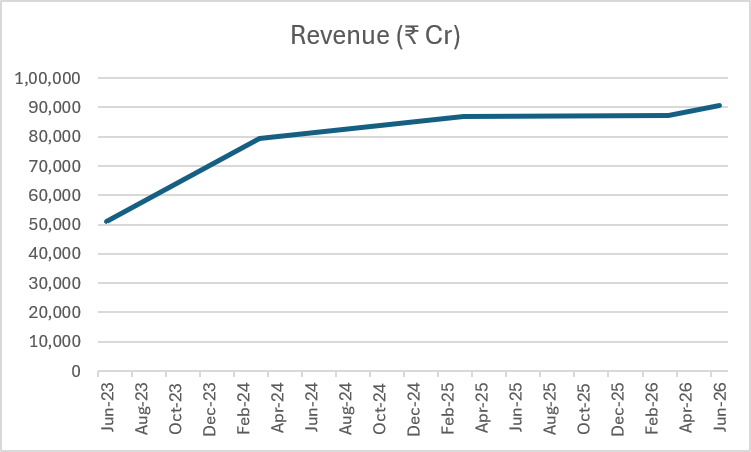
Revenue has continued to reach new highs despite the merger. If the franchise had genuinely weakened, I would have expected slower growth or even stagnant revenues. That simply isn’t happening.
The same can be seen in profits.
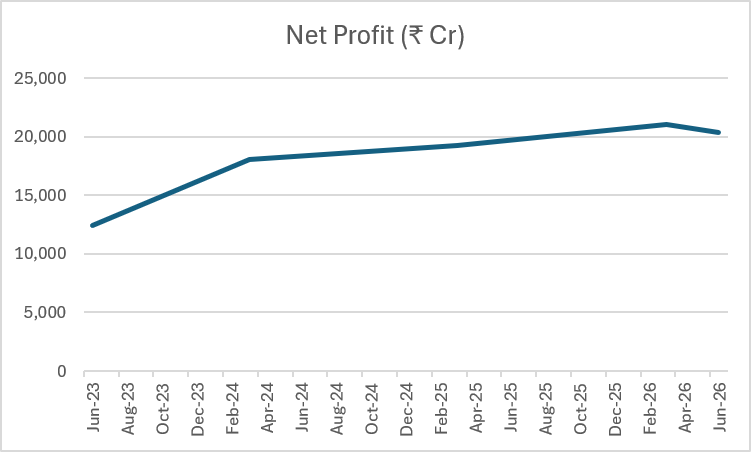
Quarterly earnings naturally fluctuate, but the overall direction is still upward. The bank is making more money today than it did before the merger.
So if revenue and profits continue to grow, where exactly is the problem?
Asset quality remains strong
Another concern I had was whether HDFC would compromise on underwriting standards while trying to grow the merged balance sheet.
The data doesn’t suggest that.
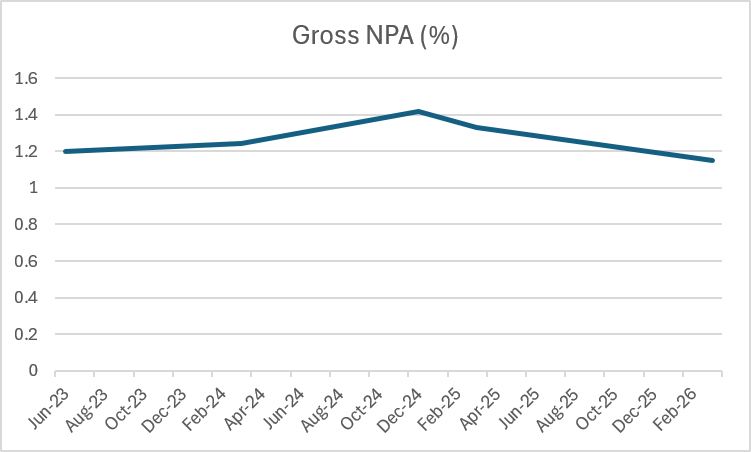
Gross NPAs did increase for a few quarters, but they have now fallen below pre-merger levels. That tells me management has remained disciplined even while integrating one of the largest financial mergers in India.
The franchise also continues to expand.
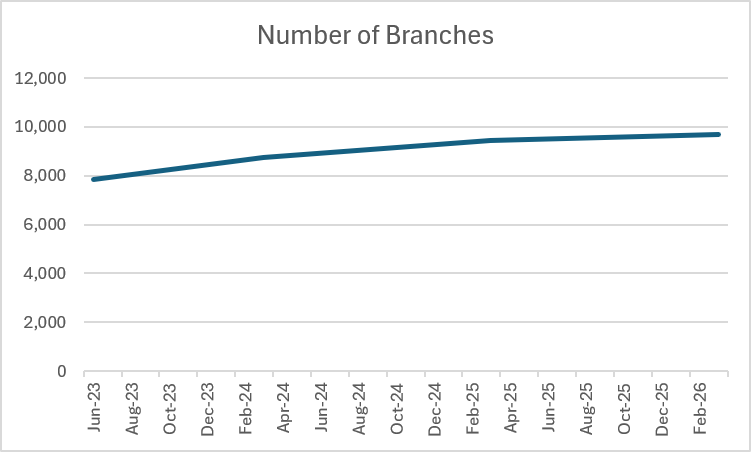
That is an increase of nearly 1,830 branches in less than three years.
Management also mentioned that business per branch has increased from roughly ₹266 crore to around ₹330 crore. That is important because it suggests they are not simply opening branches for the sake of growth. Existing branches are becoming more productive as well.
So why is the stock still struggling?
This is where I think the answer becomes interesting.
The problem is not growth.
The problem is profitability.
For almost a decade, HDFC Bank consistently generated industry-leading returns on equity.
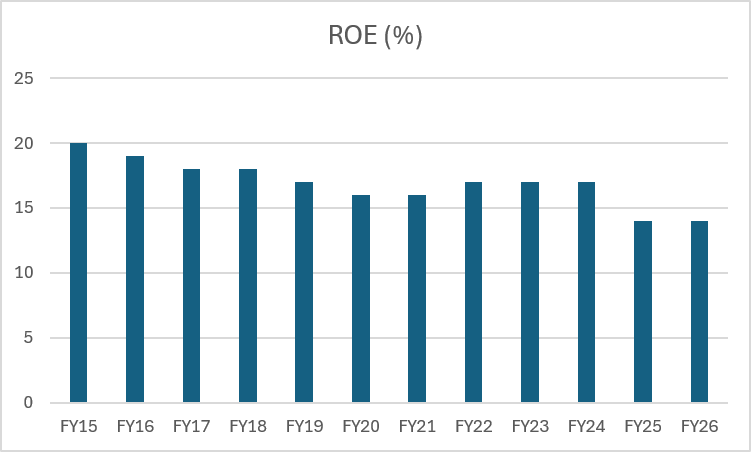
This chart explains a lot.
The business has continued to grow, but shareholder returns have not.
That is probably the biggest reason why the market has reduced the valuation multiple.
The next obvious question is why ROE has remained under pressure.
The answer seems to lie in the bank’s funding profile.
CASA has not recovered yet
This was probably the weakest chart I came across.
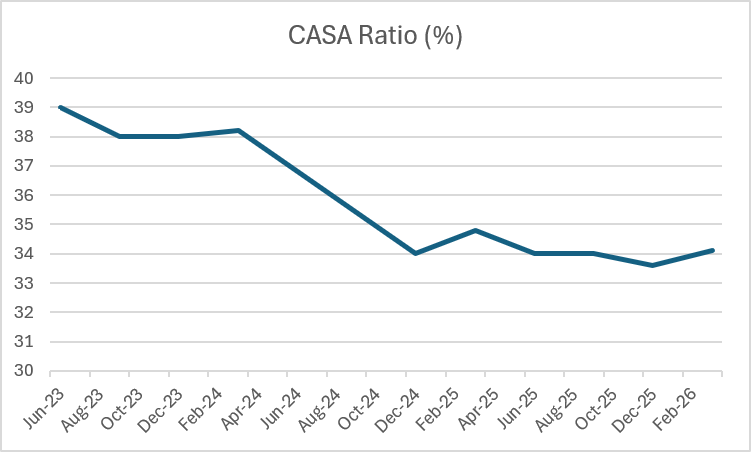
Before the merger, CASA was close to 39%. Since then it has settled around 34%, with very little improvement over the last few quarters.
Management continues to say that they would like to move back towards 38% over time, but the numbers suggest that recovery is still in its early stages.
This matters because CASA directly affects funding costs.
A weaker CASA mix means greater reliance on term deposits and borrowings, which keeps funding costs elevated.
Higher funding costs then flow through to lower NIM, which eventually results in lower ROE.
Interestingly, management acknowledged this during the latest earnings call. They said retail deposit pricing has largely stabilized, but wholesale deposits remain expensive. Borrowings are still around 11% of total funding, although they expect this percentage to gradually reduce over time. They also indicated that loan growth is ready to accelerate, but improving the funding mix remains a priority.
That gives me confidence that management understands the issue.
The bank is relying less on borrowings while deposits continue to grow strongly. That’s one of the key prerequisites for better funding economics.
| Metric | Immediately After
Merger | Q1 FY27 | Trend |
|----|----|----|----|
| Average Deposits Growth | Pressure | 13.3%
YoY | Improving |
| End-of-Period Deposits | Pressure | 14.7%
YoY | Improving |
| Average Advances Growth | - | 13.4%
YoY | Healthy |
| End-of-Period Advances | - | 15.4%
YoY | Healthy |
| Borrowings (% of liabilities) | 21% | 11% | Improving |
More deposits mean the bank relies less on expensive borrowings.
Cheaper funding → Higher NIM.
| Metric | Q1F27 Value |
|---|---|
| Average Deposit Growth | 13.3% |
| YoY | |
| End-of-Period Deposit Growth | 14.7% |
| YoY |
Management specifically highlighted that borrowings are reducing and stated that the long-term borrowing mix should be closer to 5–6%, while it is currently around 11%.
| Period | Borrowings |
|---|---|
| Post-merger peak | ~21% |
| Q1 FY27 | ~11% |
This is one of the strongest pieces of evidence supporting a future NIM recovery.
Cost of funds has started falling
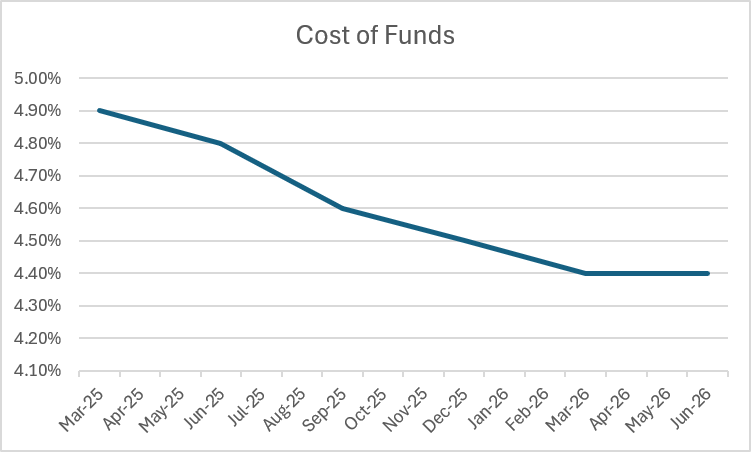
This is exactly what you want to see.
Lower funding costs generally support better NIM over time.
My takeaway
After going through the numbers, I don’t think HDFC Bank has a growth problem.
Revenue is growing.
Profits are growing.
Customers continue to increase.
The branch network continues to expand.
Asset quality remains among the best in the industry.
The challenge is that profitability has not yet caught up with the size of the merged balance sheet.
Nearly three years after the merger, the operational integration appears largely complete, but the financial benefits are still taking time to show up. The market seems to be waiting for clear evidence that CASA, NIM and ROE have begun moving back towards their historical levels.
For me, that is the key question going forward.
If funding costs continue to normalize over the next couple of years, higher NIM should eventually translate into better ROE, and that could justify a higher valuation multiple again.
If those metrics remain stuck where they are today, then the market’s caution is probably justified.
26 Likes
While its a good comparative study , but weren’t circumstances different? there were severe regulatory pressure for BAC to merge with Merryll Lynch..
HDFC Bank /HDFC Ltd merger came after years of deliberation (may be a decade). Looking at its valuations even now, the value compression is not comparable to BAC (it was coupled with major financial crisis too). I want to understand if the consequences of the merger were not envisaged by investors? why did market not readjust the valuations subsequently?
Looks like asset growth and low cost deposits growth are the two factors that will drive the valuations from here on, structurally it might be very slow looking at the situation now. While all this has happened , I am doubtful if the valuations will reach the earlier levels considering how the bank by itself has changed from taking over HDFC assets and change in investing landscape. It was highly valued based on consistent growth , asset class (diversified), quality and margins, considering how the business composition has changed and where SIPs are flowing (blame some on the management changes/issues) it might be challenging to regain that valuation.
1 Like