Between 1780 and 1840, during Britain’s Industrial Revolution, the economy grew by 46%, but worker wages only rose by 12%. All the gains went to factory owners (capital), not workers. The top 1%'s share of national income grew from 25% to 35% in just 47 years.
As per the article, the world is going through a similar phase. But like last time, it might not take decades to happen. I found it to be a little pessimistic, but still a good take.
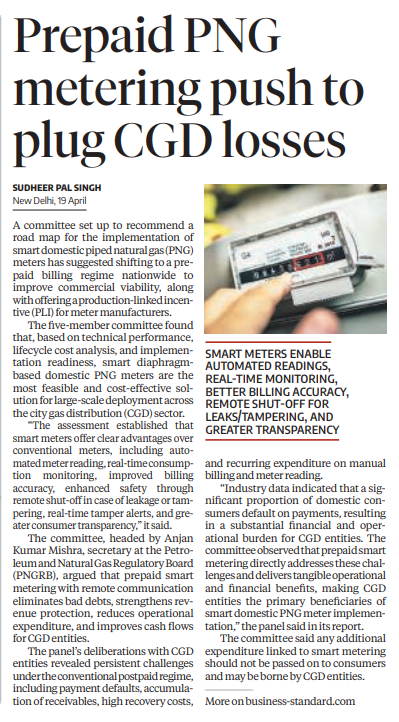
DISCOMS have still not figured out that prepaid electricity is the best way forward for electricity payments. A tried and tested method applied by many African countries.
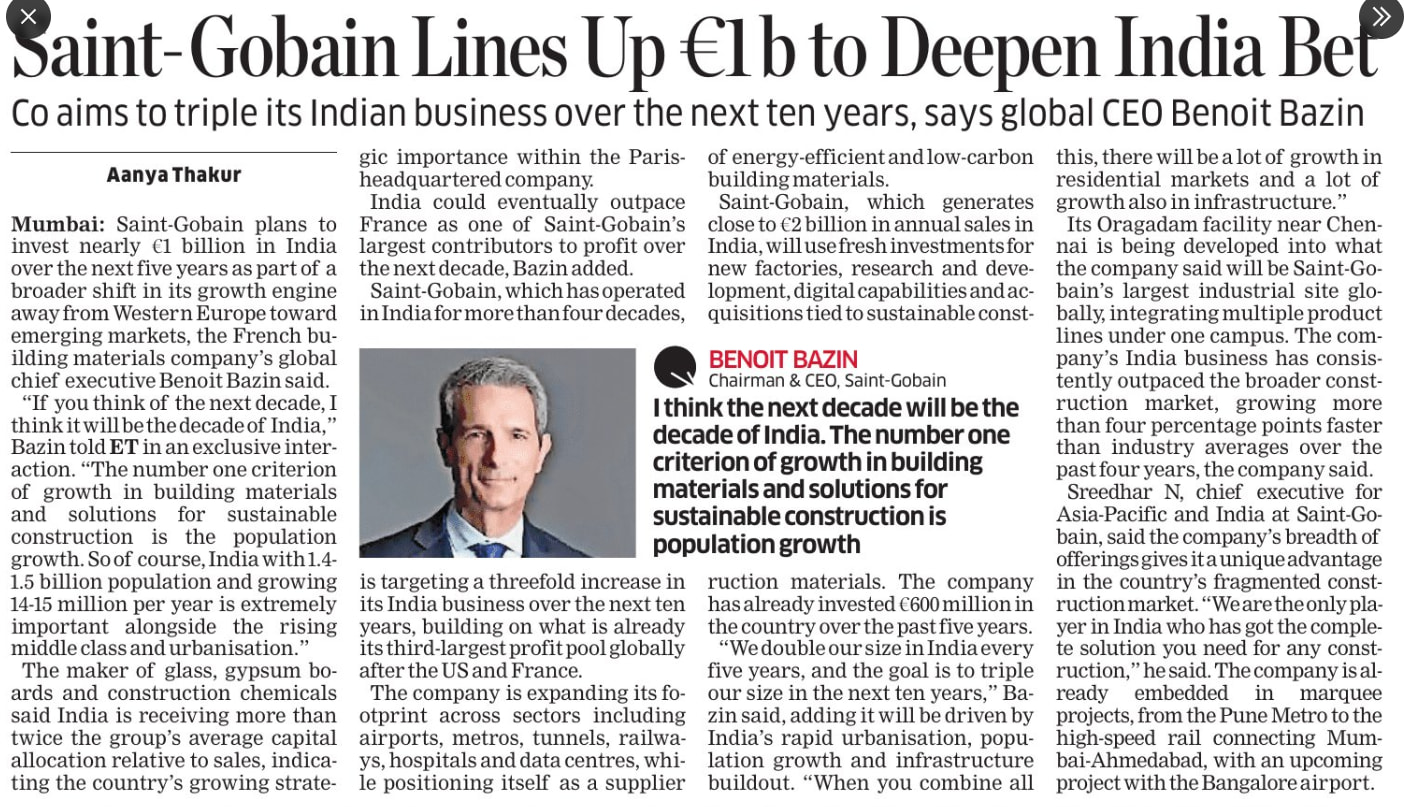
In age of disruptive technology, one should be careful for paying high multiples! Companies, which are in euphoria, due to their capital investment in battery and battery related chemicals & components are at great risk. Company investing high capital and building large capacity could face tough time if the current technology on which they invested become outdated!
Markets can surprise you on the upside and downside. Intel has doubled in last 1 month and 4 xed in the last year from the lows . Looks like the AI roulette wheel has spotted the cpu companies as their next bastion. Only time will tell if this search for narratives on the AI theme would end as badly as dot com bubble. In the mean time enjoy the party till the music stops…
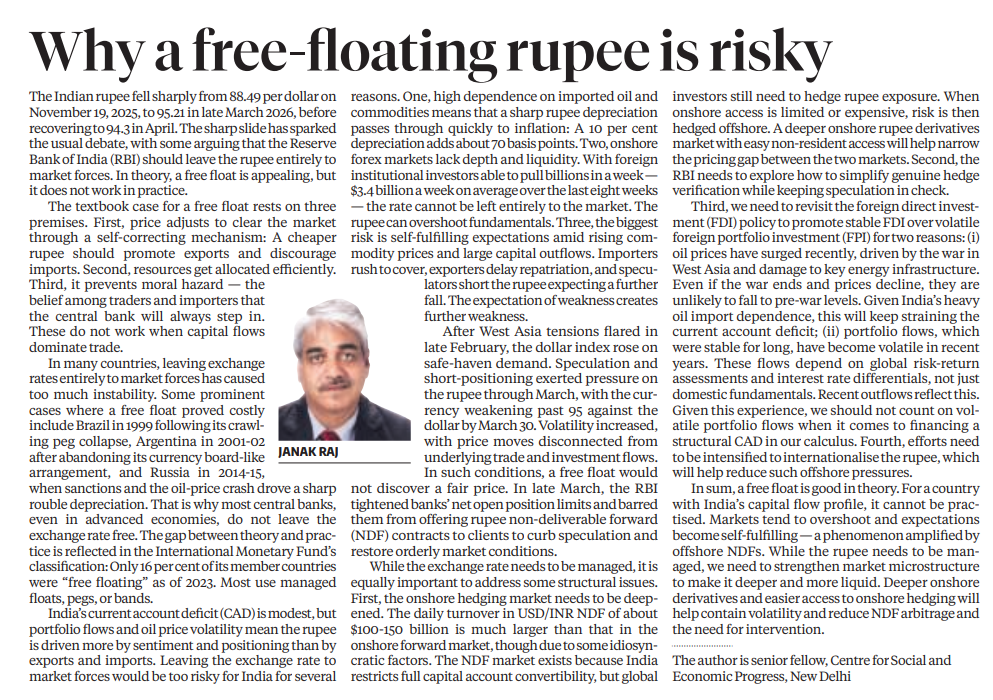
Interesting article on - Is Buying across corrections being seen as opportunities, but in reality perhaps may be running ahead of earnings and supply shocks.
For India, the impact is immediate. It is not just an oil importer, but also dependent on the region for gas, fertilisers and chemicals. Input costs are already surging : urea prices have moved up hugely, ammonia prices have followed a similar trajectory, sulphur is up sharply, and even chip prices have spiked.
The report points out: “as of April 23, daily ship arrivals at four major Indian ports (Navi Mumbai, Vishakhapatnam, Mundra, and Krishnapatnam) have fallen 40.6% YoY
wholesale prices jumped nearly 175 basis points in a single month. The report says, ‘Critical industrial commodities and sectors affected by the crisis have seen a price surge. The risks are tilted toward persistence rather than quick reversal of the price pressures.’
We often believe that, Developed Nations have better governance, enforcement of laws and good justice for all. By and large, this is true in most of the Developed Nations, but sometimes they also have gaps which can be exploited. US H1B and various other Visa systems always had these gaps right from 1990-2000 days, and even today.
If AI can be used to plug such gaps and misuse by small firms, that would be useful.
No place is perfect. No law is perfect. Instead of perfection we should look at how good in terms of implementation with whatever in place. I do agree and mind you these gaps are made such that there can be provision provided as an option in legal way. I was on H1B for quite while and I know these all are legal ways. Even there are couple of states that issue driving license to illegal migrants with less paper work and Bank will let you open account. There is a system infact to arrange all these . I am sharing as I met couple of them but ya looong back.
Indian IT Index is down in the past six months, and there are concerns over revenue de-growth in FY27.
General principle in investing is -”Buy low and Sell high”, but investors do not actually practice this all the time due to fear, low conviction, and FOMO. While some of the concerns about IT services sector might be true, IT industry has seen similar negative sentiments during 2016-2018 due to Cloud, RPA, SaaS and PaaS, and has navigated through those technical innovations. They never built their own products and platforms but built applications and services around the global products. Can they do something similar now ?
After every 10 years, there is an innovation which generally changes the direction of industry/capex; and it also creates new investment opportunities. It seems that, AI is creating such investment opportunities in those geographies which leads the AI ecosystem.
It is on similar lines as 1990-2000 belonged to IT services, 2000-2010 belonged to Pharma, 2010-2020 belonged to BFSI, and 2020-2030 might belong to AI infrastructure/models.
Gentle reminder article for Value Investors that S&P500 could be “overvalued” based on PE and CAPE both, and value investors should be aware of the fact that AI has tilted the valuations in high risk zone.
Though no one should believe in any forecasts, such articles should be used to understand long term perspective of the author.
Towards the end of the podcast David Friedberg dropped some seriously concerning news about the upcoming El Niño season. The core issue, he explains, is that our oceans act as the “battery of weather.” They absorb heat all year and eventually release it back into the atmosphere, driving global weather patterns. But right now, the oceans are holding onto a massive, unprecedented amount of heat. To put it in perspective, Friedberg noted that the ocean currently has an anomaly of 11 million extra terawatt-hours of stored energy. That’s roughly equivalent to 500 years’ worth of total human energy usage just sitting there, waiting to be released.
Because of this massive energy buildup, Friedberg is 99% confident that the upcoming year will be the hottest humans have ever recorded. This is going to trigger severe shifts in weather patterns worldwide. We can expect major “atmospheric river” events—basically, relentless, heavy rain dumps—hitting places like the US Southwest, California, and the Gulf Coast. Meanwhile, regions in the northern US and Canada are looking at low snowfall and intense heat waves, which significantly increases the risk of those massive Canadian wildfires we saw a couple of years ago. Interestingly, one silver lining is that the El Niño pattern typically means fewer Atlantic hurricanes.
However, the most alarming part of this forecast isn’t just the extreme weather; it’s the potential devastation to global agriculture. Record-shattering heat in major farming hubs like Brazil, Argentina, and Australia could lead to widespread crop failures. This isn’t just a local problem—it’s a global one. If Australia’s wheat crop fails, countries like Indonesia and the Philippines, which rely heavily on those exports, will face severe food shortages.
Friedberg highlighted a particularly terrifying scenario for India: there’s a high probability that their monsoon season could fail. That would devastate the 150 million farmers who depend on the rain, threatening the food supply for a billion and a half people. To make matters worse, India is already facing a fertilizer shortage due to geopolitical tensions in the Middle East. If you combine that with a failed monsoon, you’re looking at a massive calorie deficit and potential social unrest in South Asia.
Naturally, this is all going to send shockwaves through the global economy. We’re looking at spikes in energy and electricity prices, grid failures in places dealing with extreme heat, and wild volatility in commodity markets. Chamath chimed in, asking if genetically modified “super seeds” could help save the day. Friedberg explained that while climate-adapted crops are essential for the long term, they aren’t a quick fix for the immediate crisis. However, he did point out an interesting long-term trend: as the planet warms, viable farmland is actually expanding further north, allowing places like Canada to grow crops like soybeans that wouldn’t have survived there a few decades ago.


 . Looks like the AI roulette wheel has spotted the cpu companies as their next bastion. Only time will tell if this search for narratives on the AI theme would end as badly as dot com bubble. In the mean time enjoy the party
  till the music stops…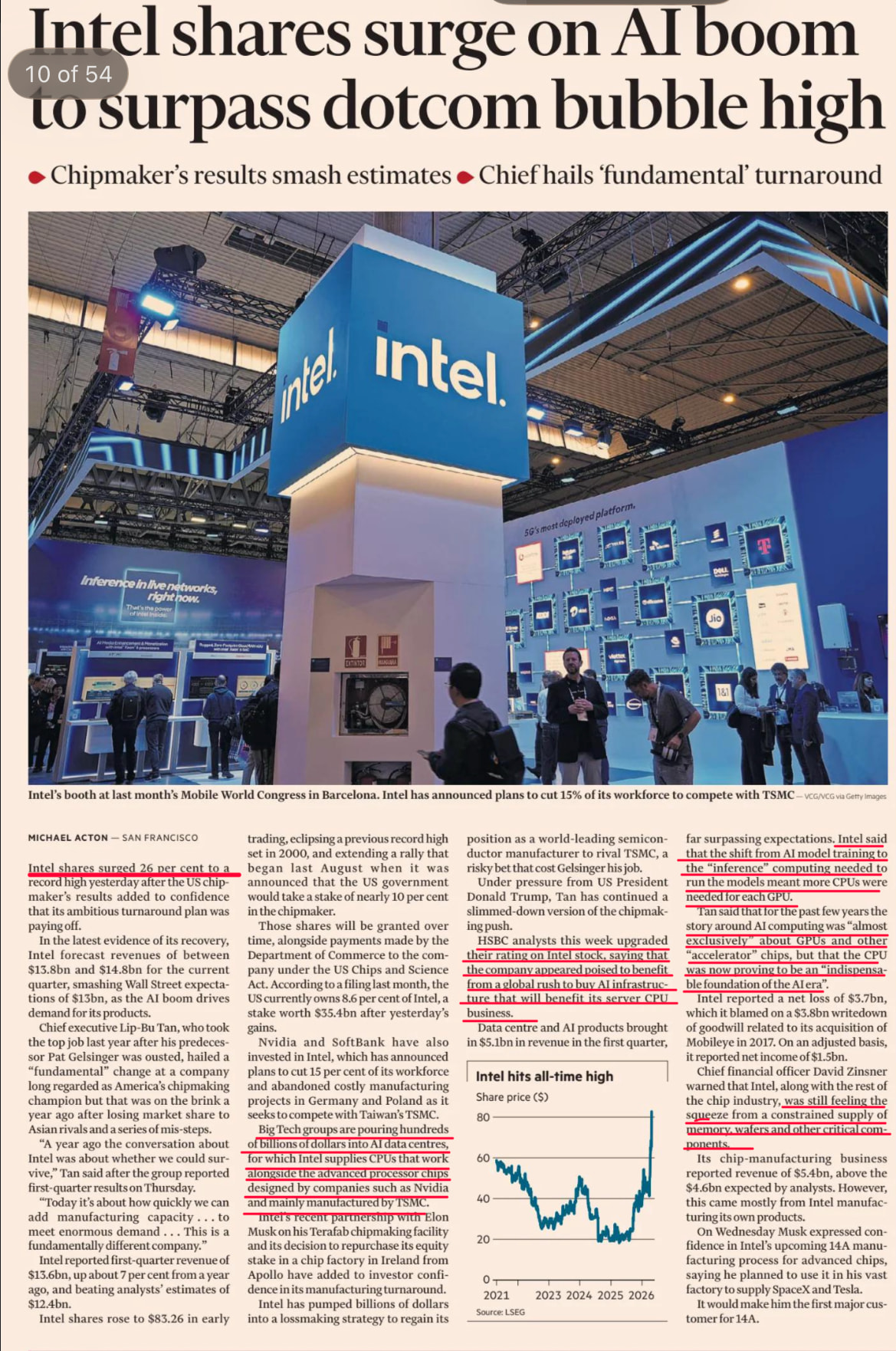
 . I am sharing as I met couple of them but ya looong back.