
Epack Durable Ltd: Record Sales, Shrinking Profit, and the Bet on Operating Leverage
When you buy an air conditioner in India, there is a good chance a company whose name is not on the box built it. Epack Durable is one such company: a contract manufacturer, or ODM, designing and building appliances that other brands sell under their own name. By volume, it is India’s second-largest room-AC ODM (RAC).
Think of a banquet hall that is ready to host events, with the lighting, staff and other costs already paid for. Every extra booking uses the same space, so most of the additional revenue goes straight to profit. But if the hall remains half-empty, those fixed costs continue to hurt profits. This simple idea explains much of what has happened to Epack over the last two years.
How It Actually Makes Money
Epack’s revenue splits four ways: room air conditioners (RAC), small and large domestic appliances (SDA and LDA, air fryers to washing machines), and components, made both for itself and for external sale.
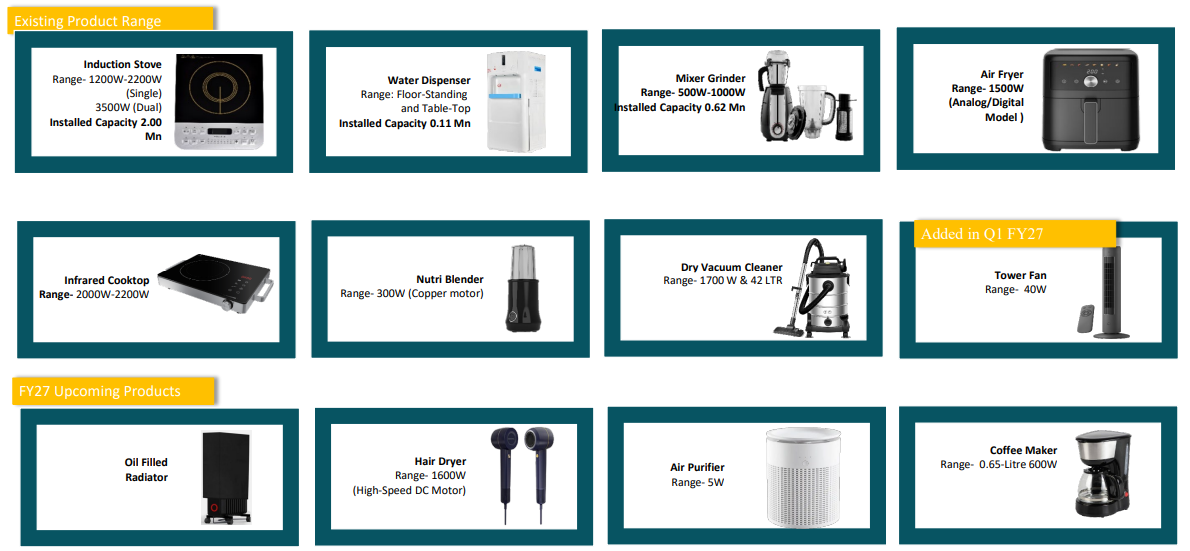
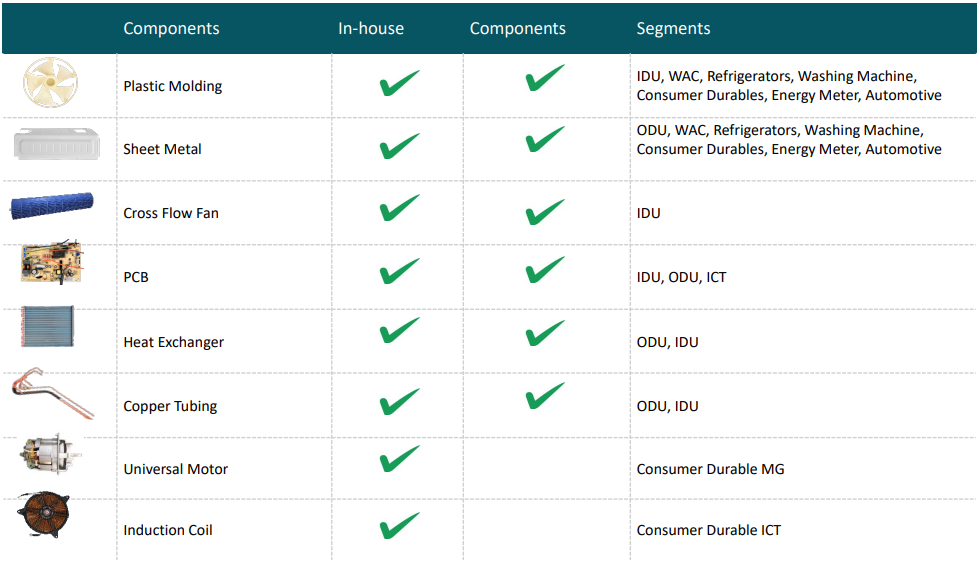
The margins are thin by design. A contract manufacturer earns a fee on top of costs, not a brand’s markup. Epack’s answer is backward integration: making the parts itself instead of buying them. Each component brought in-house adds value and shields margins from supplier pricing.
RAC is the anchor and the problem. It is a summer business, peaking in the June quarter, while September and December have historically run at a loss. Management is building domestic appliances ( SDA &LDA) which sell through winter, to balance this. These categories carry a gross margin roughly 1.5 to 2 percentage points above AC.
A concrete example: Epack builds air conditioners for Hisense. In the January-to-June season it delivered close to 60,000 units worth about Rs 120 crore, Rs 65 crore of that in the June quarter alone. Epack designs and builds; Hisense sells and markets.
The Andhra Pradesh Deal: What Epack Gets and Why It Matters
In early July 2026, the government of Andhra Pradesh approved a formal incentive deal for Epack Durable and its subsidiary, Epack Manufacturing Technologies (EMTPL). In plain terms: Epack has committed to building large factories in the state, and the state government has agreed to give a significant portion of that money back over time, alongside land and other support.
The total investment planned is Rs 1,084 crore. Of this, Rs 314 crore comes from Epack Durable itself, and Rs 770 crore from EMTPL. The factories will make room air conditioners, components, small domestic appliances, washing machines, and smart televisions. The project is expected to create about 1,600 jobs in the state.
The centrepiece of the deal is a 50% capital subsidy. A capital subsidy works like this: for every rupee Epack spends building these factories, the state government will return roughly 50 paise over time, as a direct grant. On a Rs 1,084 crore investment, that translates to roughly Rs 542 crore coming back, though the timing and exact eligibility will be determined through the state’s Electronics Manufacturing Policy 4.0 framework.
There is an important timing benefit here. The subsidy coverage starts from November 2024, not from the date of approval. That means the money Epack had already spent at its Sri City plant before this deal was officially signed also qualifies. The company does not need to spend fresh money to start unlocking the benefit.
The state has also agreed to allot 36.41 acres of land at Sri City at Rs 60 lakh an acre, a subsidised industrial rate. On top of this, Epack will receive partial reimbursement of power costs and benefits on the state portion of GST it pays, which together reduce the ongoing cost of running the facilities.
Taken together, this deal materially improves the return profile of the Sri City investment, which was the plant running at the lowest utilisation and the biggest drag on consolidated returns. With roughly half the capital cost being subsidised, the bar for Sri City to earn an acceptable return on invested capital is lower than it appeared before this approval.
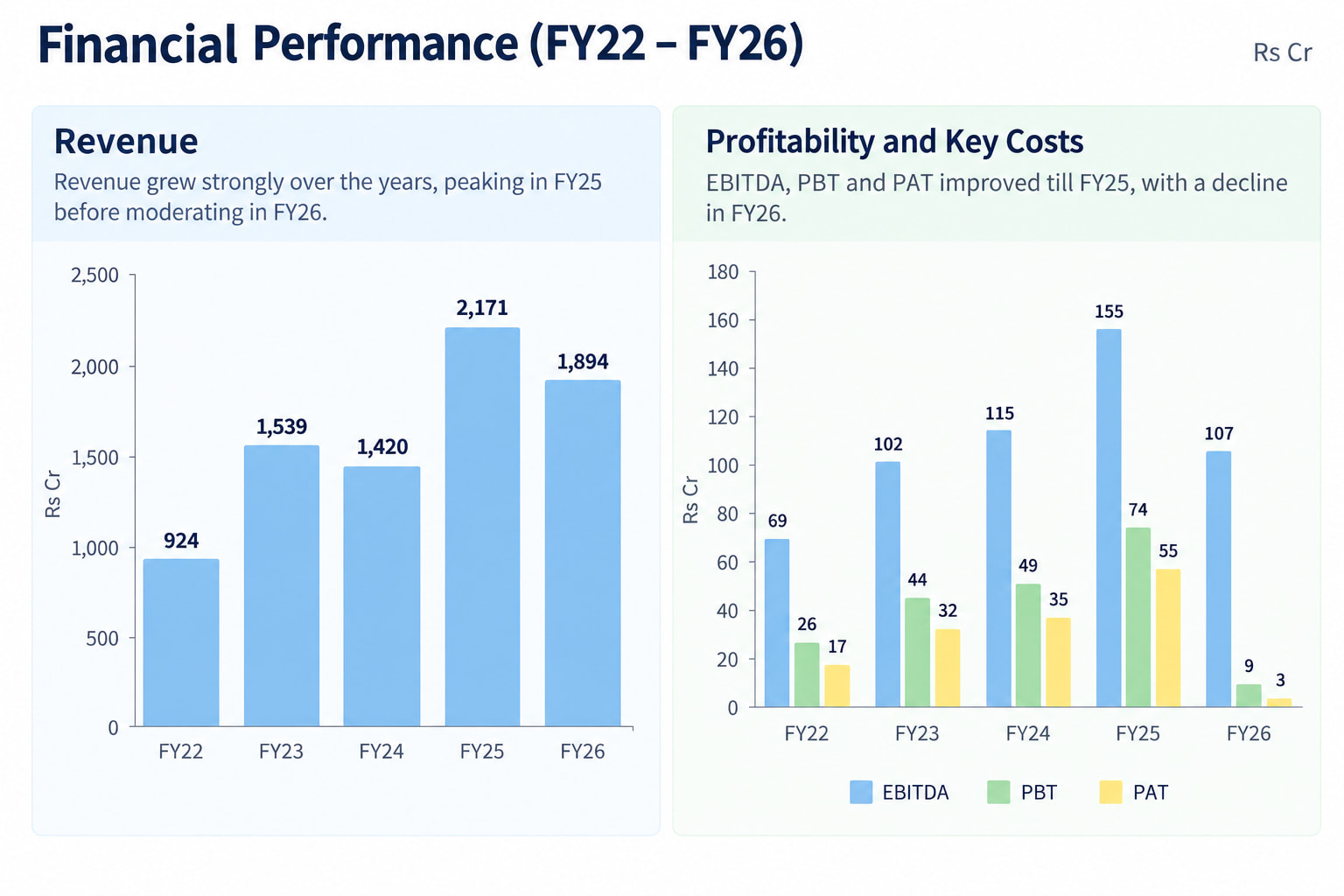
Revenue compounded near 20% a year for four years, then fell 12.7% in FY26. Profit fell harder. PAT dropped from Rs 55 crore to Rs 3 crore, a 94% fall. EPS went from Rs 5.75 to Rs 0.34.
Three things hit together in FY26: soft RAC demand as brands worked down excess channel stock, commodity and forex costs outrunning price pass-through, and the reversal of a government incentive. Below the line, depreciation and interest both rose as new plants came online. Smaller operating profit, spread over a heavier fixed base, is operating leverage working in reverse.
Q1 FY27 shows the pivot, and a trap for a quick reader.
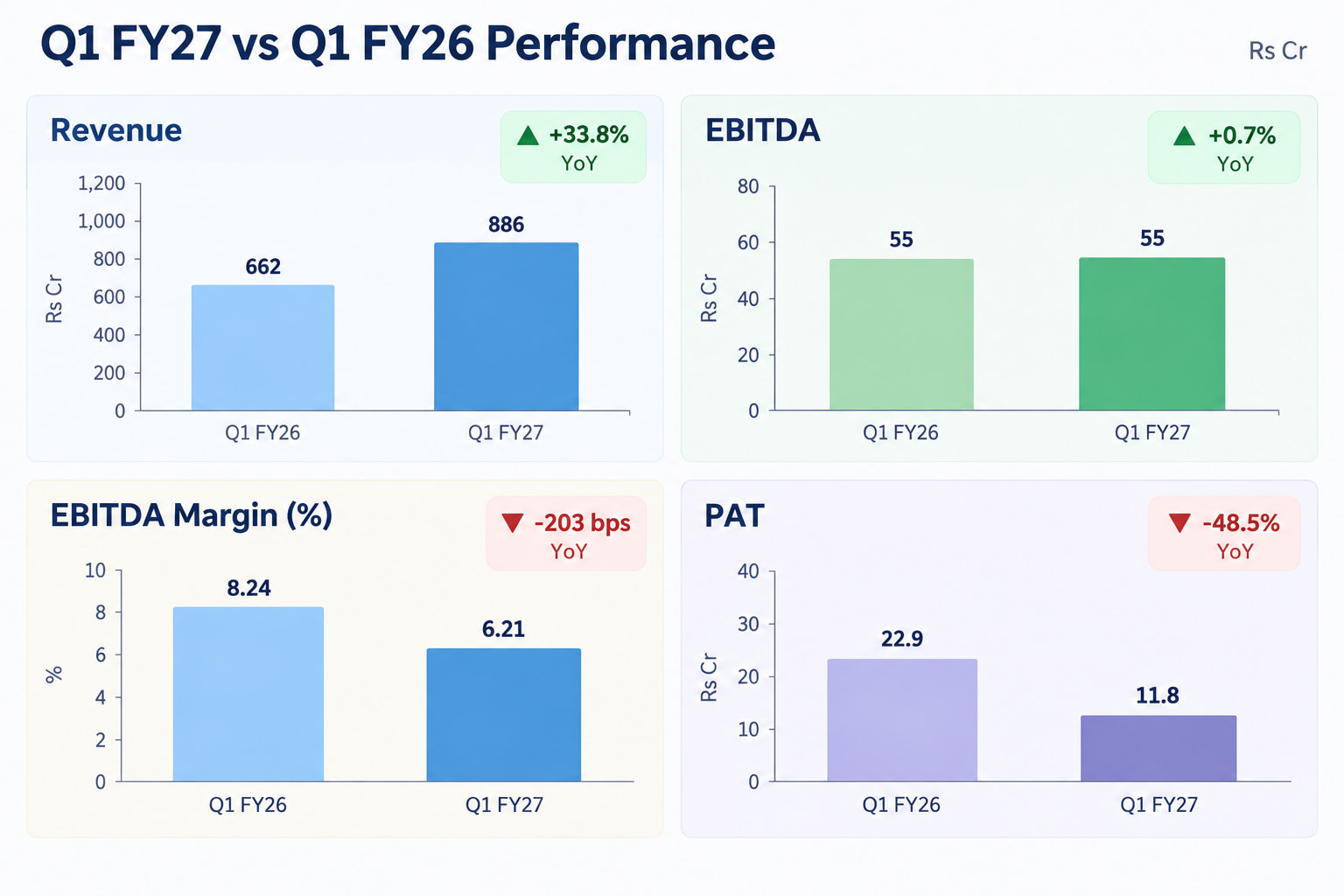
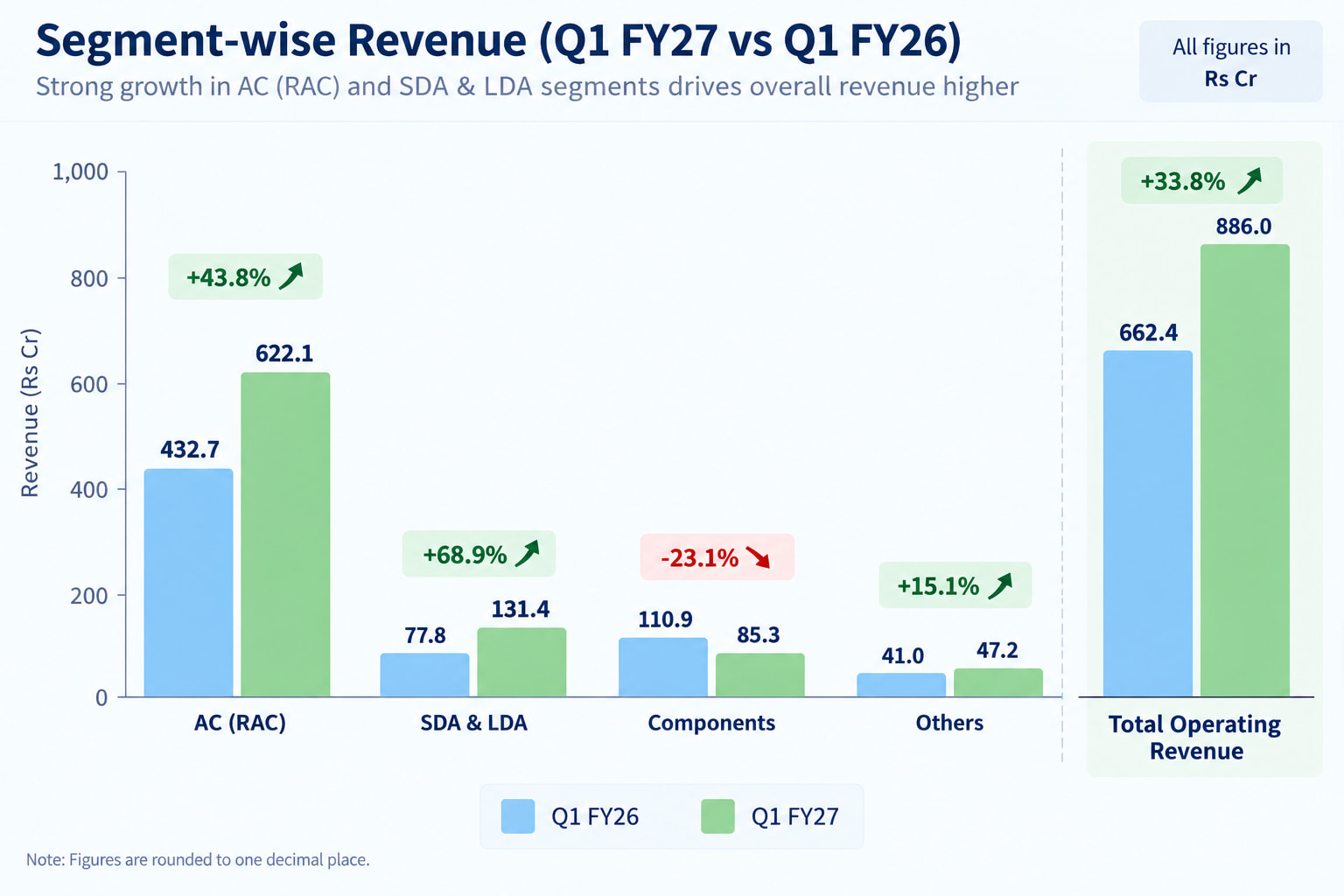
Record revenue, a 203-basis-point margin fall, profit halved. But the Q1 FY26 base carried Rs 13.3 crore of Production Linked Incentive (PLI) income, a subsidy with no matching cost, flowing straight into EBITDA. This year that income was zero. Strip it from last year’s base and the underlying margin was closer to 6.4%, not 8.24%. Management’s own like-for-like read: margin actually moved about plus 15 basis points, not minus 203. Most of the headline fall is accounting, not operations.
The balance sheet carries the real strain.
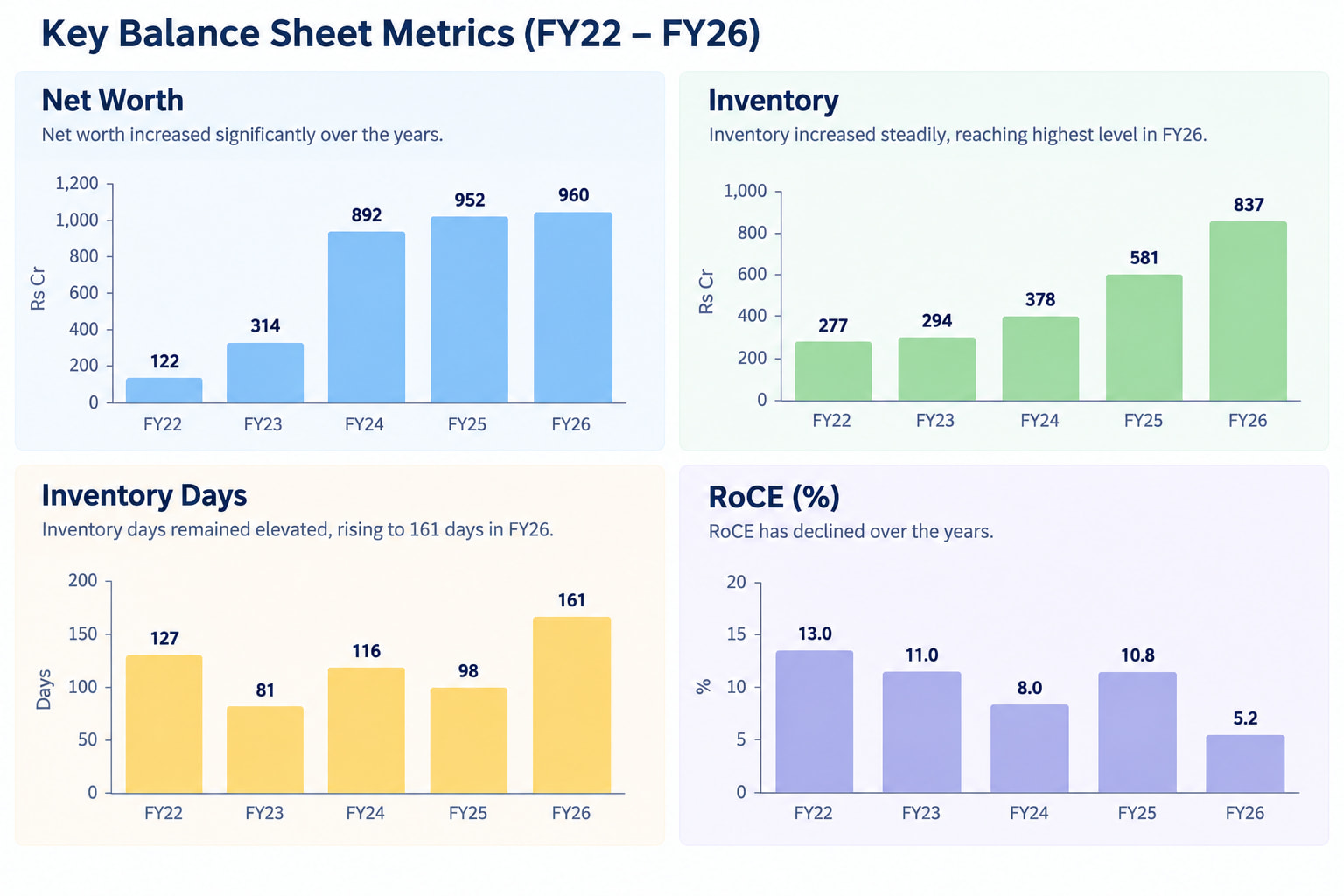
The 2024 listing recapitalised the company, cutting leverage to almost nothing. FY26 undid part of that. Gross debt nearly doubled to Rs 707 crore, mostly to fund inventory, which jumped to Rs 837 crore as new BEE rating rules forced ahead-of-season stocking. RoCE halved to 5.2%; RoE fell to 0.4%. Both sit below what the business needs to earn to create value.
Debt is material here, so it earns its own view.
3
At 6.5 times, this looks alarming. Two things soften it. Net debt to equity is only 0.7 times, so this is not a solvency problem. And most of the debt funds inventory, which converts back to cash as it sells. The ratio is high because EBITDA is cyclically depressed and inventory is temporarily bloated, not because the balance sheet is overstretched.
Cash generation is the real weak spot.
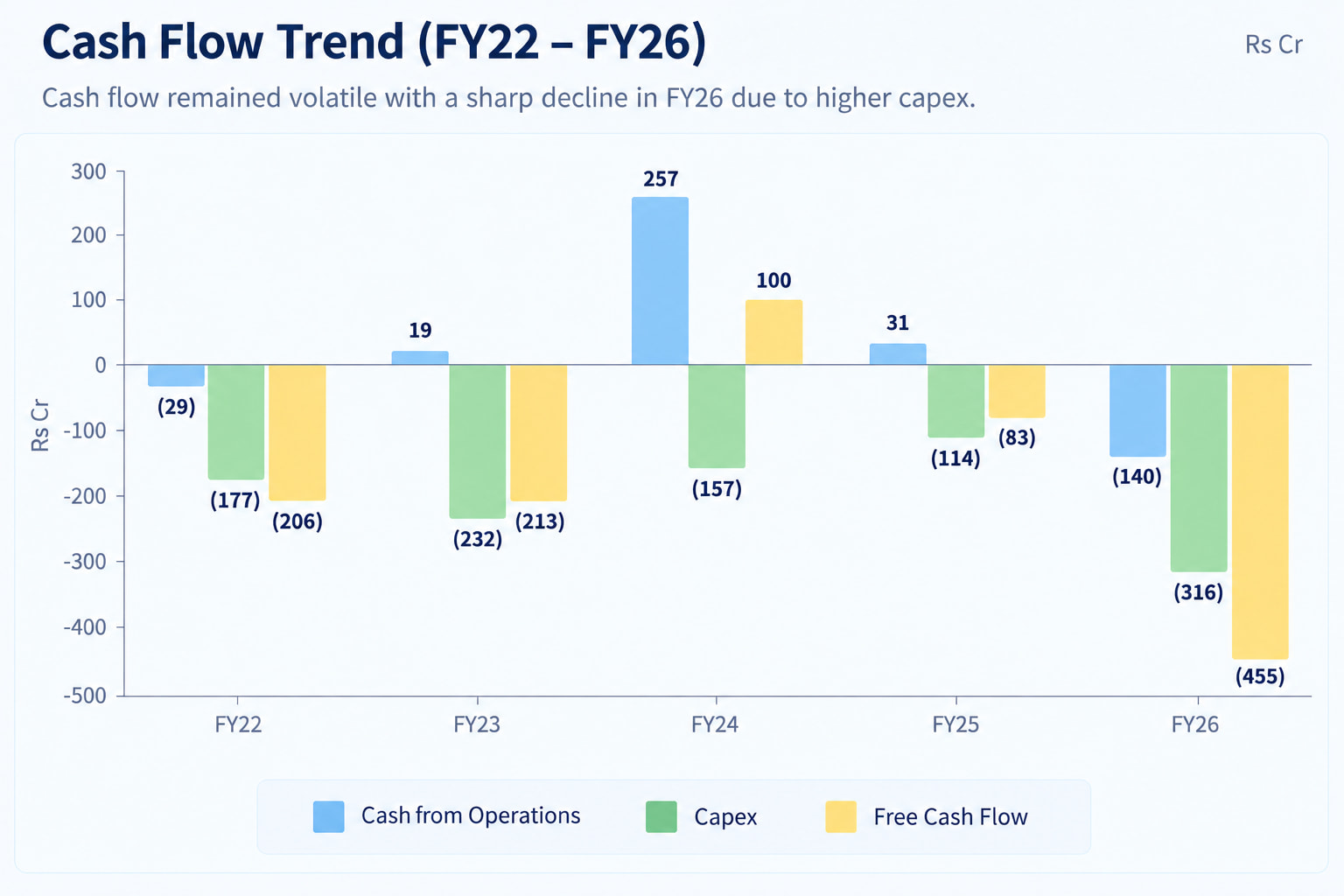
FY26 operating cash flow turned negative as inventory absorbed cash, and heavy capex pushed free cash flow to minus Rs 455 crore, plugged by debt. This is a business that has consumed cash to grow. Whether that spending starts paying back is the entire question.
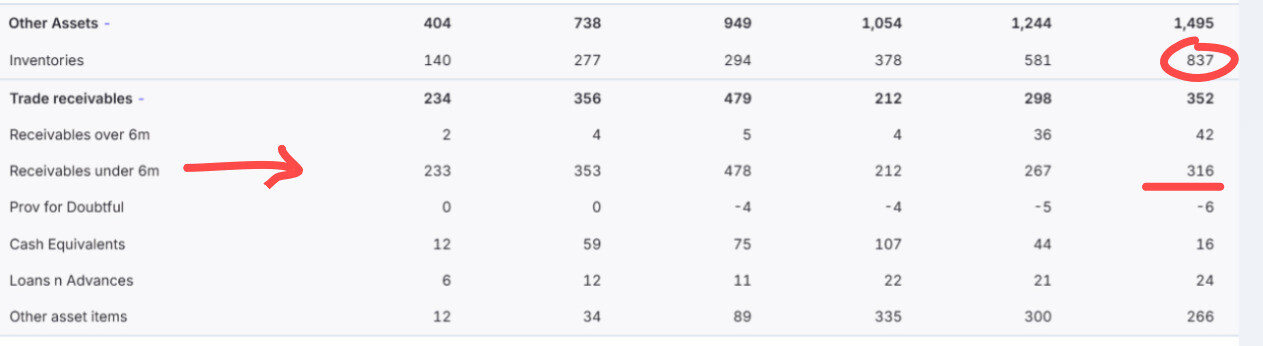
The receivables data adds one important nuance to the working capital picture. Of the Rs 352 crore in trade receivables as of FY26, Rs 316 crore, or about 90%, is under six months old. Only Rs 42 crore is older than six months, and a provision of Rs 6 crore has been made against doubtful recovery. This is a healthy receivables profile. The concern in EPACK’s working capital story is inventory, not collections: customers are largely paying on time, the cash is just getting stuck earlier in the cycle, at the raw material and finished goods stage, before the invoice is even raised.
Industry Tailwinds
AC penetration in Indian households remains low. To put that in perspective, roughly one in three Indian households owns a refrigerator, but far fewer own an air conditioner, and that gap represents years of replacement and first-time purchase demand still to come. The domestic AC market was about USD 4.46 billion in 2025 and is projected to reach USD 15.12 billion by 2034, a compound growth rate of about 14.5% a year. Rising incomes, hotter summers, and expanding demand from Tier 2 and Tier 3 cities all support this trajectory.
The home appliances market more broadly, which covers washing machines, air coolers and other products Epack now makes, was valued at approximately USD 86.85 billion globally in 2026 and is projected to grow to USD 143 billion by 2035 at roughly 5.7% a year. For Epack, which is actively adding washing machines and small appliances to reduce its dependence on AC, this matters: the diversification strategy is pointed at markets that are themselves growing.
Two policy shifts matter specifically for Epack. The first is a subsidy change. PLI, a government scheme that paid manufacturers extra for making components in India, is being phased out. In its place come Quality Control Orders, government rules that simply ban the sale of certain components, like compressors, unless they meet a set quality standard. This favours a company like Epack that already makes most of its own components, since it needs fewer certified parts from outside suppliers.
The second is a ratings change. Every air conditioner sold in India carries a star rating, one to five, showing how energy-efficient it is. The government raised the bar for what counts as each star rating from January 2026, so ACs that were five-star before no longer qualify, and manufacturers had to redesign and requalify their models to the new standard. This forced the whole industry to stop selling old-rated stock and switch entirely to new-rated ACs, which briefly left extra old inventory sitting unsold in the trade channel. That overhang is now clearing, and the reset favours larger manufacturers like Epack who could redesign and requalify products fastest.
Competitive Advantages
The moat is backward integration and a de-risked customer base, both backed by numbers.
Epack makes heat exchangers, copper tubing, circuit boards and moulded parts in-house. Its plants are designed to flex across product types because so much of the value sits inside the factory rather than in parts bought from outside suppliers. When demand for one product softens, the lines can shift to another without rebuilding from scratch.
This in-house capability also changes the cost equation on commodities. When copper prices rise, a pure assembler pays whatever the market charges for a bought-in heat exchanger. Epack absorbs the raw copper cost but captures the fabrication margin itself, which partly offsets the commodity move. The Andhra Pradesh deal deepens this further: with roughly half the capital cost of the Sri City expansion being subsidised by the state government, Epack’s cost base at that facility will be structurally lower than a competitor funding the same capacity entirely from its own balance sheet.
The customer base has widened sharply. Top-two customer concentration fell from 72% of revenue in FY23 to 38% in Q1 FY27. Customer count grew from 18 to more than 72; product categories, from 6 to 19. Non-RAC revenue rose from about 20% of the total in FY23 to 45% in FY26. A company once dependent on a handful of AC buyers now sells broadly across categories and clients.
Where the Next Three to Five Years Come From
Washing machines are the stated big lever. Top-load machines already run for three national brands. The higher-value front-load line, tied to Hisense, is in pilot, with mass production targeted around end-October. Because washing machines sell through the non-AC months, this is management’s tool to fix the September and December losses that have historically dragged on full-year earnings. Risk: the ramp is early; a slip pushes the seasonality fix out by quarters.
Hisense is the second driver. Management has framed a five-year cumulative revenue target of Rs 8,000 crore across AC and washing machines from this partnership. FY27 is year one; Rs 120 crore delivered in the first half is called on track. Risk: this rests entirely on one partner’s India ambitions holding over five years.
Utilisation is the third, and the clearest near-term number to watch. Sri City, the newest plant, ran below 25% utilisation last year and reached about 50% in Q1 FY27. The older Dehradun and Bhiwadi plants run near 85% to 90%. Management targets over 60% blended utilisation across all three in FY27. The arithmetic is simple: fill Sri City, and the fixed costs it currently drags on margins start working the other way. Risk: if demand or new-product ramps disappoint, the plant keeps dragging rather than contributing.
Smart televisions are the fourth, though the least developed of the four. The Andhra Pradesh investment commitment explicitly includes television manufacturing capacity alongside ACs, washing machines and small appliances, marking it as a medium-term intention rather than a distant idea. No production timeline or customer has been announced publicly. It is worth tracking because televisions are a high-volume, brand-driven category where ODM manufacturing is well established globally, and Epack’s existing infrastructure would transfer. For now it is a flag on the roadmap, not a near-term earnings driver.
Epack is mid-way through a Rs 470 crore capex programme, about Rs 297 crore spent in FY26, plus a separate Rs 1,085 crore, five-year commitment to Andhra Pradesh under the state’s Electronics Manufacturing Policy 4.0, against which a 50% capital subsidy on eligible fixed investment is approved, with coverage retrospective to November 2024. See the Andhra Pradesh Deal section for the full breakdown. This is a company still building capacity, not harvesting it.
Framing all of it, management has floated roughly Rs 5,000 crore of revenue by FY29, which from the FY26 base implies over 35% annual growth. Ambitious, against a business that shrank in FY26.
Peer Comparison
Genuine listed peers are scarce. Amber Enterprises is the closest match, a pure RAC ODM, though six times Epack 's scale. PG Electroplast overlaps on washing machines and other appliance ODM work, with a stronger balance sheet. Dixon Technologies is India’s largest EMS player, included for context rather than as a close match: its revenue is dominated by mobile phones and LED TVs, not appliances, so its scale and margin structure are not directly comparable.
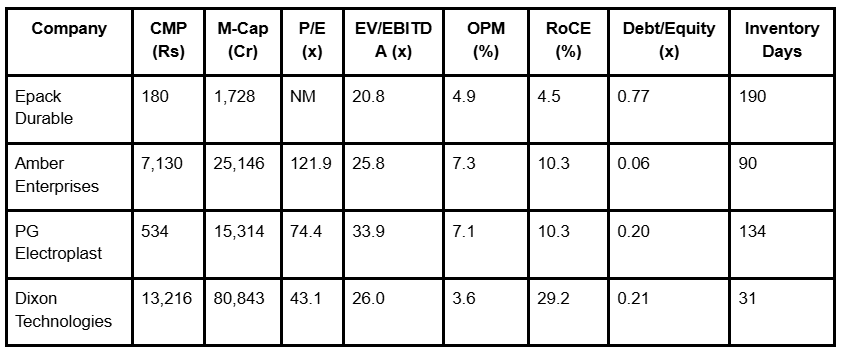
The gap is stark. Epack’s operating margin sits below all three peers, and its RoCE is under half of Amber’s or PG Electroplast’s, far below Dixon’s. Inventory ties up cash for 190 days against Amber’s 90 and Dixon’s 31, a business turning working capital far more slowly than a scaled EMS operator. The market prices this in: Epack carries no meaningful PE while Amber and PG Electroplast trade above 70 times, and Dixon above 40. If Epack 's operating-leverage story plays out, closing even part of this gap in RoCE and inventory efficiency is what a re-rating would rest on.
Key Risks
Operating leverage failure, high. Trigger: Sri City and the new washing-machine lines staying below roughly 55% utilisation. Impact: EBITDA margin stuck near 6%, RoCE below cost of capital, Rs 470 crore of capex earning little. The Andhra Pradesh subsidy lowers the return threshold at Sri City, but does not eliminate this risk if utilisation stays structurally low.
Leverage and working capital, high. Trigger: inventory staying elevated, or another weak demand year. Impact: net debt above Rs 700 crore, interest above Rs 80 crore eating most of operating profit, cash flow staying negative.
RAC seasonality, high. Trigger: a slip in the washing-machine ramp. Impact: September and December quarters stay loss-making, as they nearly did in Q4 FY26 where net profit was Rs 0.24 crore, dragging the full year regardless of a strong June quarter.
Commodity and currency pass-through lag, medium. Trigger: a sharp move in copper or the rupee. Impact: direct margin hit; a forex loss alone added Rs 6 to 7 crore of cost in Q1 FY27.
PLI expiry, medium. Trigger: FY27 is Epack’s last PLI year. Impact: loss of support worth 1.5 to 2% of EBITDA, partly offset as the company claws back the discount it had passed to customers. Net effect on reported margin is genuinely uncertain.
Customer concentration residual, medium. Trigger: loss of the anchor RAC customer, which management says drove most of the 30% RAC volume growth in Q1 FY27. RAC is still 55 to 70% of revenue.
Andhra Pradesh subsidy execution risk, medium. Trigger: delays in state disbursement, changes in government policy, or Epack failing to meet the investment milestones that unlock the subsidy tranches. Impact: the 50% capital subsidy, roughly Rs 542 crore expected back over time, does not arrive on schedule, making the Sri City and EMTPL investments more expensive than the current plan assumes. State incentive schemes in India have historically been subject to disbursement delays even when approvals are in place, so the approval and the cash are not the same thing.
Valuation
PE is not the right tool here. With profit near zero, it produces meaningless numbers. EV/EBITDA is more reliable: it measures the total price of the business, market cap plus net debt, against operating profit, and is the standard lens for a company whose earnings are recovering. Implied PE is included as a secondary check.
Enterprise value is the total price a buyer would pay for the entire business, not just the shares. If the market cap is the price of the equity, enterprise value adds the debt a buyer would also inherit, giving a truer picture of what the business costs.
Scenarios look to FY28E, the first year in which PLI claw-back and higher utilisation should both be fully reflected. These are illustrative outcomes, not forecasts.
Bull: Sri City and washing-machine lines fill, utilisation crosses 65%, the PLI discount passed to customers is fully reversed, and the Andhra Pradesh capital subsidy begins reducing the effective cost base at Sri City. EBITDA margin 8.0% on Rs 3,100 crore revenue. PAT benefits additionally from lower net depreciation as subsidy receipts offset capitalised costs over time.
Base: Partial operating leverage, utilisation near 60%, margins recovering but not fully normalised. EBITDA margin 7.0% on Rs 2,900 crore.
Bear: Leverage does not arrive, Sri City stays underutilised, margin stuck at 6.0% on Rs 2,600 crore.
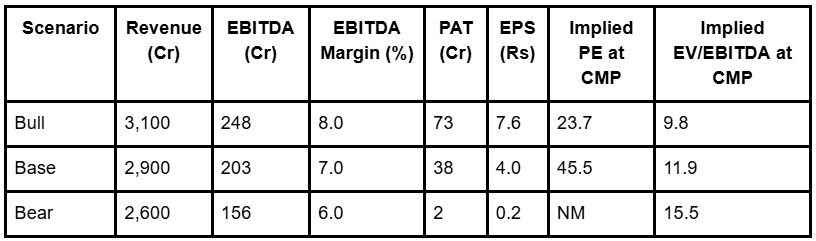
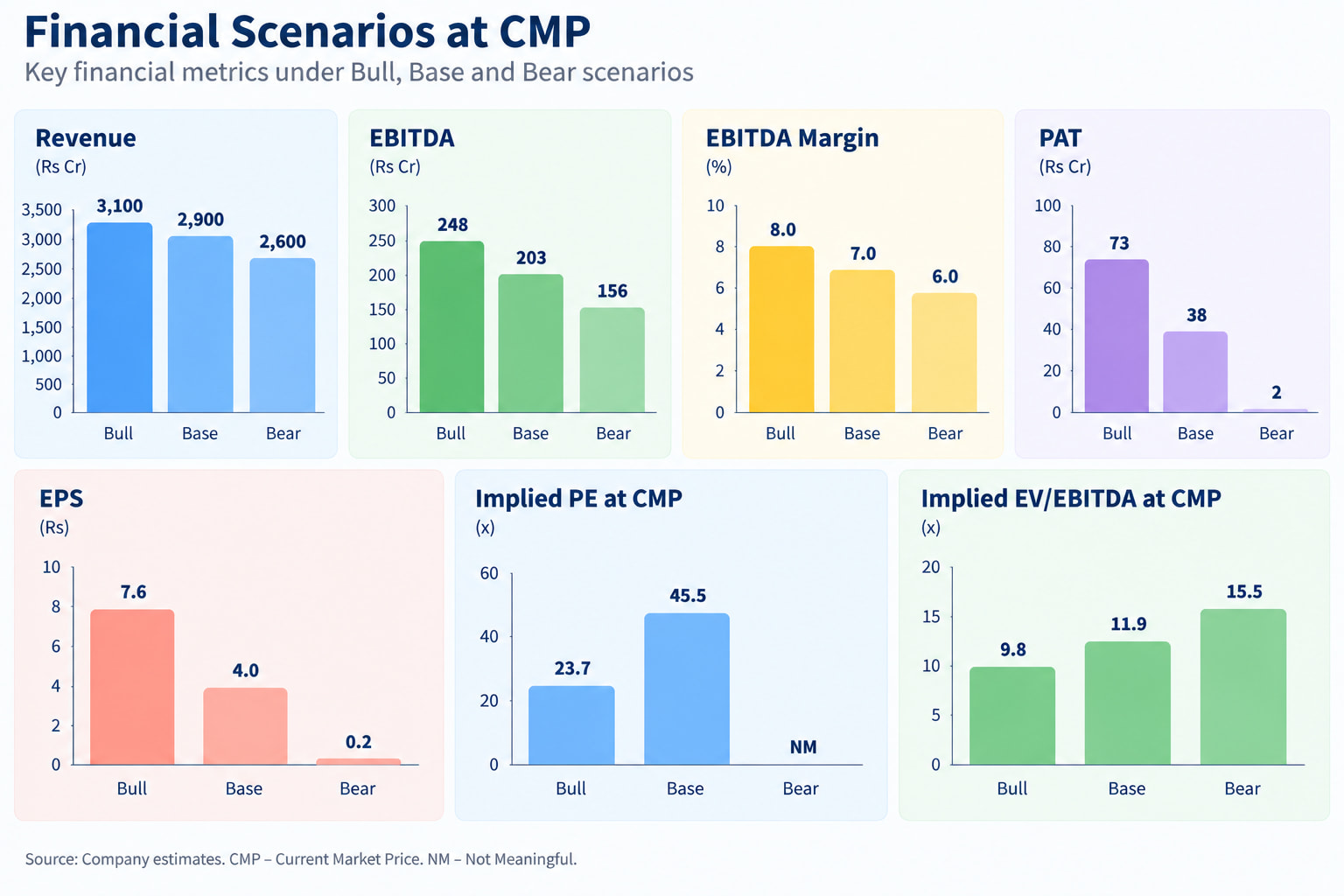
Current market price Rs 180 as on 18 September 2026. Market cap Rs 1,728 crore. Net debt Rs 691 crore, FY26. Enterprise value approximately Rs 2,420 crore.
At today’s price, the market pays close to 15 times a stuck-margin FY28E and under 10 times a fully recovered one. The swing in implied PE from 23.7 times to not meaningful shows how dramatically small margin moves affect profit when the earnings base is this thin. In the bull case, the Andhra Pradesh subsidy is an additional tailwind to PAT that the table does not fully capture, since the disbursement schedule is not yet public.
The Bottom Line
Epack has proven the top half of its story: record revenue, top-two customer dependence cut from 72% to 38%, a wider product range, and the deepest backward integration among Indian RAC makers. The Andhra Pradesh deal adds a third proof point: a state government committing to subsidise half the capital cost of Epack’s next capacity tranche is an external validation of the manufacturing model, not just management’s own assessment of it. The core market has a long runway.
It has not proven the bottom half. Profit collapsed, RoCE halved to below cost of capital, and the business burned cash in four of five years while debt rose. Much of the reported margin fall is a PLI accounting effect, not an operating one, but the real test is arithmetic: can Rs 470 crore of new capacity fill fast enough to carry its own depreciation and interest. The Andhra Pradesh subsidy lowers that bar somewhat, but it does not remove it.
What the market prices, under 10 times a recovered FY28E EBITDA and near 15 times a stalled one, is a bet on that arithmetic. Epack is delivering scale. It is not yet delivering the profit that scale is supposed to bring. The next four to six quarters, on utilisation, margin, and the first signs of subsidy disbursement, decide which wins.
Management and Ownership
Ajay DD Singhania is Managing Director and CEO; Rajesh Kumar Mittal is CFO. The company has roughly two decades of manufacturing history. Promoters held 46.4% as of 30 June 2026; institutions (domestic and foreign) held about 19%.
Disclaimer: This article is for educational and informational purposes only and should not be construed as investment advice, a recommendation, or a solicitation to buy or sell any security. The author holds the NISM Series XV (Research Analyst) certification but is not a SEBI-registered Research Analyst. The views are based on publicly available information and may change as new information emerges. Please do your own research and consult a SEBI-registered investment adviser before making any investment decision.
Holding disclosure: The author does not hold shares in Epack Durable Limited as of the date of publication of this article.