
@iaditya if you had gotten access to the annual reports since 1999, could you please send them over? It would be massively helpful. Thank you
1 Like
Hello everyone,
I would like the forum’s take on an interesting and significant development in the industry.
Robert F. Kennedy had heavily based his campaign on MAHA, especially doing away with petroleum-based food additives in Fruit loops, a popular western breakfast cereal.
While he had promised significant action on companies, an outright ban wasn’t promised in the April 25 statement
I was initially skeptical of it being just lip service. However, companies seem to be responding to the threat. Food giants like JM Smucker, Kraft Heinz etc have come forward to phase out artificial dyes in food within the stipulated time period
A brief history of artificial colors in food shows the urgency of this situation. After kicking the can down the road forever, the FDA has started to take action with the ban of Red 3 in Jan 2025.
Besides, states have been more proactive and are accelerating the phase out of artificial food dyes in the days following the ban.
The level of apathy historically is terrifying. eg. A dye approved in 1907 was banned only in 1950 after a mass sickness of children. 1963-1987 was when these nine new synthetic drugs were approved by FDA.
Synthetic Food Dyes Targeted by the FDA Announcement
- Citrus Red No. 2
- Color: Red-orange.
- Current Use: Historically used to color orange peels, though its application is now limited and restricted to specific purposes (e.g., mature oranges) under 21 CFR 74.302.
- Timeline: The FDA is initiating the process to revoke authorization within the “coming months” from April 2025, suggesting a target completion by late 2025 or early 2026.
- Relevant Details:
- This dye has faced scrutiny due to potential carcinogenic risks, prompting its restricted use.
- The revocation aligns with the FDA’s fast-tracking of natural alternatives, reducing reliance on petroleum-based dyes.
- Impact: Food companies using Citrus Red No. 2 (if any) must transition to natural substitutes like annatto or turmeric extracts.
- Orange B
- Color: Orange.
- Current Use: Rarely used today; previously permitted for sausage casings but largely phased out due to safety concerns.
- Timeline: Similar to Citrus Red No. 2, the FDA plans to revoke authorization within the “coming months” from April 2025, likely by late 2025 or early 2026.
- Relevant Details:
- Its discontinuation reflects a cleanup of obsolete or unsafe dyes, with minimal industry impact given its limited use.
- No specific natural replacement is highlighted, but options like paprika oleoresin could suffice.
- FD&C Green No. 3 (Fast Green FCF)
- Color: Sea green.
- Current Use: Used in candies, beverages, desserts, and processed foods to achieve green hues.
- Timeline: Part of the six remaining synthetic dyes targeted for elimination, with a national standard and timeline established for the food industry to transition to natural alternatives. The full phase-out is expected by the end of 2027, aligning with industry commitments like J.M. Smucker’s.
- Relevant Details:
- Concerns include potential links to behavioral issues in children, though evidence is less conclusive than for Yellow No. 5.
- The FDA is working with industry to replace it with natural alternatives like spirulina extract or chlorophyllin copper complex.
- FD&C Red No. 40 (Allura Red)
- Color: Reddish-orange.
- Current Use: Widely used in candies, beverages, baked goods, and processed foods (e.g., J.M. Smucker’s jams) for red and orange shades.
- Timeline: Included in the six remaining dyes, with a phase-out target by the end of 2027.
- Relevant Details:
- The most commonly used synthetic dye in the U.S., it’s linked to hyperactivity in sensitive children (2007 Lancet study).
- Natural substitutes include beet juice, anthocyanins, or blends with marigold oleoresin for orange-red tones.
- Industry resistance may delay full compliance due to cost and color stability challenges.
- FD&C Yellow No. 5 (Tartrazine)
- Color: Bright yellow.
- Current Use: Common in snacks, desserts, and beverages, including Smucker’s products, to enhance yellow tones.
- Timeline: Targeted for phase-out by the end of 2027 as part of the six remaining dyes.
- Relevant Details:
- Associated with allergic reactions and behavioral changes, prompting its inclusion in the FDA’s initiative.
- Natural alternatives include turmeric, safflower, or marigold oleoresin, which are being fast-tracked for review.
- FD&C Yellow No. 6 (Sunset Yellow)
- Color: Orange-yellow.
- Current Use: Used in snacks, sauces, and desserts for orange or yellow shades.
- Timeline: Scheduled for elimination by the end of 2027, alongside the other five remaining dyes.
- Relevant Details:
- Similar health concerns to Yellow No. 5, with evidence suggesting links to ADHD symptoms.
- Replacement options include carrot extract, annatto, or marigold oleoresin, with the FDA reviewing their safety and efficacy.
- FD&C Blue No. 1 (Brilliant Blue FCF)
- Color: Bright blue.
- Current Use: Found in candies, beverages, and baked goods for blue or green shades (often blended with Yellow No. 5).
- Timeline: Included in the six remaining dyes, with a phase-out target by the end of 2027.
- Relevant Details:
- Linked to potential neurobehavioral effects, though evidence is debated.
- Natural substitutes like spirulina, gardenia blue, or butterfly pea flower extract are being considered, with fast-tracked reviews.
- FD&C Blue No. 2 (Indigo Carmine)
- Color: Dark blue.
- Current Use: Used in confections and beverages for blue or purple hues.
- Timeline: Part of the six remaining dyes, targeted for elimination by the end of 2027.
- Relevant Details:
- Concerns include possible links to hyperactivity and allergic reactions.
- Potential replacements include red cabbage extract or spirulina, though stability issues may require blending.
So, marigold and turmeric oleoresins being major products of AVT natural products stand to benefit by being strong replacement candidates for Yellow 5, maybe Yellow 6 and perhaps a bit for Red 40.
Marigold and turmeric offer different value propositions.
Turmeric has a bit of earthy flavor to it, is an anti-oxidant and anti-inflammatory agent. However due to lower bioavailability, health benefits aren’t as distinct
Marigold, while being lighter in color has a relatively neutral flavor is meaningfully more expensive than turmeric
However, it has gained prominence for its high lutein content (up to 15%), superior bioavailability, and natural colorant properties. These characteristics make it indispensable in nutraceuticals, functional foods, premium cosmetics, and animal feed additives where natural ingredients command premium pricing.
With global lutein demand growing at 6.8% annually, marigold oleoresin has become the primary source for ocular health supplements. Clinical studies confirm lutein’s effectiveness in reducing age-related macular degeneration risks by 26%, driving adoption among aging populations in North America and Europe.
Even before the Trump admin change, the replacement of synthetic dyes (like FD&C Yellow #5) with natural alternatives has accelerated, with marigold extracts now used in 28% of new natural food colorant launches . Their heat stability (up to 180°C) makes them ideal for baked goods and dairy products reformulating to meet clean-label demands.
Source:
So, while feed grade marigold oleoresins will benefit from higher tariffs on China, food grade marigold oleoresins, where China doesn’t compete with India, has this major tailwind ahead.
This is already visible in the export numbers.
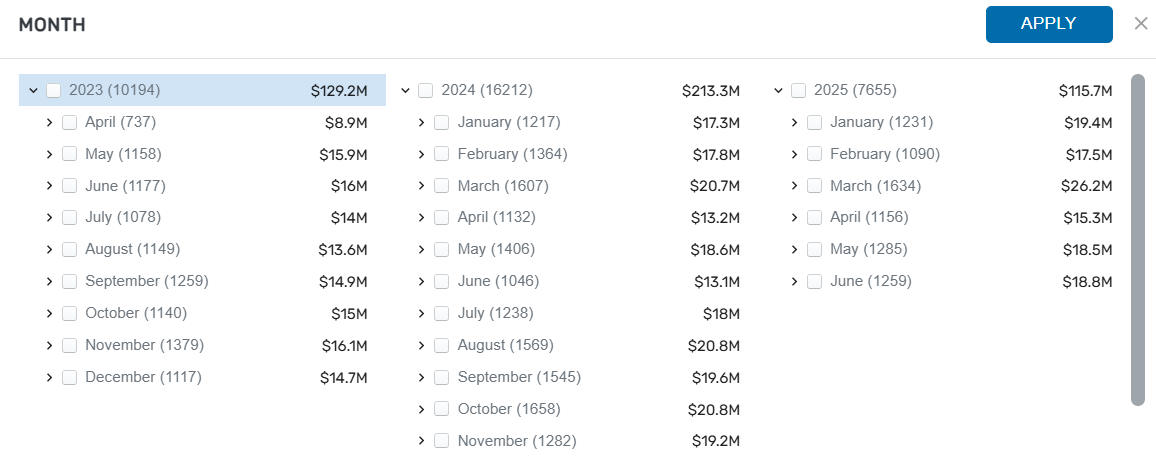
Marked jump in global exports for AVT for this quarter, especially in June.

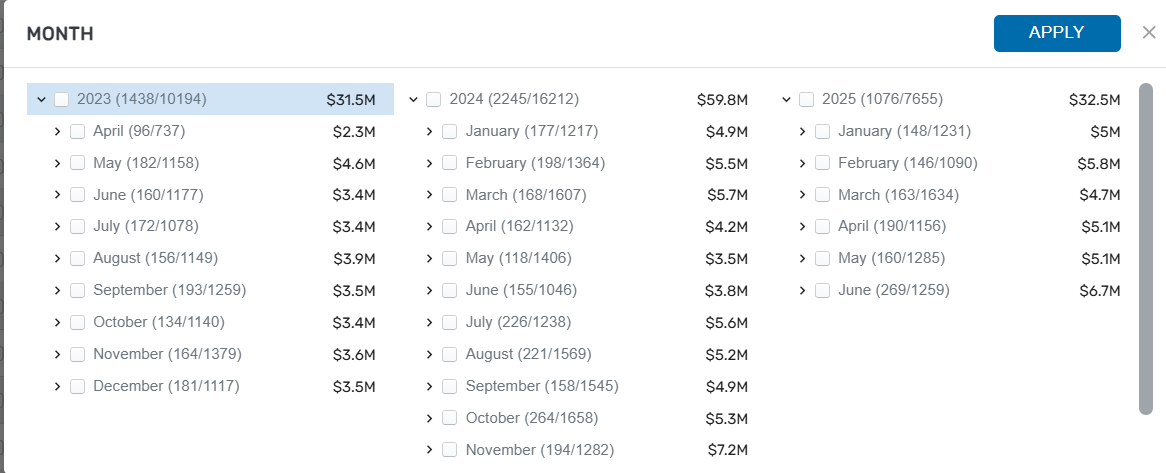
USA exports contributing a lion’s share to the acceleration.
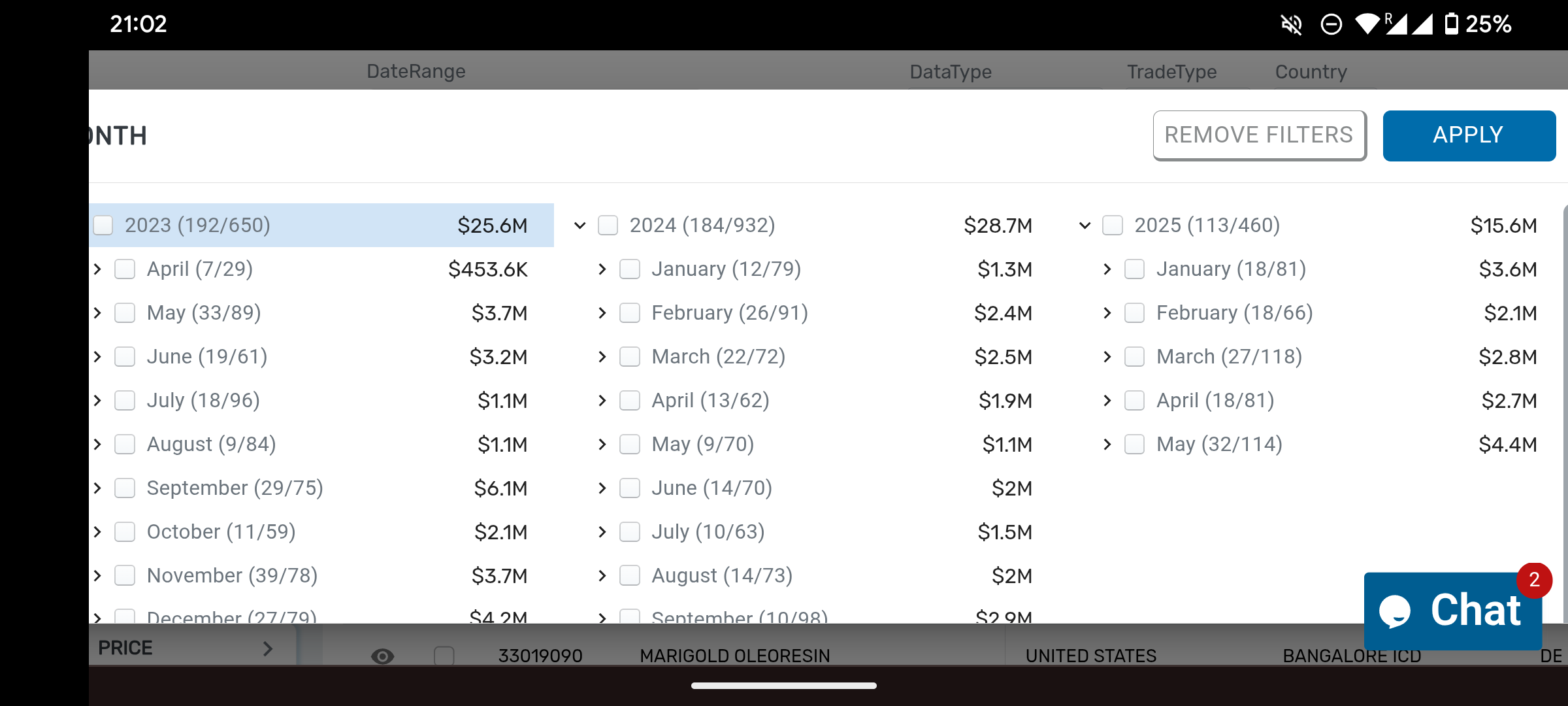
As discussed in my above post, HS code wise data within oleoresins/extracts is really hard to decipher into the corresponding products so I’ll skip that.
Even Synthite, a larger competitor in the overall oleoresins/natural ingredient space, has seen significant jump in exports
Overall exports:
Exports to USA:
One trend mentioned in the reports which AVT seems to be behind on is the method used for extraction. AVT seems to be using the dated solvent extraction method using Hexane while newer methods like supercritical CO2 extraction seems to yield more concentrated oleoresins.
AVT AR doesn’t directly mention the solvent used.
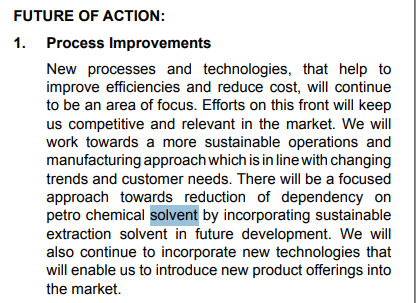
However, an AVT employee’s github repo shows that they use Hexane(oops)
Are they behind on R&D in general? I don’t think so. This is perhaps a calculated capital allocation decision so far. Supercritical CO2 method is very capital-intensive.
The increasing R&D expenditure % in recent years have recently started bearing fruit - and have been mostly towards animal nutrition/providing “solutions” for customers per their claims in their annual report.
Out of 5 patent applications with assignee as AVT Natural, one of them had been acquired long ago for a marigold hybrid decades ago, one surprisingly was left to expire over a decade before its actual expiration due to non payment of fees(which is weird but given the lack of citations, it is perhaps not of much commercial value)
The other three patents have been applied for in the last 2 years and two of them are in the animal nutrition space with the other being in the marigold formulation space(i.e. more value addition).
Overall, AVT is witnessing a regulation-driven step change in demand in the marigold(anmd turmeric) verticals while possessing a very strong balance sheet and capable management to take full advantage of opportunities in product lines of the present and future.
Disclosure: I continue to be invested and have added significantly as and when these developments occured
Edit: I can not post under this thread because of the three consecutive posts per thread. Idk how long I can edit the same post too.
Here’s an exhaustive list of all developments/wins under MAHA as per today’s White House post.
Also, to pour some cold water over the ceiling of this opportunity, while the spice oleoresins division is nearly locked in to benefit, there’s some ambiguity with respect to usage of marigold oleoresins.
The market research report preview I’ve attached states that FD&C Yellow 5 has been partially replaced by marigold oleoresins already in newer products. It doesn’t give the geography where it is happening. As a copium filled bull led on by endowment effect, I’d like to think that usage of the term “FD&C Yellow 5” in the report implicitly states that it is for the USA. In Europe, it is called E102. If the report wanted to use a generic name, they could’ve gone with Tartrazine.
That’s me putting way too much stock into a report preview.
Kemin has approval for lutein and xeaxanthin extracts from marigold for use as a food additive where they’ve mentioned that these additives could impart color to the food.
The FDA, while approving it, have mentioned a clause regarding whether it would require explicit approval as a separate color. The criteria for that doesn’t have any quantifiable values.
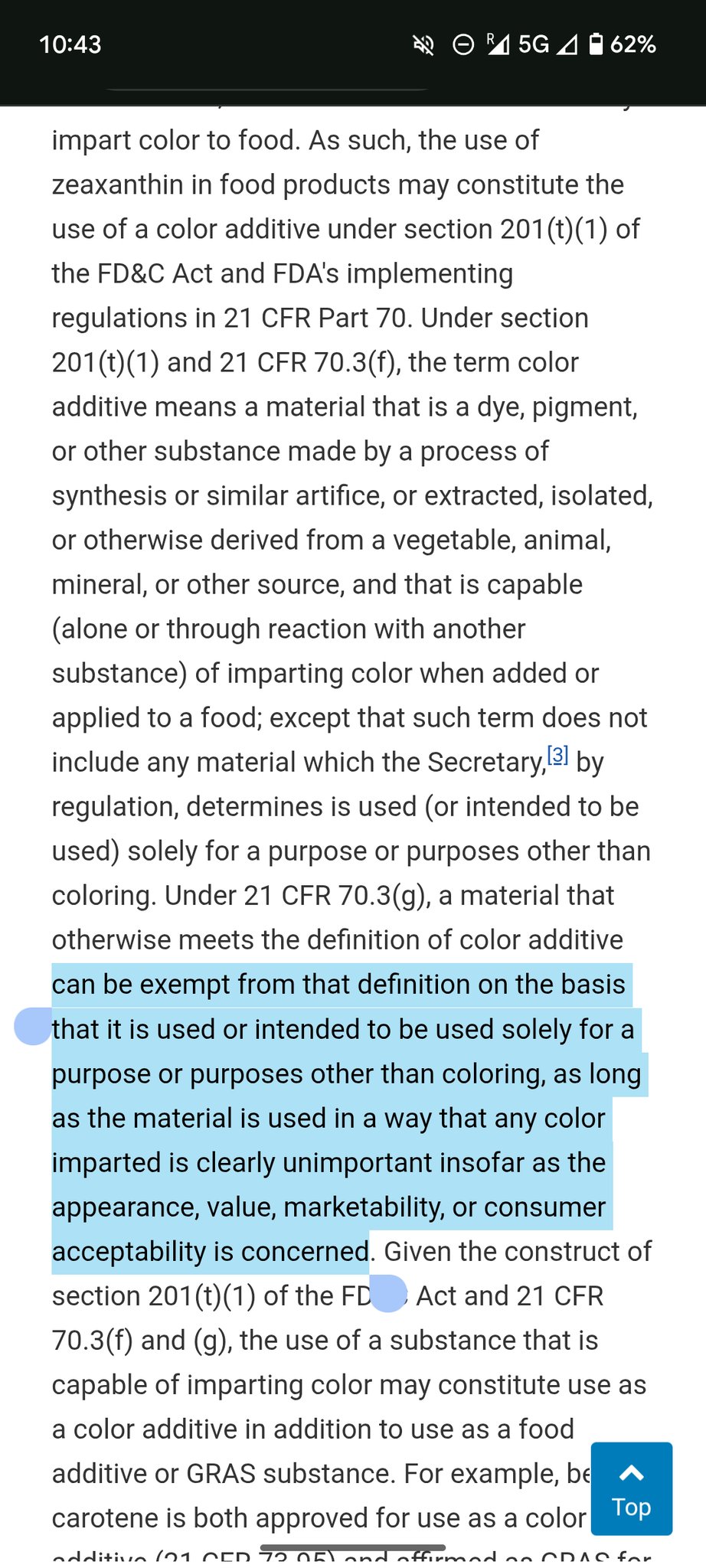
As of this date, looks like Kemin hasn’t have had to seek approval as a food color additive.
Marigold stands approved as a color additive only for feed.
Does the market research report imply that the criteria is loose enough for marigold to be used selectively in food applications? I don’t know.
So, I did some digging.
I went through eximpedia for each export entry. While we know(refer post from a month or so ago) that HS code 33019090, while not exclusive to marigold oleoresins, contains marigold oleoresins.
So, i filtered for YTD exports for the HS code 33019090.
Et Voila. US accounts for nearly 85-90% of YTD marigold extracts exports(12-15% to Italy)
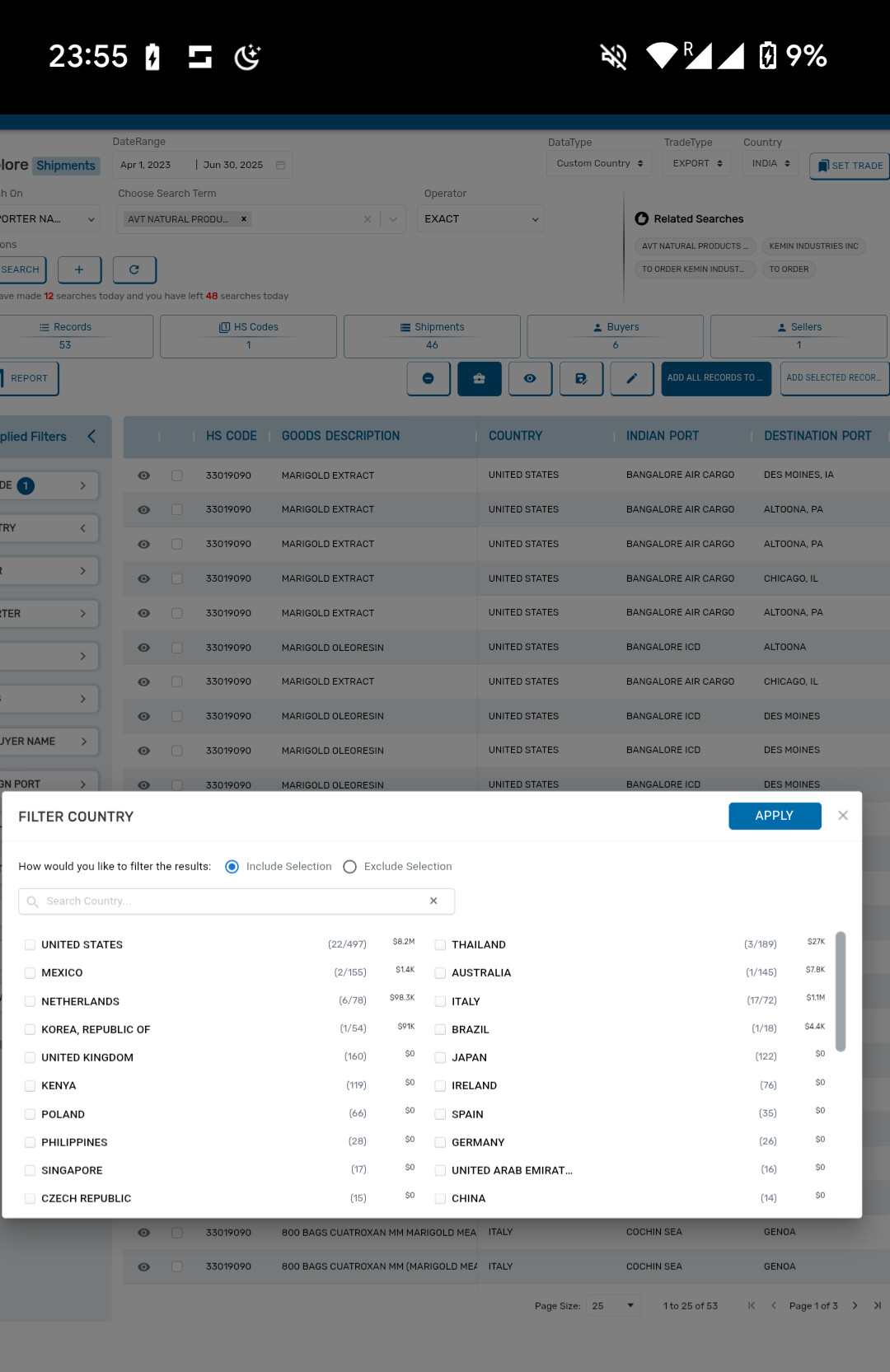
Given AVT’s claim that their extracts are used in food, eye care along with poultry pigmentation, it’s up to you to determine odds of the entirety of the export being for feed and only the Italy part for food/eye care.
Another important point to note in the MAHA tweet today:
Tyson foods is mentioned as one of the companies that have promised to do away with artificial dyes
Marigold extracts are used for poultry pigmentation. Per my understanding, it is to enhance the color of egg yolks as well as to improve the pigmentation of broiler chicken skin and fat. Some studies have shown that adding marigold extract to broiler feed can increase the yellowness values of shank, beak, skin, and muscle.
So, even if you do believe that marigold use isn’t happening in the food sector in the US(I think the odds of it are low due to reasons presented above), the poultry pigmentation market(which is 75% of the marigold extracts market) stands to benefit.
Apoester and canthaxanthin are the artificial dyes used in poultry pigmentation
Here, China competes but how much of a threat do they still pose given the tariff situation?
I tried looking up the buyers of the marigold extracts on eximpedia YTD in America. It’s just Kemin!
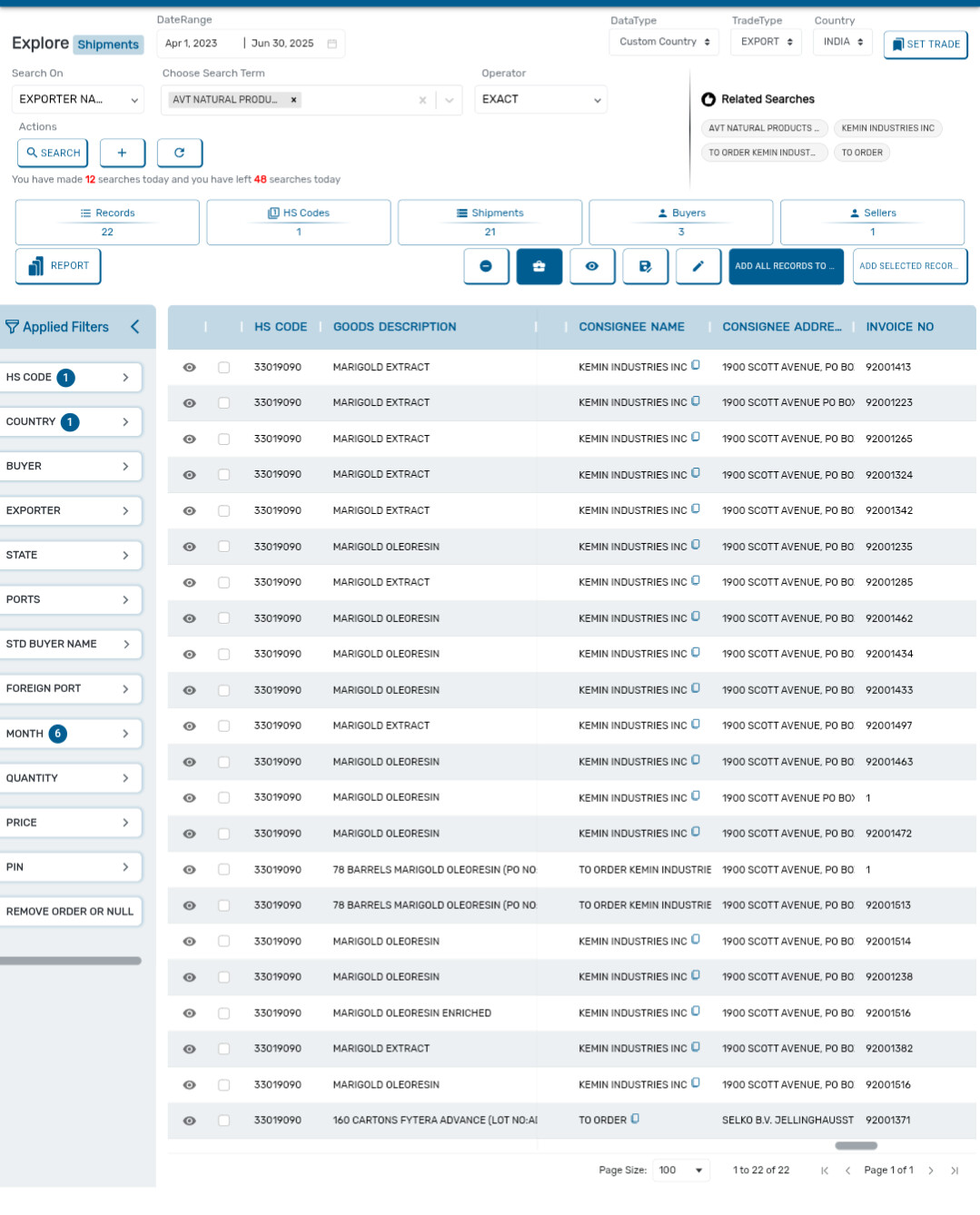
So, the marigold play also seems to be on the table to varying degrees.
Shoutout to Sarthak M Agarwal on X for the pushback/discussion
11 Likes
Nice video of Synthite Industries (competitor of AVTNPL)

1 Like
From FY25 AR - https://www.bseindia.com/xml-data/corpfiling/AttachHis/0989367e-8ea0-4de2-856e-8710e995aeb3.pdf
Animal nutrition business has almost doubled in FY25 and it looks it has been growing at good rate from last of couple of years.

Historical standalone numbers.
| Sales (in crs) | FY20 | FY21 | FY22 | FY23 | FY24 | FY25 |
|---|---|---|---|---|---|---|
| Animal Nutrition | 4.2 | 0.68 | 7.64 | 17.7 | 16.74 | 30.58 |
| Marigold extracts | 153.6 | 162.76 | 240.73 | 254.52 | 178.9 | 192.1 |
| Spices extracts | 112.68 | 179.36 | 174.87 | 149.8 | 140.2 | 141.05 |
| Instant Tea | 97.5 | 127.62 | 102.05 | 149.1 | 158.4 | 130.7 |
| Total | 367.97 | 470.4 | 525 | 571 | 494.3 | 495 |
3 Likes
R&D Expense capatalized or considered in P&L staement ?
Its routed through PnL not capitalised in the BS
2 Likes
DOES ANYONE HAVE IDEA REGARDING THE CONTRAT TERMS BETWEEN COMPANY AND FARMER FOR PROCUREMENT ? LIKE AFTER TAKING SEED FROM COMPANY FARMER HAS TO SELL COMPANY OR ALLOWED TO SALE IN MARKET also?