Amara Raja Energy & Mobility Ltd. (formerly known as Amara Raja Batteries Limited)
As on 20 Oct 2026:
Market Capitalization: ₹ 13,414 Cr.
Current Market Price: ₹ 733/share
Introduction to battery industry:
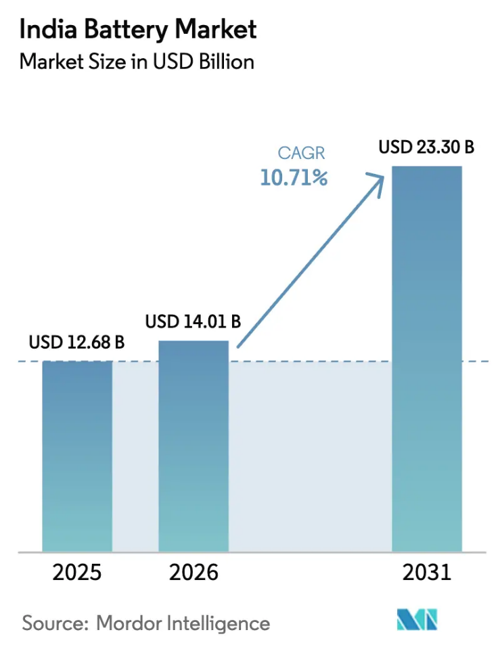
India is seeing a rise in battery demand due to various technological upgradations and driving factors.
It is projected that the market size will expand from $14Bn in 2026 to $23.3bn over the five years.
Lead-acid retained 53.2% share of the India battery market size in 2025, while lithium-ion batteries are forecast to expand at a 33.5% CAGR to 2031.
Key Drivers:
Supportive Government Incentives & Policies
The PM E-DRIVE scheme, expanding subsidies to include e-trucks and e-ambulances.
Rapid EV Adoption in Two- & Three-Wheelers
Expanding Telecom & Data-Center Backup Needs
The India battery market size for secondary cells (lead-acid, lithium-ion batteries and other rechargeable batteries) is projected to rise from USD 8.30 billion in 2025 to almost USD 18 billion by 2031.
The India battery market size for automotive use is expected to nearly triple over the forecast window, reflecting robust subsidy support under PM E-DRIVE.
Industrial segments, motive power, telecom backup, and data-center UPS, held a 34% share in 2025.
About the company:
Amara Raja Energy & Mobility Limited, (ARE&M is one of the largest manufacturers of lead-acid batteries in India.
Has strong presence in the Industrial and Automobile battery business with deeper relationship with OEMs.
Also exports to over 70+ countries across the world.
Company’s Business Segments:
1.Automotive Battery Business:
The business caters to passenger vehicles, commercial vehicles, two and three wheelers, farm equipment, e-rickshaws and home UPS applications through a broad product portfolio spanning mobility and energy-storage requirements.
2.Industrial Battery Business:
It caters to a wide range of energy storage requirements across telecom infrastructure, data centers, manufacturing facilities, transport infrastructure, renewable energy systems and industrial mobility applications.
3.New Energy Business:
Other than Lead acid batteries (including lithium-ion batteries)
Lead Acid:
ARE&M is a strong competitor in lead acid battery segment (automotive and industrial businesses)
Revenue Dominance: Lead-acid batteries remain the core business, contributing 92% to 96% of total revenue as of recent quarters.
The company holds the position of India’s second-largest lead-acid battery manufacturer, trailing only Exide Industries in overall market share. Despite this ranking, the company is the dominant leader in the industrial battery segment and commands the largest market share in the two-wheeler battery category.
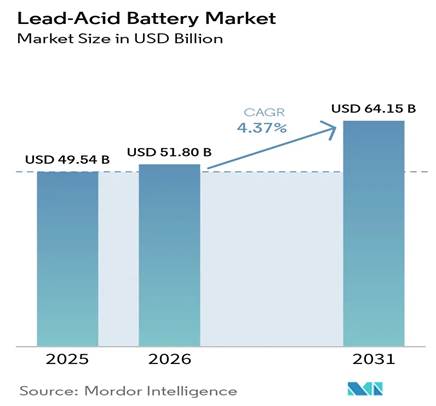
Mature chemistry, wide service networks, and strong price-to-performance ratios keep the technology relevant even as lithium-ion costs fall. Premium valve-regulated lead-acid (VRLA) formats continue to win share because they satisfy automotive start-stop, telecom uptime, and data-center backup requirements without routine maintenance.
ARE&M are the pioneer of VRLA in India.
AUTOMOTIVE BATTERY BUSINESS:
1.Domestic Business:
A.Replacement Market:
- As the installed vehicle base are expanding replacement demand remains healthy across passenger and commercial vehicle categories in future.
- Demand across tubular battery and Home UPS categories are rising due to uninterrupted power availability is becoming increasingly important for households and small businesses.
B.OEM Business:
- Industry growth across OEM categories remained moderate, with vehicle volumes growing by approximately 7.9% and twowheeler volumes by 10.7% during the year.
- Growing penetration of start-stop systems is also accelerating migration toward advanced battery formats such as EFB and AGM.
2. International Business:
A. International Product Portfolio:
- The international portfolio is expanding through the addition of EFB and AGM battery ranges designed for start-stop applications and higher electrical load requirements, respectively.
- Commercial batteries remain an important part of the international portfolio. The offering was broadened across truck and bus applications as fleet activity increases across APAC, MEA and Europe.
INDUSTRIAL BATTERY BUSINESS:
1. TELECOM:
- The telecom energy storage market moved deeper into lithium-ion adoption during FY 2025-26.
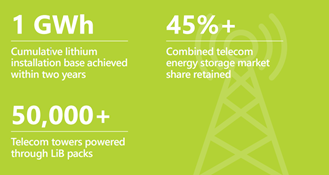
- Even within this transition cycle, the retained combined telecom energy storage market share above 40% while preserving leadership in the lead-acid battery segment.
- Also emerging as a preferred Lithium battery supplier.
- Lithium Battery play: LiB packs are now powering more than 50,000 telecom towers, taking cumulative installation base to 1 GWh within two years.
2. UPS:
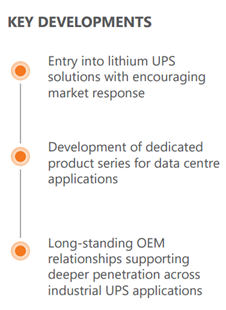
- Demand across UPS applications is remaining healthy, particularly across data centres, manufacturing facilities and infrastructurelinked installations.
- The business also initiated participation in lithium UPS solutions and received encouraging traction with multiple OEM approvals secured across applications.
3. RENEWABLE ENERGY AND BESS:
- The renewable energy and BESS markets have operated in a volatile environment, marked by rupee depreciation, rising material costs and geopolitical disruptions.
- Renewable energy integration, industrial energy optimisation and storage requirements are expected to support demand across renewable energy and BESS applications during FY 2026-27.
- Commercial and industrial renewable adoption is also expected to increase due to rising industrial power tariffs and focus on energy cost optimisation.
- Large-scale BESS deployment is expected to gain momentum as grid-scale renewable integration increases.
4. MOTIVE POWER:
· Demand across motive power applications is expected to remain linked to growth in warehousing, logistics, material handling and industrial automation activities.
5. RAILWAYS:
- Railway battery demand is to remain stable with gradual migration toward lithium-ion technologies across select applications.
- Despite this structural shift, the business surpassed last year’s performance supported by increasing participation across urban mobility and high-speed rail infrastructure projects.
6. EXPORT BUSINESS:
- Lithium adoption across telecom infrastructure applications increased further across several export markets, changing demand patterns across parts of the industrial battery business.
- New ultra-high wattage VRLA products planned for launch during the year are expected to support deeper engagement with global UPS OEs across multiple regions.
- Also planning to increase participation across telecom lithium deployments following completion of product development and certification activities.
NEW ENERGY BUSINESS (contributes for 4% of the revenue)
TRANSITIONING FROM CAPABILITY CREATION TO EXECUTION
The company focused the earlier years on creating core infrastructure, strengthening research and development capabilities and initiating customer engagements across key segments. During FY2025-26, this groundwork translated into measurable progress towards execution and operational readiness.
1. Electric Mobility Solutions:
- India’s electric mobility ecosystem continues to expand across personal and commercial mobility segments.
- The company’s Electric Mobility Solutions business remains focused on advanced lithium-ion battery packs developed for two-wheeler, three-wheeler and four-wheeler applications.
2. Energy Storage Solutions:
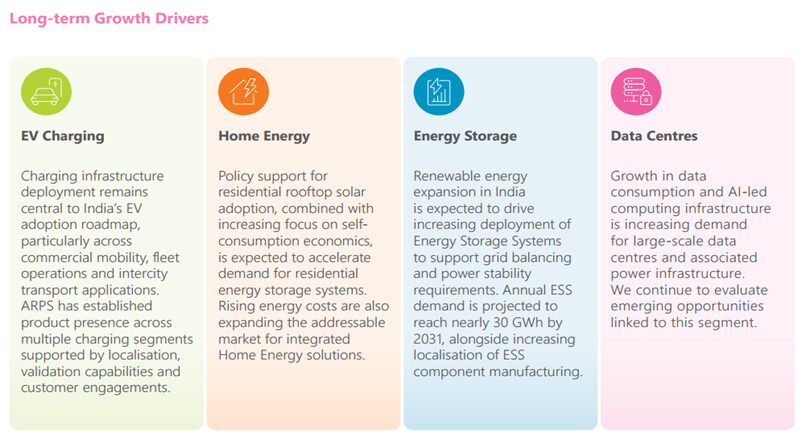
- As solar and wind penetration increases, Battery Energy Storage Systems are becoming important for dispatchable power, peak demand management and grid balancing. Annual Battery Energy Storage System demand in India is expected to reach nearly 25-30 GWh in the near term.
- Within this landscape, Amara Raja Advanced Cell Technologies (ARACT) is developing domestic manufacturing capabilities with focus on technology leadership, integrated supply chain development and after-sales service networks.
3. Customer Qualification Plant (CQP):
- The Customer Qualification Plant CQP) marked an important step in the business’ transition towards operational readiness during FY 2025-26.
- The CQP is capable of producing multi-chemistry and multi-form factor cells, supporting product validation and customer qualification requirements across applications.
4. Amara Raja Giga Corridor:
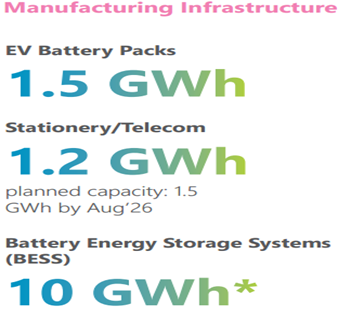
· The long-term roadmap for the Amara Raja Giga Corridor is aligned to approximately 16 GWh of cell manufacturing capacity, nearly 5 GWh of Low Voltage Pack manufacturing capacity and a 10 GWh Battery Energy Storage System (BESS) manufacturing facility.
5. AMARA RAJA POWER SYSTEMS (ARPS):
- The business expanded its presence across DC fast charging and Home Energy applications, while broadening its customer base across Charge Point Operators (CPOs), infrastructure developers and OEMs.
- Increasing order inflow in DC fast chargers further strengthened ARPS positioning within the domestic EV charging market.
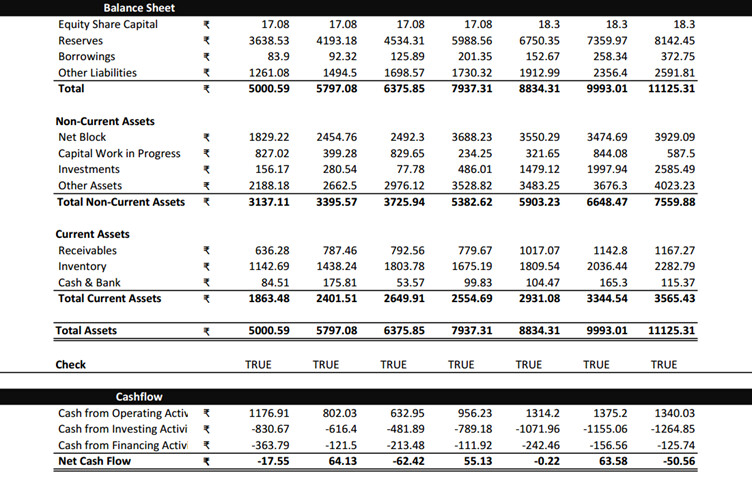
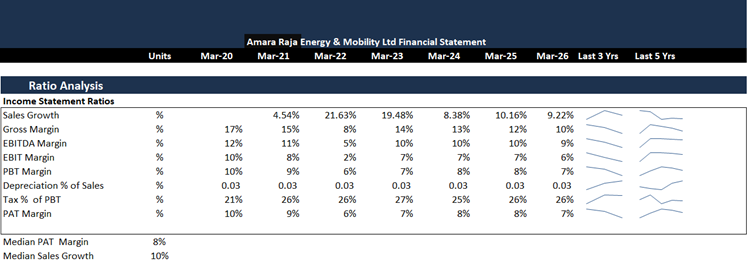
Financials: