Akme Fintrade (India) Ltd
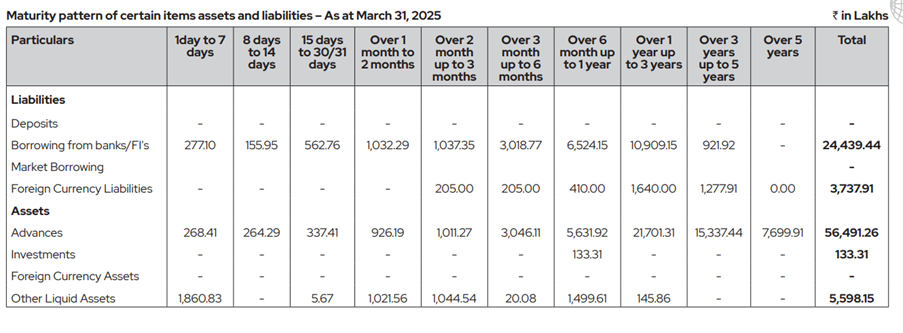
Akme Fintrade is a specialist lender with a very specific playbook. At its core, the company’s business model is built on providing secured loans—primarily for vehicles and small businesses—to people in the rural and semi-urban parts of India. Their entire strategy revolves around the idea that every loan must be backed by collateral, which is a smart way to reduce risk when your customers might not have a formal credit history. Everything is branded under the name “Aasaan Loans,” which means “Easy Loans,” a name chosen to connect with their target audience. AFIL is operating 28 branches and 30+ sales points across Rajasthan, Maharashtra, MP, and Gujarat. It serves 2+ lakh customers with an AUM of ₹523+ crore, borrowings of ₹240+ crore, GNPA of 2.86%, and NNPA of 1.27%.
The people driving this are the promoters, primarily the Jain family, led by Chairman and Managing Director, Mr. Nirmal Kumar Jain. He’s a Chartered Accountant with over two decades of experience in the finance world and is the main architect of the company’s strategy. He’s been with the company since the beginning and has a proven track record in this niche lending space.
Mr. Rajendra Chittora (Executive Director) joined the company in December 2020 and brings substantial experience in the auto finance sector. He has over 10 years of experience in the auto finance industry and was previously recognized with a Long Service Award for his decade-long contribution to Tata Motorfinance.He holds a Bachelor of Science, a Master of Science in Electronics, and an MBA in Business Development, all from Mohanlal Sukhadia University, Udaipur.
A pivotal milestone in the Company’s history was its successful Initial Public Offering (IPO), which opened for subscription on June 19, 2024, and resulted in a listing on both the Bombay Stock Exchange (BSE) and the National Stock Exchange (NSE) on June 26, 2024. This transition to a publicly traded entity was a strategic move designed not just to raise capital but also to enhance corporate governance standards, increase transparency, and broaden its access to capital markets for future requirements. The IPO was not merely a financial event but a strategic pivot, with the primary objective stated as augmenting the capital base for future business expansion. This infusion of fresh equity capital is the direct enabler for sustaining the company’s high-growth trajectory, allowing it to expand its loan book significantly without compromising its conservative leverage profile or robust capital adequacy.
Business Model & Revenue Structure
The company operates a “hub and spoke” model with two primary business segments:
- Business Finance (76% of revenue): SME/MSME loans, loan against property (LAP)
- Vehicle Finance (24% of revenue): New/used two-wheelers, three-wheelers, and commercial vehicles
All loans are secured with collateral and follow monthly/quarterly repayment schedules, targeting salaried professionals and self-employed individuals in rural markets.
Financial Performance Analysis
Recent Results (FY25)
-
Revenue: ₹102.72 crores (40% growth from ₹73.50 crores in FY24)
-
Net Profit: ₹33.23 crores (79% growth from ₹18.53 crores in FY24)
-
EPS: ₹8.28 vs ₹5.85 in FY24
-
ROE: 10.98% vs 8.66% in FY24
-
Net Interest Margin: 11.24% (improved from 10.26% in FY23)
Asset Quality Metrics
-
AUM: ₹523+ crores with consistent growth
-
GNPA: 2.77% (improved from 3.63% in FY24)
-
NNPA: 1.27% (significantly improved)
-
Collection Efficiency: 91.18% vs 83.61% in FY24
Management Team
Board of Directors
- Mr. Nirmal Kumar Jain: Chairman & Managing Director (29+ years experience)
- Mr. Rajendra Chittora: Executive Director
- Mr. Ramesh Kumar Jain: Executive Director
- Independent Directors: Mr. Nishant Sharma, Ms. Antima Kataria, Mr. Sanjay Tatke
Key Management (Recently Strengthened)
- Mr. Akash Jain: CEO (appointed July 2024)
- Ms. Rajni Gehlot: CFO
- Mr. Shiv Prakash Shrimali: COO
- Mr. Suresh Chandra Gupta: CRO
IPO Details & Current Valuation
IPO Information
- IPO Date: June 19-21, 2024
- Price Band: ₹114-120 per share
- Issue Size: ₹132 crores (fresh issue)
- Subscription: 55.12x oversubscribed
- Listing Price: ₹127
Current Valuation
- CMP: ₹8.37 (Split 10:1)(as of Sep 26, 2025)
- Market Cap: ₹357 crores
- P/E Ratio: 11.4x (attractive vs market average of 29x)
- P/B Ratio: 0.73x
Investment Positives
- Niche Market Focus: Strong presence in underserved rural/semi-urban markets with growth potential
- Improving Asset Quality: GNPA reduced from 4.57% to 2.77%, collection efficiency improved to 91%+
- Strong Capital Position: Post-IPO networth of ₹382 crores, CAR of 57.58%
- Experienced Leadership: 29+ years of industry experience with recently revamped professional management
- Secured Lending Model: All loans backed by collateral, reducing credit risk
- Digital Transformation: Launch of “AASAANLOANS” platform for operational efficiency
- Attractive Valuation: Trading at significant discount to historical levels and peer multiples.
Key Investment Concerns / Risks
.Geographic Concentration: ~64% of portfolio concentrated in Rajasthan, creating regional risk
- Small Scale Operations: Relatively small AUM of ₹523 crores vs established NBFCs
- Regulatory History: Past non-compliance issues with RBI norms
Competitive Pressure: Intense competition from banks and larger NBFCs
The biggest issue is concentration. A staggering 64% of its business comes from just one state: Rajasthan. This means any local economic downturn, political instability, or even a bad monsoon in Rajasthan could hit the company disproportionately hard. This risk is amplified because their loan book is also concentrated, with about 79% in business finance for small enterprises, the very group that would be most affected by a local slowdown.
The second major concern revolves around governance and the promoters themselves. A significant portion of the shares held by promoter family members Manju Devi Jain and Dipesh Jain are pledged. This is a red flag for investors because if the stock price were to fall significantly, the lenders could force a sale of these shares, putting even more downward pressure on the price and signaling potential financial stress within the promoter group. Adding to this, the company has a history of “operational deficiencies” noted by the RBI and a period where a credit rating agency put them in an “Issuer Not Cooperating” category because they weren’t providing enough information. While these issues may be in the past, they raise questions about the company’s internal controls and transparency.
In short, Akme Fintrade has a solid, proven business model for its niche, led by an experienced hand. But its heavy reliance on a single state and the financial arrangements of its promoters create a high-risk profile that can’t be ignored.
My Insights on how I see this:
Akme Fintrade has aggressively expanded its loan book in recent years, and its valuation is currently highly attractive with a price-to-book ratio below 1 and a low price-to-earnings (P/E) multiple.
Loan Book Aggressive Expansion
-
The company’s Assets Under Management (AUM) have grown to over ₹523 crores, showing consistent and rapid expansion in recent quarters, reflecting a focused drive towards larger scale.
-
Recent financials demonstrate 40% year-on-year revenue growth and a 79% increase in net profit, as loan disbursal activity and new segments have fueled growth.
-
Geographic outreach has increased, with operations now expanding into four states and branch network scaling, supporting faster loan book growth.
-
SME and MSME lending is a key driver, with the business finance segment now representing 76% of revenue, compared to earlier dominance of vehicle finance.
Attractive Valuation
AFIL presents a compelling investment opportunity as an undervalued, well-capitalized, and conservatively managed NBFC, offering pure-play exposure to the structural growth of India’s rural economy. The Company’s current valuation, with a Price-to-Earnings (P/E) ratio of approximately 11.4x and a Price-to-Book (P/B) ratio of 0.74x, reflects a deep and unwarranted discount to the broader NBFC sector median P/E of approximately 28-29x. This valuation disconnect fails to account for AFIL’s superior growth profile, robust profitability, strong asset quality, and conservative leverage. A significant re-rating of the stock is anticipated as the Company strategically deploys its IPO proceeds, expands its operational footprint, and gains wider market visibility and analyst coverage as a newly listed entity.
Technical Analysis
Sharing my technical take on Akme Fintrade (AFIL). The stock has just confirmed a major bullish reversal pattern on massive, institution-level volume, suggesting a new uptrend is underway. The setup looks compelling, and here are the key levels and data points to monitor.
The Setup: Confirmed Bullish Reversal
Pattern: The chart has formed a classic Inverse Head and Shoulders bottom, a powerful bullish reversal pattern that developed from the April 2025 lows.
Breakout Confirmation: The pattern was confirmed by a decisive, high-volume move above the neckline resistance at approximately ₹8.54. This is now the most critical level to watch.
Volume Validation: The breakout is strongly validated by an extraordinary volume surge of over 1500% compared to the 3-month average. This is not retail noise; it signals significant institutional buying and conviction.
Disclosure: I have invested a small quantity at ₹7.70, so my views may be biased. I am posting this to gather different perspectives and would appreciate it if others could share their thoughts or any additional information they might have on the company.
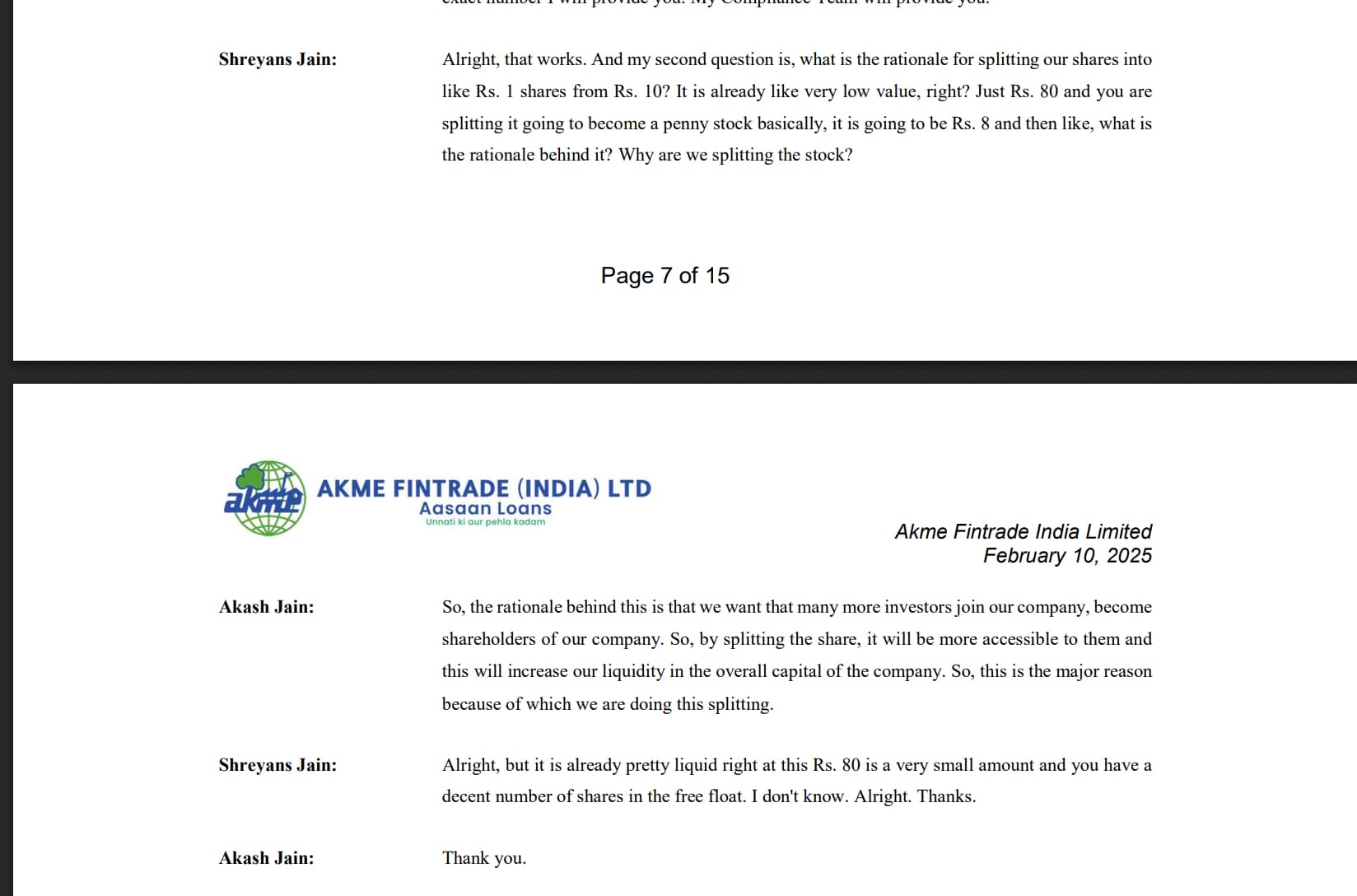
 Not often that we hear such gems from management