Airfloa Rail Technology is a company trying to do two very different things at the same time — and if you are tracking it, both need your attention.
A Business Built Over Time
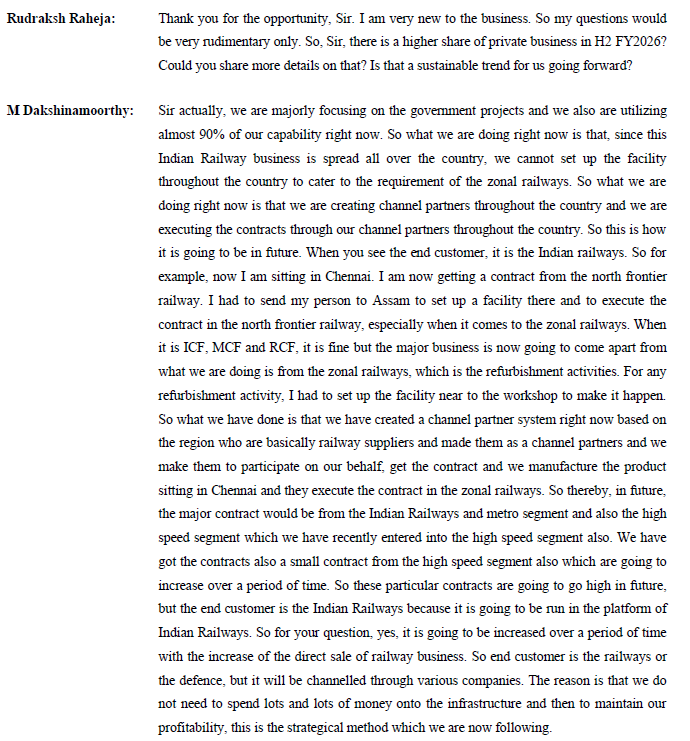
Airfloa did not appear out of nowhere in September 2025. It was incorporated way back in December 1998, in Chennai, as Airflow Equipments India Pvt Ltd. It only became Airfloa Rail Technology Limited when it was preparing for its IPO. Behind the new name is 27+ years of railway manufacturing experience.
Railways is Still the Bread & Butter
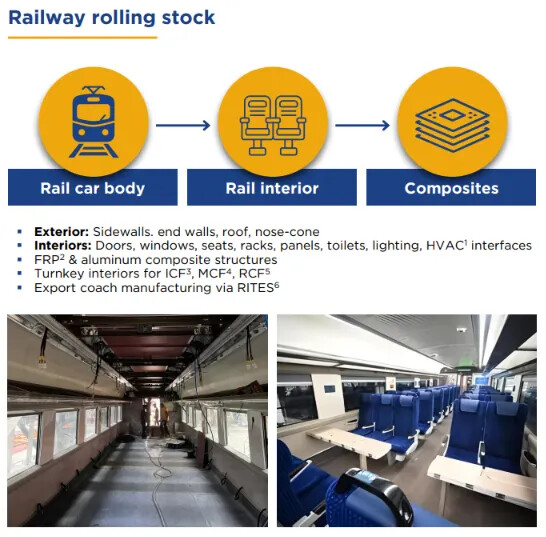
At its core, this is a precision manufacturing business. Airfloa makes high-precision forged and machined components, and it also does turnkey interior furnishing for rail rolling stock — design, tooling, manufacturing, assembly, installation and commissioning, all under one roof.
The company is supplying several components to BEML for the new Vande Bharat sleeper trains, including windows, luggage racks, partition frames, door systems and other interior components.
The business sits across four product areas:
-
Interior & furnishing
-
Car-body manufacturing
-
FRP (fibre-reinforced plastic) composites
-
Rolling-stock equipment integration — sliding door systems, polycarbonate seating, window assemblies (including emergency-openable windows), interior lighting, air filtration, and aluminium composite exterior panels
Two manufacturing facilities, both near Chennai — Keelkatalai and Oragadam — carry ISO and IRIS (International Railway Industry Standard) certification, audited by DNV-GL.
The Aerospace & Defence Pivot
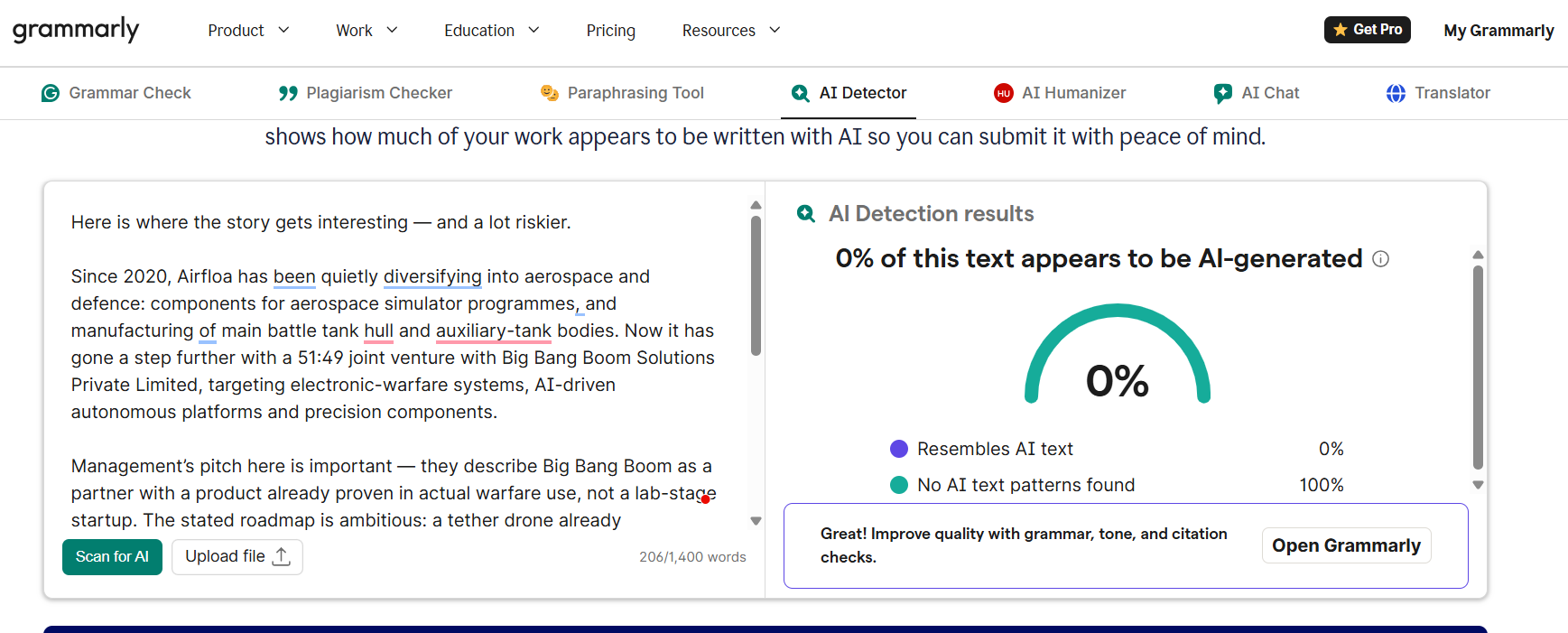
Here is where the story gets interesting — and a lot riskier.
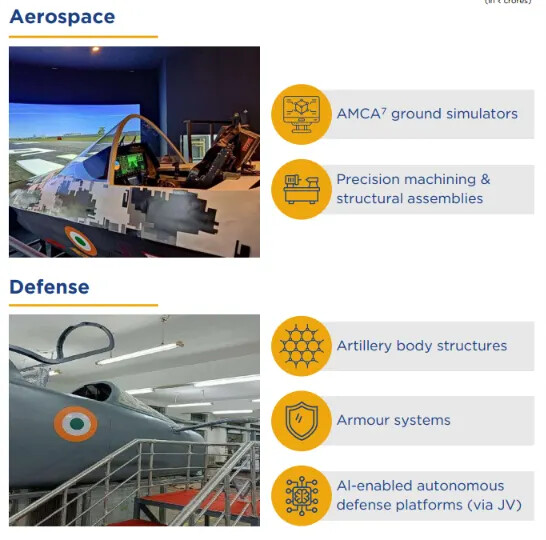
Since 2020, Airfloa has been quietly diversifying into aerospace and defence: components for aerospace simulator programmes, and manufacturing of main battle tank hull and auxiliary-tank bodies. Now it has gone a step further with a 51:49 joint venture with Big Bang Boom Solutions Private Limited, targeting electronic-warfare systems, AI-driven autonomous platforms and precision components.
Management’s pitch here is important — they describe Big Bang Boom as a partner with a product already proven in actual warfare use, not a lab-stage startup. The stated roadmap is ambitious: a tether drone already developed, a loitering drone in development, a laser-based anti-drone system targeting a 2,000–5,000 metre range — against roughly 800 metres for existing India-made systems — unmanned ground vehicles for the army, and a separate Indo-Israeli programme for an autonomous drone for civilian and defence use.
There is also an integrated train safety and security system in the works. Management has been careful to clarify — this is a broader environmental-safety system, NOT the government’s Kavach anti-collision system.
Can a railway-components company successfully become a defence-tech player through one joint venture? That is the real question every investor in this stock needs to grapple with.
Building for Scale
Airfloa is acquiring a 14-acre plot to build a dedicated facility that separates Indian Railways mainline production from metro production — starting at 50,000 sq ft and scaling toward roughly 1 lakh sq ft, positioned near the Modern Coach Factory to cut transport costs. Management has guided ₹20–30 crore of capex to start, funded through a bank term loan, with an expected asset turnover of about 4x the investment.
The product line keeps expanding too — a fresh MoU with Janatics Industrial Automation adds automatic door systems to Airfloa’s rail-interior offering.
Management has indicated the company may need to raise capital again within roughly 18 months from November 2025 as order books and working-capital needs scale up. So, a possible equity dilution is on the cards.
How do the Numbers Stack Up?
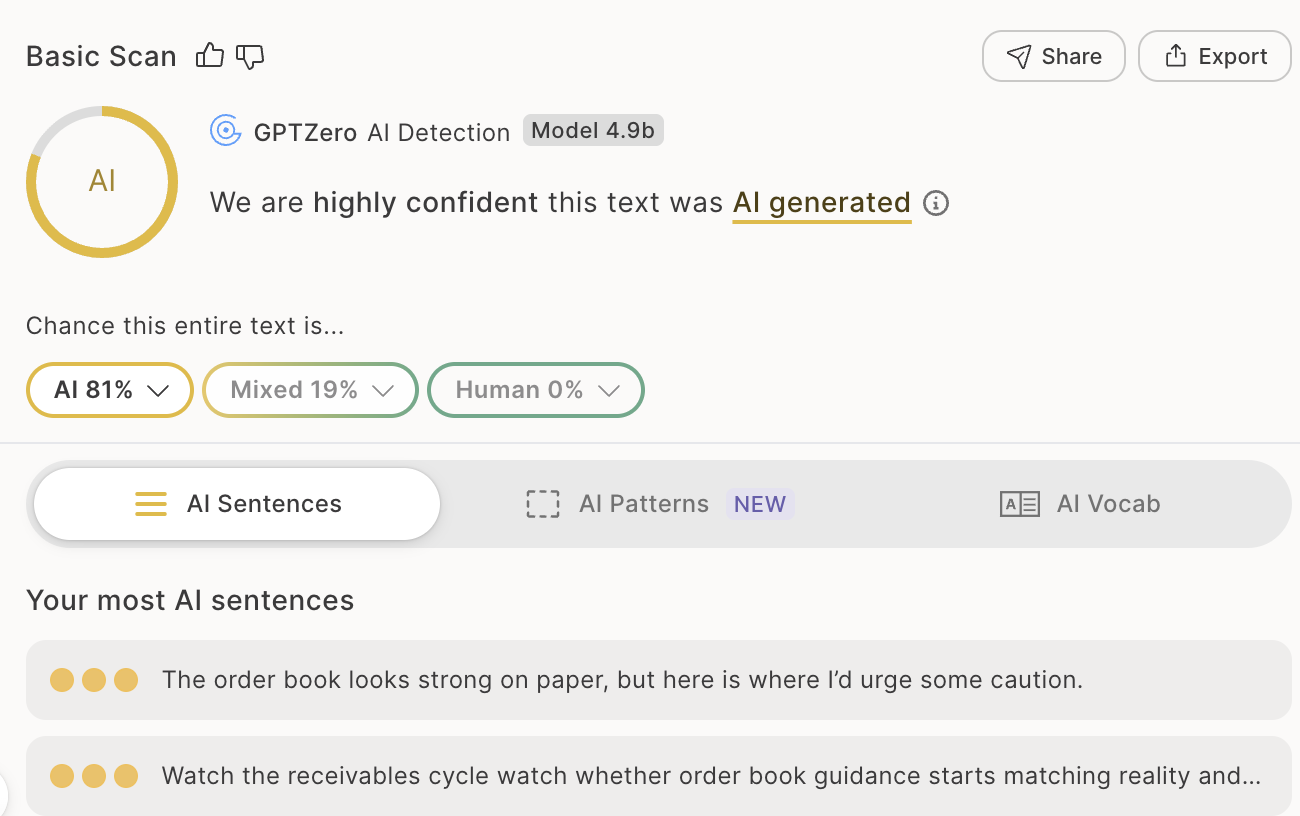
The order book looks strong on paper, but here is where I’d urge some caution. The management commentary here has historically run ahead of what the company actually delivers.The outstanding order book stands at ₹469 crore, well short of the ₹1,000 crore guided earlier for FY26.
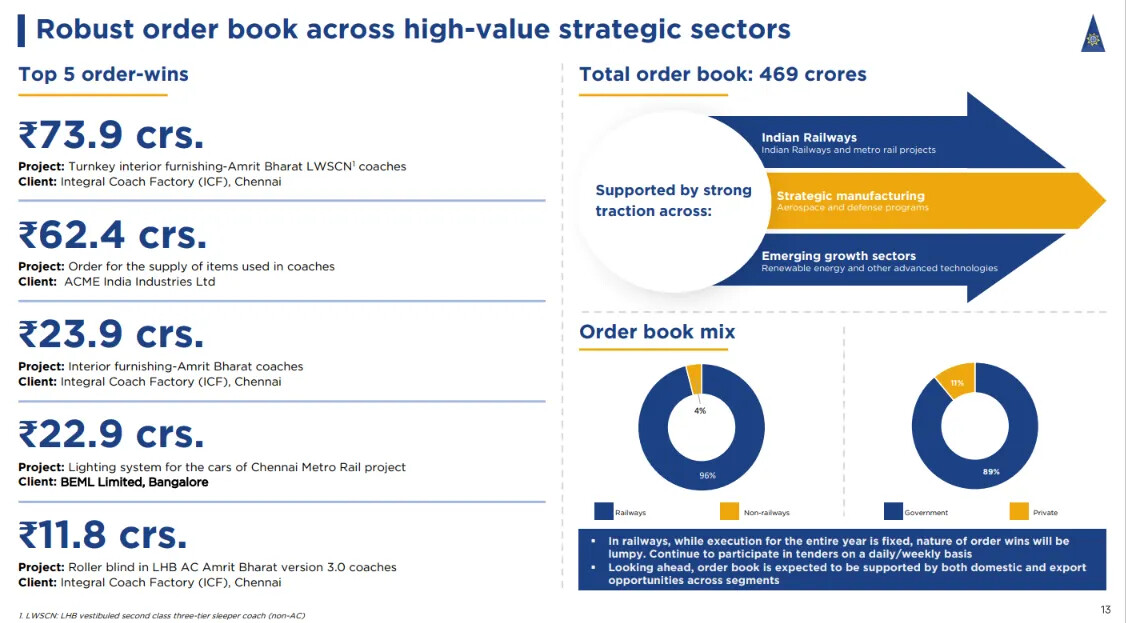
The bid pipeline is around ₹1,200 crore — split roughly ₹900 crore railways, ₹120 crore metro, and ₹60–70 crore defence — with a stated historic win rate of 20–25%. The Aeronautical & Defence business now makes up roughly a third of revenues.
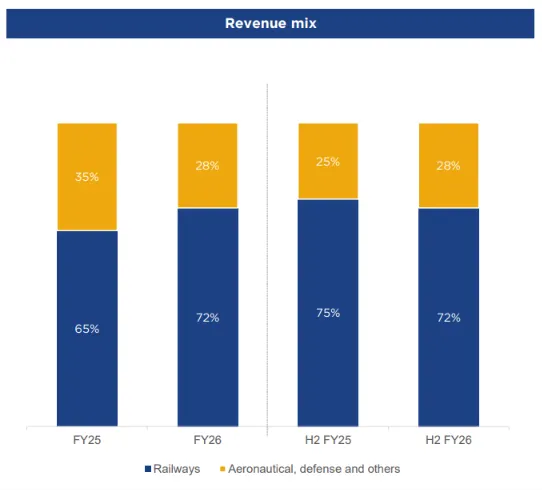
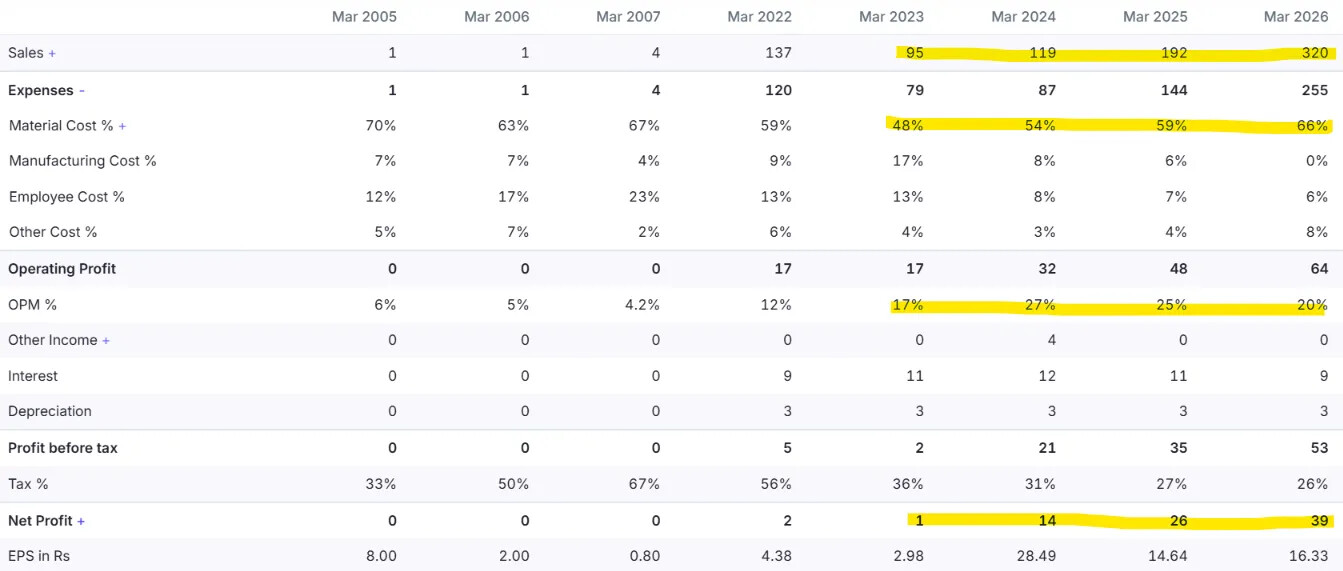
Revenue and profit are both compounding fast. But operating margins have fallen every single year since FY24 and that is not a sustainable combination forever. Management has guided ₹500 crore revenue with a 12–13% PAT margin for FY2027, and is optimistic about a ₹1,000 crore topline by FY28.
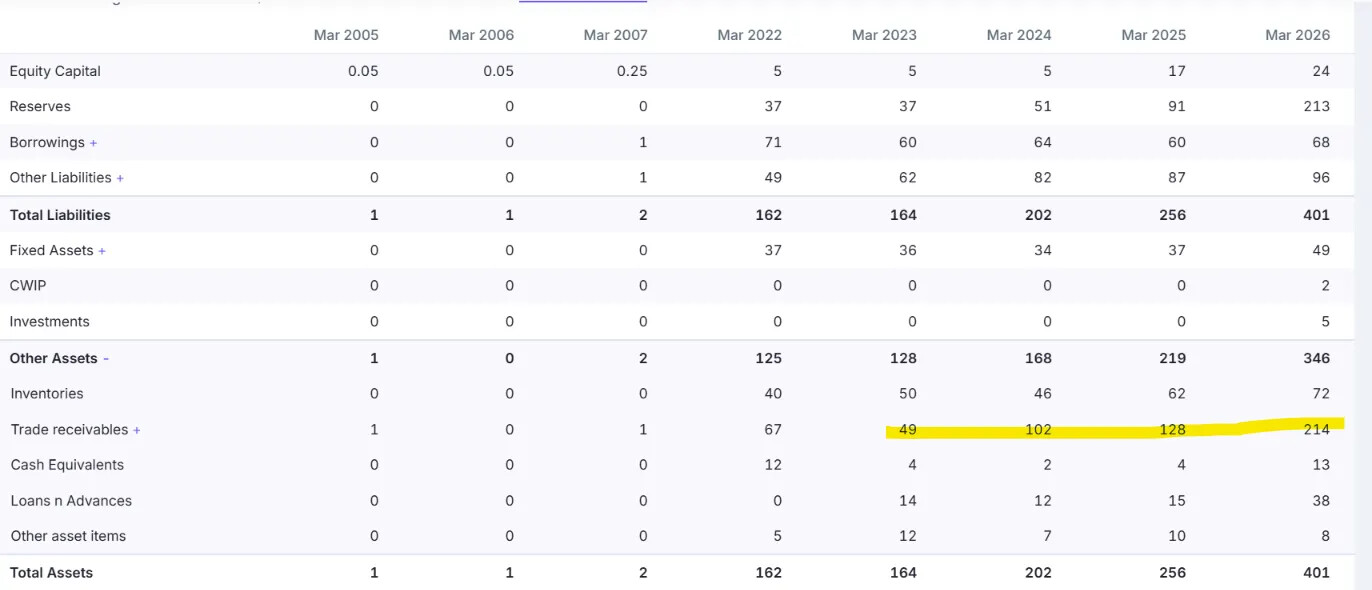
Receivables are the number I’d watch most closely. Trade receivables stood at ₹214 crore as of 31 March 2026, elevated because of March-heavy execution — typical of a railways-dependent business. About 20% was collected by end-May. Management expects roughly 70% of outstanding receivables to be collected by end-June, translating to a ₹100–110 crore cash inflow by then. Whether that collection actually comes through on schedule will tell you a lot about the real quality of this order book.
The Risks You Cannot Ignore
-
Raw material price volatility can compress margins further
-
Revenue is heavily concentrated with a single customer — Indian Railways — which stretches the balance sheet, raises working-capital needs, and lengthens the receivables cycle
-
The business is structurally leaner in the first half of the year, since Railways places most of its orders in the second half
-
Sourcing high-precision manufacturing machinery from China is getting harder, with Chinese authorities now seeking end-use certification for such imports
-
The JV partner, Big Bang Boom Solutions, is a pre-revenue startup — and a target of roughly 50% defence revenue mix within two years looks, frankly, like a stretch.
Where the Next Leg of Growth Comes From
The tailwind is real. Indian Railways is spending big on Vande Bharat, Amrit Bharat, metro rail, EMUs, refurbishment programmes and the border modernisation initiative— a proposed capital deployment of up to ₹45,000 crore over just 18 to 24 months. That single initiative accounts for roughly 22% of India’s entire planned railway infrastructure budget over the next two years.
Management claims ₹26,000 crore has been sanctioned for the Railways Refurbishment opportunity, with an “initial allotment” of 25,000 coaches over three to four years, orders expected “right from this year,” and a target of roughly ₹100 crore of orders in FY27 from refurbishmentalone — with margins maintained at current levels.
There’s also a new subsidiary for electroluminescent dynamic display boards — positioned for commercial and signage across the railway network, and as management put it, “flexible electronics towards the aerospace and space activity.” Potential commercialisation is expected in FY2027. This is described as an inorganic growth driver, and importantly, it is not yet baked into the current order book or tender numbers. The management has not provided much details about this.
The Bottom Line
Airfloa is, at heart, a railway ancillary business with a genuinely large addressable opportunity in front of it. The defence and aerospace foray is the new addition to the story, riding on a pre-revenue JV partner and ambitious targets. Watch the receivables cycle, watch whether order-book guidance starts matching reality, and watch that capital-raise signal over the next 18 months. This is a company where the growth narrative is compelling, but the numbers need to keep pace with the story being told.
SEBI MANDATED DISCLAIMER:
Intelsense.in is owned by Cupressus Enterprises Pvt Ltd (SEBI Registered Research Analyst) with Registration No. INH000013828
Research Analyst or his associates or his dependent family members may hold a financial interest or actual/ beneficial ownership in the financial products/ securities advised herein.
Investment in the securities market is subject to market risks. Read all the related documents carefully before investing.
Shree Rama Managers LLP is a SEBI-Registered Portfolio Management Services Company (SEBI Reg. Number: INP300007341).
Stocks discussed, if any, are for EDUCATIONAL purposes only and should NOT be construed as investment advice.
Please consult your financial advisor and do your own due diligence before investing.