Numbers that caught the eye (last 4–5 years)
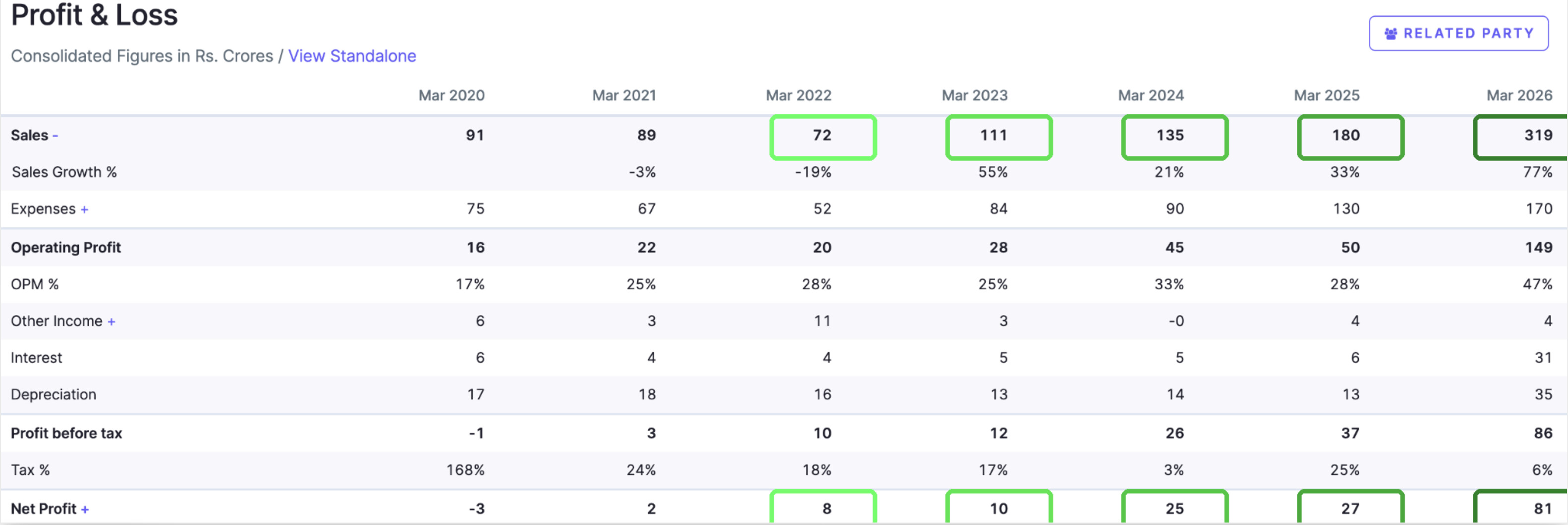
Its very impressive to see any company grow with such consistency and profitability, year after year. ABSM is one who has grown both sales as well as profits by doing more and more value added work.
Not only this but in the last 2 years ABSM has becomes a cash generating machine, with EBITDA TO OPERATING CASH FLOW CONVERSION RATIO OF 90-100%. This is extremely rare to see in SMEs.
All this while the company is available at a Market Cap lower than the value of its Gross Block.
Short version
The tide is high, but ABSM is not just floating — it is trying to buy, fix, convert, and contract its way into a stronger position.
ABS Marine is becoming a cleaner offshore cycle story with more visibility and better assets. What began as a more service-led marine business is increasingly turning into a ship-owning + ship-management platform, with ship owning doing more of the heavy lifting.
ABS seems to be benefiting from: a tight OSV market, older fleet needing replacement with minimal replacement available, and a demand and charter rate environment that has re-rated sharply in this post-COVID cycle.
What ABSM does
ABS Marine is a very old setup, in this business since the 90s, with the promoter being ex GE Shipping.
It is an integrated maritime services company focused on offshore support vessels (OSVs) and related marine work.
- Slowly shifting from ship and crew management business to more of Acquiring and Deploying specialised vessels into long-duration offshore work
Main customers are typically: O&G companies like ONGC, Schlumberger, L&T and broader offshore energy operators such as Reliance, Cairn, Oil India, and some Middle East-linked demand pockets.
What has led to this above growth we see in the picture
-
Sudden change in stance and aggression to expand and grow by acquiring and owning more vessels, leading to strong sales growth and with it changing their business mix more towards higher margins segment.
-
Better utilisation of assets has led to better margins- lot of their vessels being under dry docking or upgrade cycles didn’t generate revenues and hence lower margins before.
-
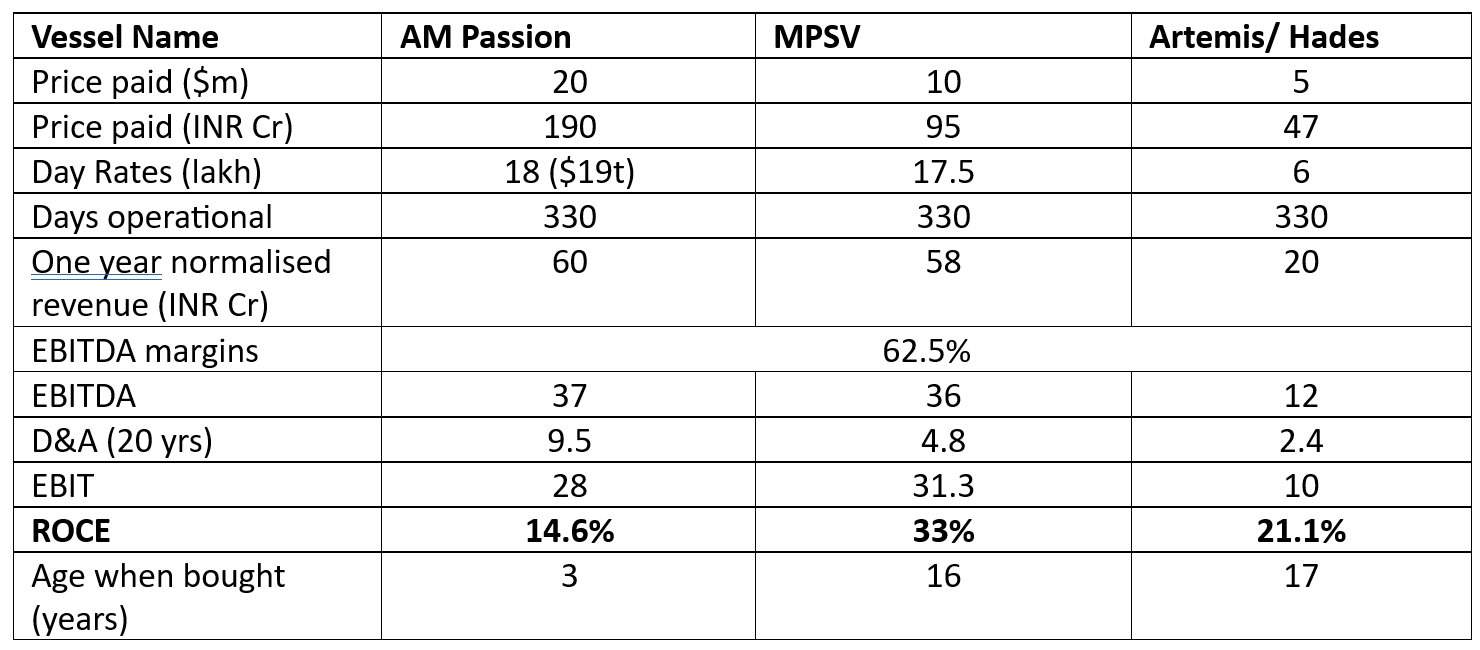
The industry cycle being extremely strong the charter rates have gone through the roof in these past few years (even doubling year on year), making them more money from the same asset, hence improving their margins even further. Vessel-level profitability is strong: new contracts have shown ~60–65% EBITDA margins, helped by tighter supply and better pricing.
- If you think about it- actual margins are much much higher but are getting hidden because of the low margins services business and also the margins that Erin makes at a large turnover is just 10-12%. Hence the actual owned vessels margins could be well north of 65-70%, and as the revenue contribution from the owned vessels increases because of the ongoing vessel acquisition- the real margins would get more clearly visible
-
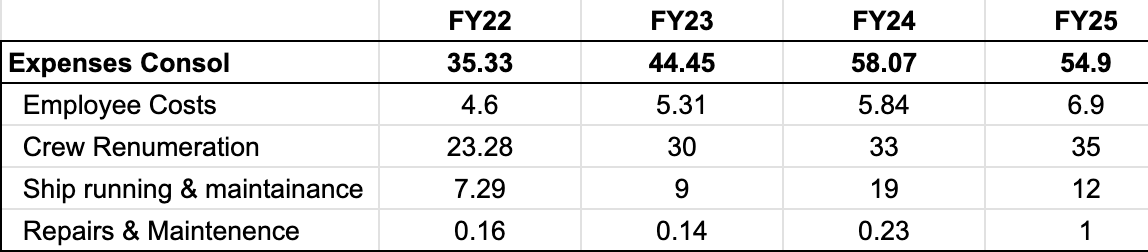
Also they have controlled their expenses well, seeing some sort of operating leverage-
-
- This same trend has also continued in FY26, if you look at their other expenses growth versus sales growth
-
Promoters have walked the talked till now and have even been conservative time and again, executing over and above their revenue and margins guidance (one can go through the concalls).
What’s changing in the Industry
In simple terms the cycle changed because of- Shift from Onshore oil to Offshore oil to Shale oil and now back to Offshore oil.
Negativity for one bringing positivity for another- funny
The old cycle: up to 2013–14- The fall of Onshore Oil
The industry had a strong phase uptill 2013–14, with healthier utilisation and better charter pricing.
Then came the struggle- The fall of Offshore Oil because of Shale oil
After that, the cycle turned. Weak rates, older assets, low newbuild construction, and cautious demand made life difficult for vessel owners. The market spent years in a disciplined, almost dull phase. Lot of charterers died and the survivors became today’s giants.
Post-COVID: the script flipped- The fall of Shale Oil
Post-COVID, offshore activity recovered and charter rates snapped higher. Supply remained tight, so the market moved from “survive the cycle” to “capture the cycle”.
Marketed utilisation: Pretty tight
Offshore supply vessels or DP2 vessels (vessels that ABSM owns and charters) to be specific are very different kind of vessels and are in a big shortage.
Marketed utilisation is what matters, not just headline fleet count.
The offshore market is tight because:
-
the usable fleet is smaller than the headline fleet,
-
many vessels are old,
-
replacement supply is limited, as newbuilds are not happening and thus no new supply coming in.
-
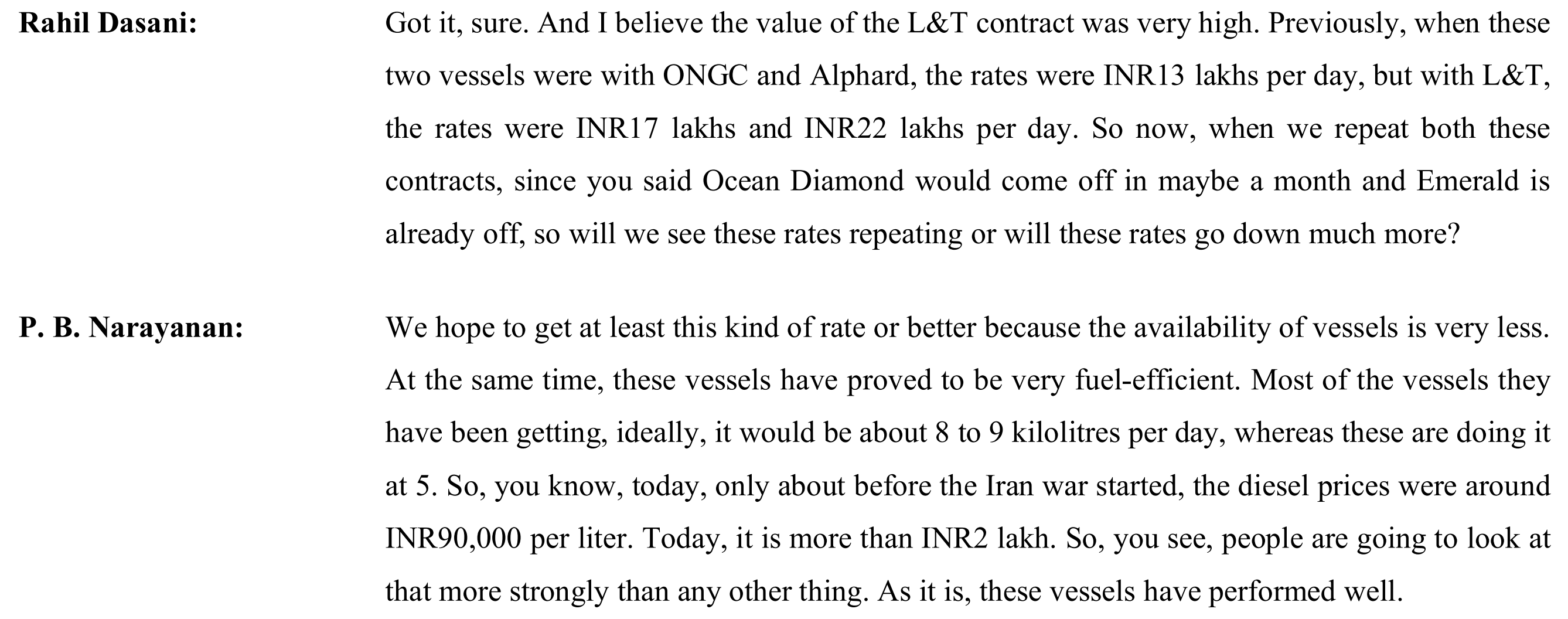
and customers prefer reliable, ESG compliant vessels over cheap substitutes- which is again a task because older vessels do not fit the ESG and fuel economy criteria the customers want today
The important takeaway is that the right vessel gets paid first.
Data from GE shipping concall
Asset quality matters in this market: India has roughly 139 Indian-flagged OSVs, but only ~15 are under 10 years old.
-
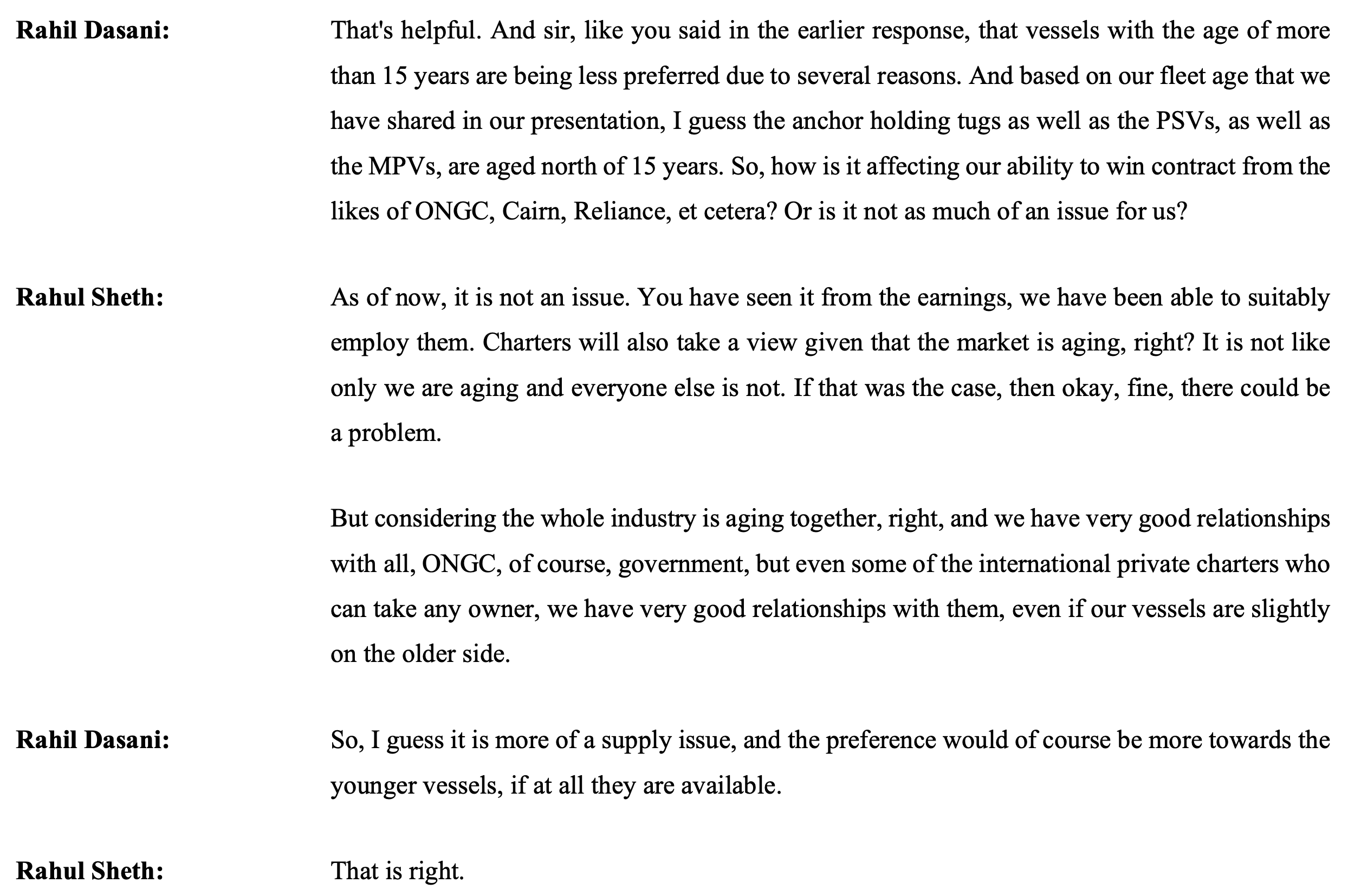
the Average age of ABSM’s fleet is approximately 10-12 years, while peers are aged much more around 20-25 years
-
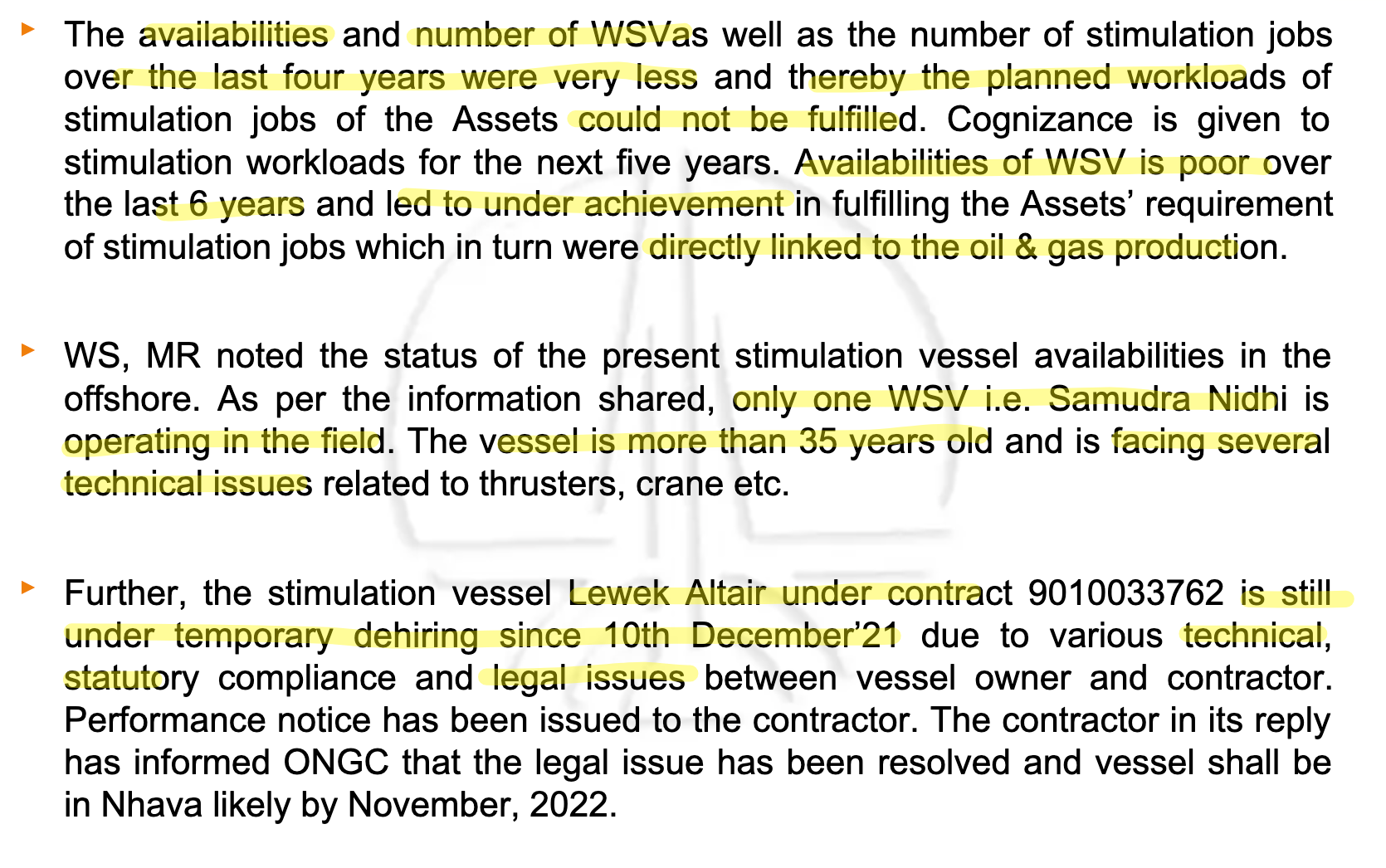
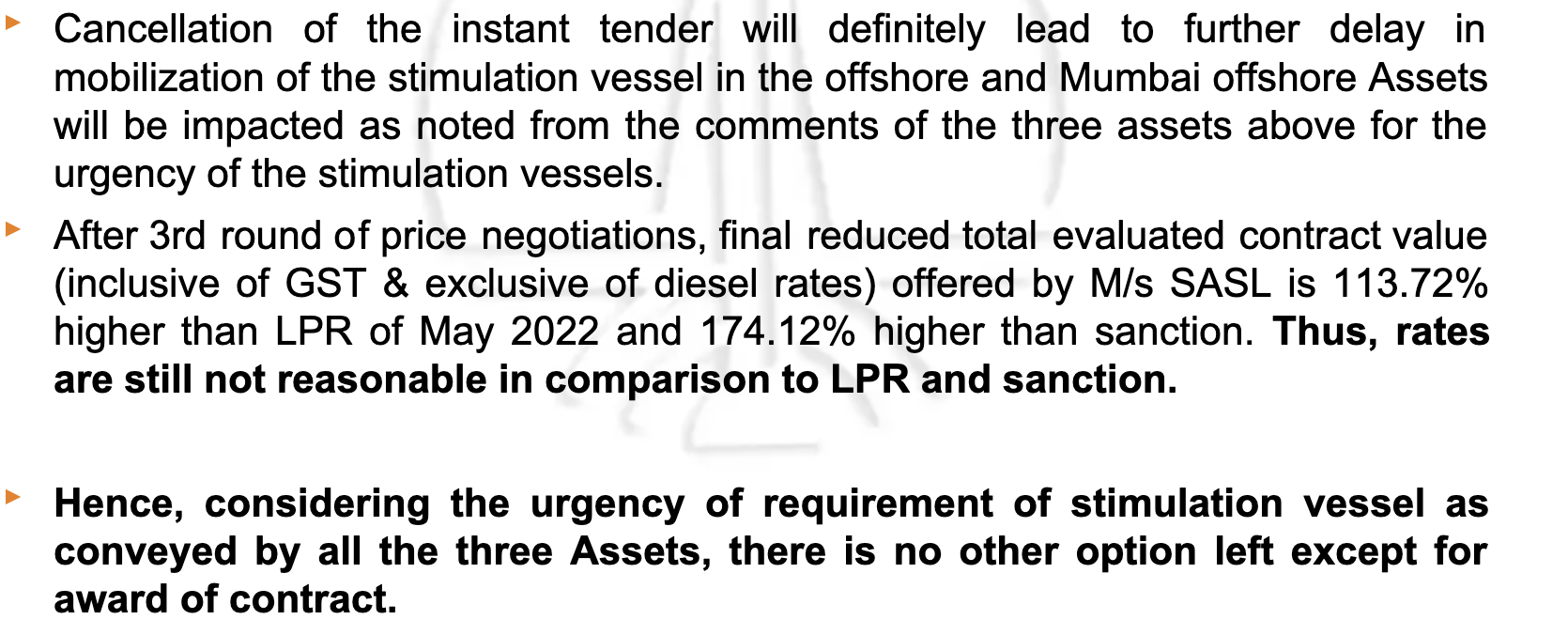
Stimulation vessels is also a segment ABSM is focusing on, which is again in shortage, the below image is from an old ONGC tender
-
-
-
-
- very interesting to read that even PSU had no option but to pay a premium price to the vendor
-
-
-
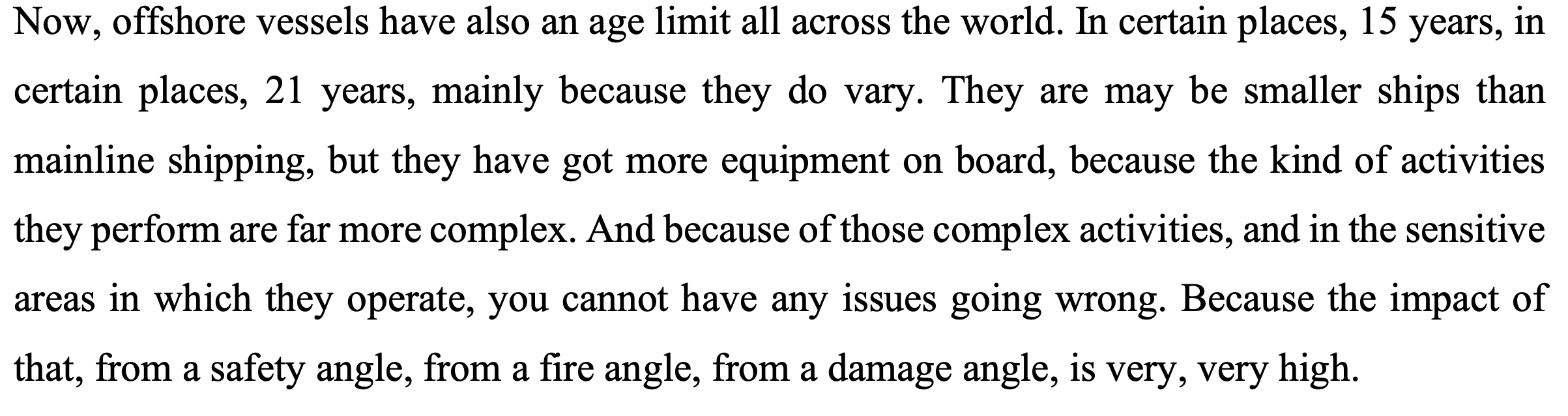
Data from the annual report of a competitor

The supply situation is so tight that even older vessels are being used as there is no other option
ESG compliance and efficient vessels is becoming a big thing

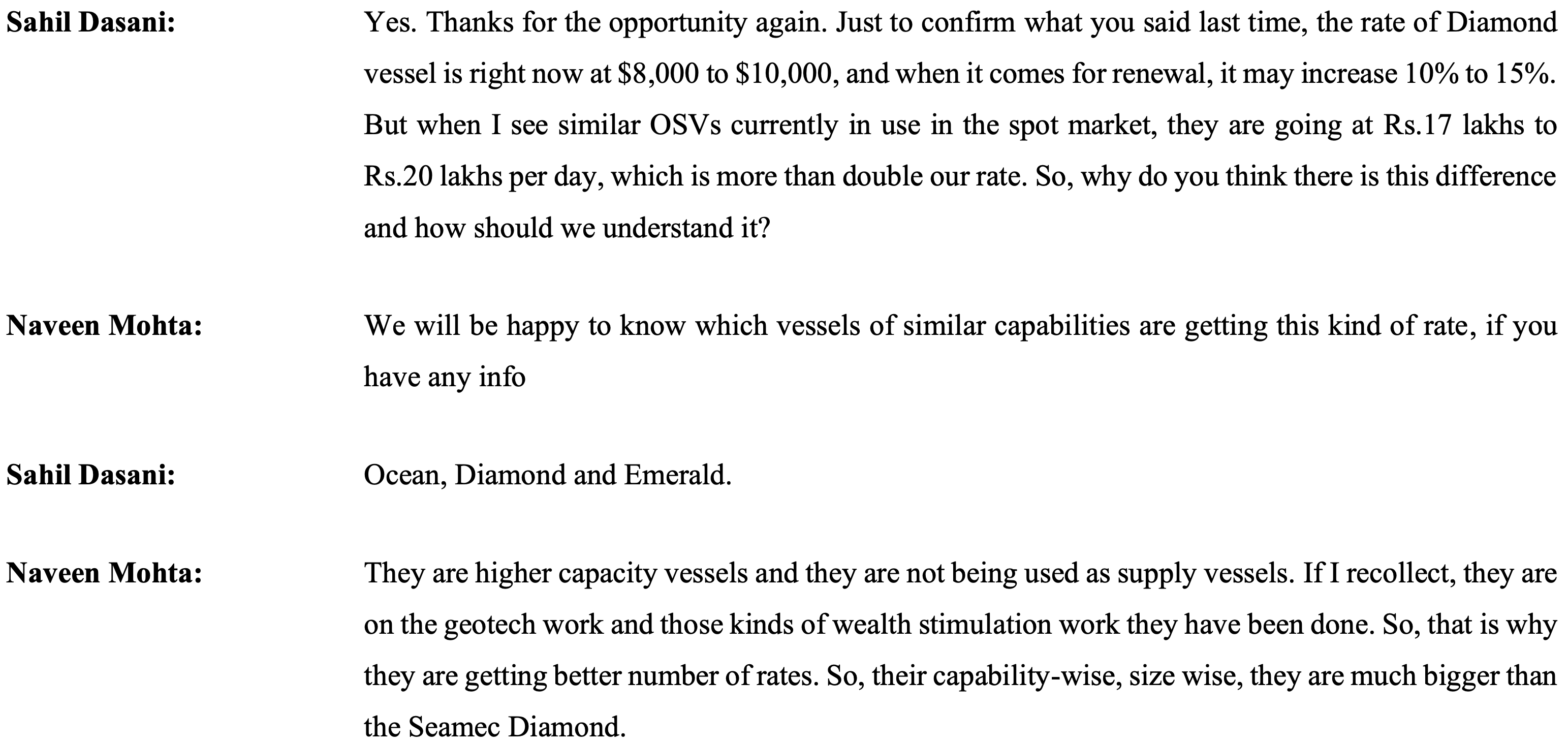
Just to show even the recent bullishness in the charter cycle, we can see the ABSM contracts for 2 of their vessels over time
-
- in the above you can see how both Ocean and Emerald have gone at much higher rates recently versus last year in March 2025

Even SCI indicating higher repricing

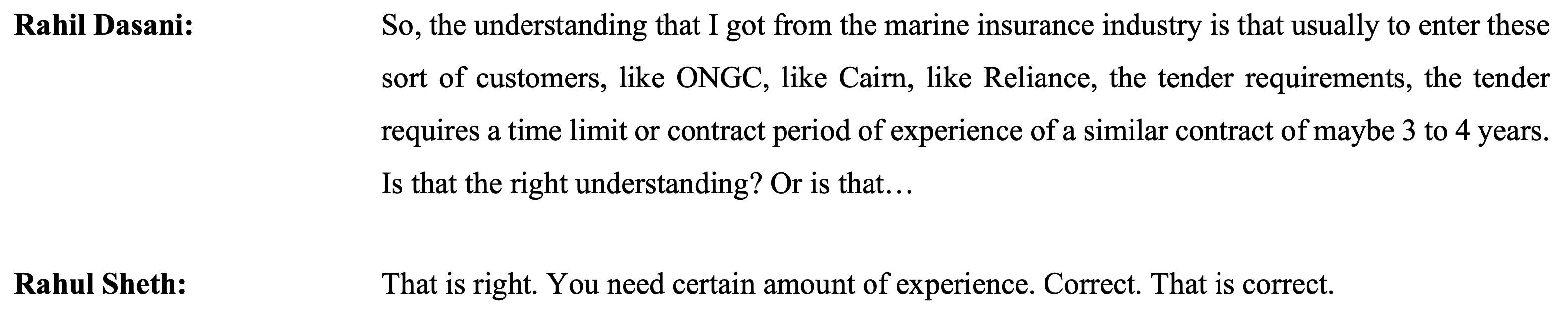
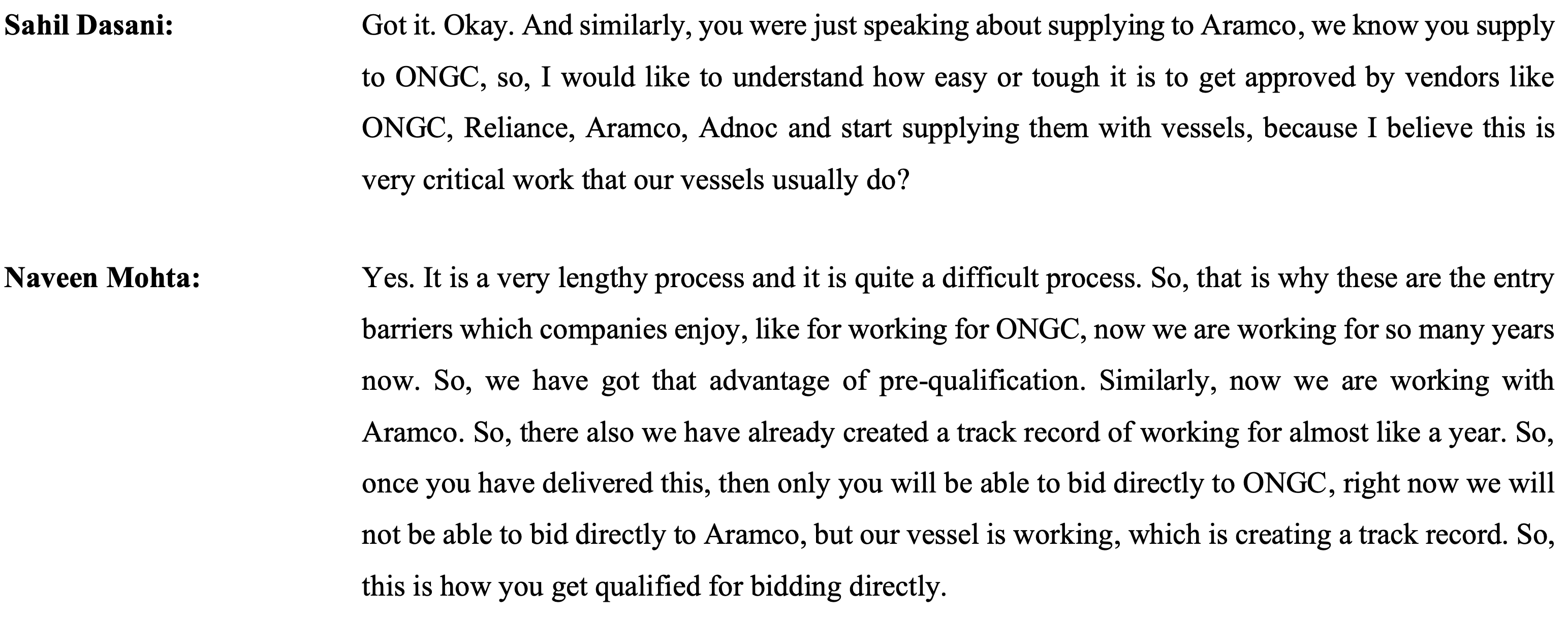
Having Sales & Purchase experience is very important in this industry, as assets are extremely costly at 100-120cr plus. Adding to it the cyclicality of the industry, if one buys it at the peak then during the downcycle it can be extremely bad for them, in the last downcycle post 2014 a lot of large charterers couldn’t survive and died. Plus sourcing and negotiating is very tough in this industry, hence considering all this entry for new players is highly improbable
Adding to this customers have long approval cycle
How ABSM is changing with the tide
Historically ABSM management has been slow and conservative around acquiring new assets, buying the first in 2015 (after being in this business since 1992) and second in 2019 and since then only recently.
Post that they have gotten on an aggressive vessel acquisition spree, with plans to add even more then what they have added till now.

The shift is clear: from ship-management-heavy to ship-owner-led.
Why that matters:
-
ship management is steadier but lower margin,
-
ship ownership captures more upside in a tight market,
-
specialised vessels can command better rates, ABSM’s vessels are doing higher complexity jobs and thus earn a premium to peers and market rates.
All these acquisitions have been measured, securing contracts quickly after the vessels are acquired, for example-
- The vessel Ocean Diamond was acquired in Jan 2025, and was deployed in Mar 2025
- Similarly Emerald was acquired in May 2025 and even deployed in the same month
- The same thing as Emerald also happened in the vessel AM Passion
This shows that ABSM only buys vessels when they have demand and contract visibility from customers.
The nice thing called visibility
ABSM management has been of a longer term orientation- usually in tight supply situations playing spot market is very remunerative, but ABSM recognising and respecting the cyclicality of the industry has gone after longer term multi year contracts. Anokhi, Celestial, AM Passion and Erin are all under long term contracts, locking in these higher premium charter rates ABSM can see today for the next few years, hence providing that long term certainty and visibility that our market usually loves.
That is a very healthy setup in a cyclical industry. Long-duration contracts are the shipping equivalent of getting a seat by the window.
Hopefully these newer vessels will also soon be deployed under longer term contracts, once done with their docking period. Already one of the vessels has signed a new 5 year contract.
ABSM has also started bidding in international contracts in the Middle East side, where realisations are even higher and contracts again longer term.
- A small player like ABSM dealing with Global giants like Schlumberger limited (SLB), Aramco, ADNOC, etc and securing long term multi year contracts says a lot about it.
Positive takeaways and momentum
A few upbeat themes stand out clearly:
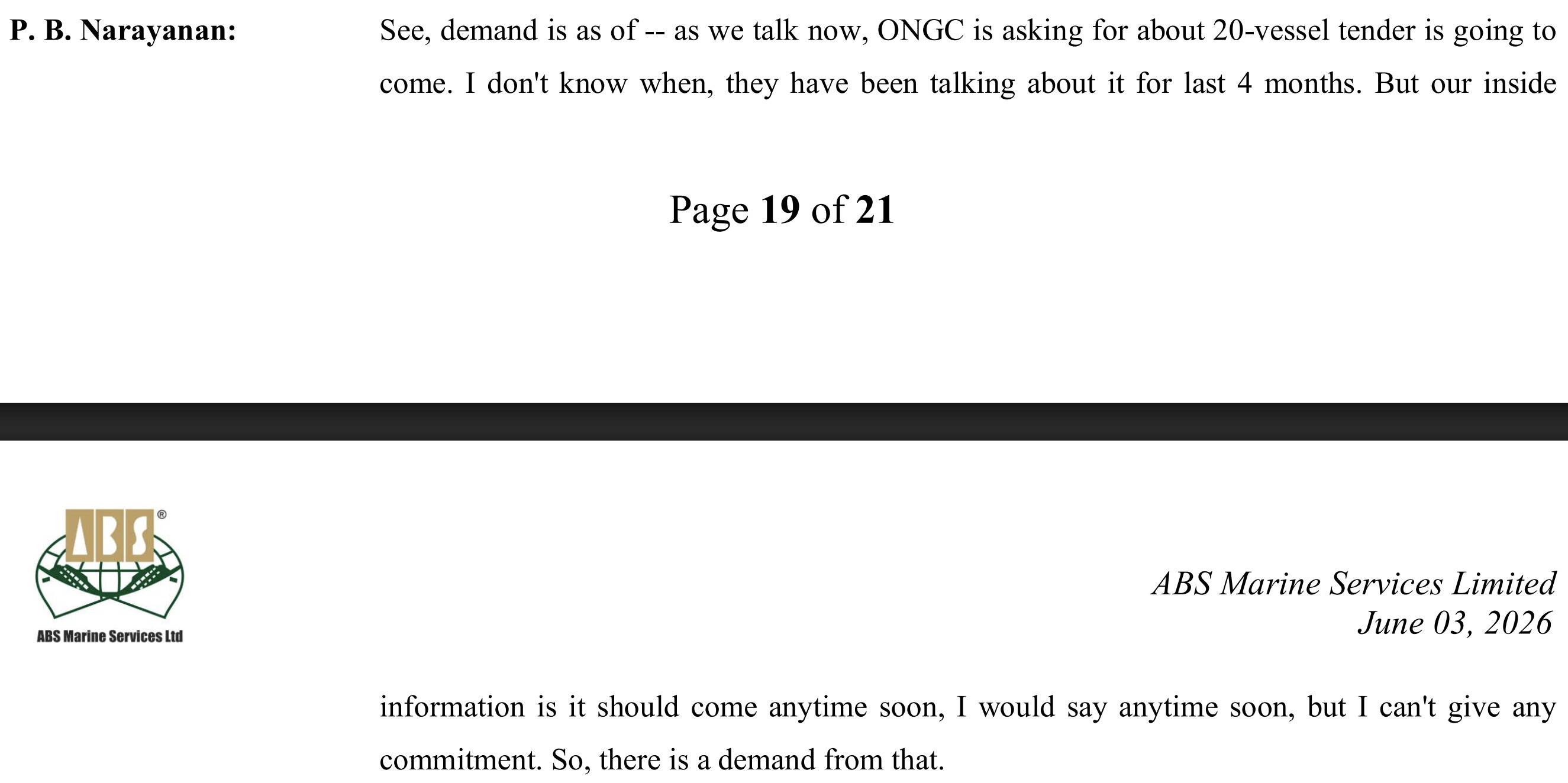
1) Supply shortage- The market is tighter than it looks, while demand is booming
The number of modern, truly usable OSVs is limited, and that scarcity supports pricing.

2) Expansion- The company is upgrading its fleet
Newer DP2 vessels and specialised assets generally mean better deployment options and better economics.
3) Long term Plan- Contract visibility is improving
Multi-year deals reduce earnings wobble and make planning much easier.
4) Operations are getting more efficient
Lower maintenance costs, better charter hire, and improved margins all point in the same direction.
5) Lower Finance cost
trying to work on getting lower interest rates from banks which improves their PAT significantly.
6) Tonnage tax scheme Benefit
Tax rates going ahead from FY27 will be 2-3%, improving PAT even further. One can read about this new scheme on the internet.
7) Higher Return Ratios
Ratios have improved and should improve even further going ahead once this new capex generates revenue and improves margins even further.
Risks
Shipping industry is a cyclical one- need to be kept watch on
High debt- although thats a perspective of an individual
- People see debt and worry, I see how the conservative the promoter has been and is, and is still willing to risk his company if it all goes down, meaning he would have thought it through
- secondly I see the tailwind the industry is in, also they are locking in vessels in longer term contracts playing it safe, and also leasing out vessels within minimal time of buying them showing that they always have visibility before acquiring a new vessel
- but still a risk is a risk- high debt ‘maybe bad’
Related party transactions with with Oceandeep Energies which is owned by promoters- Erin has been leased to ABSM by Oceandeep
- the charter rate that ABSM earns off of Erin seems lower to the charter hire charges ABSM pays Oceandeep and hence doesn’t make as much sense
- although management says there is some confusion which they will clear, and also they have stopped this model now and now buying all vessels in ABSM itself
Not a risk- but an issue is that Rajasthan Global got in Pre IPO and has been selling and creating a supply pressure
disc- i m invested from lower levels and biased