Satish's SME Corner : Notes and Con-call Updates

Updates from DSM fresh foods Call today:

Discussion between Rakesh Arora (Go India Advisors) and Deepanshu Manchanda (MD of DSM Fresh Foods/Z Fresh), focusing on the company’s business model and the acquisition of Ambrosia.

Ambrosia Acquisition Details

  • Transaction Structure: DSM Fresh Foods has acquired a 76% stake in Ambrosia (via AVM Food Tech) through a primary cash infusion of ₹8 crore. Deepanshu Manchanda personally acquired the remaining 24% for ₹2 crore,.
  • Asset Value: The total cost of the asset is approximately ₹16 crore, comprising ₹9–10 crore for land, ₹3 crore for the building, and ₹5 crore for plant and machinery. The company will also take over liabilities of roughly ₹11–14 crore,.
  • Infrastructure: The acquisition includes a 4.5-acre land parcel (with 1.5 acres built-up) and a 30,000 sq ft fully integrated facility featuring four parallel automatic and semi-automatic lines,.
  • Capacity Potential: The current built-up space can support revenue of ₹140–150 crore. Fully developing the land parcel could raise capacity to ₹500–600 crore.

Strategic Rationale & Product Expansion

  • Product Portfolio: Ambrosia adds 150 to 200 SKUs, including frozen soups, desserts, and snacks. DSM plans to introduce meat proteins into Ambrosia’s currently vegetarian-heavy catalogue,.
  • Market Access: The facility holds regulatory approvals that provide immediate access to international markets. DSM sees immense export potential to Europe, Canada, and the UK, targeting the Indian diaspora with “heat and eat” products,.
  • New Brand Launch: A new brand, “MA Foods”, will be launched specifically for ready-to-eat and ready-to-cook products, targeting big-box retailers in the US and the Middle East.
  • Margins: Ambrosia’s products are expected to yield margins 20–25% higher than DSM’s existing fresh food business due to the value-added nature of the goods (e.g., sauces, frozen meals).

DSM Fresh Foods (Z Fresh) Performance

  • Growth: The company has achieved 52% CAGR revenue growth, with profits rising from ₹2.7 crore to ₹9 crore. It is the first profitable D2C fresh food platform in the space.
  • Business Model: Operates on a satellite farm-to-fork model with direct sourcing (bypassing middlemen) and centralised processing,. The business split is currently 50% B2B and 50% B2C.
  • Margin Profile:
    • Gross Margin (Buying-to-Selling): Peaks at roughly 50–55%.
    • Realised Gross Margin: Approximately 35% for B2C (due to processing/logistics costs) and 15–18% for B2B.
  • Delivery Strategy: The company rejects the “10-minute” quick commerce trend, viewing it as unsustainable, and instead relies on slotted deliveries.

Future Outlook

  • Revenue Guidance: The company targets 70–80% revenue growth over the next 1–2 years.
  • Ambrosia Targets: Ambrosia previously peaked at ₹16 crore revenue; DSM aims to double this figure in the coming financial year,.
  • Acquisition Strategy: DSM pursues an “acqui-hiring” strategy, historically acquiring one company every three years, but now aims for one acquisition per year or strategic partnerships to accelerate growth,.
  • Reporting: The company will commence quarterly reporting starting from the new financial year.

Its looks to me they have spent 30 Cr overall for the Ambrosia acquisition. 16 cr Cash out + 14 crore liability.

DSCL : Hold tracking Position.

7 Likes

thanks for the Notes. considering staggered outflows reg debt of Ambrosia and future outlook looks promising. execution is key.past acquistions they handled well. Hope they achieve revenue guidance in next 2 years

1 Like

FlySBS Updates :

  1. Concall notes:

These are some high-level updates.

  • Fleet Expansion from 3 to 9(all 6 new will be under dry lease) by q1 fy27.
  • Fully transition to dry leave by fy27.
  • Q3 FY26: ₹84.75 Cr (70% International / 30% Domestic)
  • Client Retention: 79–89% of revenue comes from repeat clients.
  • Client Type: Corporate clients dominate (87%), with the UHNI/HNI segment growing (13%).
  • Utilisation: Current utilisation stands at 7–11 hours/day, with a potential to reach 13–14 hours using multi-crew operations. this will increase the margins.
Metric Details
Market Gap India has 110 private jets vs. US’s 15,000; estimated need for 3,000 aircraft.
Revenue Quality High repeat business (80%+) indicates stickiness.
Growth Trigger Tripling fleet size (3 to 9) in the next 6 months.
Efficiency Moving from Wet Lease to Dry Lease to boost EBITDA margins.
  1. Plane crash of Competitor VSR ventures

The recent plane crash of Bombardier Learjet 45XR (registration VT-SSK), operated by VSR Ventures in which all occupants got killed exposes the risks faced by FlySBS.

VSR seems to have a history in plane crashes, any crash like this will invoke serious protocols from DGCA. All VSR planes could get grounded fully until DGCA is satisfied that rest of the flights can fly. These incidents not only impact the owning company but the entire industry , FlySBS also might have to undergo some checks form DGCA , insurance costs for everyone goes up in future.

Summary of Risk Exposure:

Risk Type Covered by Insurance? Impact on FlySBS
Asset Loss (Plane destroyed) Yes (Hull Insurance) Minimal financial loss (Asset replaced).
Passenger Liability (Deaths) Yes (Liability Ins.) Legal claims covered (up to limits).
Revenue Loss (Fleet grounded) No High Impact: Zero income during DGCA investigation.
Premium Hike (Post-accident) No High Impact: Permanent increase in operating costs.
Brand Damage No Critical: Potential loss of core corporate contracts.

While the issues could be purely related to VSR , I wanted to check how FlySBS fares on these risks, below is what I could gather.

Structural Oversight: In-House CAMO : FlySBS have established an in-house CAMO (Continuous Airworthiness Management Organisation). Instead of relying solely on third-party mechanics to say “it’s fixed,” CAMO is a regulatory designation that makes FlySBS responsible for continuously monitoring the health of their aircraft. They have a dedicated “Quality Department” that audits the MROs (Maintenance Repair Organisations) rather than blindly trusting them.

External Audits: The “Ex-DGCA” Factor: FlySBS conducts monthly external audits led by an ex-DGCA Head of Safety. By hiring a former regulator to audit them monthly, they are effectively subjecting themselves to a “mock regulatory inspection” 12 times a year. Most operators only face this scrutiny when the actual DGCA decides to inspect (which might be once a year or after an incident).

Business Model Shift: The strategic shift from Wet Lease (renting plane + crew + maintenance from others) to Dry Lease (leasing just the plane and using own crew/maintenance). In Wet Leases (Current 66%): You rely on the lessor’s safety standards. In Dry Leases (Target 100%): FlySBS takes full operational control. They choose the pilots, they mandate the training, and they control the maintenance schedule. This eliminates the risk of a third-party lessor cutting corners on safety.

Pilot Fatigue Management: The company maintains a policy of 3 sets of crew per aircraft. Pilot fatigue is a leading cause of landing accidents. By having 3 rotating teams per jet, they ensure pilots are not pressured to fly when exhausted just to complete a VIP trip.

Asset Selection Pedigree: Management noted they faced “challenges” sourcing assets because they insisted on the right pedigree. They rejected available aircraft that didn’t meet their quality standards, accepting a 2-3 year wait or long search times instead. They are not buying “cheap” or “problematic” older jets just to expand quickly.

Feature VSR Ventures (Typical Charter Risk) FlySBS Aviation (stated Mitigation)
Oversight Standard Regulatory Compliance Monthly audits by ex-DGCA Head of Safety
Maintenance Reliance on MROs In-house CAMO to audit MROs
Crewing often tight rosters 3 Crew Sets per aircraft (Fatigue buffer)

Read more at:

Ajit Pawar plane crash: Black box recovered; govt assures time-bound probe — what we know so far | India News - The Times of India?

Dscl: Hold just tracking qty. Waiting for Management to prove their capabilities as its recently listed business.

13 Likes

WHITE HOUSE OFFICIAL SAYS U.S. ALSO DROPPING 25% ADDITIONAL TARIFF ON INDIAN IMPORTS SINCE INDIA REDUCING PURCHASES OF RUSSIAN OIL.

So Its down from 50 % to 18%.

Hope this is the final outcome of trade deal and DJT doesn’t do a Uturn .

9 Likes
1 Like

Rappid Valves (India) Ltd.

05/02/2026

1. Summary: The “Rappid” Growth Phase

Rappid Valves continues to demonstrate strong traction in the niche Marine and Defense sectors. The company reported a 47% YoY revenue growth in H1 FY26, driven by the execution of specialized valve orders.

Key Developments (H1 FY26):

  • Financial Growth: Revenue ₹28.8 Cr (up 47%), PAT ₹3.38 Cr (up 41%).

  • Strategic Moat: Secured ClassNK (Japan) Type Approval, joining an elite club of Indian manufacturers certified for global marine shipbuilding.

  • Export Breakthrough: Achieved UL Approval (USA) for specialized ball valves, opening the US market.

  • Capacity Expansion: A new 9,000 sq. ft. inventory facility and a 6,000 sq. ft. dedicated export unit are now functional.

https://nsearchives.nseindia.com/corporate/RAPPID_16102025150349_General_Information_Business_update.pdf

2. Company History & Evolution

  • 2002: Incorporated as “Rapid Valves (India) Pvt Ltd” by Mr. Gaurav Dalal.

  • 2007: Commenced full-scale production.

  • 2007–2013 (The Struggle Phase): The promoter admitted to struggling with the Oil & Gas sector due to high competition and capital intensity. This failure pivoted the company toward specialized sectors like Marine and Pharma.

  • 2009: Renamed to “Rappid Valves (India) Private Limited”.

  • 2024: Converted to a Public Limited Company and listed on NSE Emerge in September 2024, lot Size 600.

  • 2025: Achieved prestigious ClassNK Japan approval and UL Approval (USA).

Corporate Video: https://youtu.be/1z1INB8y4pY

Interview Pre-Ipo: https://youtu.be/pVAdF87iSHo

3. Product Portfolio & Applications

Rappid Valves manufactures a diverse range of valves using Ferrous and Non-Ferrous materials (Nickel Aluminum Bronze, Gunmetal).

Core Products

  • Marine Valves: Gate, Globe, and Check valves designed for saline environments.

  • Ball Valves: Includes specialized Top Entry and Trunnion Mounted valves.

  • Butterfly & Check Valves: For flow regulation in pipelines.

  • New Developments:

    • Large Size Globe Valves (NAB): 450mm (840kg) and 550mm (1035kg) developed for the Fleet Support Ship (FSS) project.

    • Remote Operated Valves: For inaccessible locations in ships/plant

    • Key Industries Served

      1. Marine & Defense (Primary Growth Engine): Indian Navy, Shipyards (MDL, GRSE, Cochin Shipyard).

      2. Industrial: Chemical, Ethanol, Power, and Steel plants.


      4. Manufacturing Facilities

      Location: Genesis Industrial Complex, Palghar, Maharashtra.

      • Existing Infrastructure: Covers over 32,000 sq. ft. Equipped with VMCs, CNCs, and test benches.

      • New Expansion (Rappid 2.0):

        • Inventory Facility: Added 9,000 sq. ft. for store management to streamline workflow.

        • Export Unit: A new 6,000 sq. ft. facility dedicated to export orders is now fully functional.

      • Automation Focus: Management is aggressively moving toward “Rappid 2.0”—reducing human effort by 60-70% via automation to ensure precision and handle skilled labor shortages.


      5. Promoter Background & Management

      Mr. Gaurav Vijay Dalal (Chairman & MD)

      • Background: Mechanical Engineering diploma and 22 years of experience.

      • Role: Hands-on technical leader; responsible for the pivot from general Oil & Gas valves to niche Marine valves.

      • Remuneration:

        • Salary increased to ₹72 Lakhs per annum (effective Sep 1, 2025) from ₹48 Lakhs previously.

        • Analysis: The hike is substantial (50%) but aligns with the company’s transition to a listed entity and improved profitability.

      Mrs. Mansi Gaurav Dalal (Non-Executive Director)

      • Background: Psychotherapist and Happiness Coach. Focuses on HR, soft skills, and CSR (Manray Foundation).

      • Remuneration: Drawing sitting fees and commission; previously drew salary as Executive Director before resigning and re-joining as Non-Exec.

      6. Financial Analysis: H1 FY26 vs. H1 FY25

      The company has maintained robust top-line growth while preserving profitability margins despite inflationary pressures.

    • Comparison Analysis:

      • Revenue Surge: The ~47% jump in revenue confirms strong execution of the order book.

      • Margin Compression: EBITDA margins contracted from 23.3% to 19.5%. This is primarily due to a sharp increase in “Purchases & Operating Expenses,” which grew by 108% (₹26.08 Cr in H1 FY26 vs ₹12.51 Cr in H1 FY25). This suggests higher raw material costs or a shift in product mix.

      • Interest Coverage: Finance costs decreased slightly (₹56L vs ₹59L), improving the interest coverage ratio, likely due to better debt management using internal accruals or IPO proceeds.


      7. Balance Sheet & Working Capital Deep Dive

      A critical area for investors is the working capital cycle, which has intensified in H1 FY26.

    • Analysis:

      • Inventory Pile-up: Inventory increased by ₹5.68 Cr in just 6 months. This often precedes a strong H2 execution but currently ties up capital.

      • Receivables Stretch: Receivables stand at ₹24.6 Cr. On an annualized revenue run-rate of ~₹58 Cr, this implies Receivable Days of ~155 days, up from ~135 days in FY25. This is a “Red Flag” indicating slower collections from Defense/PSU clients.

      • Rising Debt: To fund this working capital gap, Short-Term Borrowings jumped by ₹5.07 Cr to ₹13.48 Cr.

      B. Cash Flow Situation

      • Operating Cash Flow (OCF): For the period ended Sept 30, 2025, the OCF was Negative (₹7.60 Cr).

        • Reason: The profit of ₹4.54 Cr was completely wiped out by the increase in Trade Receivables (₹5.36 Cr outflow) and Inventories (₹5.68 Cr outflow).
      • Investing Cash Flow: Outflow of ₹0.39 Cr, primarily for minor capex.

      • Financing Cash Flow: Inflow of ₹5.07 Cr from new short-term loans helped bridge the cash gap.


      8. Business Updates & Future Outlook

      The quantitative strain on working capital is balanced by significant qualitative achievements in H1 FY26.

      A. Order Book & Pipeline

      • Current Order Book: ₹20.19 Cr (as of Sept 30, 2025).

        • Split: Marine (Defense) ₹8.24 Cr | Non-Marine ₹11.95 Cr.
      • Pipeline: Bids worth ₹119 Cr submitted on the GEM Portal. Technical qualification achieved; commercial bids awaited.

      B. Strategic Certifications (Wide Moat)

      1. ClassNK (Japan) Type Approval:

        • Rappid is now one of the few Indian manufacturers certified for Hull Valves (Top Entry Ball, Gate, Globe) used in global shipbuilding. This certification is mandatory for marine insurance, making it a high barrier to entry.
      2. UL Approval (USA):

        • Indigenous design and manufacture of Ball Valves for a US customer received UL Approval for water quality. This allows for exclusive export to the USA, validating their “Make in India” for the world capability.

      C. New Product Development (FSS Project)

      • Developed large-size Nickel Aluminum Bronze (NAB) Globe Valves for the Fleet Support Ship (FSS) project.

      • Sizes: 450mm (840kg) and 550mm (1035kg). These require advanced metallurgy and simulation capabilities, reinforcing their position as a specialized defense supplier.D. Capex & Infrastructure

      • D. Capex & InfrastructureIPO Proceeds Utilization:

    • Allocated: ₹6.73 Cr for Plant & Machinery.

    • Utilized: ₹3.08 Cr (approx 46%).

    • Pending: Significant dry powder (₹3.64 Cr) remains for further automation.

  • New Facilities:

    • Inventory Facility: 9,000 sq. ft. store to streamline the high inventory levels mentioned in the financials.

    • Export Unit: 6,000 sq. ft. fully functional unit dedicated to export orders.

9. Risk Assessment

11. Risks, Red Flags & Contingent Liabilities

Red Flags & RPTs

  • Related Party Transactions (RPT):

    • Significant loans taken from and repaid to Gaurav Dalal (MD). In FY25, loans received were ₹3.69 Cr and repaid ₹3.77 Cr.

    • Assessment: While common in SMEs, frequent lending/borrowing with promoters can indicate working capital stress.

  • Negative Cash Flow: As detailed in Section 7B, the business is currently cash-hungry due to slow debtor days.

Contingent Liabilities

  • Bank Guarantees: ₹14.62 Lakhs (Performance BG to IDBI Bank). This is low and manageable.

Risk Factors

  1. LD Clauses: Defense contracts often have strict Liquidated Damages (LD) clauses for delays. A 5% penalty on a ₹10 Cr order can wipe out net margins.

  2. Raw Material Volatility: Copper/Nickel price fluctuations impact the cost of Bronze/NAB valves.

  3. Client Concentration: Heavy reliance on 5-6 major PSU shipyards.

12. Conclusion

The H1 FY26 results present a classic case of a fast-growing defense SME: Explosive Profit Growth (41%) accompanied by Cash Flow Strain.

  • The Bull Case: The ClassNK and UL approvals are game-changers that will likely materialize into high-margin export orders in FY27. The ₹119 Cr pipeline provides high revenue visibility.

  • The Bear Case: The company is currently “cash poor” despite being “profit rich.” We must monitor the Debtor Days closely in the annual results. If the operating cash flow does not turn positive by year-end, it may necessitate further dilution or debt.

The fundamental story has strengthened with new certifications, but the balance sheet health has temporarily weakened due to working capital demands.

==================================================================

Compiled Notes from here & there, No Buy/Sell Recommendation

==================================================================

7 Likes

https://www.moneycontrol.com/news/business/companies/dgca-orders-special-safety-audit-of-14-charter-operators-after-fatal-baramati-crash-13822444.html

FlySBS is not mentioned in the Article.

2 Likes

US TARIFF POLICY UPDATE

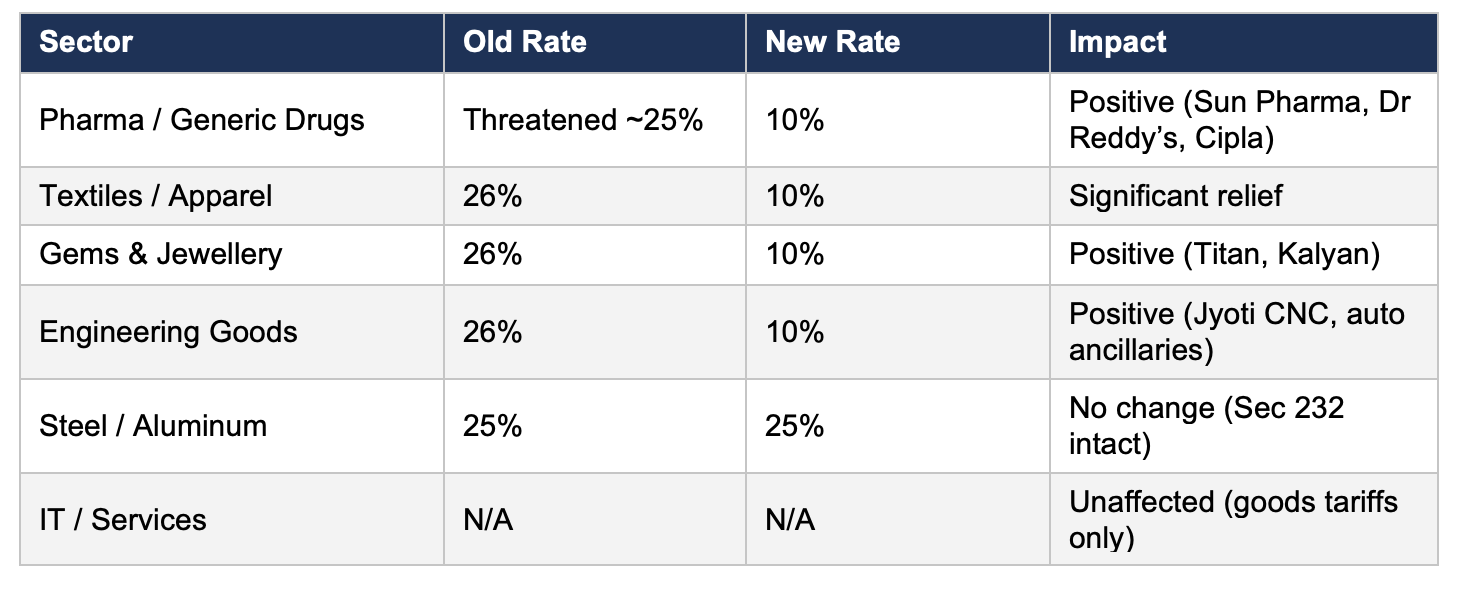
India’s effective tariff rate on goods exports to the US drops from 26% to 10% immediately. The 10% is legally distinct from what was struck down but carries a 150-day expiry. Net positive for Indian exporters in the near term; significant policy uncertainty remains.

The Ruling — February 20, 2026

The US Supreme Court struck down President Trump’s IEEPA-based tariffs in a 6-3 decision (Learning Resources Inc. v. Trump). Chief Justice Roberts, writing for the majority, held that IEEPA — a 1977 emergency powers law — does not authorize the President to impose tariffs, as the statute contains no reference to tariffs or duties and no prior president had ever used it for this purpose.

The ruling invalidates all tariffs imposed under IEEPA, including the ‘Liberation Day’ reciprocal tariffs and the baseline 10% global tariff. Tariffs imposed under other statutes (Section 232, Section 301) are unaffected.

Trump singed 10% Global Tariff post the ruling

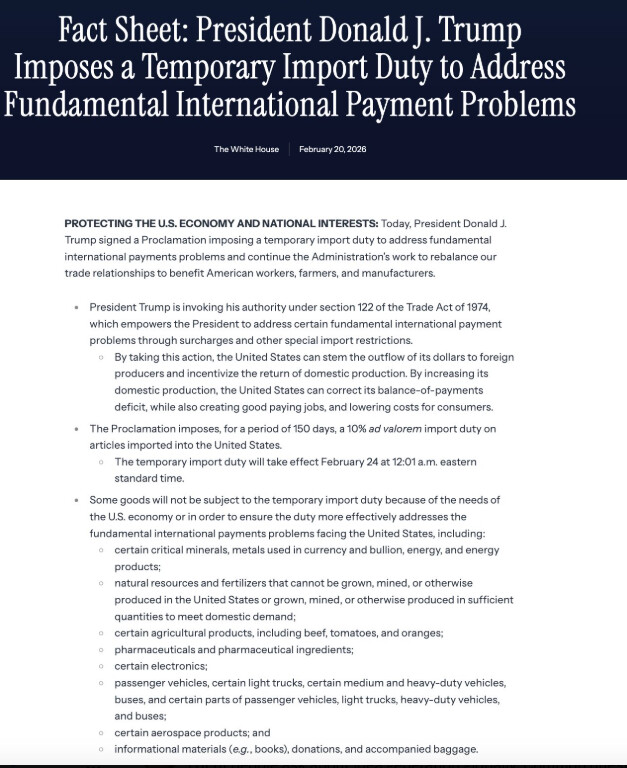
Within hours of the ruling, Trump signed an executive order imposing a new 10% global tariff under Section 122 of the Trade Act of 1974 — a completely separate legal authority. Key constraints of this new order:

• Maximum rate capped at 15% under Section 122

• Valid for only 150 days (expires ~mid-July 2026) — Congressional approval needed for extension

• First-ever invocation of Section 122 in US history

• Takes effect February 24, 2026 at 12:01 a.m. ET

The administration confirmed: ‘Yes, 10% until another authority is invoked’ for India specifically. Treasury Secretary Bessent stated this approach will ‘result in virtually unchanged tariff revenue in 2026.’

Refunds

~$175 billion in IEEPA tariffs collected since January 2025 may be subject to refunds. The Supreme Court remanded the refund issue to the US Court of International Trade. Trump has indicated his administration will contest refund claims, likely dragging litigation for months or years. The US Chamber of Commerce confirmed Indian exporters are eligible to claim refunds on IEEPA tariffs paid.

India — Before & After

Key Risks Going Forward

• Section 122 expires in ~150 days — Trump may seek Congressional extension or invoke Section 338 (Smoot-Hawley, allows up to 50%) or expand Section 232 to new sectors

• Section 301 investigations already initiated against China and Brazil; India could be targeted next

• India-US bilateral trade deal terms (referenced by Trump) may lock in specific tariff rates independent of court rulings

• Pharmaceutical tariffs under Section 232 remain a live threat — not yet imposed but still possible

• IEEPA-based trade deals with EU, South Korea, Japan may unravel since those deals were predicated on IEEPA tariff threats

14 Likes

C2C advanced stock is mentioned here https://www.businessworld.in/article/sebi-bombshell-top-general-manager-suspended-overnight-in-shocking-vigilance-scam-594670

3 Likes

Pharma is out as per Factsheet

4 Likes

Anyone tracking Positron Energy? Trading at a PE of just 6.6x and EVEBITDA at 2.4x; almost 50% market cap is just cash. What caught my eye was that they have long term contracts for procurement of Natural Gas equal to 22,000 mmbtu per day. Its not clear how much supply they are still getting but even if its 40-50% they can sell in the open market at 3x the cost price as they are a gas aggregator, see this article about gas prices- Adani Total Gas raises prices, citing Middle East conflict - The Economic Times

If they are sourcing natural gas from the US or other such locations then in that case they would still be getting 100% supply and they could sell the entire amount in the open market?

Gas prices are going to take a while to normalize so this situation could easily drag on a few months atleast so at current valuations downside seems very limited and upside could potentially be massive??

Please understand that the company has only contracted with natural gas importer for procurement, which was expected in 1st qtr of next FY. The amount is approximately amounts to average 22000 mbtu per day. Simultaneously company has also contracted for sale of natural gas. So even if company gets delivery there is little chance of windfall gain. And mind it , expectation only, and that too next FY. So it is like a projection and we know what happens to projections of small cap / SME companies. And by June, 2026 who knows where natural gas price will be. Moreover there is force majeure clause always in any contract. So I will not read much here.

How will the company effected with the shortage envisaged in the supply side……will it not face shortage and hence not be able to meet it’s contractual obligations to customers……i feel it’s a precarious situation

If it’s supplies are not disturbed, and it can make a killing due to the rising gas prices then it will be interesting.

Kindly shed light on how my understanding is misconstrued.

Disclosure……. Was invested over an year ago, exited with losses when the topline surge was not accompanied with stable margins

Extent of supply disruption is not clear which is why it is available at this price. They have two sourcing contracts; one for 7,000MMBTU /day and another for 16,000MMBTU/day. There is a strong likelihood that they would have sourced gas from two different geographies after their experience with the Russia Ukraine war etc. If that is the case I am betting on the fact that they would still be getting close to full supply on one contract and possible some supply on the second contract. They have only one long term supply contract of 9,000MMBTU/day which they could declare force majure on (or sell upto 10-20%) and sell the rest of the gas in the spot markets.

Yes, there are a lot of open and unknown variables but at 6x PE (without adjusting the cash equal to 50% of MCap) the worst is already baked in and my downside is limited whereas my upside could potentially be massive. Its a bet but today when gas is as good as gold its a bet I am happy to take on. Heads you win and tails you don’t lose much.

These are the details of their existing sourcing contacts-

Annual revenue projections are based on an assumed selling price of ₹1,000 per MMBTU (average selling price in FY24-25).

1. Long-Term Contract (Announcement dated 01/09/2025)

  • Total contracted volume: 60,991 Billion BTU = 60,991,000 MMBTU.

  • Contract period: 1 September 2025 to 31 December 2035 (3,774 days).

  • Average daily volume: 16,161 MMBTU/day (60,991,000 ÷ 3,774).

  • Annualised volume: 5,898,706 MMBTU (16,161 × 365).

  • Annual revenue projection: ₹5,898,706,000 (approximately ₹590 crore).

2. Shorter-Term Contract (Announcement dated 13/08/2025)

  • Total contracted volume: 3,635,000 MMBTU.

  • Contract period: 1 October 2025 to 31 March 2027 (547 days).

  • Average daily volume: 6,645 MMBTU/day (3,635,000 ÷ 547).

  • Annualised volume: 2,425,548 MMBTU (6,645 × 365).

  • Annual revenue projection: ₹2,425,548,000 (approximately ₹243 crore).

Combined Position During Overlap Period (1 October 2025 to 31 March 2027)
The two contracts operate concurrently for approximately 18 months, yielding a cumulative average daily volume of 22,806 MMBTU/day (16,161 + 6,645). This closely aligns with the company’s stated ramp-up target of around 22,000 MMBTU/day by the beginning of the next financial year, as referenced in the 01/09/2025 announcement.

@satishwe sir, Pls share your thoughts on smallcap space, Which can be added in the current market situation

1 Like

Disclaimer : This is a not a buy/sell advice. And as already mentioned in the start of this Thread micro cap space is very volatile and illiquid. I do hold all the stocks discussed.

  1. JNK India :I think one good beneficiary due to current war might be JNK India which caters to refineries and fertilizers. Due to the current war in /middle east many refineries and plants are getting hit and will be rebuilt. The Dangote order that is expected could rerate the stock quickly if the company is able to win it. Also the Bina order of ~ 500 crs will surely come in due course of time as its part of the single order and JNK has already got 1050 crs from it. You can read about the recent con call highlights here which was already looking good before the war.
  1. Gargi : Going by management words for 35% + cagr for 4 yrs, company looks attractive at current prices. IF you are new to this stock , ITs parent already is doing 10,000 cr business at Parent level PN gadgil and sons in real jewelry in Maharashtra. They are expanding the number of outlets via EBO and Sis model , newly listed REVA from same parent is opening 10-20 stores in next 24 months , that would add to the outlets count with les capex requirements. I have put my notes from recent concal here.
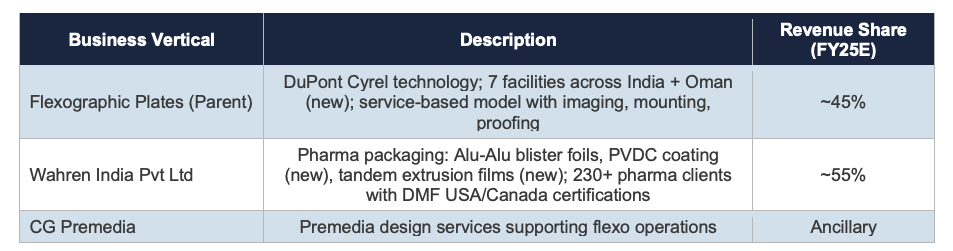
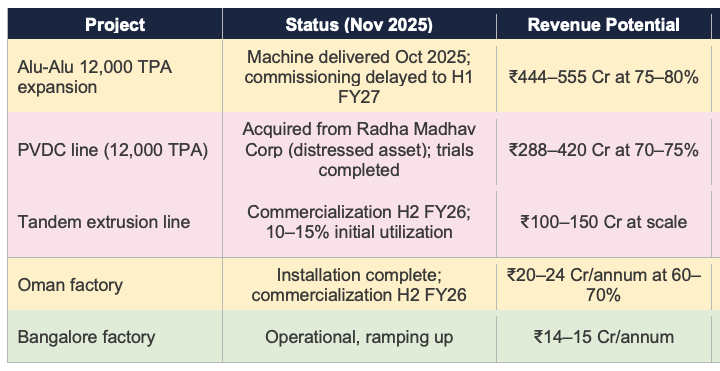
  1. Creative Graphics : Looks attractive after the correction that happened due to aluminum prices spiking which could impact margins. ITs into Flexographic plates + pharma alu alu packing. Completed the capex already so i expect all -ves are already factored in.

Sharing 3 stocks for now, but at current prices more than 50% of the stocks look oversold and could give decent returns if results turn out good. But If the War escalates and some large damages happen to middle east infra, markets could correct more, i usually dont hold cash that much, right now I am fully invested and absorbing the short term pain.

14 Likes

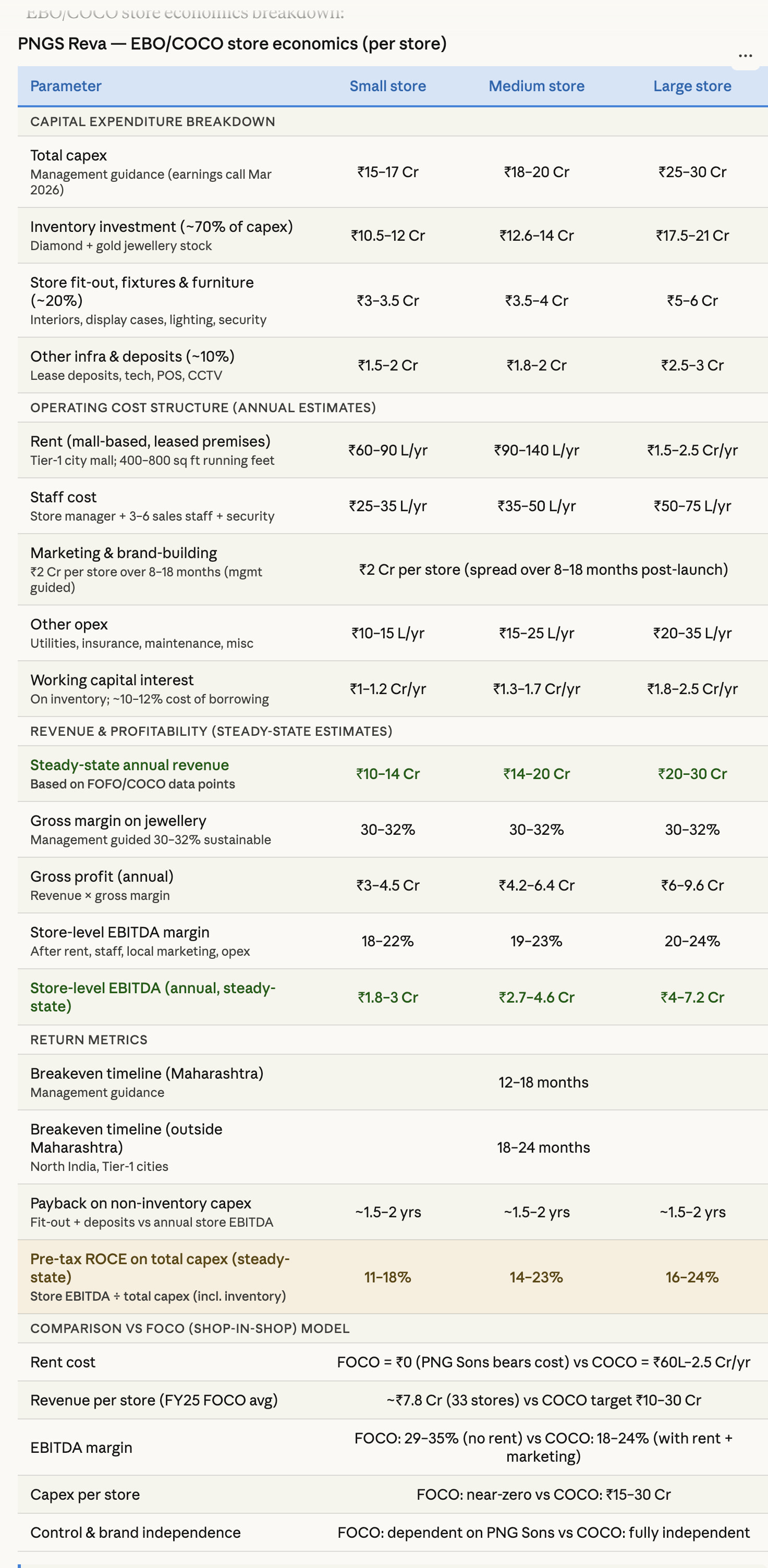
Some data on Store economics for REVA. Since this is derived using concall/drhp/AI, need to be cautious , but looks largely accurate.

3 Likes