@cdas3317 - Some of the books I found on twitter as it keeps showing me lot of what other people are reading since I keep sharing about books. Most were discovered that way. These days I also ask claude to suggest and at this point it knows how I go about things, so it makes good suggestions. I think you should try the claude option as its far easier and high quality. Twitter is good for serendipitous discoveries.
@Rahul_Chechare - What you are asking is a general question on concentration. The gist of it is that holding 3 stocks or 10 stocks can both be concentrated. The rough guideline most people will agree on is 5-6 stocks adding up to 75% of pf. Pre 2023, I have generally held around 10 stocks with top 5 adding up to 60-70%. Post 2024 and onward, my concentration levels have been more tighter - the reason is simple. Concentration is a function of market environment. When I feel that broader market is getting weaker, being concentrated on names that give you valuation/growth comfort protects the downside. So during this period I held 75% in 5 stocks in '24 and even early '25 but something got into me towards end of year where I got increasingly bearish and yet was 100% invested. So towards Sept-Dec '25, believe it or not, I had only Sai life, Hindustan Zinc and Silver/Gold. This was perhaps the most concentrated I have ever been. I changed things around February but still I was bearish on broader market if not for the AI/DC themes - so towards end of Feb, I held only 3 stocks - Sai, Mtar and Aeroflex with TD added in March or so. Sai around this time was as high as 57% for me because I ended up buying the Feb dip post earnings on top of an already huge position. So a concentrated individual position for me can be 15-50% but on cost basis most likely not more than 15-20%.
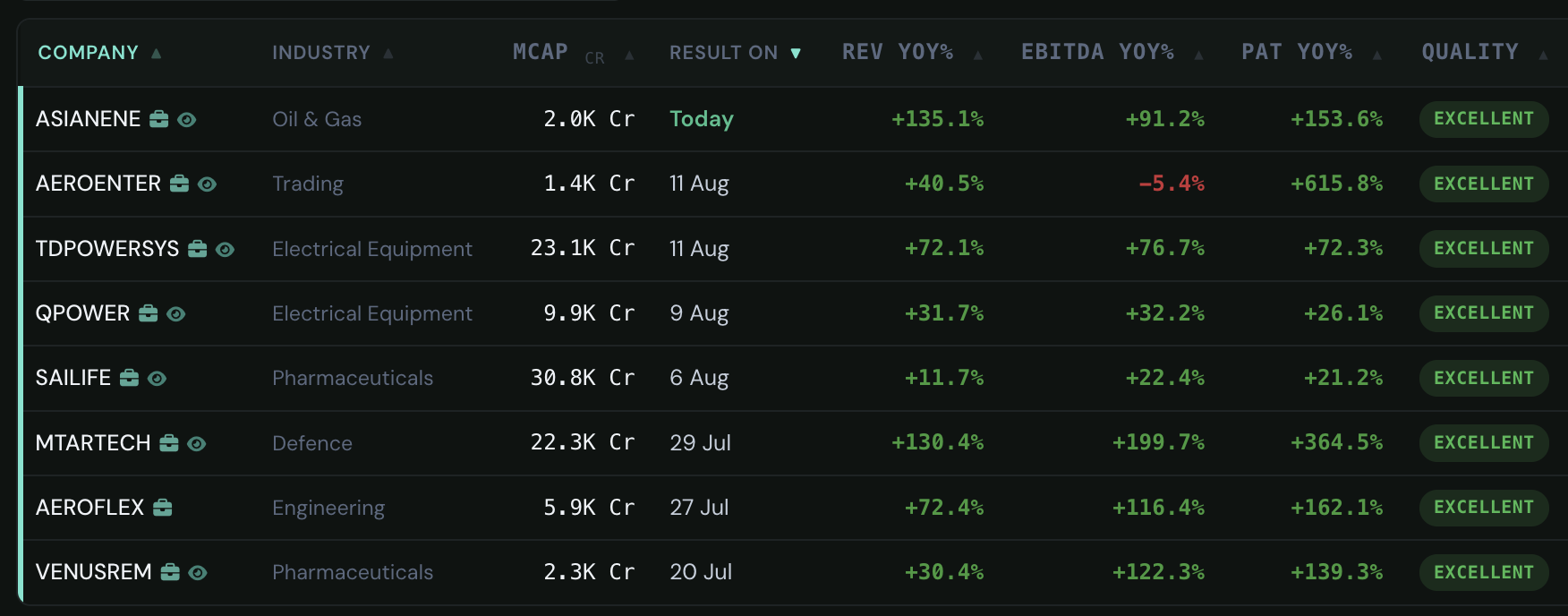
Post June, I am getting the sense that market is turning broader. This is what is driving my taking lot of small positions (typically ~5%) in Yash, Aimtron, Asian Energy, Qpower, Vivid, Aeroflex Enterprises etc. All of these today add up to 40-45% or so (I would love to have had higher position in Vivid, Yash, Aimtron but being SMEs, they are very illiquid, so I was unable to scale up at the prices I wanted). I have reduced Sai and Mtar down a lot since June and recently TD too to make these bets which I found interesting. All these have extremely strong growth backing them and some even at very cheap valuations - Asian Energy Services and Aeroflex Enterprises esp. Aero Enter for eg. I had initially missed the 220 Cr sale from Ingersoll Rand so this company net of cash has a big holdco discount which I hope can bridge. AESL has 50-100% PAT growth possibility in FY27 despite being so cheap. Overtime I have noticed my positions tend to consolidate as things change.
The way I see it is like playing poker or in general any board game. You must watch the board and make your moves. To this extend, I literally do treat it as a long board game with my portfolio/watlist being always in view taking 50% of a 27" screen (tiled windows split left/right) and the watchlist taking almost 75% of the 50% along with other useful information which to me is designed like a board game. You are always aware of what the goal is, how the board is positioned, what moves are available and can actively consider what is your best possible move, even if you dont make a move for weeks or months. The idea is to be insensitive to volatility (more inconsequential variations you observe, more immune you become to it) and to not be an ostrich in the sand when better moves present themselves. For a retail investor with little time who still wants to invest direct and has capability to do so, ~10-15 stocks is the most you can closely track (tracking is not looking at price and social media chatter) with an hour a day and several hours on weekends and so you should stick to being around this number or give your money to a capable fund manager (These days there are several good ones doing a great job).
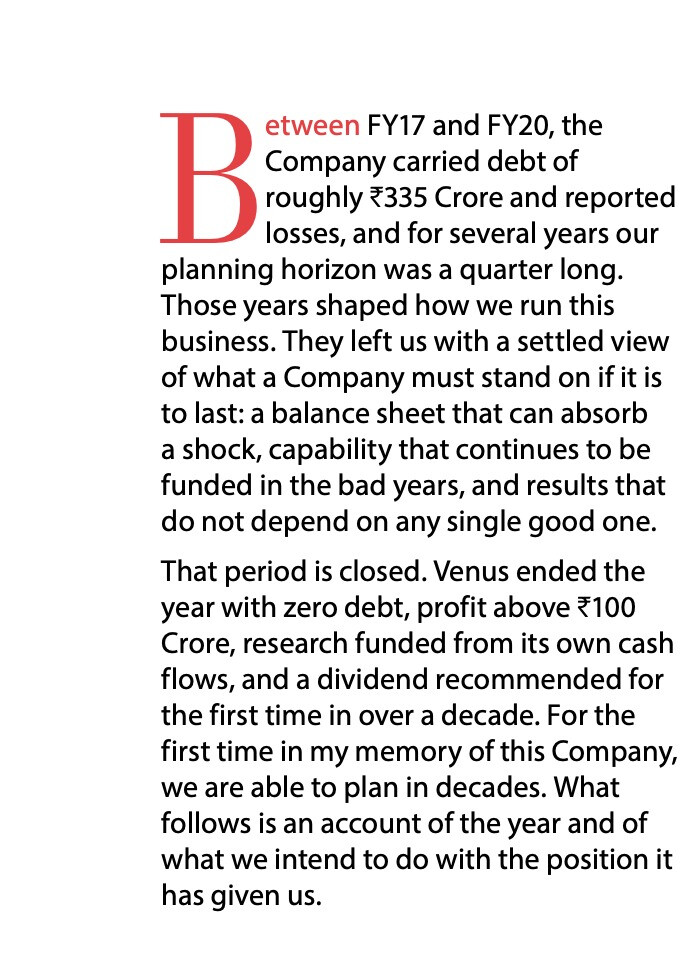
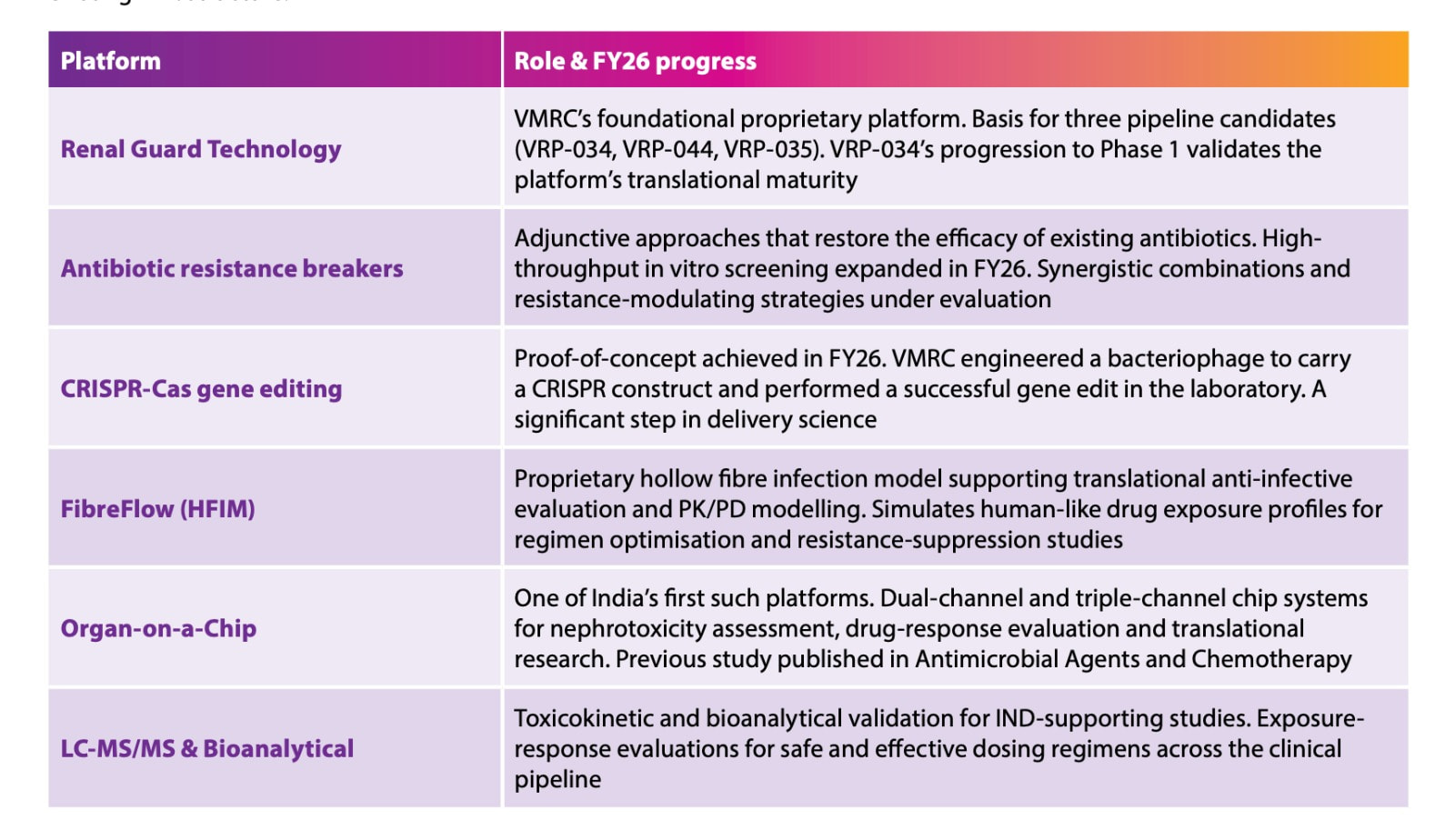
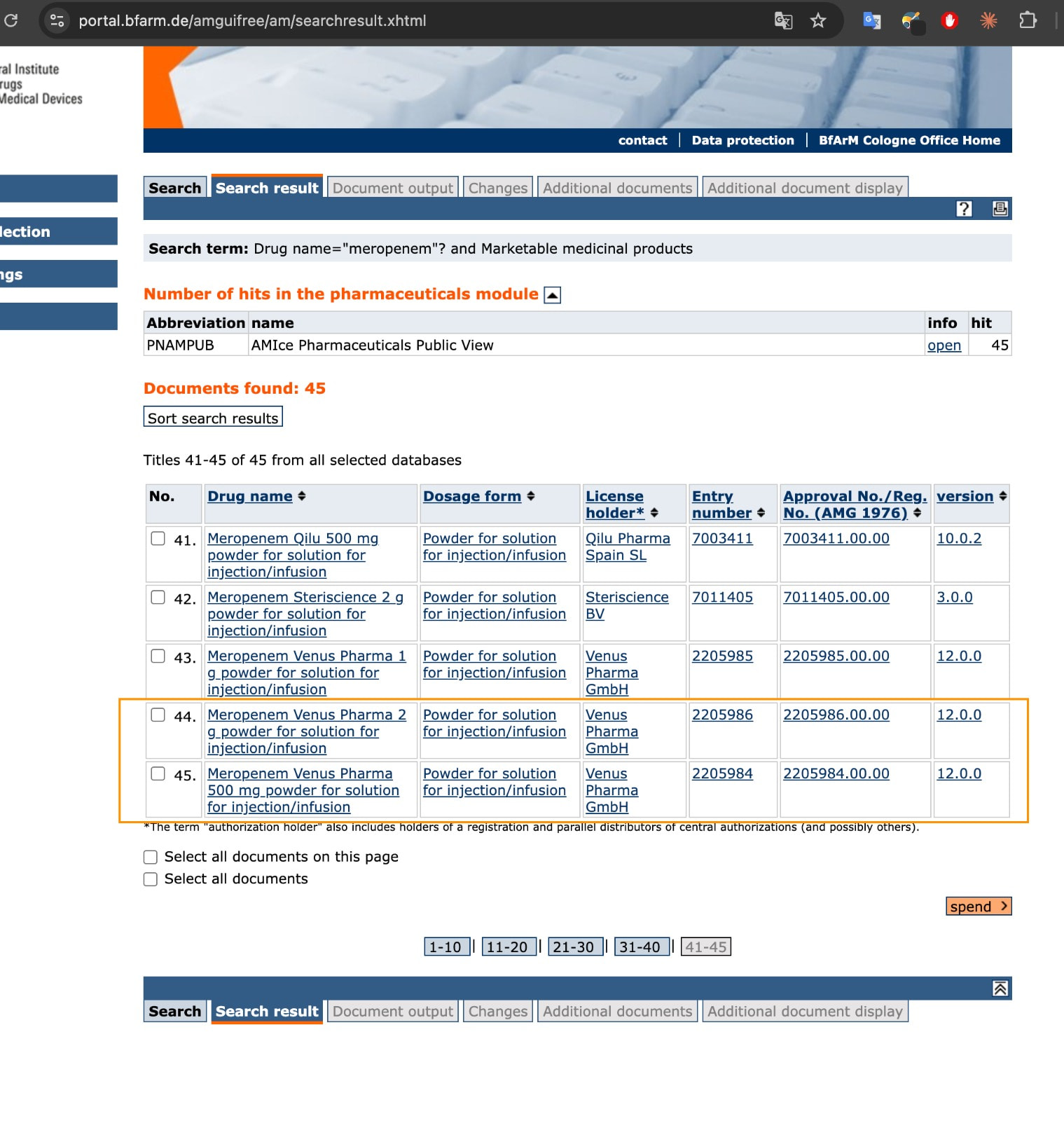
Spend last weekend researching Venus Remedies. I think its a good business worth looking at and despite the runup in the last year, is still cheap compared to peers. Venus is into complex injectable formulations (hard to get qualified in regulated markets) - for critical care and oncology and other speciality therapies. Bulk of the revenues come from Carbapenems (you might remember it if you followed by Wockhardt thesis) and of late Oncology portfolio. India is only 23% of revenues while Europe makes 17% of revenues. Rest comes from LatAm (19%), Middle-East (14%) and Africa (13%) and Asia (12%). They are present in regulated and semi-regulated markets and have 1100+ granted market authorizations. What caught my attention was this in the Annual report as I was reading it.
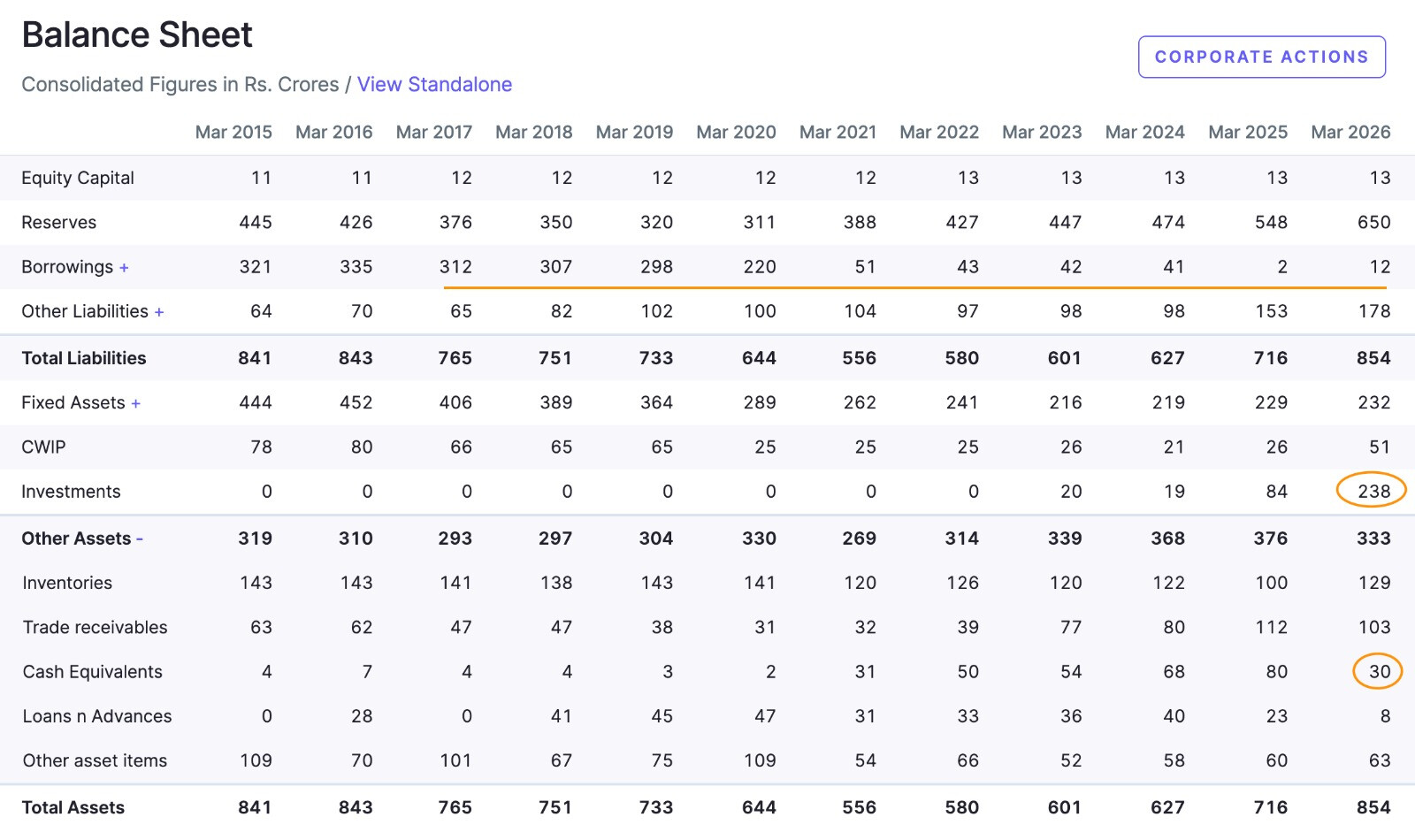
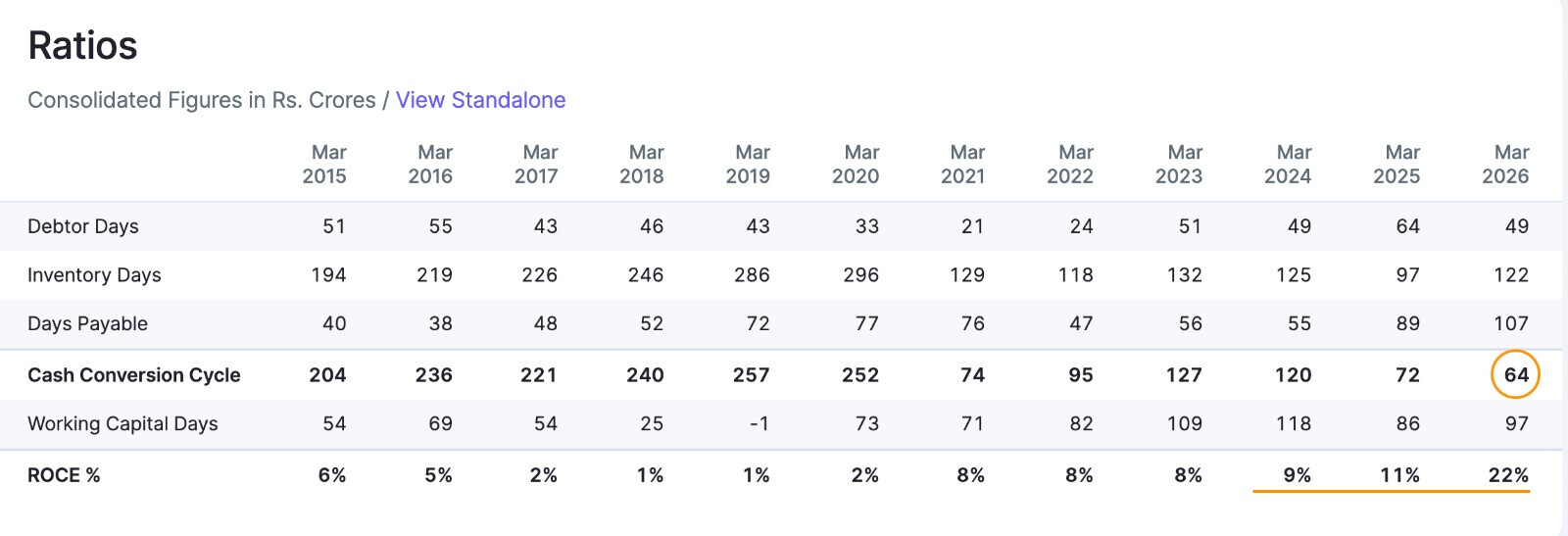
The company has had a very messed up past (similar to Wockhardt) mired in debt which it defaulted on back in 2015 or so. Things have changed a lot in the last few years though. They sold Elores to Cipla in 2020 and used the cash to reduce the debt and have run operations more tightly to turnaround the business. It shows in the financials
From being debt ridden to now having ~250 Cr net cash and zero debt.
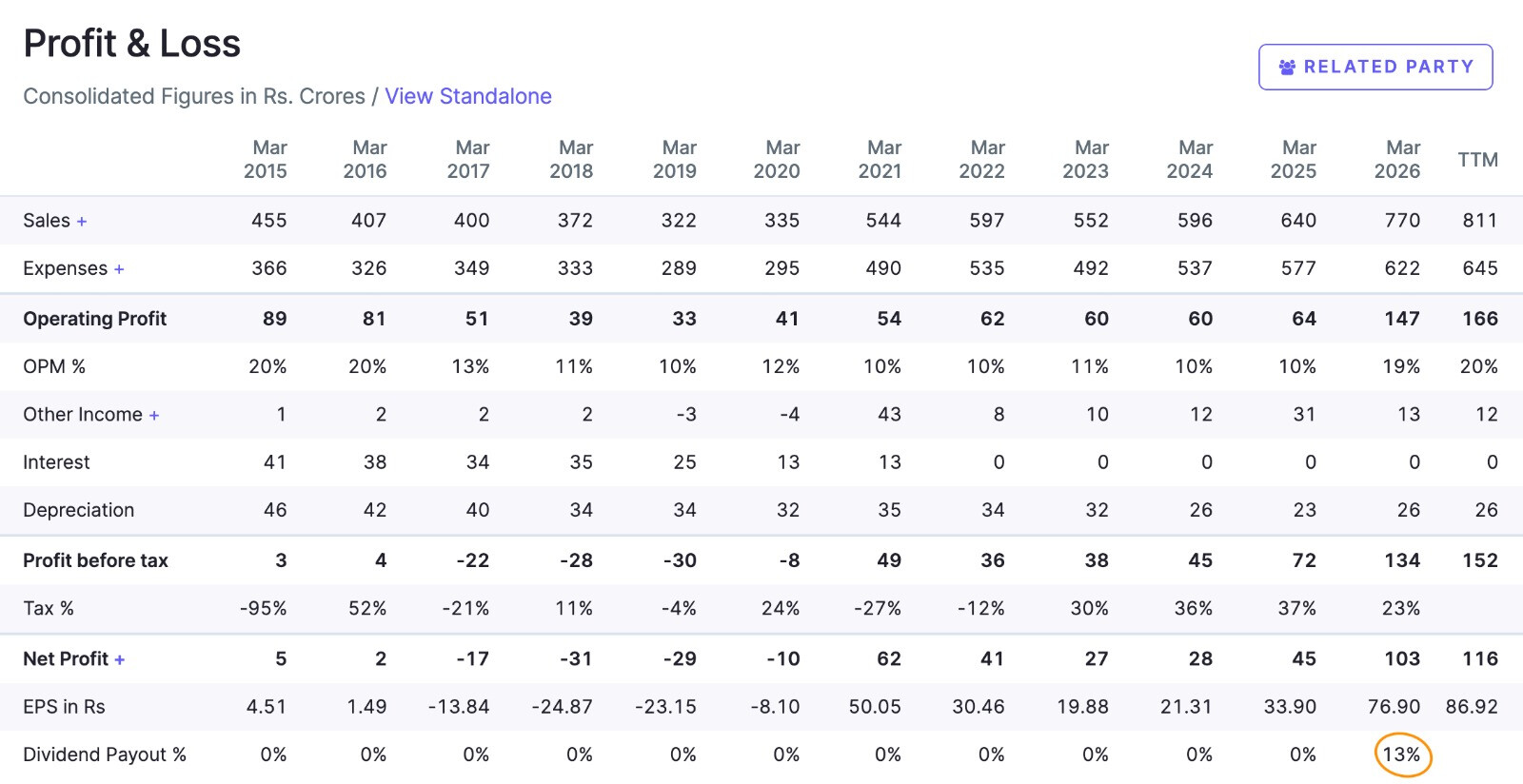
The growth in the last 4 years with increasing Oncology mix has been stellar with PAT moving 28 Cr → 45 Cr → 103 Cr. Q1, FY27 shows growth is set to continue with new market authorizations, new molecules they have got approval for and expanding reach. For first time in over a decade, they even had a dividend payout.
When I first heard of the story, the initial thing that came to mind was that Orchid was struggling in this same sector (anti-infectives), then how is Venus doing so well. The difference is Orchid is a Ceph API company while Venus is Carbapenem (While both are beta-lactams, they have diff KSMs and Venus sells its own branded formulations while Orchid is primarily an API player). Orchid today has 811 Cr revenue on which it makes 41 Cr EBITDA while Venus today makes same exact 811 Cr revenues coincidentally but makes 166 Cr EBITDA which is 4x profitable but still trades at 2000 Cr vs 10000 Cr for Orchid Pharma.
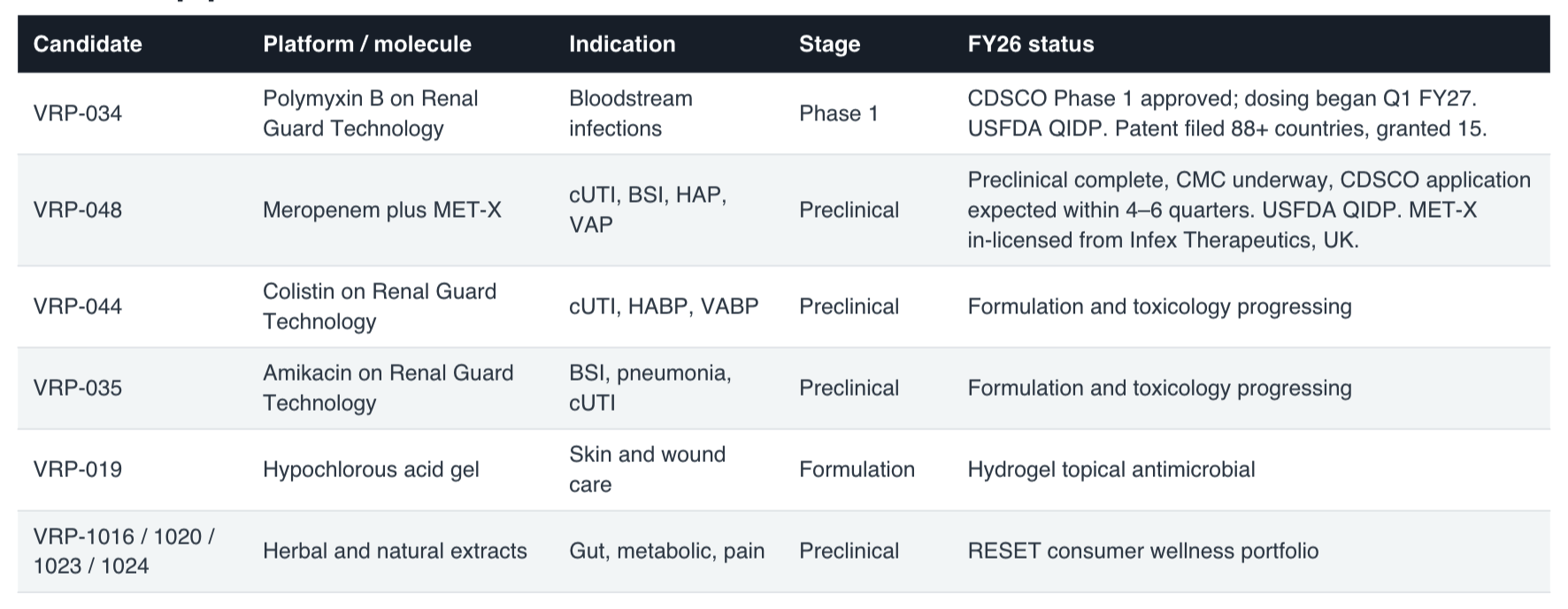
Venus is the classic Wocky sort of bet in more ways than one. They also have a NCE portfolio with VRP-034 in phase-1
This drug VRP-034 is sort of a wonder drug though it isn’t novel because while working on Wocky WCK-5222 I noticed that it can be used when Polymixin-B fails and it fails primarily because more of it can’t be given due to its renal toxicity. What Venus drug does is modifies the delivery technology (RGT or renal guard technology) so its far less toxic on the liver. It has FDA QIDP status as well and could be fast-tracked to approval like WCK-5222 was. They also have another drug with QIDP status called VRP-048 but its still in preclinical stage and not worth discussing more about. Just worth knowing that Venus has a relatively good R&D team as well.
As per the AR, they are recently doing some work on CRISPR and other cutting edge stuff as well. It shows the company has the chops, even if nothing is in the near-term revenues (at least 2-3 yrs out).
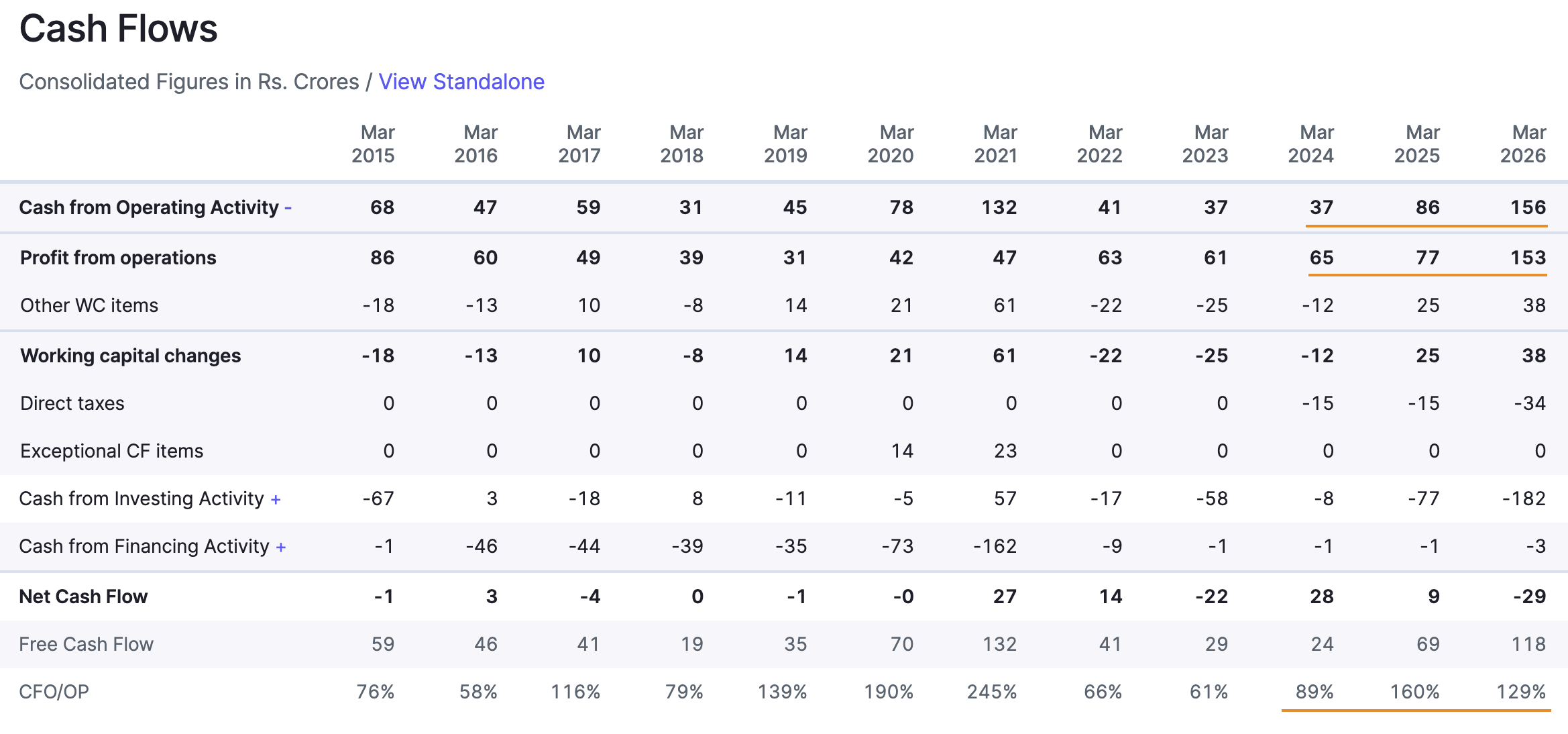
Another things worth highlighting is the stellar cash flows. They are converting over 100% of their profits into cash flows which is how they are now 250 Cr net cash.
Its over 100% because a lot of WC has been freed up too and you can see how cash conversion is now just 2 months from being 8 months pre 2020.
I haven’t done justice to it though this has already gone on long. I suggest reading the recent annual report which came couple of weeks back.
It is not the kind of business I generally get excited with - I am only excited because of the valuation differential vs peers like Orchid (similar on antibiotics portfolio), Sakar (similar on Oncology portfolio in EU GMP regulated markets), Beta drugs (Oncology tender business in India) or Sai parenteral etc. all of which are trading at 3-4x premium or more (in case of Orchid). Market still sees this business the way it was pre-2020 but a lot of changed since and when perception shifts, the multiple can re-rate. Growth can continue if they invest the cash in acquiring channels so they get to keep more of the margins (like how Caplin does)
Risks:
- Not sure of growth sustainability - Is perhaps all low-hanging fruit plucked? Q1 shows growth continuing. Also we aren’t paying exhorbitant multiple for growth here so it covers for downside.
- Company doesn’t do concalls and doesn’t even send ppts. Doing just this can give investors confidence to invest. Waiting a full year to find out what went wrong is absurd and no one is going to do that
- Some of FY26 profitability is from PLI (~15 Cr) and forex. Even adjusting for this, assuming other companies don’t have these, it is still at least 2-3x cheaper than peers
- It has had a sharp runup in the last year and is currently in ASM-4th stage. Technically also looks bearish. Worth keeping that in mind.
Disc: I have small position in Venus Remedies bought this week around current levels