Multi-Disciplinary Reading - Book Reviews

Good questions, @vb_1lavya! I will try to answer them below:

These holdings are recorded as assets of the Trust Funds and liabilities of the Treasury, but when you consolidate the federal government as a single entity, these internal IOUs cancel out. From the perspective of the whole federal government, intragovernmental debt is just a transfer from one pocket to another; it does not change the government’s overall net financial position.

Intragovernmental debt is real as an accounting and legal liability within the federal budget, but it is “not real” in the sense that it is not a net claim on the government by outsiders and does not itself create market‑financing risk.

The author argues that the debt problem could, in theory, be resolved without raising taxes or cutting safety net programs—but only through decades of consistently balanced budgets. However, history shows that this is highly unrealistic. Every major economic shock, whether in 2000, 2008, or 2020, has required massive government spending to stabilize the situation. With the national debt already exceeding 120% of GDP, expecting uninterrupted fiscal balance for decades, without any major disruptions, is wishful thinking at best.

The current problem of national debt needs comprehensive look at the entire outlays, instead of only discretionary defense expenses. There are tons of inefficiencies in each and every area where government spends. DOGE initiatives earlier this year found many such inefficiencies in the system.

At the end of World War II in 1945, the U.S. had a debt-to-GDP ratio of roughly 120%. By 1981, that figure had fallen to around 30%. Those were the nation’s golden decades, marked by nominal GDP growth exceeding 10%, which played a pivotal role in reducing the debt burden to manageable levels. Today, with debt once again hovering around 120% of GDP, it’s unrealistic to expect meaningful debt reduction solely through cuts in discretionary defense spending, especially when GDP growth is projected at only 3–4% in the best-case scenario. Hence, more comprehensive approach to the problem is needed by drastically cutting the inefficiencies in all the spends in all departments.

5 Likes


Origin of Life, What Everyone Needs to Know by David Deamer

The greatest lollapalooza effect has got to be hydrogen atoms from the big bang fusing together to form pretty much every other atom we know, and by trial and error over billions of years, resulting in self-assembling self-replicating autocatalytic chemical factories which then went on to form coalitions that evolved circuits capable of appreciating lollapalooza effects.

How life began is one of science’s great unanswered questions. In this book, David Deamer, a renowned scientist and Professor of Biomolecular Engineering at the University of California, provides a succinct introduction to begin your journey of exploring this absolutely fascinating frontier.

The book explores ideas in three sections:
How to make a habitable planet
From not alive to almost alive
What we don’t know yet

He follows the format of stating an idea, giving a possible explanation, and explaining how we know what we know.
Here is what we know about life:

  • It has some fundamental properties - capture of energy from the environment, and use of said captured energy to perform catalysed reactions that sustain its structure as well as make copies of itself.

  • This is possible because of 3 classes of carbon polymers- protein, DNA/RNA and carbohydrates.

  • Proteins are polymers of monomers called amino acids (there are 20 amino acids in human protein).
    These perform catalytic, structural and pretty much most of the other functions in a cell.

  • DNA/RNA are polymers of 4 types of nucleotides, which are molecules that contain a pentose sugar, a nitrogen base, and a phosphate group. DNA codifies the information required to make proteins, and thus helps cells make copies of themselves efficiently.

  • Carbohydrates are polymers of monosaccharides, which are essentially aromatic carbon chains with multiple OH groups. These are used as sources of energy for the cells to breakdown and use.

  • Finally, lipids, which are long chain esters of long chain carboxylic acids with glycerol, have the property of self assembling into water tight vesicles in water due to their amphiphilic nature. These form the membrane that contain everything else.

All of this sounds terribly complex. That’s because it is. We’ve been able to work out all of this. But how did it all begin?
Here is a rough outline:

  • Hydrogen atoms were made just after big bang.
  • Other atoms such as carbon, oxygen and nitrogen were made later by nuclear fusion reactions in stars.
  • These particles, including some basic molecules such as water, carbon dioxide, ammonia, and methane, were released as interstellar dust after the completion of the lifecycle of early stars.
  • Molecular clouds gathered to form planetismals which formed planets.
  • Early earth collided with another planet to form present earth and the moon.
  • The collision caused everything to melt, this in turn caused heavier particles such as iron and nickel to sink to the centre of the globe to form a molten core.
  • The deeper part cooled and hardened, the outer core is still molten due to heat from decaying radioactive material. The movement of this molten part gives the earth its magnetic field, which wards off the more harmful radiation from the sun, and hence plays a pivotal role in making the earth habitable.
  • The other thing that makes the earth habitable is the presence of liquid water. It’s the right temperature for water to exist as a fluid. Water is the perfect solvent for diffusion to occur to make metabolism possible.
  • Simple organic molecules such as hydrogen cyanide, ammonia and methane were delivered to earth by meteorites.
  • Even amino acids and lipids have been found on meteorites.
  • In any case, the monomers mentioned earlier can be synthesized from simple organic molecules by naturally occurring reactions in conditions present in prebiotic earth.
  • They basically require a form of energy, which in this case is sunlight.
  • These monomers then need to be polymerised to make the building blocks of life.
  • Polymerisation reactions probably occur due to wet-dry-wet cycles that happen in fresh water pools created by precipitation over volcanic islands (the author’s theory, not everyone agrees, the alternative view is this happened in the sea itself).
  • When mixed with lipid molecules, these polymers get internalised into vesicles formed by them in the wet part of the cycle. These assemblies are called protocells.
  • Most of these assemblies don’t last. But a few rare ones have certain properties that are relevant to life’s processes, such as stabilisation of the the membrane, selective permeability, catalytic activity etc .
  • Protocells with such properties survived and dominated early colonies.
  • Slowly, feedback loops form. And an information cycle emerges, where DNA codes for protein, and the manufactured protein then helps the DNA make copies of itself.
  • A primitive metabolism, where energy was captured, stored in chemical bonds, and used by coupled reactions to maintain cell structure and function, was formed.
  • Hence at some point, these assemblies acquired all the properties required to be called ‘alive’.

There is a lot we don’t know about the above outline though. The more we find out, the more questions emerge. That includes:

  • What came first? Protein or RNA?
  • How did enzymes come into being?
  • How was metabolism formed?
  • At which point did vesicles enter the picture? Did they encircle formed metabolic pathways or did they make them possible in the first place?
  • How did protein synthesis get coupled with DNA
  • How did feedback loops emerge?
  • Where exactly did life begin? Was it even on earth?
  • Where did the virus come from?

This book barely scratches the surface of this fascinating subject. It is a quick summary and an introduction of sorts, meant to inspire not just interest in the domain but also research ideas in youngsters reading. Professor Deamer does a stellar job of distilling the essence of what has been done and what needs to be done to chip away at one of the universe’s great unsolved mysteries.

15 Likes

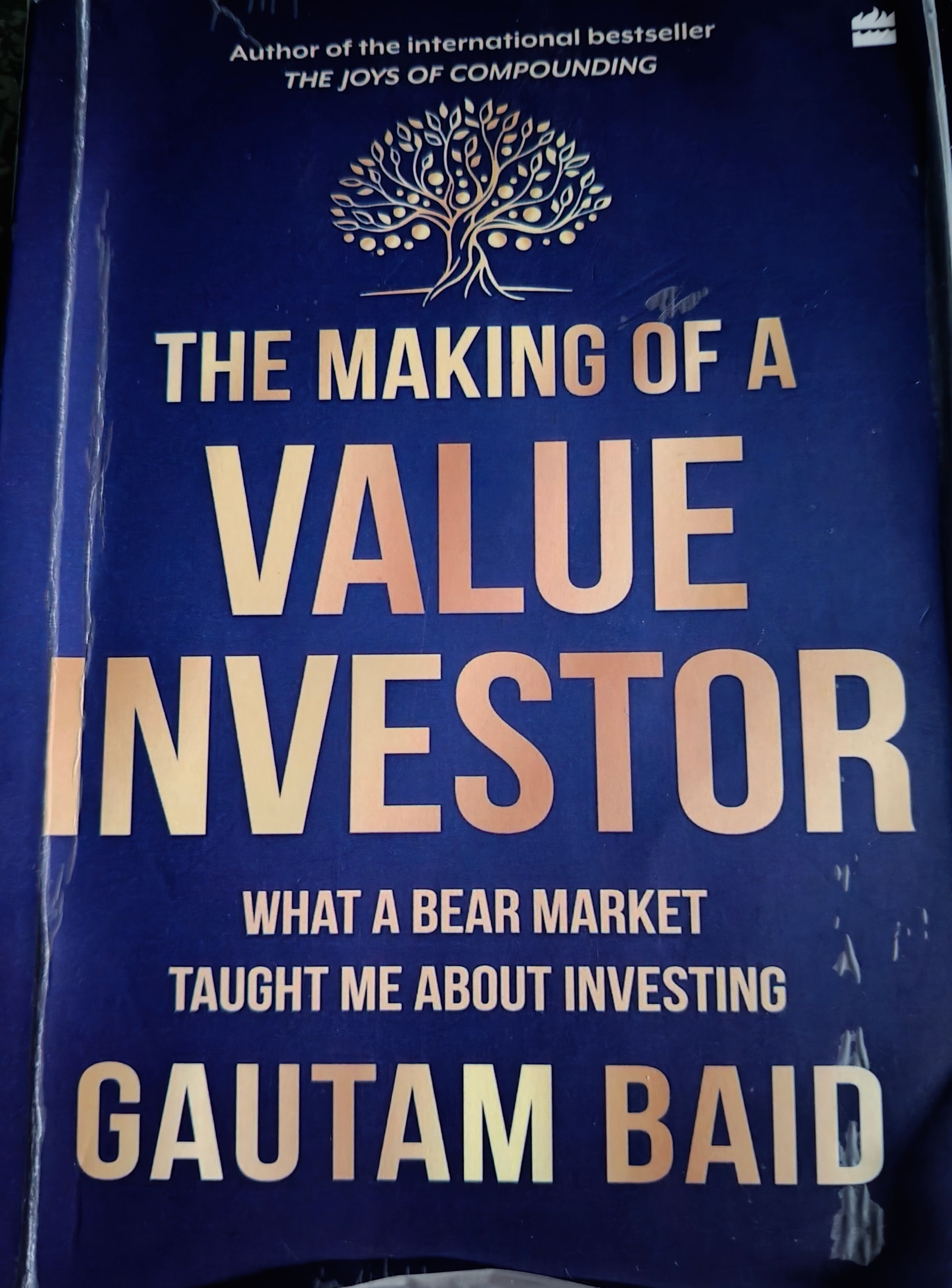
Very good book to read especially for Banks and Nbfc and value investing.

  1. One of the best lines which I read from this book is “Good investment at big discount always come with some sort of discomfort or doubt, else there would be no discount.

  2. In lending business, market always give good valuation to business which has seen multiple downcycle with good control over asset quality.

8 Likes

one amongst my favorite. A gem. Reading this knowledge bundle one time is not enough. Reread few more times. Been years. Need to revisit.

1 Like

The hour of the predator by Giuliano Da Empoli (2025)

There was a time when I would finish a book once I started it, but as I am growing older, I want the book to meet me where I am. To paraphrase Schopenhauer: “Be careful what you read, for life is short”.

After many half-read books, I read this one cover to cover.

The author (Giuliano) is a career diplomat – among other things, he served as a senior advisor to former Italian PM. In this book, drawing on his background, he argues that the era of traditional diplomacy and democratic norms is being ravaged by a new class of “predators.”

These predators are political strongmen (like Trump, MBS or Putin) and Tech billionaires (like Sam Altman or Elon Musk) who view traditional institutions (the UN, regulatory bodies) as obsolete hurdles. They operate on a logic of disruption and brute force rather than consensus.

I picked up the book couple of days before the current middle east crisis, and read this passage couple of days into it:

(note: Machiavelli’s Prince was based on a real-life character Cesar Borgia)

"Machiavelli didn’t care about the norms of legitimate power because they no longer corresponded to the reality that he saw around him. What interested him was trying to understand how power can be asserted amid chaos, when everyone is fighting everyone else and force becomes, once again, the only rule of the game. Inheriting a principality is easy. What is much more difficult is illegitimately conquering one and, most importantly, keeping it.

Machiavelli’s Prince is a usurper’s guide to conquering and ruling. There are many lessons to be drawn from its pages for Borgias of all eras, but one of them stands out above all the others: the first law of strategy is action. In a situation of uncertainty, when the legitimacy of power is precarious and can be called into question at any moment, he who fails to act can be sure that change will happen anyway—to his disadvantage.

If Tolstoy shows us that the condition of the powerful man is always to be thwarted, since the fulfilment of his will depends on the will of so many other people that it becomes practically impossible, meaning that the lowest infantryman in Napoleon’s army has more freedom than the emperor himself, then the resolute action of a prince constitutes the solution to this problem.

This is what today’s Kremlin insiders call ‘manual override’. When the system, with all its procedures and hierarchies, no longer produces the desired result, there remains the possibility of direct intervention: breaking the official rules to re-establish substantive justice. What comes from this is a form of miracle, in the literal meaning of the word, since a miracle is the direct intervention of God upon Earth.

But for the miracle of power to happen, it takes more than a resolute action. The action must also be reckless, because what is the point of an action that simply responds to necessity? That would be little more than the act of a technocrat, one of those cruel, grey functionaries who act in the name of constraints from on high, which they claim only they can control. The essence of power resides in the very opposite of this. Goethe tells the story of an old Saxon duke, intuitive and wilful, who was urged to think carefully before making an important decision. ‘I don’t want to think carefully,’ he replied. ‘Otherwise, what would be the point of being Duke of Saxony?’

The apogee of power coincides not so much with action as with reckless action, which is the only kind that will shock people. And shock is the foundation of the prince’s power"

13 Likes

In a market like this — choppy, uncertain and occasionally testing conviction — it’s easy to get caught up in noise, short-term price moves and the urge to “do something.”

That’s exactly why reading 100 Baggers by Christopher Mayer at this time felt so grounding. It doesn’t just teach you how to find great stocks — it teaches you how to sit tight when it matters most.

A few ideas that really stayed with me:

• Longevity beats intensity — The biggest winners weren’t just great businesses, but businesses that stayed great for a long time. Compounding needs time and time needs patience.

• Return on capital is everything — High ROCE businesses that can reinvest at similar rates are rare… and incredibly powerful. That’s where the magic lies.

• Growth + Quality + Discipline — High sales growth, strong margins and no unnecessary leverage kept showing up as common threads.

• Owner-operators matter — Skin in the game changes behavior. Capital allocation becomes sharper and long-term thinking becomes natural.

• MOATs are real (but varied) — Whether it’s brand (like Tiffany), cost advantages (like Walmart), or network effects (like Microsoft), durable advantages separate compounding machines from the rest.

• Valuation matters… but not in isolation — Great businesses often look “expensive.” The key is understanding what you’re paying for and how long it can keep compounding.

• Not all recover after a crash — A powerful reminder that avoiding the wrong businesses is just as important as picking the right ones.

What I appreciated most was how simple yet profound the framework is:
:right_arrow: Find high-quality businesses
:right_arrow: Let them compound
:right_arrow: Don’t interrupt the process unnecessarily

Sounds easy. In practice, it’s anything but.

In times like these, when markets test patience more than intellect, this book reinforces a simple truth:
The biggest edge in investing is not intelligence — it’s temperament.

Curious to hear from fellow investors —
What’s helping you stay disciplined in this kind of market!

8 Likes

It needs frequent rereading..especially why deep work is meaningful chapter..psychologically .neurologically. philosophically — all cal newport books are good..deep work is best

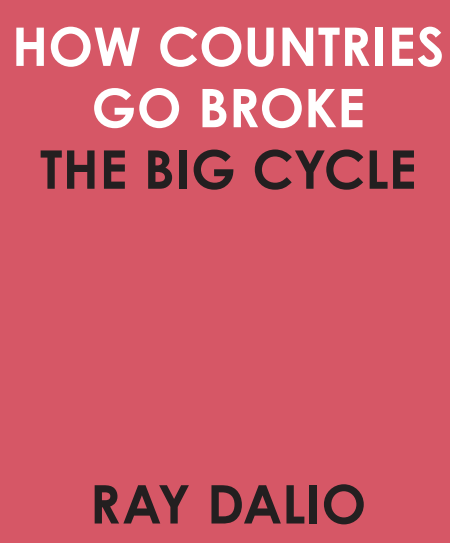
I’ve been trying to better understand the implications of the current U.S. debt situation. As a bottoms-up stock picker, I’ve historically paid little attention to macro factors, which left me wondering: if the U.S. debt situation were to spiral out of control, how severe could the fallout be globally? And how long would it take for markets to recover—could it resemble the 25+ year stagnation seen after the 1930s Great Depression?

After reading Ray Dalio’s work, I feel I have a more structured framework for how such a scenario might unfold. Two key takeaways stood out:

  1. The likelihood of the U.S. returning to a gold-backed monetary system is extremely low. Even if they do, they might do only a few percentage of floating currency.

  2. In the event of a debt crisis, the Federal Reserve and policymakers would likely attempt to engineer a “beautiful deleveraging” through a combination of:

    • Debt restructuring or write-downs, which are deflationary and economically painful

    • Monetary expansion (printing money to purchase debt), which is inflationary and supportive of growth

This mix of deflationary and inflationary forces could help balance the system and potentially avoid a prolonged, multi-decade downturn like the one experienced after the 1930s crash.

Notes from the book are below.

  • Long-term debt cycles end because the debt burdens are too great to be sustained. Said differently, because it is more enjoyable to borrow and spend, if one isn’t careful, debt and debt service can grow like a cancer, eating up one’s buying power and squeezing out other consumption. This is what makes the long-term Big Debt Cycle.

  • The main difference between a short-term debt cycle and a longterm debt cycle has to do with the central bank’s ability to turn them around. For the short-term debt cycle, its contraction phase can be reversed with a heavy dose of money and credit that brings the economy up from a depressed disinflationary state because the economy has the capacity to produce another phase of non-inflationary growth. But the long-term debt cycle’s contraction phase cannot be reversed by producing more money and credit because existing levels of debt growth and debt assets are unsustainable and holders of debt assets want to get out of them because they believe that, one way or another, they will be poor storeholds of wealth.

  • Classically, these runs accelerate and feed on themselves as holders of debt assets see that, one way or another (through default or through the devaluation of their money), they will lose the buying power that they had believed was stored in these debt assets, causing great shifts in market values and wealth until debts are defaulted on, restructured, and/or monetized. Because this tightening proves too harmful for the economy, the central bank eventually simultaneously eases credit and allows a devaluation of the currency. The devaluation of money can itself be the reason to sell the debt asset because it becomes a poor storehold of wealth. So, whether there is a tightening of money that leads to debt defaults and a bad economy or an easing of money that produces a devaluation of money and debt assets, it is not good for the debt asset. This dynamic creates what is called a debt “death spiral” because it is a self-reinforcing, debt-contraction dynamic in which the rising interest rates cause problems that creditors see, leading them to sell the debt assets, which leads to even higher interest rates or the need to print more money, which devalues the money and leads to even more selling of the debt assets and the currency and so on until the spiral runs its course.

  • When this happens to government debt, the realization that too much debt is the problem naturally leads to the inclination to cut spending and borrowing. However, because one person’s spending is another person’s income, cutting spending at such times typically only contributes to increases in debt-to-income ratios. That is typically when policies are shifted to a mix of debt restructurings and debt monetizations, with the mix chosen primarily dependent on how much of the debt is denominated in the country’s currency. This defaulting on, restructuring of, and/or monetizing of debt reduces the debt burdens relative to incomes until a new equilibrium is reached. The movement to a stable equilibrium typically takes place via a few painful adjustment spasms because borderline financial soundness is achieved before secure financial soundness.

  • The Big Debt Cycle sequence to keep in mind is: first the private sector overborrows, has losses, and has problems paying it back (i.e., a debt crisis); then, to help out, the government overborrows, has losses, and has problems paying it back; then, to help out, the central bank buys the government debt and takes losses. To fund those purchases and to fund other debtors in trouble (because it is the “lender of last resort”), the central bank prints a lot of money and buys a lot of debt. Then, at its worst, the central bank loses a lot of money on the debt it bought.

  • The best way for policy makers to reduce debt burdens without causing a big economic crisis is to engineer what I call a beautiful deleveraging, which is when policy makers both 1) restructure the debts so debt service payments are spread out over more time or disposed of (which is deflationary and depressing) and 2) have central banks print money and buy debt (which is inflationary and stimulating). Doing these two things in balanced amounts spreads out and reduces debt burdens and produces nominal economic growth (inflation plus real growth) that is greater than nominal interest rates, so debt burdens fall relative to incomes.

  • When central banks have big losses on their debt, that signifies a step toward a more advanced stage near the end of the Big Debt Cycle so I view it as a flag.

  • Like a life cycle, the Big Cycle goes through stages. This late-cycle stage, which I call Stage 5, comes just before the depression and war stage that brings about the end of the Big Cycle. For reasons I will explain later, I believe that we are now in this late-cycle stage. It is a time of radical, typically unexpected changes that haven’t happened in one’s own lifetime but have happened many times throughout history

  • I call that economic-impact-necessitated change in monetary policy Monetary Policy 3 (MP3). MP3 is when there are coordinated moves between the central government and the central bank, where the government runs large deficits and the bank monetizes them. The dynamic inevitably arises when interest rate changes (MP1) and quantitative easing (MP2) are no longer effective at helping conditions for most people and when the free-market capitalist system doesn’t get the job done.

  • In fact, I judge the US government’s debt situation to be nearing the point of no return. By that, I mean that the debt and debt service levels are nearing those that cannot be reduced without great losses to debt investors because at such levels a self-reinforcing debt “death spiral” occurs due to the need to borrow to service debt and due to interest rates rising because the risks of holding the debt/currency become apparent. At the same time, I judge the shortterm risks to be low because inflation and growth are relatively moderate, credit spreads are low, real interest rates are high enough for lender-creditors without being too high for borrower-debtors, and the private sector’s income statements and balance sheets are in relatively good shape—good enough to tax if that is needed to help the central government’s finances. However, if the demand for new debt sales and debt rollovers falls off and/or there is the selling of debt assets, that would quickly raise the short-term risk gauge. By the way, this gauge can change very quickly—e.g., overnight.

  • In fact, the US economy would at this moment in time appear to be in an excellent equilibrium level judging by its levels of growth, inflation, real interest rates, and central bank debt monetizations, which can create the mistaken impression that all is now good.

  • The two things that we should expect not to happen but if we see them happen should be viewed as big red flags that are signaling that the real value of money and debt are at great risk are 1) another round of quantitative easing to increase liquidity and force real interest rates down and 2) the central government gaining control over the central bank.

  • I want to make this clear and easy to remember. If you keep in mind the number 3, that will help you remember that: ■ The budget deficit should be cut to 3% of GDP (from what it is currently projected to be by the CBO, about 6% of GDP), and ■ These cuts can come from 3 sources (spending cuts, tax increases, and interest rate cuts, with interest rate cuts being the most impactful). If the president and those in Congress agree that they need to do that, and they agree on a bipartisan backstop approach to doing that (I will suggest an option), they will achieve the goal of greatly reducing the odds of the US government going broke. That’s it in a nutshell. I will now explain.

  • When there are large government debts that are growing quickly so that large cuts to budget deficits are needed, the most important things to do are to 1) cut the deficit by enough to rectify the problem, 2) cut the deficit when economic conditions are good so the cuts are counter-cyclical, and 3) have monetary policy be stimulative enough to keep the economy strong in the face of such cuts.

  • So, it’s not hard for me to imagine how a pragmatic “grand bargain” between reasonable Republicans and Democrats could be reached. My only question is whether the people involved will operate together logically to do sensible things. That leads me to conclude that if our representatives in Washington don’t get a debt limit deal done, it will be because of their lack of reasonableness and their inability to compromise— not because a good and workable plan is beyond their reach. Because the failure to reach an agreement will produce a much bigger problem than reaching an agreement along the lines of my 3% solution, it seems to me that the electorate should hold their representatives in Congress accountable to get a debt limit deal done.

  • Because I know that it takes only one really bad bet or a series of moderately bad bets to knock me out of the game, I am extremely risk-averse, so I have built great risk controls. I control risks through diversification of my good risky bets rather than by avoiding risky bets. To me, the “Holy Grail of Investing” is to find and make 15 or more great uncorrelated bets.

  • Regarding where we are in the Big Debt Cycle, as shown earlier in this book, by my measures the US and most major countries (the other G7 countries and China) are overindebted, in the late stages of their Big Debt Cycles, and have to frequently rely on Monetary Policy 3 (i.e., big fiscal deficits that are funded by central banks buying the debt). As a result, if their long-term Big Debt Cycle issues are not controlled in some way, the probability of an unwanted major restructuring/monetization of debt assets and debt liabilities that are denominated in the major reserve currencies happening is very high—something like 65% over the next five years and something like 80% over the next 10 years.

  • Clearly, it is in these countries’ interests to not have such large debt burdens. As I have seen by studying history, when countries were in analogous positions, they reduced their debt burdens using various, seemingly extreme ways that were then, and would be now, considered unimaginable. These extreme actions have included freezing debt payments, seizing assets of adversary nations, imposing confiscatory taxes and capital/foreign exchange controls, defaulting on debts/extending maturities, and changing the type of money in circulation (by de-linking it from a hard asset like gold or creating a new type of money).

  • The big debt issue of there being too much debt relative to the demand for it will almost certainly lead to big fundamental changes in the monetary system, which will change what money is and how it works, which will happen either before the crisis in an attempt to prevent it or in response to the crisis. At a high level, while there are variations in how each of these debt crisis cases plays out, it almost always becomes relatively undesirable to hold the debt assets (e.g., bonds) compared with other storeholds of wealth that don’t lose buying power when the value of money goes down.

  • Hopefully this picture makes people worry and motivates them to do what is still in their power to do to improve things, which brings me to a final principle: If you’re not worried, you need to worry—and if you’re worried, you don’t need to worry. That’s because worrying about the things that can go wrong will protect you, while not worrying about them will leave you exposed.

10 Likes