
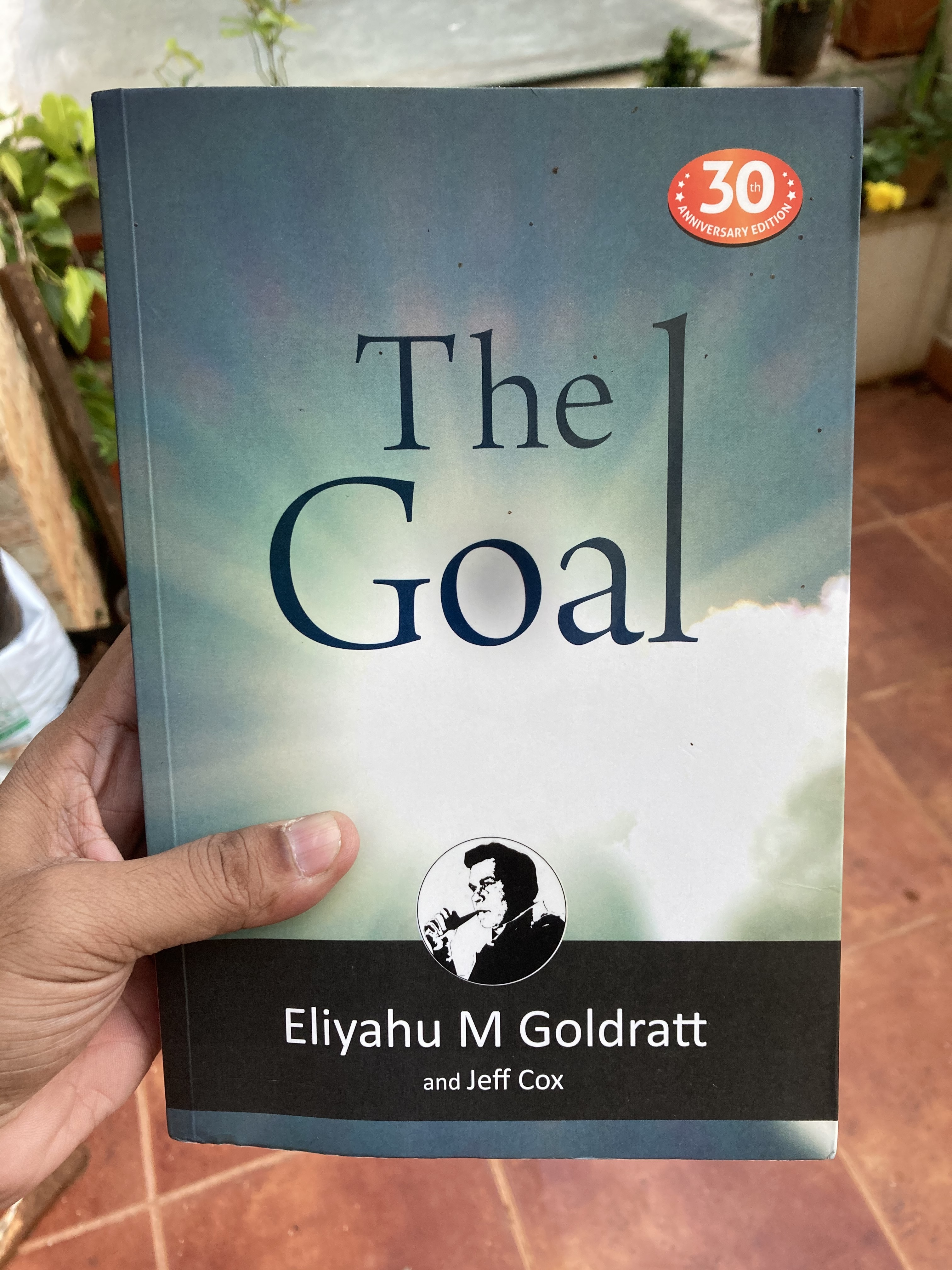
The Goal, Eliyahu M. Goldratt, 1984 - What a weird book. This is supposed to be a novel but its about running a manufacturing plant efficiently. This is aimed at managements of businesses that run manufacturing plants. However, anyone who loves reading balance sheets, especially at working capital trends is bound to love this book (so yeah, not for everyone). The primary concept behind the book is one of “lean manufacturing” which in turn is based on the theory of constraints. Toyota Production System (TPS) made this quite famous with their just-in-time manufacturing and they were so proud of it that they would invite competitors to visit their plants to learn from them.
The book is very harsh on Cost Accounting and rightfully so, since it promotes local efficiencies, rather than that of the entire business. The primary takeaway is that businesses must focus on bottlenecks, and focus on throughput (not as a measure of what a factory can produce, but in terms of aligning output to market demand). This would avoid piling up of inventory, in terms of producing something just to keep the machines running and people busy, all in the name of efficiency. This locks up a lot of firm’s resources in working capital. So the author views Inventory not as an asset but as a liability. This inversion in thought produces some very counter-intuitive moves like allowing large parts of the plant to be idle, selling below cost, reducing batch sizes despite local inefficiencies and so on. These were the parts I thoroughly enjoyed, along with the part where Rogo goes on a hike with boy scouts and figures out the dependencies and statistical fluctuations in the way the group was moving on a hike (phenomenal analogue).
This is probably one of the hardest books to recommend since its probably the worst fiction I have ever read, as it has zero character development - the characters are just inner voices of the author playing the Socratic method (collaboratively asking questions and finding answers) and its relevance is very limited to people that run manufacturing plants or people who have never run one but invest in some and hence would like to visualize the relationship between inventory, sales and operating margins (Anil Lamba’s Romancing the Balance Sheet does a phenomenal job on these as well) or if you loved this subject called “Operations Research” in college. This is good content written in a clunky, repetitive and tedious fashion. 8/10