
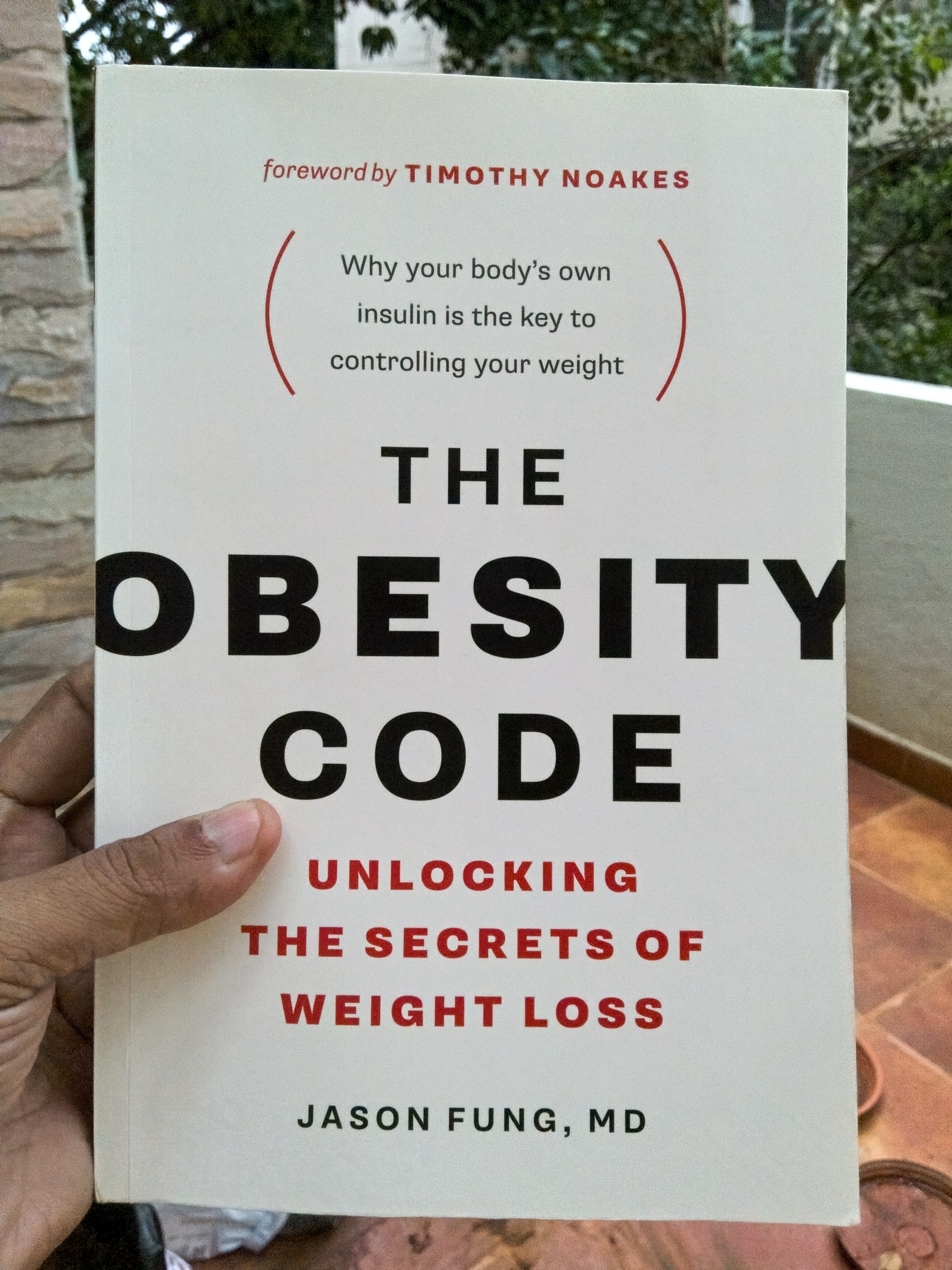
The Obesity Code, Jason Fung, MD, 2014 - I haven’t read too many books on health and wellness, so thought why not start with this one which comes very highly recommended by @crazymama . I am thankfully neither diabetic nor obese but the underlying research and facts in the book can be useful for everyone.
Here are some of my takeaways from the book
- Reducing caloric intake doesn’t help in reducing obesity
- Calories In minus Calories Out is not equal to Body Fat
- Calories In and Calories Out are not independent variables. Calories Out depends on Calories In as your body reduces expenditure (basal metabolic rate) as intake reduces
- A calorie in broccoli is not the same as a calorie from a candy bar. Some calories sit longer in the stomach than the rest due to their absorption/gastric emptying rate.
- Exercise doesn’t cause lasting weight loss in the medium/long-term
- Almost all diets like LCHF, Mediterranean, Keto are all beneficial but only somewhat and none of them are supreme
- Higher Insulin levels cause obesity. Higher Insulin levels could be caused by insulin resistance. Insulin resistance is caused due to refined carbs, processed food, continuous intake of foods without long periods of fasting after feasting. The body subsequently generates more insulin to compensate the absorption of glucose
- Fiber is very good in reducing energy density of food. Vinegar moderates blood glucose levels.
- Even whole-wheat bread has as high a glycemic index as white bread. Industrial milling (vs stone-milling) to fine flour causes extreme absorption of carbs.
- Solvent-extracted vegetable oils are very harmful. Fats like Olive oil and walnuts are very good.
- Fasting/intermittent fasting has tremendous benefits
- All sorts of artificial sweeteners are more harmful than fructose (fructose itself though lower in glycemic index is more harmful than glucose).
- A bulk of the obesity and diabetes epidemic is self-inflicted due to AMA/AHA guidelines from the 70s that advocated low-fat, high carb diets.
- Not all obesity is due to insulin and not all the things that regulate insulin are well understood. Stress-response (Cortisol) in the wild would cause an animal to have higher glucose for fight or flight. Stress still increases blood glucose and consequently insulin and causes obesity.
There are several perspectives considered in the book and consequently a lot of research papers and studies are quoted from over a 100 years, making it relatively credible on the subject. It doesn’t attempt to sell anything and advocates becoming healthy by subtraction more than by addition which in general is a good approach with a lot of troubles caused by excesses. Very highly recommended, especially for understanding diabetes, obesity and health in general. 9/10