
It still is a dying business. It is acting upon tailwinds
I just went through the full thread. You guys have done some good work here.
Some additional thoughts
The margin differential between HIIL and Modern was something which kept me out but I had a theory that Modern being export heavy was actually being penalised for it though it might be counter-intuitive. HIIL had a export share of 9% in FY26 while Modern had 53% in exports. Export markets prices were lucrative which is why Modern made better margins than HIIL until about 4 quarters back (compare FY24 and FY25 and first two qtrs of FY26). Historically this worked out well but India faced additional 25% tariffs by US from Aug 2025 taking total tariff to 50% which was reversed in Feb to 18%. This should have played a part in subdued margins in Q3/Q4 FY26. Post that, I suspect the company is now focusing more on domestic industry where they have all essential qualifications and this has helped pick margins up.
I also thought, exports + hormuz related logistics could have also contributed to lower relative margins but the primary contributor I think is just fuel + power which impacts margins more than logistics (like 20% in fuel and power vs 2% in logistics)
So overall I think Modern’s margins should continue to creep up from here and I think Q2 is only the early signs of it. They are roughly 2-3 qtrs behind HIIL on this due to shifting nature of business from exports to domestic and also likely longer term contracts with US utilities that don’t allow for quicker repricing which should get repriced now with a lag.
This is claude on qualification each of these companies hold.
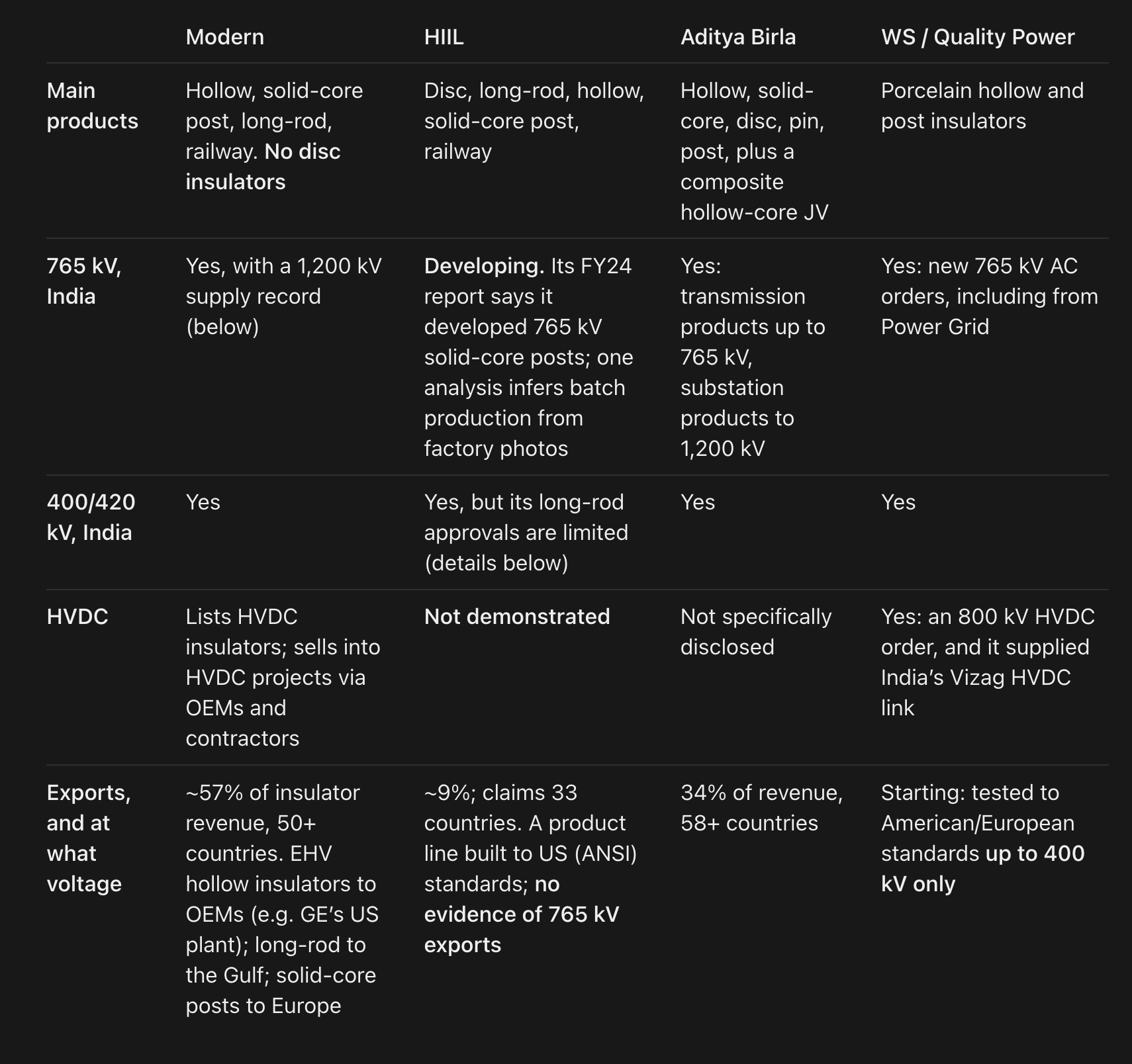
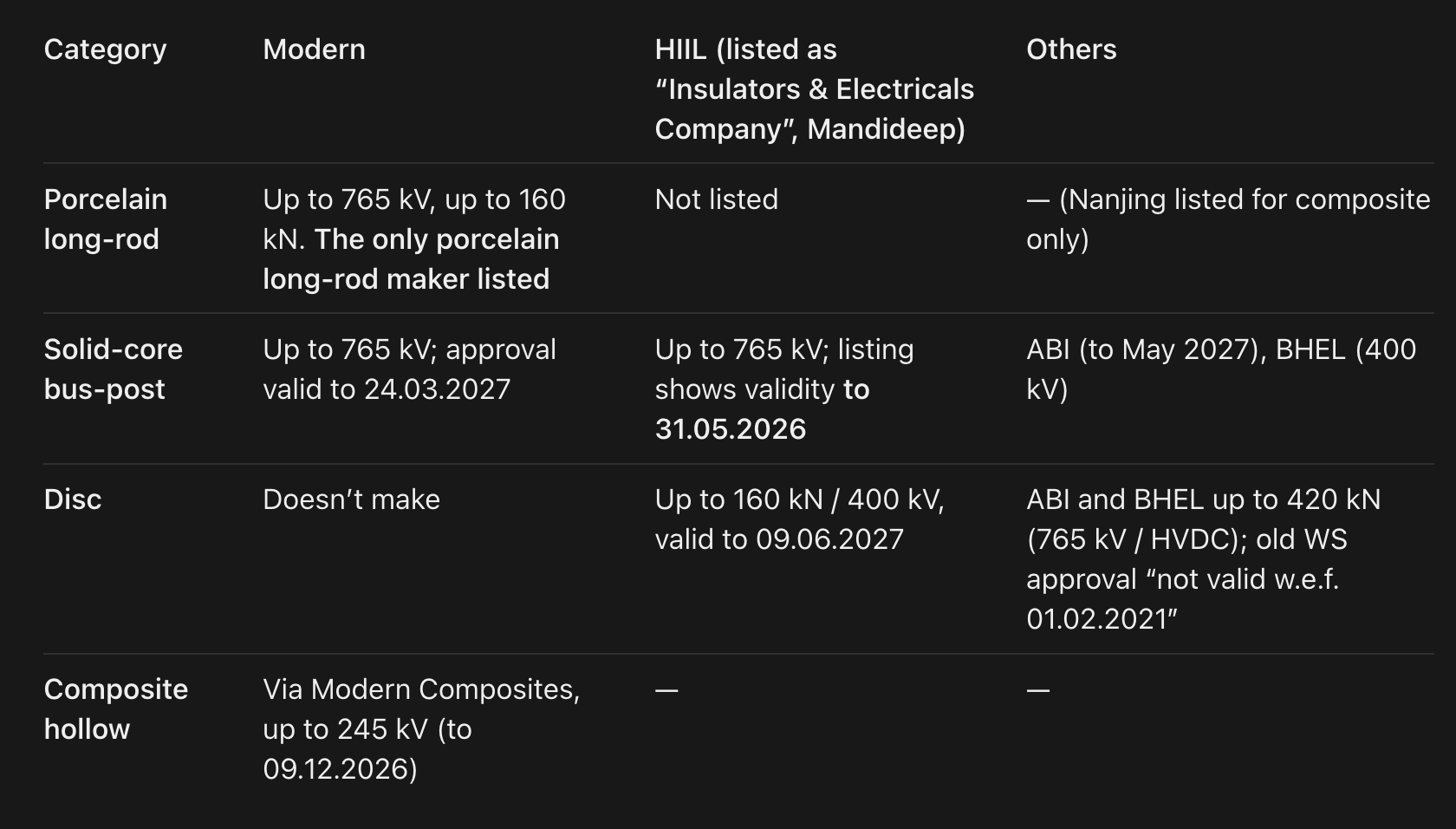
Domestic demand for EHV insulators should pickup with execution of HVDC corridors and Modern should make better margins there. In general domestic demand is stronger than global demand because domestic transformer guys are catering to export demand as well. Almost all companies are now eyeing export markets including the biggies like GE Vernova and Hitachi energy where India is becoming a global power grid equipment manufacturing hub. So even domestic demand is partly driven by the global demand so pricing should hold up along with demand.
Modern has done capacity expansion in FY26 by adding a kiln which has taken 25k MT capacity to 30k MT. They are adding one more kiln in current year as per the CRISIL report at an expense of 30-40 Cr so they are expanding this year as well and should get to 35k MT for FY28 which is about 40-45% capacity expansion as compared to 24k they were at before the tailwind started.
Some risks
- HIIL seems cleaner but Modern has corp gov issues with the 70 Cr loan to Modern Denims in the hope of amalgamation so that they can make use of MDL’s losses to offset taxes in Modern Insulators. This merger going through is thus essential to justify those RPT loans
- With no calls or ppts, its all going to be guess work here on what’s actually happening
Disc: I have positions in Modern between 540-550 purchased recently
16 Likes
HIIL: Impossible to buy with all these back to back upper circuits.
2 Likes
Adding a few thoughts, data points and some ground-level observations.
Many people believe porcelain insulators have suddenly gone into shortage. That is only half true.
If you go through HIIL’s annual reports and collate the data, a few interesting observations emerge.
Production volume | Realization (Source: AR)
FY24 – 12,790 MT – 165/kg
FY25 – 14,689 MT – 180/kg
FY26 – 14,749 MT – 224/kg
When the power cycle began in 2023, realizations started inching up, but only slowly. These plants had operated at deeply depressed realizations for the previous 15 years, so every manufacturer’s first priority was simply getting back to optimum utilization.
Unlike transformers, conductors and most other electrical equipment, where demand was driven by RDSS, solar and wind, porcelain insulators had very little role to play in that first leg.
Both HIIL and Modern primarily make EHV substation porcelain insulators. Neither is really in transmission-line insulators (long rods), which is a technologically commoditized product; for transmission lines, composite long rods are the preferred choice anyway, it’s made by Olectra, MMP and numerous other players.
So in Phase 1 of the power cycle, largely replacement-driven (RDSS) and lower-kV-driven because of renewables, EHV porcelain insulator manufacturers had no large demand vector of their own. They benefited from rising realizations, but from a base so depressed that nobody had an incentive to add capacity.
Look at the chart closely:
EHV substation installations were flat from FY18 to FY25. What has changed is that we are now in Phase 2 of the power cycle, which is EHV HVAC/HVDC focused, driven by government targets and this phase, unlike Phase 1, is substation-dominated.
You can see it in the data: substation additions above 220 kV broke out for the first time in the last decade, and as the numbers stand today, FY27 is going to be another record year, followed by FY28, which will be a record year again. On top of this, the government has recently announced GEC Phase 3 and the 1150 kV AC programme, both of which are, once again, substation-heavy.
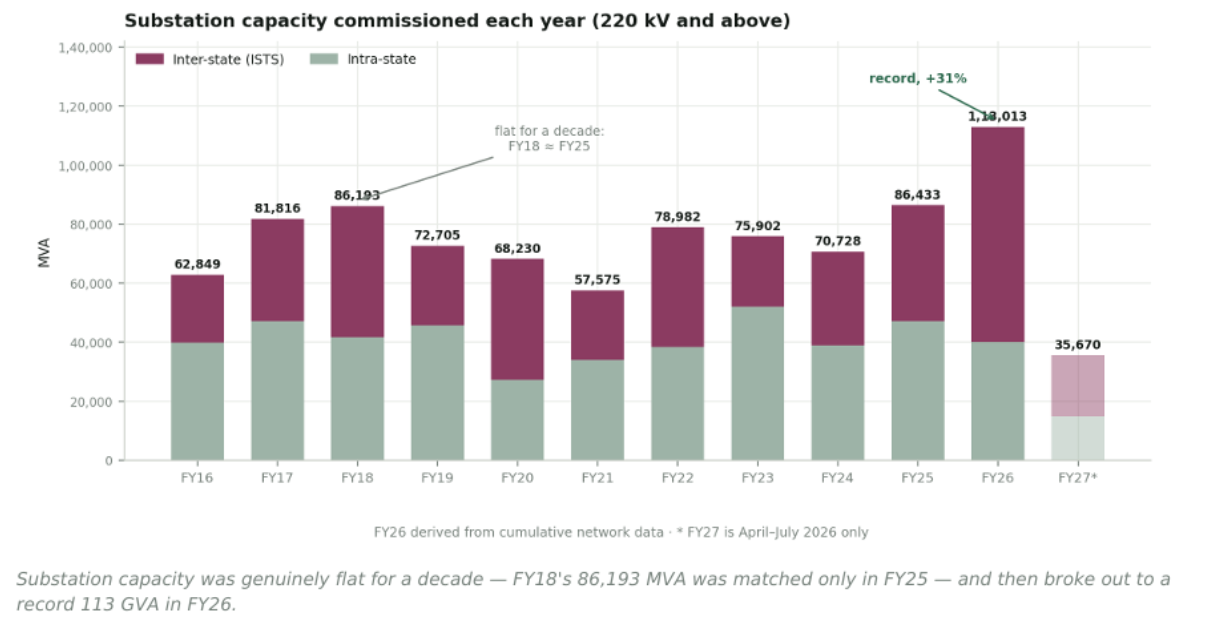
That’s your demand vector.
EHV substation porcelain insulators have only three domestic manufacturers (four if you count WinWin, which I don’t, more on that later). These three had already reached 100% capacity utilization in FY25, and with installations flat for the previous ten years, nobody could see what was coming.
Demand exploded. Why?
Turns out the porcelain insulator requirement per substation rises sharply with voltage class:
HVDC >>>> 765 kV >>> 400 kV >> 220 kV
Current demand is skewed towards exactly these higher classes.
With supply controlled by three players and demand exploding, lead times started rising. Realizations, which were hovering around 224/kg in FY26, are in range of ~300-350/kg, partly because of the immense pricing power these companies now have, and partly because of a higher share of higher-kV insulators, which are more complex, highly safety-critical and demand a great deal of manufacturing experience.
Plants of all four companies are 20+ years old and were set up through technical collaborations with MNC companies.
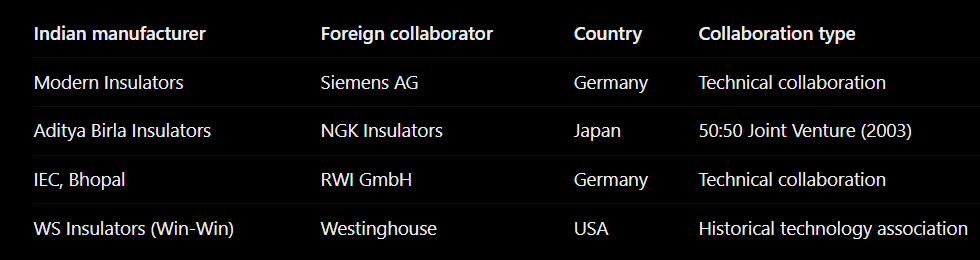
You can rest assured no new player is going to enter this industry, globally, I couldn’t find a single new entrant in the last 15 years.
So on one side, demand has structurally skyrocketed. On the other, supply is controlled by a handful of manufacturers, around 10–12 globally (at higher kV), and it is no surprise that all of them are sold out.
Coming back to the domestic market: HVAC and HVDC substations here are going to use porcelain. It is cheaper, more reliable, has a 50-year track record, and at higher voltage classes in particular it is well studied, well documented and the de facto choice.
Aditya Birla does have a JV with Maschinenfabrik Reinhausen to manufacture hollow-core composite insulators, but that capacity is entirely export-driven, European utilities can afford that price point, Indian utilities cannot. It is also a technologically complex product; you need a technology transfer to make it in-house. Though the product itself has a great future.
Recently, Trench acquired Reinhausen Hollow Core composite insulator facility -
"In recent years, our industry has faced capacity constraints. By acquiring RPC’s IP, engineering and production assets, we are strengthening our vertical integration while continuing to pursue a balanced ‘make and buy’ strategy. We will continue to expand and support our trusted partnerships with existing suppliers. Our customers will benefit from shorter lead times and enhanced supply reliability."
So, coming back to porcelain.
One option is to import from China, few OEMs are already doing it, paying 30–40% higher prices. The reason - at higher voltage classes there are limited players in China as well, and China is going through its own EHV cycle, so it doesn’t have much spare capacity either.
Freight is also a large variable. Higher-kV insulators are big, safety-critical items, and even a slight defect can cause arcing, so transportation has to be handled with care and has it’s own costs.
So you can see why insulators have now become a bottleneck.
They may not look very complex compared to bushings or transformers (they actually are, that is why only 10–12 companies make them globally), but so much has happened in the background that the real complexity now lies in demand/supply.
Now, taking each player one by one.
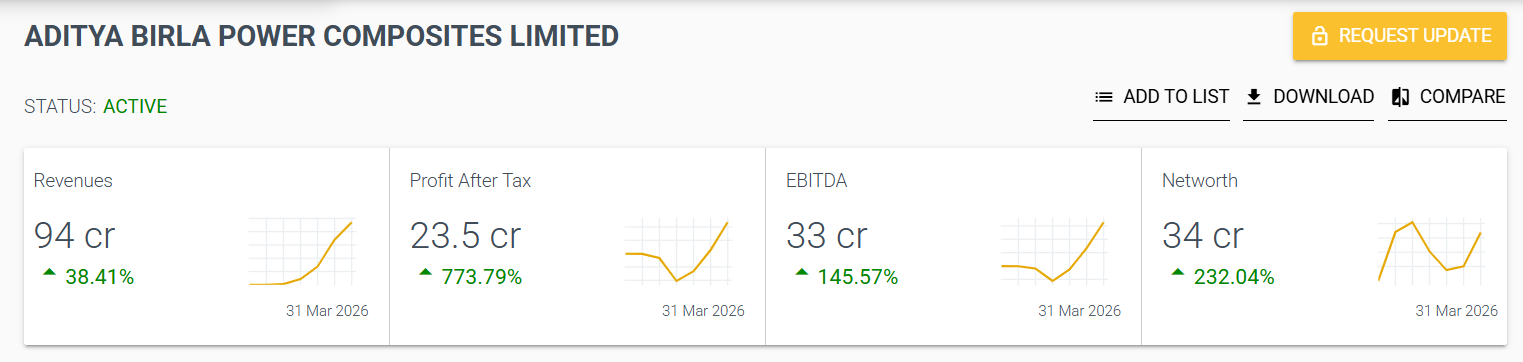
1. Aditya Birla : On paper, it has the largest installed capacity. In reality, that is far from the truth, roughly half of that capacity is in disc and pin insulators, which is a dead product, and those lines are not fungible, so the machines are sitting idle gathering dust (industry source; not verified personally). Given the Reinhausen JV for hollow-core composites, Aditya Birla is not particularly interested in porcelain either, it is a very small part of their Grasim’s operations.
2. Modern Insulators : A very capable player, and that capability is exactly what backfired. A few years ago, with the market as weak as it was, Modern locked large part of its capacity into long-term contracts with foreign customers, a prudent decision at the time. Today it means Modern cannot raise prices on that volume, not immediately atleast and it is already running at 80–100% utilization, so the room to benefit from the existing setup is limited. The two new kilns will fetch better margins, which may lift overall margins by 4–5 percentage points, but that’s about it. The notion that Modern’s margins will catch up with HIIL’s is not going to happen in my opinion.
Source: industry conversations, unverified, so treat accordingly and do your own checks. I don’t have bandwidth to personally verify it.
3. WinWin : Not much to add. Rated capacity is 18,000 MTPA, but industry sources put dispatchable capacity at no more than 12,000 MTPA. The factory has been idle for a long time, so it has to go through type testing again, and even reaching full utilization on that 12,000 MTPA will take a good 1.5-2 years. Efficiency also matters enormously in this business, and it is built up by running plants for years. Reaching 30–40% EBITDA margins will not be easy. That said, it is a good story and worth tracking.
Now coming to HIIL (4) , firstly the history is important here. It’s owned by Hindusthan Group, which was founded by RP Mody.
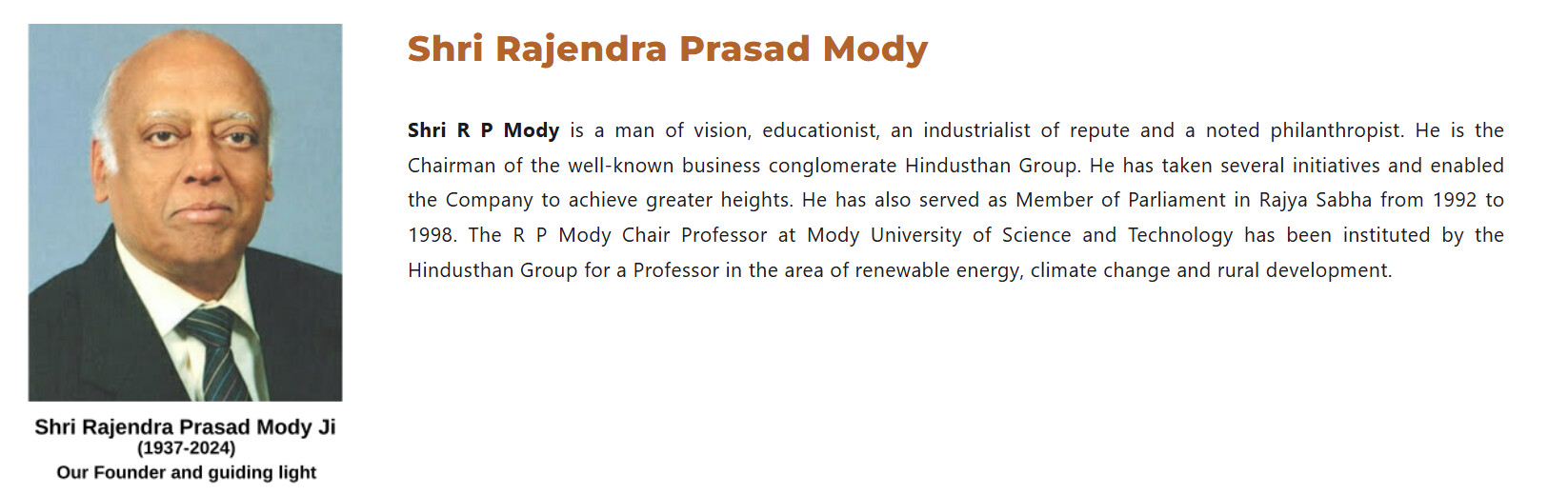
His son, Vikram Aditya Mody, runs HEIL. ( HEIL | Hindusthan Engineering and Industries Limited )
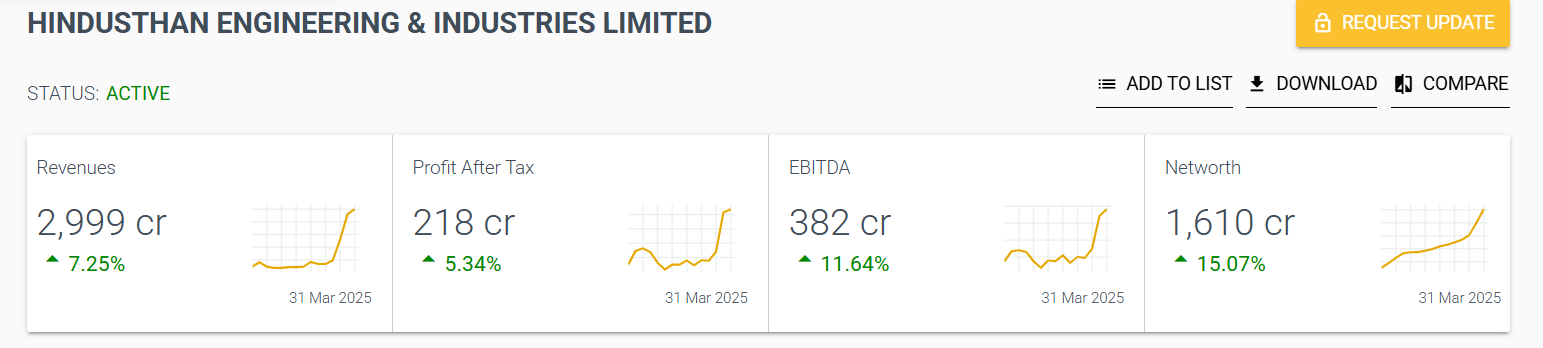
With the promoter family’s attention largely on HEIL, HIIL’s plant had long been run by professional management. Only recently did the third generation, Raghavendra Anant Mody (36), son of Vikram Aditya Mody, take over as Chairman.
So we now have a setup where HIIL has young, aggressive management + access to capital + a demand vector + an already running, optimized factory + intent.
Aditya Birla lacks the intent.
Modern lacks the aggressive management.
WinWin lacks a running facility, so any meaningful scale-up is still two years away.
HIIL is the one with all the stars aligned, which I must say is a fairly unique setup. That is why it is now doing 40%+ operating margins (±5%, depending on gas price volatility), and the factory is likely sold out at around these realizations.
I have looked closely at both HIIL’s and Modern’s factories. Each kiln is a massive setup, which means your factory is your bottleneck, and that is why the few small unlisted players in this industry can forget about capitalizing on the opportunity.
This is how it looked with timestamp.
HIIL
JUNE 15 - 2024
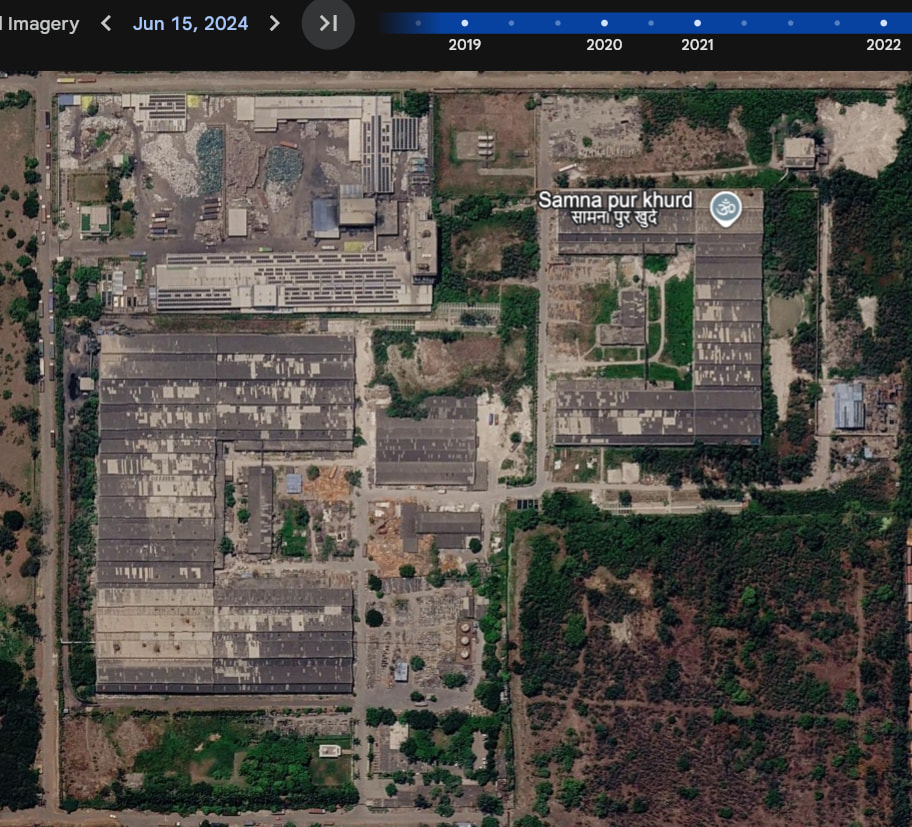
APRIL 15, 2026
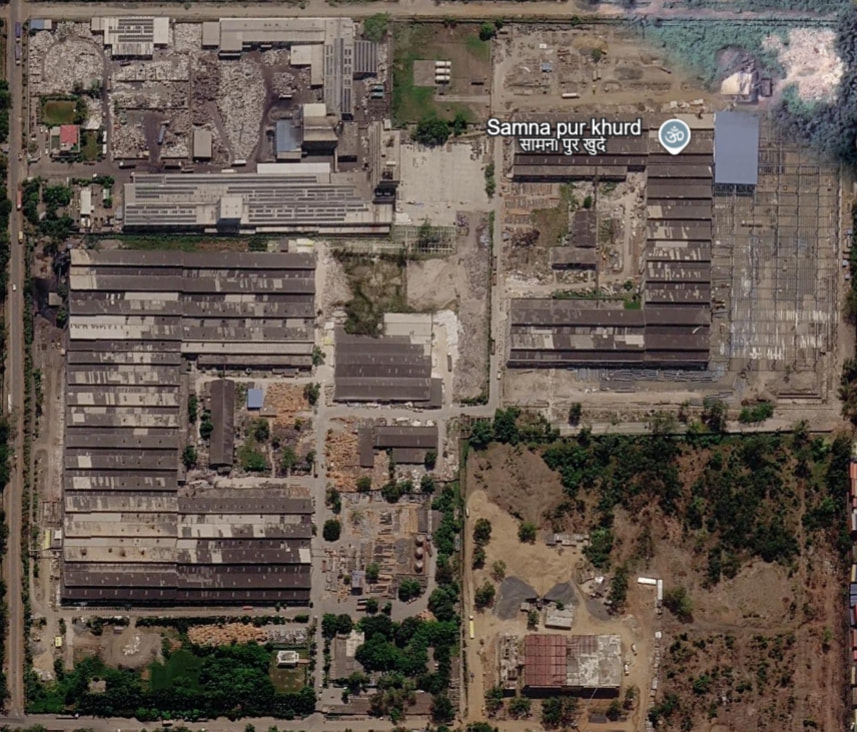
OCT, 2026
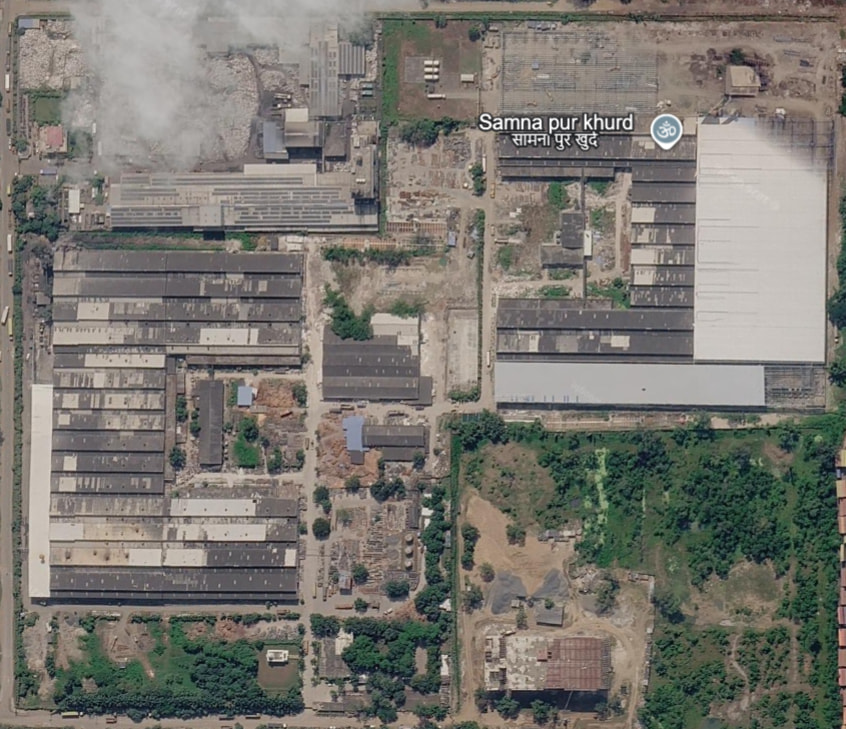
So you can clearly see cranes all over the factory, the north block, the east block and the south block.
Using the dimensions available, I tried to map how many additional kilns this site can accommodate before they would have to go for a greenfield capex.
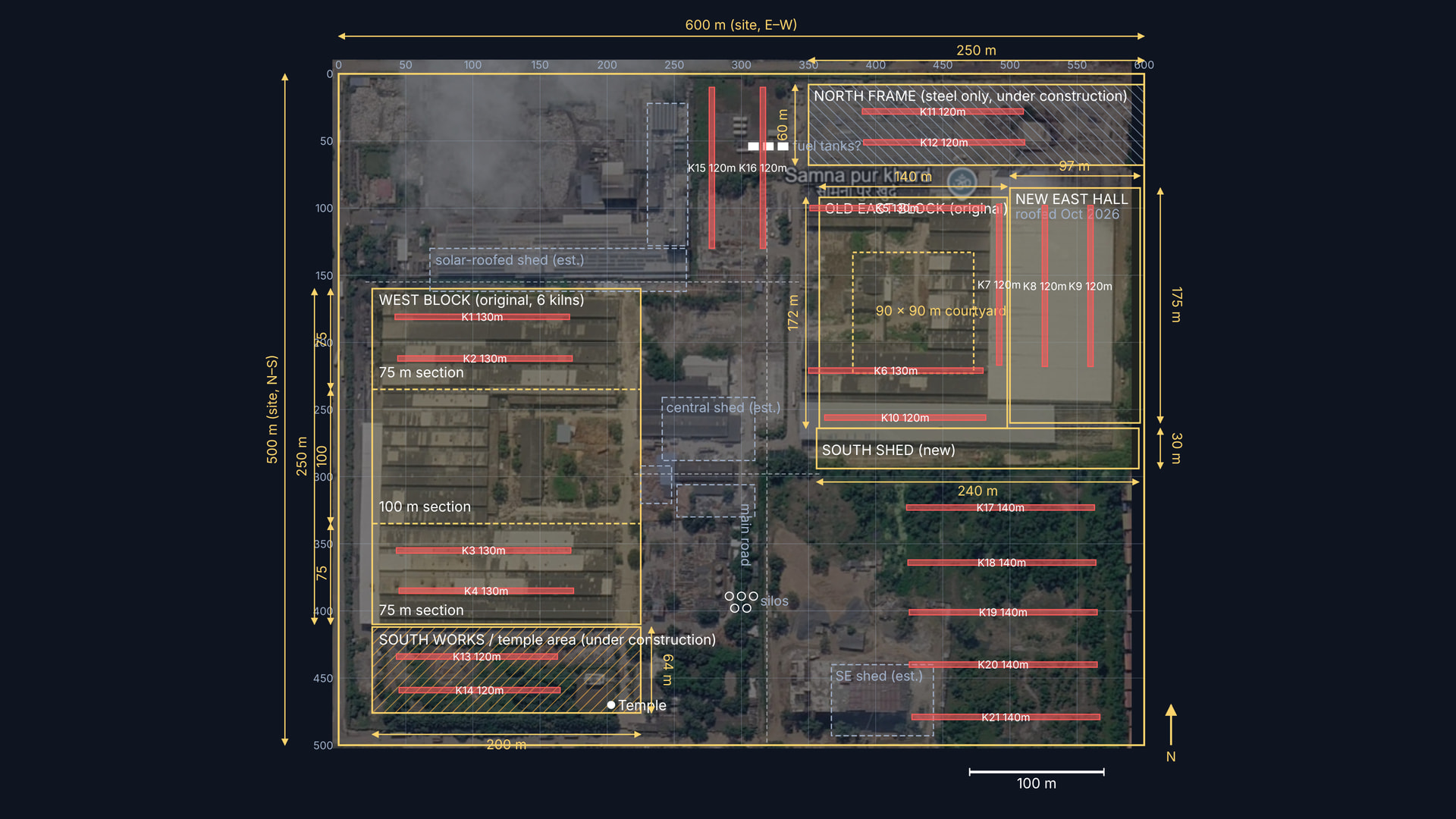
K1–K6 are the six existing old kilns.
K7–K9 were announced in Phase 1 of the capex, in November 2025.
K10–K12 were announced in Phase 2 of the capex, in February 2026.
The location of K1–K6 is known.
The location of K7–K12 is a reasonable guess based on the construction visible.
The location of K13–K21 are purely speculative, K13 and K14 show some early signs of construction activity, but nothing has been announced, so treat them as speculative only.
That is well over 70,000 MTPA of possible capacity. I don’t even want to put numbers to it. The point is simply to show how a strange combination of demand and supply vectors can take a company with 15 years of losses to immense possibilities.
Now, coming to Modern Insulators. Ground feedback was that they have some kind of space constraint. Yet if you look at their factory, there appears to be more than enough space. It may be that with residential construction and solar panels on the east side and some construction on the west, all they have left is the middle section, which could still host 2–4 additional kilns, possibly more. Since the ground feedback did not match the satellite image, I will leave it at that.
MARCH 12, 2024
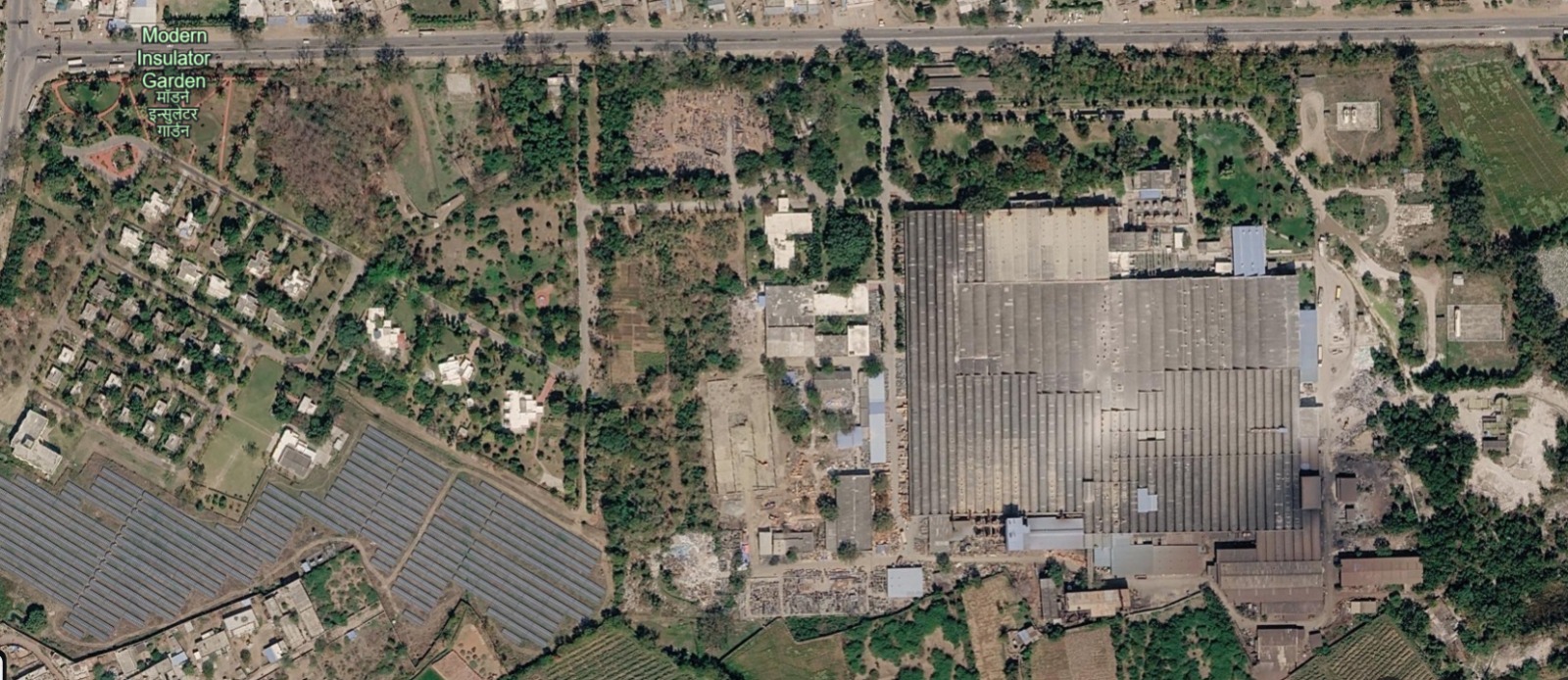
OCTOBER, 2026
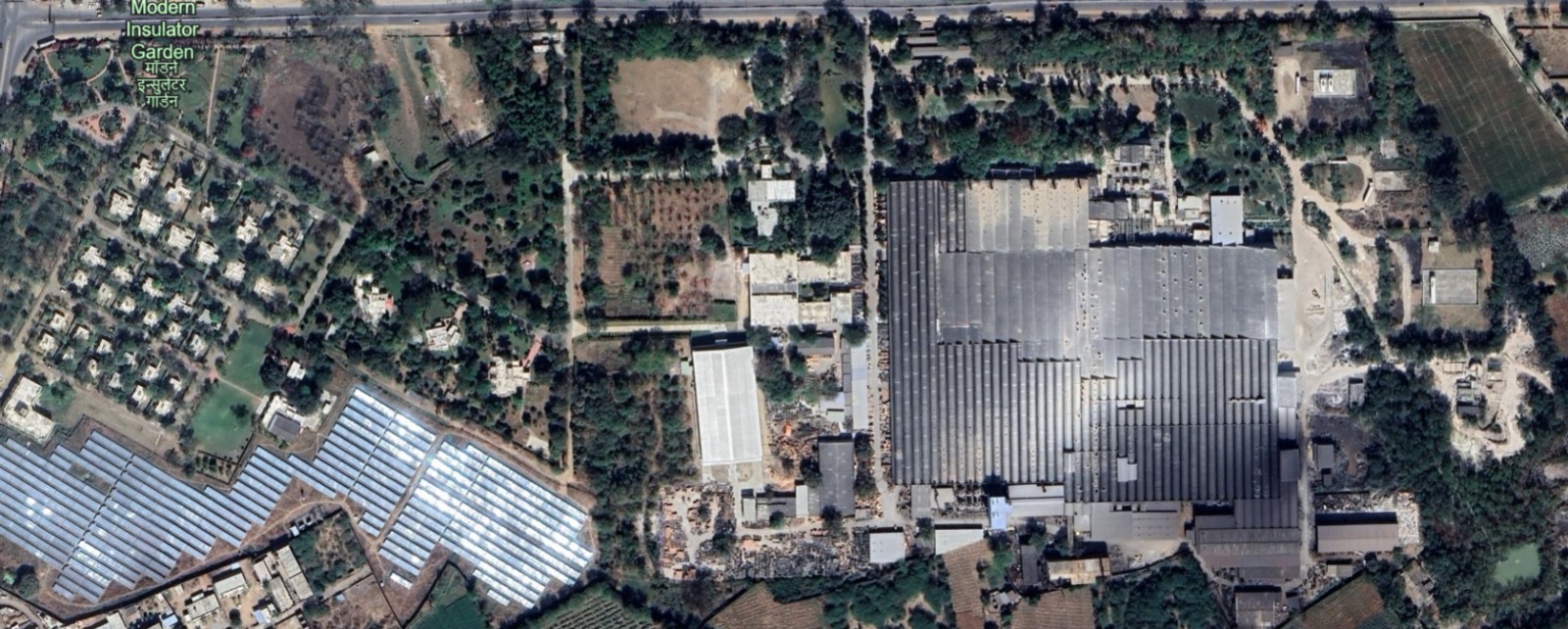
So any additional kilns Modern brings live at this facility can be sold at market realizations, fetching higher margins. The intent has not been much in evidence so far, but it is worth keeping an eye on.
I believe the industry has changed for good. You can see that the rise in realizations is not a one-off event; it has been building since FY23, and only recently has operating leverage started to show up. Also remember that every additional kiln added to these factories lowers the overall cost per additional tonne produced, so efficiency should improve from here.
So this business looks ripe for the next few years. Who knows what happens after that.
I am just a novice investor. Nothing here is a recommendation, my research can be wrong, and you should do your own due diligence.
49 Likes
Such a good write up. Learning so many out of the box WFH scuttlebutt tricks from you 
The first one was feeding factory pictures to Claude to map capabilities. I also started using this and checked FROG Cellcast’s products by uploading their exhibition pictures from LinkedIn. Got some good insights.
And then there’s this satellite imagery one. I once read that Walmart’s earnings are predicted using parking space utilisation captured from satellites, and some dude was predicting crude oil inventory using shadows that were casted by the walls of the silo on its floating roofs. First time seeing someone use similar meathod in the Indian investing scene.
6 Likes
Thanks to phreakv6 for his insights on Modern and HIIL. I was really surprised at his recent entry at 540-550 level as it was offering very reasonable entry level around 400 level. But that is beside the point as he makes deep dives and his entry may be post Q2 results.
I have my 2 cents as follows. Besides the lack up of information, I don’t think their exposure towards Modern Denim is a Corp Governance issue, as there is definite benifits to Modern on amalgamation. And while going through their result I was astonished their profit tripled from Q2 2026 level and doubled from Q1 2027 level. This is before tax and interest. This is really astronomical. So it appears that they are unwinding from longterm contracts and with almost 40% expansion in next FY, we can look forward to more than 300 cr NP. This is on the basis of 50 cr NP in Q2. This only extrapolates to 200 cr, add 40 % expansion. Additional icing on the cake will be benefits from Modern Denims merger and more margin improvement due to demand - supply situation. So it works to more than 60 EPS, which to my mind will support a price target above 1200 level. And we know when the stock is rerated, the momentum it self will propel it to more than 50% valuation So my bill case price level is much more, which I do not want to quantify as it will be only speculation
This is my view. And I am invested at much lower level with limited quantity. So please take my views as vested and make your own due diligence before taking any buy/sell decision.
1 Like
While I agree with your post, it should be kept in mind that the Q2 numbers included a very high other income of 23 cr which made the PAT numbers look better.
1 Like
There are lots of funadamental supported positive sentiments surrounding porcelain players, as >=220kv HVAC and HVDC at play, especially 765kv HVAC, never seen before. 70-80 GVA/year has new reset at 110-120 GVA/year, now going at 150GVA/year as of now for HV transformation. 765kv almost contributing 47% of targeted 150GVA.
765kv used to be 20GVA/year, now capex is running at 70GVA for current year. Such capex is central government/private sponsored and can be lumpy too (??)
Is this really a long term transformation for industry? seems so.
Are margins sustainable for high demand products? only time will tell as capacities are also coming up.
In past, 2020-2021 was good time and companies hit 10% OPM trading at ~5 EVEBITDA then. Today, raw material cost has reduced to 22-25% from 50-70% in past, which is mainly driving margins to 25-40% OPM. This is possible when pricing of products goes up, probably thanks to 765kv products.
HIIL vs modern : HIIL has mainly fixed priced contracts as per credit rating and so exposed to margins swings, while modern has both fixed priced and pass through contracts. Historically, modern has shown margin consistency more than HIIL.
Q2 margins for HIIL has shown significant improvment backed by mainly improved realization and reduced other expenses which house Power/oil cost, Jobs on contract and comsumables, sustainability of which needs to be checked over following quarters.
More comparision
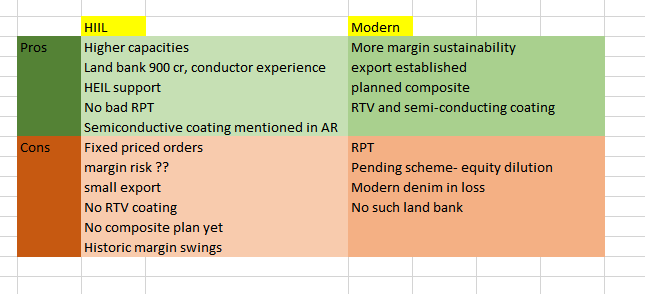
2 Likes
Both companies work on fixed-price contracts, but that does not mean those contracts cannot be revised in extraordinary situations. In February–March, when gas prices tripled within a month, both HIIL and Modern renegotiated existing as well as new orders.
Contracts are fixed-price because of visibility: the companies, in turn, sign fixed-price contracts with their raw material suppliers. So this is not really an issue, they have been running this business for decades.
Modern’s fixed-price arrangement with its foreign customers is different. That is an agreement where only raw material price fluctuations get passed through, not any increase in market realizations.
4 Likes
Thanks for pointing out this for me. As per my understanding this relates to investment profit and should not be taken as a regular income and so should not be taken for profit calculation. Having said that I also observed that company has regularly shown other income of around 10 crs. So to be on the safe side and conservatively we should exclude this net of taxes from profit. So if you exclude 16 cr from profit then Q2 profit can be taken around 36 cr, which are not bad. And mind you, Modern has an export component of more than 50% of their turnover in 2026. This speaks about their quality and acceptance by big players. With negligible rwa material component and declining logistical problems, we can expect better realisations in coming qtrs. So my expectation stands with some reduction in net profit level.
1 Like
Any scuttlebutt on the below if quality is improved now?
I didn’t come across anything like that. Up to 400 kV, all the players are at par; at 765 kV, depending on the exact specification, each has its own market.
These companies have been making insulators for 15+ years. Even Modern had failures on a specification it was supplying to a Middle East customer. It is engineering - you learn with time and your yields keep improving.
At the end of the day, all of it gets consolidated into net realization.
5 Likes
Attaching an old HIIL presentation. It’s outdated, but still informative.