
The $222Bn TAM is indeed the value unlocked for PGs, not revenue capturable by IKS - valid critique.
A bottoms-up look gives roughly $607/physician/year currently ($91M revenue divided by 150K physicians), which is a deliberately modest starting point. Management has acknowledged ARPU will compress further as AQuity’s human model is replaced by IKS’s tech platform, boosting margins even as per-unit revenue dips.
The real story is cross-sell: management has explicitly called out a “90x growth opportunity” by rolling out the full platform across AQuity’s 500 enterprise PO customers.
On the “only 40K of 150K active” point, that is actually a tailwind, not a ceiling; the hard work of trust, contracts and EMR integration is already done. Even a modest $5K ARPU across the existing 150K-physician network implies a $750M revenue opportunity, roughly 2.5x current run-rate, entirely within their existing base, with management already noting cross-sell is activating faster than anticipated.
Hmmm i think a couple of assumptions might be optimistic or incorrect. Let me try and provide my POV
- The current revenue per user should be 91M/40k = 2300 per physician per year. This is because the 150k users are in the network of the PGs they are working with but most of them might not be using IKS (This was explained by the CFO in an interview on YouTube) - imagine a PE acquires and consolidates many PGs some of which are on other systems and don’t want to migrate to IKS.
- Given the same argument, there is no tailwind. The remaining users still need fresh integrations, fresh training etc. Since switching systems in this industry is difficult, my guess is it will be an uphill battle to capture market share. Unless IKS has a highly differentiated and highly convenient product - which I don’t think they do - the switch is going to be slow.
- Even if they cross sell to the existing 40k users, the revenue per user might go upto 5k which won’t do much.
I want to emphasize that I’m not saying that the stock won’t do well. There might as well grow for the next few years. But I’m saying that the TAM is MUCH SMALLER than they would lead us to believe.
Fair pushback on the 40K active base and the 2,300/physician current ARPU is honestly the cleaner number to use. But the cross-sell thesis was never about converting resistant physicians on legacy systems. It is about deploying the full platform stack to the 500 enterprise PO customers who are already contracted, trusted, and integrated, and that is a very different unlock from a cold market share grab
Just to set the record straight - The management has NOT called out any 90x growth opportunity. Financial news aggregators like screeners or simply wall st accidentally cross pollinated a 90x oversubscription during IPO, for a 90x growth opportunity. This is not the case. It is very unlike them to make such a statement. As evidenced by their behavior on all con calls and media interactions - Both Sachin and Nithya are very cagey about making any forward looking statements / revenue or profit guidance.
The more realistic TAM for IKS is not the $260Bn often cited in presentations. That figure represents the economic value of administrative time saved, not the revenue vendors can capture.
A better way to estimate TAM is to start with the total US physician groups administrative spend, which is roughly $260B annually. Only about 13% of this is currently outsourced, implying a vendor revenue pool of roughly $34B today. This is the real TAM for IKS in my opinion.
This outsourced segment is growing faster than the overall administrative market — around 12% CAGR versus ~8% for total admin spend — as hospitals and physician groups increasingly outsource operations to reduce costs.
Therefore, the key investment question is not the theoretical TAM but how much share of the growing outsourced market IKS can capture.
With the outsourced market potentially expanding from $34B today to ~$100B over the next decade, even capturing 2–3% market share could imply multi-billion dollar revenue potential for IKS.
In an industry growing at 12%, the top decile players will be likely growing at double that rate or more, particularly if your base is small. This is the most relevant point for IKS investment thesis IMO.
Absolute TAM, for argument sake can be considered to be 50% of $260bn, assuming 260 is cost to the physicians and if outsourced, value will be split equally between the physician groups(savings) and the service provider. It’s just a perspective. Even then it implies a 4x from current outsourced value.
The thing is IKS is less than 1% of this market. They can gain share due to their breadth of coverage and value proposition. Can they double the market share over 5 years? Alpha is never about growing with the market, it is about outrunning it.
Top 10 clients contribute around 44-45% of revenue. Given that software/saas is on the cusp of commoditization, there’s the serious risk of service revenue deflation. Large provider groups would be itching to build in house solutions and reduce reliance on outsourcing, whether they succeed or not only time will tell, but they will certainly attempt it given the rate of progress in Agentic AI solutions.
if i understand what IKS does, i believe it is very sticky. AI can be a accelerator here and may provide more margin expansion. Look at the revenue per head count which has increased in last quarter.
Further, they seem to rate favorably in certain categories based on industry research firm. Pl see this.
If you have industry leading product in some areas, an aggressive and valuable value proposition for customers, what should you sights be on?
Firstly, thier top 10 customer revenue concentration is increasing and it’s not a great sign. I guess once some of deals they have done over last 9 months get implemented, this ratio will come down hopefully.
AI is overhyped as most people don’t understand how large enterprises function and what they look at.
Most enterprises will not do software of their own. AI can help write it. But before writing, the engineering of solution, the architecture , design etc have to be done. Post writing testing, deployment, maintenance and enhancements have to be done. It has to be integrated to other systems
It is a very very tough task for most enterprises and is not scalable.
Most providers groups will not write. They won’t be able to attract the talent required for the work described above , even if someone wants to take a shot. And the cost of this talent will be higher than licensing the software.
What they will do is negotiate harder and ask for more savings. Those who haven’t outsourced will in fact have a more solid case to outsource due to higher savings.
AI is not head wind for this industry. Its a major booster for those with foresight and investment to ride this. Wait and watch.
Let’s dig deep into this “AI hype” and let’s separate fact from fiction.
In doing so, We can safely ignore lazy comments like “ With AI, Physicians Groups (Doctors, nurses and their Admin staff) will start writing their own code and replicate IKS’s product offering.” Or other such generic statements. These are laughable given the critical nature & regulatory complexity so going to skip talking about it. Also the whole point companies like IKS exists is so that Physicians can escape the “chore” not double down on it.
Anyways, lets get started. Let me make some strong bearish points on the AI disruption and see if IKS can navigate through them.
1. Native EHR Integration, The EPIC Threat (Pun intended) - The most significant threat is not a physician group writing their own code, but rather the Electronic Health Record (EHR) providers doing it for them. Epic and Cerner dominate the US hospital market. Microsoft (which owns Nuance) and Google are partnering directly with these EHRs to build ambient AI and automated RCM natively into the system. If a hospital’s existing Epic software suddenly includes a “good enough” AI auto-coder and scribe right out of the box, the need for a third-party overlay platform like IKS is severely diminished.
· IKS’s Strategy – “The Agnostic Moat” - While Microsoft and Epic are building a powerful “walled garden,” the reality of US healthcare is one of extreme fragmentation. Large health systems (like Providence or Advocate Health) often run on multiple EHRs due to years of mergers and acquisitions. Epic’s AI only works perfectly inside Epic. It does not help a health system manage its legacy Cerner nodes, its ambulatory Athena Health clinics, or its independent surgical centers. IKS operates as a System-Agnostic Layer. They provide a unified operational standard across the entire enterprise. A CFO doesn’t want five different AI vendors for five different EHRs; they want one partner (IKS) that can standardize revenue and documentation across the whole “island chain” of technology
· Assuming Liability and the importance of Human in the Loop (HITL) - The most critical distinction between a software company (Microsoft) and a services firm (IKS) is risk and liability. Microsoft/Nuance provides a “Drafting Tool.” If the AI hallucinations result in an up-coding penalty, or Medicare fraud or more than likely a malpractice suit because a clinical detail was missed in a medical note, Microsoft’s terms of service generally shield them from that liability. This where HITL shines. IKS takes on the operational burden of ensuring the note is 100% accurate and the code is compliant. For a large physician group, the “fee” paid to IKS is kind of like an insurance premium against billing fraud and clinical errors. Software companies are currently unwilling to sign the Service Level Agreements (SLAs) that IKS signs regarding accuracy and financial outcomes.
2. Commoditization - IKS expanded heavily into the clinical documentation space. Generative AI (like GPT-4 and Med-PaLM) is rapidly commoditizing ambient voice-to-text. If an AI agent can listen to a visit and generate a SOAP note instantly, that would threaten their scribe business.
· IKS’s Strategy – Pivot to “Validation as a service” - An AI-generated draft is useless to a hospital if it contains a hallucinations, errors or requires medical staff to proofread and edit, as the time savings & efficiencies then are minimal. Hospitals & Physician groups require a Human-in-the-Loop (HITL). How it plays out: Microsoft and Epic will provide the vehicle, but IKS will be the driver. IKS will likely pivot from “we will write your notes and codes” to "we will manage, audit, and take responsibility for the AI’s output, end to end. IKS is already leaning into this, marketing their Scribble platform as offering “AI + Clinician-guided HITL” and heavily recruiting Coding Audit Managers to review AI outputs
3. The AI Arms race & Deflationary Pressure on Pricing - Assertion: With AI most of their products and services are commoditized and therefore there will be deflationary pressure on pricing.
· IKS’s strategy is to use its data and payer specific logic to its advantage. Keep in mind, that payers are also using AI to deny claims and manage costs. While providers like IKS Health use AI to optimize billing, insurance companies (Payers) are using AI to build a “defensive wall” against those same claims. Payers use AI to scan incoming claims. If the AI determines the documentation doesn’t meet a very specific, machine-learned threshold, it either rejects the claim or automatically “down-codes” the claim to a lower-paying level before the provider is even paid. Revenue Cycle Management (RCM) is not just about coding; it’s about the tiresome task of dealing with insurance companies (Payers). Native EHR AI is excellent at “Standard Coding.” However, RCM success requires knowing the specific, often arbitrary, “denial rules” for hundreds of different local payers (e.g., Blue Cross of Michigan vs. Blue Cross of Texas).
- The Win: IKS has 15+ years of proprietary data on why claims get denied across various geographies. They bake this “Payer Intelligence” into their workflow. While a native Epic AI might suggest a code based on clinical logic, IKS’s platform will flag that “Payer X will deny this code unless you attach a specific secondary modifier.” This specialized financial intelligence is something general-purpose AI models from Google or Microsoft struggle to replicate without the specific historical “denial data” that IKS possesses. This is what Physician groups pay for. Far from being commoditized or face pricing pressure – This is an essential service that improves the economics of these groups and is becoming even more indispensable as AI progresses.
4. **Why This “Payer AI” Actually Protects IKS Health -**You might think that smarter Payer AI would hurt IKS, but it actually creates a stronger demand for their services for three reasons:
· Since Payers are now using AI to deny claims en masse, hospitals can no longer keep up with the volume of appeals required to get paid. IKS provides the “counter-AI” and the massive offshore workforce needed to fight these thousands of denials. The costs for a hospital to do this alone are extremely prohibitory. And the uncollected revenue if not done right could severely impact them financially. Lawsuits against UnitedHealth and Humana claim that their AI models have a 90% error rate when those denials are actually contested and appealed.
· The “Perfect Claim” Requirement: Because Payer AI is looking for any tiny excuse to deny a claim (an imprecise word in a doctor’s note), the “clinical documentation” must be perfect. This is exactly what IKS’s Scribble platform does—it ensures the doctor’s note is written so precisely that a Payer’s AI cannot find a reason to reject it.
· The Data Advantage: IKS sees the denial patterns across thousands of different providers. They know exactly which “rules” UnitedHealthcare’s AI is currently using in Michigan vs. what Aetna’s AI is using in Texas. They bake this “Intelligence” into their software to stop the denial before the claim is even sent. Lots of lawsuits regarding the use of “Payer AI” in the media.
Why I think IKS will grow Revenues at the 20%-25%ish clip for the next few years
1. LAND & EXPAND – This has been discussed extensively on all their earnings call so going to skip describing it in detail. Let me just add that 80% of IKS’s growth come from existing customers & their NRR (Net Revenue Retention) is at 90%. So they start every year with a massive revenue base that naturally compounds as more modules are activated (the “expand”).
2. Aquity & the expansion to hospitals – Aquity’s strength is in hospitals. The acquisition of Aquity opens up not only incrementally more Physician groups but more importantly enables IKS to deploy its “land and expand” strategy to the much larger hospital market as well.
3. IKS 3.0 - IKS is shifting its business model from “fee-for-service” (charging per chart or per hour) to outcome-based contracting. Instead of a flat fee, IKS takes a percentage of the incremental revenue they generate for a hospital (e.g., by reducing denials by 20% or increasing patient throughput). This model removes the “revenue cap” associated with human headcount and allows IKS to capture a larger slice of the multi-billion dollar healthcare waste they are eliminating.
4. Decoupling Growth from Headcount (AI Leverage) – While IKS might grow its topline at the 20% - 25% ish clip for the above mentioned reasons, its profitability might grow at a much faster rate given its successful (and ongoing) deployment of “agentic AI” Example - In Q2 FY26, IKS saw 22% revenue growth despite a 4.4% decrease in total employee count. AI now handles routine tasks like prescription refills and initial coding drafts. This allows IKS to “Expand” its services across more doctors without a proportional increase in its 14,000+ global workforce, leading to the higher margins seen recently.
Apologies for the long post, but I hope this post is a good foundation / starting point to further dissect AI’s impact on IKS’s business. Let’s get the conversation started.
Its indeed laughable if people think large provider groups (top 10 clients) don’t have/hire tech teams. I’ve personally seen some of these teams experimenting with certain modules/section of EHR, and as they nail it, it can lead to unbundling and weaken pricing power. It might not be a short term risk, but its an imminent threat with the proliferation of AI Agents getting smarter.
Good Read. Some quick comments
- Native EHR Integration - while they will try inhouse, it wont be that easy. It will likely come through consolidation (acquisitions). This is what the management refered to in 3rd quarter call as the rise of the true 800 pound gorilla in this industry.
- Hospitals - they are developing the 16 function kind of suite/platform they have for the physicians to the hosiptal setting. It isnt there yet. Its likely 2 years away. Refer management comments Q3 again. This could be a big thing if they get it right in 2 years time IMO.
- IKS 3.0 - they have been on outcome based contracting for some years now. This is now actually going beyond that and creating another revenue stream in this area - underwriting and paying out certain savings upfront to the customer and recovering those and more as value is actually delivered on ground. These are the Palomar kind of deals and something they are focusing on.
- Headcount Decoupling is a wrong metric to look at now - its a given. Even the management claim they delivered 20% growth without growth in headcount while mathematically true, is not really correct. They have been rationalizing the headcount from Aquity and moving Acquity customer from tech supported human model to Human in the loop model. Net of that the headcount has grown. The rate of growth will definitely be much lower. The more relevant metric analyst should now look at is cost of manpower (and not number) and its relation to revenue. The numbers are meaningless beyond a point. For example, If they reduce 10 people and hire 2, but cost remains same, does it really change anything? This is the key. One should not get carried away just looking at headcount number.
- Gross margins will trend higher as we see Sr 4 play out. But management will keep the EBITDA margin in range by channeling extra gross margin to investments in R&D and Sales and Marketing - which to me is a +ve from a long term perspective as it can help them sustain growth of that nature over long period of time. One example is Sr2. Second is development of AI agents,agentic workflows etc.

IKS acquisition news of TruBridge. Have studied in detail. Honestly couldnt fully understand the rational.
What is clear :
- TruBridge has RCS solution and some customers in the Acute(Hospital) segment in which IKS wants to enter.
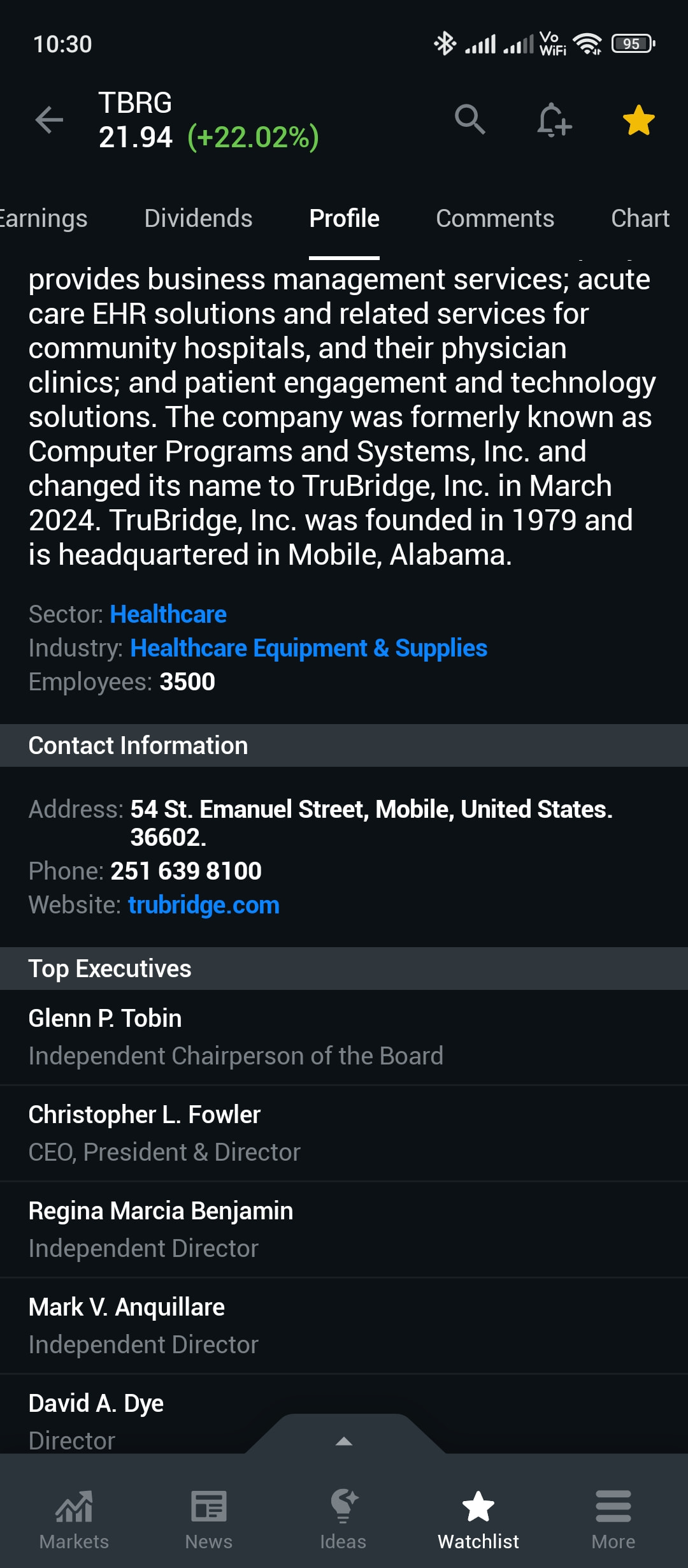
- It has EHR technology tailored to community-based healthcare organizations. The very small hospitals with less than 100 beds are thier customers. EHR is of interest to IKS.
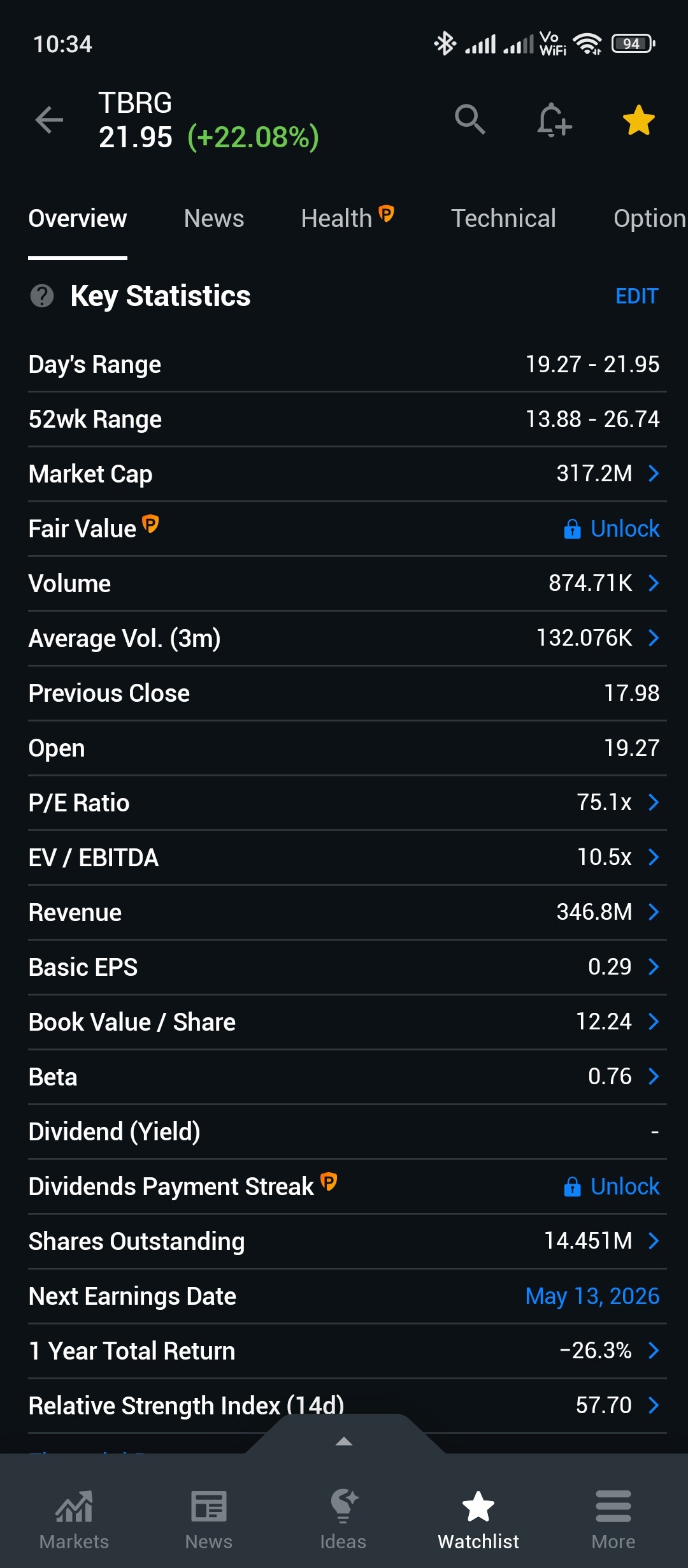
- Company has no growth, has broken even and shown little profit in 2025 and projected 200 bps of EBITDA margin improvement for FY26.
- Has around 3000-3500 employees with around 1000-1500 in India and rest in US.
- Gives both hardware and software to these hospitals and sells software both on SaaS and license models.
- RCS business is 65% of revenue and rest is EHR + others
- Has huge general and admin overheads + large US based personnel cost. Will have low hanging fruits for cost reduction.
- Has 1500 customers
- Rates as average on industry rating
- Spends 30-35 million a year on product development.
What is not clear :
- Has IKS any interest in EHR solution catering to small hospitals. Generally, it doesn’t want small customers and wants to focus on large ones. Is this extensible to large hospitals? Will IKS grow this, or just use for relationship to sell RCM or outright kill/dispose this business ?
- Their RCM business is software led. Which is what IKS also likes. However, what is the size of customers and what kind of contracts is not clear? So how many customers will be retained and how many churned out? Also scope to reduce manpower for service delivery?
- How good is the software stack and how much agentic AI work is done ? What synergy will IKS have with its existing stack?
- A part of RCM is for Acute and part for Ambulatory. The Ambulatory part overlaps with IKS. What is the story there ? Large relations to keep or small business to churn away?
- Company market cap is around 270mn. The indicated price shows a premium of around 60-70%. Its steep. What are the synergy benefit and strategic benefits that makes it worth it.
- With large loan, IKS will have difficulty funding Palomar kind of deals. This could be a real bummer.
- What human capital of the company is of real interest to IKS?
- What timeframe will IKS have for integration and realization of synergy and strategic benefits. This company being similar size of IKS , it will constrain IKs from further acquisition, till this is digested.
Pl add more points to known and unknown (questions ) and views. I am somewhat clear on synergy related cost optimization, but not clear on the strategic stuff (which is key). They wouldnt take a 600mn for adding topline, unless there was a significant strategic play.
Iam not sure why management doing this acquisition that quickly they just did the acquisition of aquity solutions in oct 2023 and there margins took a hit because of the aquity acquisition before and it took almost 2.5 years to stabilize the margins and from last 2 quarters margins were stablilized.Not sure if they acquire this company or not and how the margins will effect if they acquire.
And 5000 crores or 600 million dollars is not a small number and I guess up to 1000 crores they can support by internal cash, investments and cash flows for this year.My guess if they aquire this company they had to do in multiple tranches and with couple of years time.But if they do it on 1 go then had to take debt + QIP which is not ideal for shareholders.
My guess they are doing this due to pressure because recently Infosys looking to acquire optimum healthcare(subsidary of United health)for 4360 crores or 465 million dollars and infosys paying p/s of 1.7 and iks paying p/s 1.73.
Truebridge numbers doesn’t look that much exciting and most importantly iks has to confirm they are really acquiring or not, but incase of they are acquiring mostly because of below reasons
1)grabbing marketshare before big guys like Infosys etc establish in healthcare IT outsourcing.
2)some interesting clients and iks cross sell there products with iks product efficiencies.
3)maybe because of the software technology or AI or product IP etc.
I just checked truebridge numbers etc I didn’t find that much attractive, I will attach the images here you can check and incase if they acquire will get the answers in upcoming concalls let’s see if they acquire or not.





I believe Aquity was very good for IKS. Of course, the consolidated margin fell. But it was not like Aquity was burning cash, it was actually profitable. They got great award winning tech and foot in the door with 500+ valuable clients. Remember at that time IKS had only 50 clients, There was room for EBITDA upliftment which they have achieved. Now they need to deliver on cross sell, which is the real lithmus test of that acquisition.
If you look at Trubridge, and say it’s not making much money. Which is why it’s a good acquisition- they are wasteful and can easily be bought to 30%+ EBItDA in 6-8 quarters, while increasing R&D allocations. While that is important, that is not the rationale of the deal, particularly in a growing market. There has to be a very important strategic value, which cannot be created in 2 years, to make sense to lock huge amount of money in an acquisition. I am not clear on the strategic value as I don’t understand the roadmap they will be laying out. We need to let the deal be announced and hear management commentary to understand the strategic intent and goalpost for this acquisition.
I also don’t believe they need to dilute equity for this deal. IKS will be generating 300+cr cash, pre tax, per quarter on its own from Q1. Quarterly Interest on 6000 cr at 7% will be around 100cr (incl interest on 160mn USD which is already being serviced by Trubridge, net of which it will be likely 75 odd crores). In 6-8 quarters Trubridge can start making 200+cr pretax cash profits, which can be used to accelerate debt re-payments. I am not concerned on that too. I believe they can pay off the incremental debt in less than 5 years.
What I am concerned is that understanding of strategic value of this deal is not clear cut. It could be just the RCM business in the Acute side, it could be that + community hospital relationships. Or it could Include getting EHR piece and growing it. And more importantly where does it take IKS - does it puts IKS on a 7 year secular growth CAGR of 30%+ on extended base, after stabilising period of 6 to 8 quarters? To me that is the key.
So the deal is official and announced. Sadly the investor presentation doesnt tell a very clear story. It does clear certain points though. Will attend the call to get better clarity.
The acquisition will close somewhere in q2. I want to see Q1 and Q2 organic .. whether they hit near to 30% growth rate. This will tell me a lot about the Aquity cross sell as it is supposed to be picking up. Q4,Q1, Q2 will give the litmus test for revenue enhancement from the acquisition. This will be a possible pointer for the future as well and whether they can strive for a 30% growth in FY29, post integration.
With the large debt of $600mn, they are now effectively out of any significant acquisition consideration till FY29 atleast. Basically, they have gone all in. So this better be worth it !
As for my even earlier post , IKS will get known better in the investment community post this and hopefully more interesting conversations. In another year time it is likely heading for a mid cap categorization.
Has IKS any interest in EHR solution catering to small hospitals. Generally, it doesn’t want small customers and wants to focus on large ones. Is this extensible to large hospitals? Will IKS grow this, or just use for relationship to sell RCM or outright kill/dispose this business ?
IKS will keep and maybe slightly grow to 50-200 hospital. Key play is to get RCM into many of the EHR not having RCS from them. Plus some clinical solutions from IKS.
Their RCM business is software led. Which is what IKS also likes. However, what is the size of customers and what kind of contracts is not clear? So how many customers will be retained and how many churned out? Also scope to reduce manpower for service delivery?
Likely to keep. EHR+RCS on single integration/integrated allows for smaller customers to be serviced.
How good is the software stack and how much agentic AI work is done ? What synergy will IKS have with its existing stack?
Not fully clear. Some of the clinical solutions from IKS will get added. EHR data + RCS data from Trubridge will be very useful for improvement of AI.
A part of RCM is for Acute and part for Ambulatory. The Ambulatory part overlaps with IKS. What is the story there ? Large relations to keep or small business to churn away?
No clarity. Most likely may keep.
Company market cap is around 270mn. The indicated price shows a premium of around 60-70%. Its steep. What are the synergy benefit and strategic benefits that makes it worth it.
Significant synergy both ways. Some of the clinical solution from IKS gets into Trubridge and a couple of things from Trubridge including the clearing House and Coding can be used in IKS. IKS will leverage off shore model to bring down costs.
With large loan, IKS will have difficulty funding Palomar kind of deals. This could be a real bummer.
They have taken some extra loans over the 565 odd required for the acquisition for working capital too. So that may not be a concern.
What human capital of the company is of real interest to IKS?
Not clear. I guess the development team and sales team will be of interst.
What timeframe will IKS have for integration and realization of synergy and strategic benefits. This company being similar size of IKS , it will constrain IKs from further acquisition, till this is digested.
2-3 years, with some immediate synergy gains from G&A expenses (year1). To be followed by leveraging off shore delivery expertise of IKS (year 1-2). Then Cross sell of solutions from each other portfolio (start year 1 onwards - but pickup likely in 2nd year and beyond. this will take time). Plus driving growth into 50-200 bed hospitals (year 2 onwards - continuing) Moreover, a stronger Balance sheet will allow Trubridge to retain its existing customers and attract new ones particularly in upto 200 beds.
Overall a decent fit. Nothing earth shattering. But a clear play to leverage a less efficient equal size acquisition to add numbers, bring in efficiency, open up some additional growth in Rural hospitals and some cross sell. This without creating competitive pressure on its Ambulatory business is actually good. IKS gains size to play an even bigger game 3-4 years down the line, once the debt level comes down. Financial deal is also decent, particularly with graded interest rates, which will come down as leverage comes down.
I am positive on this deal. Lays foundation and provides runway for IKS to become a $1bn company in 3-4 years.
Disc : Invested. No recommendation. Lots of risks typical with large mergers and high borrowings. Do your own research.
Abnormal results are coming will have to wait