Reading through their concall transcript, I couldn’t help but wonder again why the bank declared ₹0.25/share dividend — minuscule in rupee terms, but destructive nonetheless.
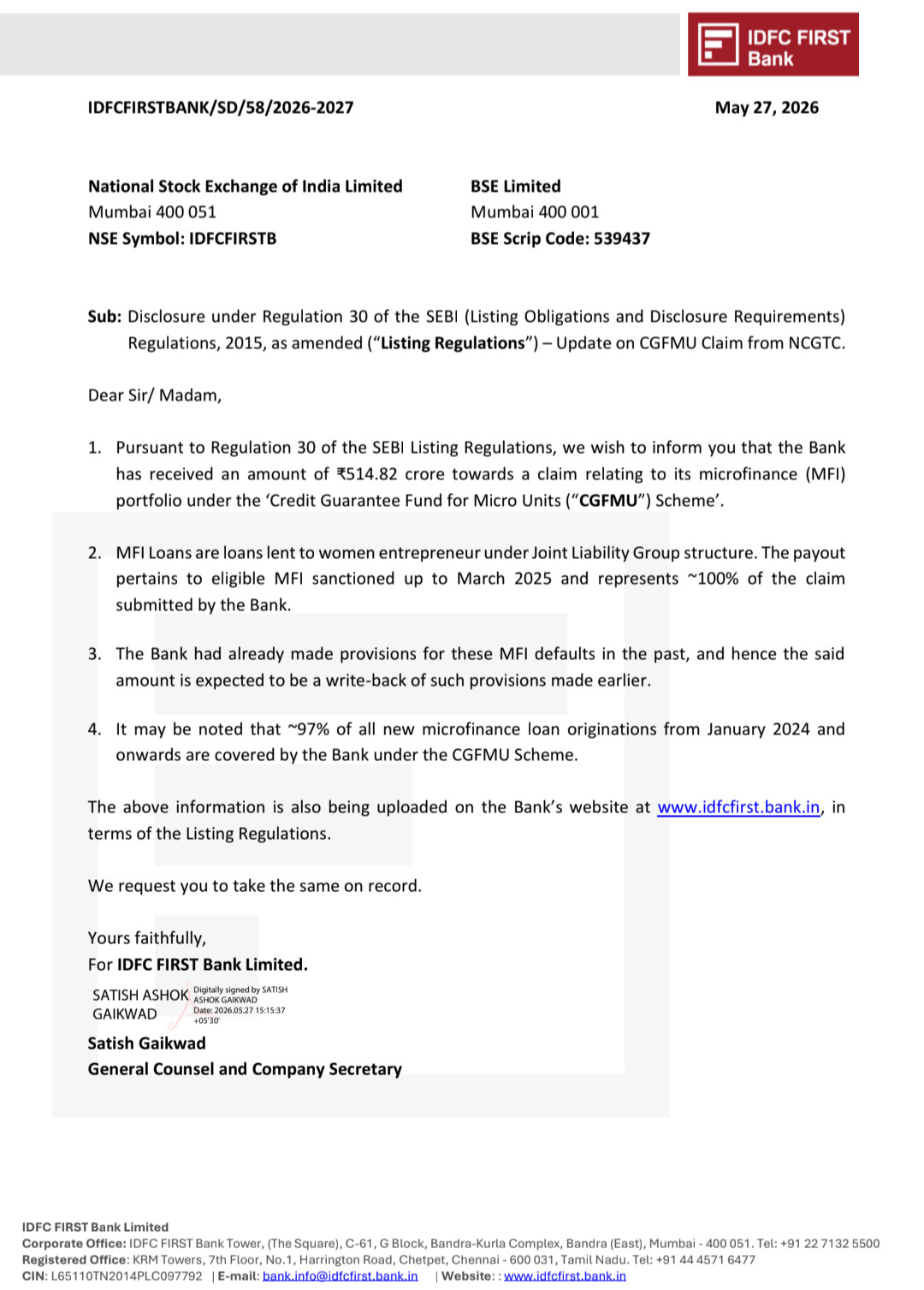
Management explicitly acknowledged in the Q&A that they “definitely” need more capital this year. In Q1 FY26, they raised ₹7,500 crores via equity. The sequence — raise equity at 1.3x book, dilute existing shareholders, then return a token dividend, then raise again — is wealth destruction in slow motion.
Returning ₹176 crores to retail shareholders as a “signal of strength,” only to immediately turn around and dilute the equity base by issuing 125 crore new shares (a ~17% dilution) at 1.3x book value, is mathematically destructive to existing minority shareholders.
Shouldn’t a bank earning 4% ROE should retain every rupee of earnings and use it to self-fund growth, not perform theatrical generosity to retail investors who interpret a dividend as a signal of strength? I mean such investors should ideally look for businesses generating ample cash with no where to deploy and hence significant payouts as dividend.
What’s more pinching is RBI recently introduced new dividend guidelines capping payouts at 75% of PAT (effective FY26-27), explicitly linking dividends to net NPA ratios and CET-1 capital strength. RBI’s clear intent is that banks should prioritize capital retention over payouts. IDFC First’s choice to pay a dividend while simultaneously needing ₹7,500 crore in rescue capital seems counter to the spirit of this prudential discipline. What if regulator wakes up to this and feels like doing something about it?
The one thing I noticed is the Q-o-Q credit cost trajectory: 2.69% → 2.24% → 2.05% → 1.63% through FY26. Seems a genuine trend. If FY27 sustains 1.7–1.8% credit cost and NII grows 18%+ as guided while opex stays at 13%, the PAT could approach ₹3,500–4,000 crore. At that level, earnings yield on current market cap (59,910 crores) starts to matter.
But paying today a P/B of 1.3x on an asset earning sub-hurdle (read: 10-year-risk-free-rate) ROE, betting on a 2-year rerating that depends on:
- deposit drag normalizing
- no more operational risk events (one fraud already),
- MFI staying contained,
- and no macro shock to their consumer/MSME mix.
That’s four conditional bets stacked together for a sub-8% earnings yield entry.
What further compounds skepticism is irrational dividend-then-raise absurdity.