
Maybe Intelligence Ain’t All That
1 Like
India’s Manufacturing Problem Is the Opposite of America’s
1 Like
So this is probably the ChatGPT moment for biology…perhaps bigger than ChatGPT…
Calico (California Life Company) is a Google ventures funded company has been working on reversing aging for the past many years…they used AlphaFold to synthesize an enzyme which when injected in the body reverses aging…in trials they turned a 70-year-old skin into a 30-year-old skin

**Paper Link:**The paper David Friedberg is referencing is titled “Reversal of protein chemical aging by enzymatic deglycation,” published in Nature Communications (July 2026) by researchers from Revel Pharmaceuticals, Calico Life Sciences, and the University of Colorado Anschutz Medical Campus.
Science Corner Verbatim Transcript
David Friedberg: do you guys want to talk about reversing aging?
all right so Jamal you can drop two if you want i’ll cover science corner solo so in the past we’ve talked about Yamanaka factors which are these proteins that can go into cells and reverse the aging of the cell and the cell starts to act young again pretty amazing and uh there’s a lot of advancement happening on that front… but this paper that came out just this week that everyone’s kind of going crazy about was put out uh jointly by Calico which is Google’s kind of you know age reversal startup that’s super secretive that they’re not allowed to talk about in partnership with a group called Revel Pharma and what they focused on was what’s called the extracellular matrix the parts outside of the cell that age and and what does aging actually look like outside of the cell well over time sugars and fats bind to proteins in the area between our cells and they accumulate they don’t get cleaned off and as they accumulate and they don’t get cleaned off they make it harder for your body to clean out that area to maintain that area it causes stickiness it causes binding and that reduces mobility and ultimately leads to things like wrinkles in our skin makes it harder for our joints to move
Jason Calacanis: is that what visceral fat is?
David Friedberg: no it’s called glycation and so it’s the binding of sugar and fat to the proteins that sit in that extra cellular in between the cells
Jason Calacanis: exactly
David Friedberg: and so it’s that whole gunky area in between the cells that when you’re young works well everything’s smooth the proteins get replaced if they break down and as you get older sugars and fats kind of stick to these proteins block them up and as they get blocked up your body can’t repair them it can’t clean them and more importantly it changes the structure and the shape of those proteins so things like collagen that are far apart stick together and that causes things like wrinkles and that causes immobility and it also causes inflammation because then those proteins kind of look different than they’re supposed to and your body starts to attack them and that activates inflammation and that’s why we get one of the reasons why we get more and more inflammation as we get older and so one of the key what are called advanced glycation end products that’s the term for these things is called CML cml is kind of the predominant molecule that that gets formed in this extracellular matrix that’s driving aging and nothing breaks it down so these scientists set out to try and create an enzyme an enzyme is a protein that breaks something down um that can break down CML and remember a protein is just a series of amino acids and those amino acids are programmed by DNA so you can put three letters of DNA to make an amino acid so you can literally just print DNA and then put it in a bacteria to print proteins and then test those proteins to see what they do that’s the the modern kind of era of kind of protein synthesis and protein testing and so these guys kind of went out and they took the target which is CML and tried to figure out okay how do we actually degrade CML clear that extracellular matrix and reverse aging and they started with AlphaFold and they used Alphafold to find a protein that could bind to CML and activate an enzyme or process that would break it down and then they took that protein from AlphaFold that comes out of a bacteria they produced it they started to test it and then they started to find some of the binders or the parts of that protein that they could make better and they used you know DNA programming to change it and they made hundreds and then thousands of variants of it to measure activity which is how good is it at breaking down the CML and they did this recursively five different cycles and then eventually they tested it once they’ kind of gotten it breaking down the CML really well in a test tube they started to test it on the proteins that we would find in our body cassine collagen retinal proteins which are in your eye hemoglobin and they were able to get rid of 52 to 97% of the CML just degraded away and then they um they found several sites where they were able to degrade over 90% and then they took actual human skin from elderly patients that had donated their skin and they put this enzyme onto that skin and they were able to eliminate 55% of the CML on the skin which basically reversed the skin’s age down to the age of a 31y old this is from greater than 70 year old patients just by putting this enzyme on the skin and so it’s kind of a groundbreaking demonstration of combination of alphafold what’s called directed evolution where you change the order of the DNA that changes the structure of the protein to test different proteins do high throughput screening and ultimately make a novel protein that doesn’t exist in nature today that can do something pretty profound for human health and now the next set of questions is okay well great this enzyme is awesome how are we going to get it into our bodies how are we going to get it into that extracellular matrix is it going to be a cream is it going to be a shot a supplement could we eventually take an RNA shot that makes the protein inside of our body and starts to do the degradation from within a lot of questions kind of still to be answered but it really I think lights a great path forward amazing for these novel therapies that we’re developing
well that’s I I will tell you this right now that will not be the first market the first market will be cosmetic and cosmetic skin yeah it will be a trillion dollar market if if you can create a cream dude if you could put this enzyme literally on your skin and have it absorb a cream game over it’s it’s a that that alone is $2 trillion but I mean dude AI let’s just talk about applications of AI why it’s actually awesome that everyone should be able to agree on and you can’t be convinced by some foreign scop this is awesome i mean this was alpha full used to discover this thing and evolve it and drive this outcome everyone can benefit from it it’s just so profound that we have this tool at our disposal in this day and age i think it’s pretty awesome
3 Likes
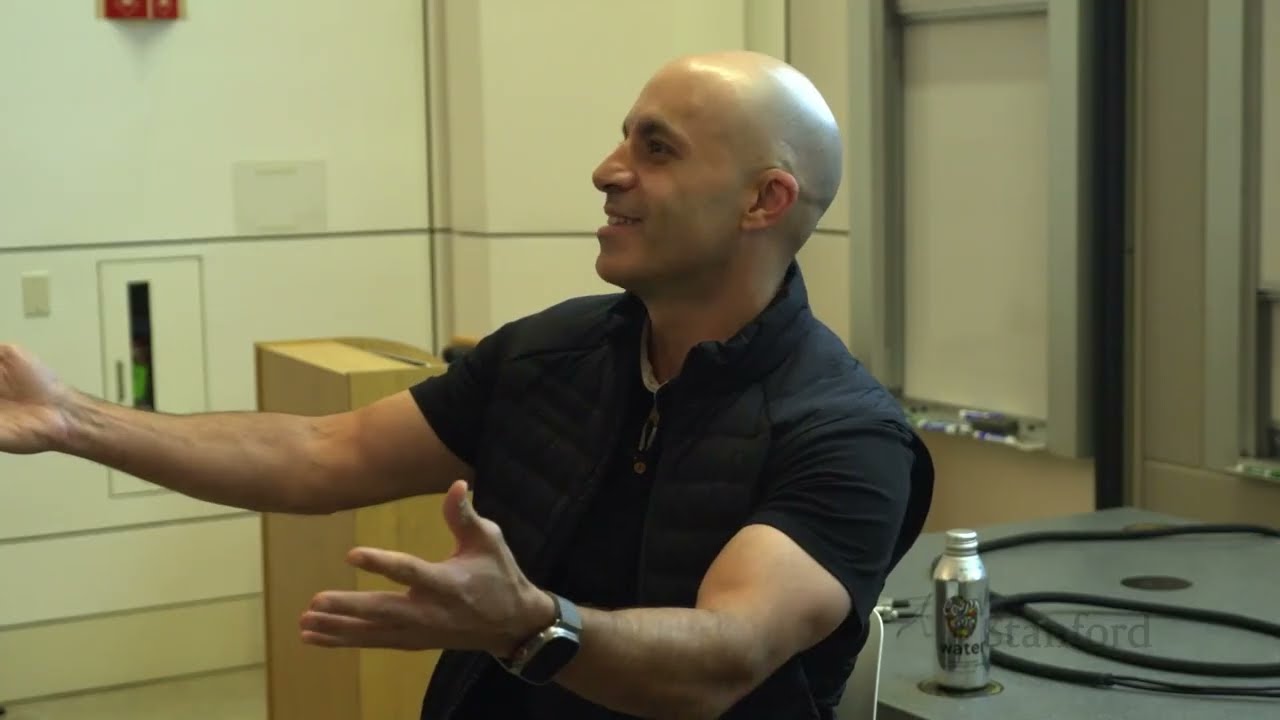
Loved this talk by Ali Ghodsi (founder of Databricks). Among other things, couple of great points he made:
1/ On productivity gains from AI
He gave couple of examples (a) when PCs came there was no visible productivity gains for many years because most companies were using it as a typewriter…and not really harnessing its full potential (b) similarly after steam engine was invented there were no measurable productivity gains for 40 years because it was being used in a very narrow sense. Similarly real productivity gains from AI will come when enterprises rewire their workflows.
2/ Where he sees value creation in AI:
He gave his example: we he was doing is PhD in early 2000s internet was the hottest thing, and the smartest CS brains in the world were working on the multicast problem – how to live stream an event to millions of users on the internet. They were developing novel protocols and data packet routing algorithms. Then the infra companies laid more & more fiber and the multicast problem ceased to exist. In early 2000s selling books on the internet (amazon) and using internet to book a taxi (uber) were considered foolish ideas. So it’s not always the hardest problem where most value creation happens. He says Healthcare and Education could be where AI creates most value.
4 Likes