
Income tax data for 2024-25 reveals surprising disparities in India’s middle class. Jharkhand outperforms Gujarat in the proportion of taxpayers earning between Rs 12 lakh and Rs 50 lakh. Maharashtra leads in the number of high-income earners, while Karnataka boasts the highest proportion of ‘lakhpatis’. The majority of Indian taxpayers still earn under Rs 7.5 lakh annually.
4 Likes
Amazing documentary on Google’s DeepMind CEO Demis Hassabis. The Thinking Game.

6 Likes
Very interesting article on market efficiency by Morgan Stanley.
5 Likes
great post on how dev kantesaria invests in high quality businesses
6 Likes
It has been long time since environment sensitive businesses highlighting road blocks in their growth path.
Large population being impacted by pollution can impact various aspects of life, such as Rising medical costs, sudden loss of earning family member, longer time-frames to combat certain diseases and reduced productivity. Many professionals have been impacted by not only longer commutes to the office but also impact on health due to low quality of environment.
Companies have also started feeling its impact on their EPS growth, as mentioned in the Financial Express article:
5 Likes
2 Likes
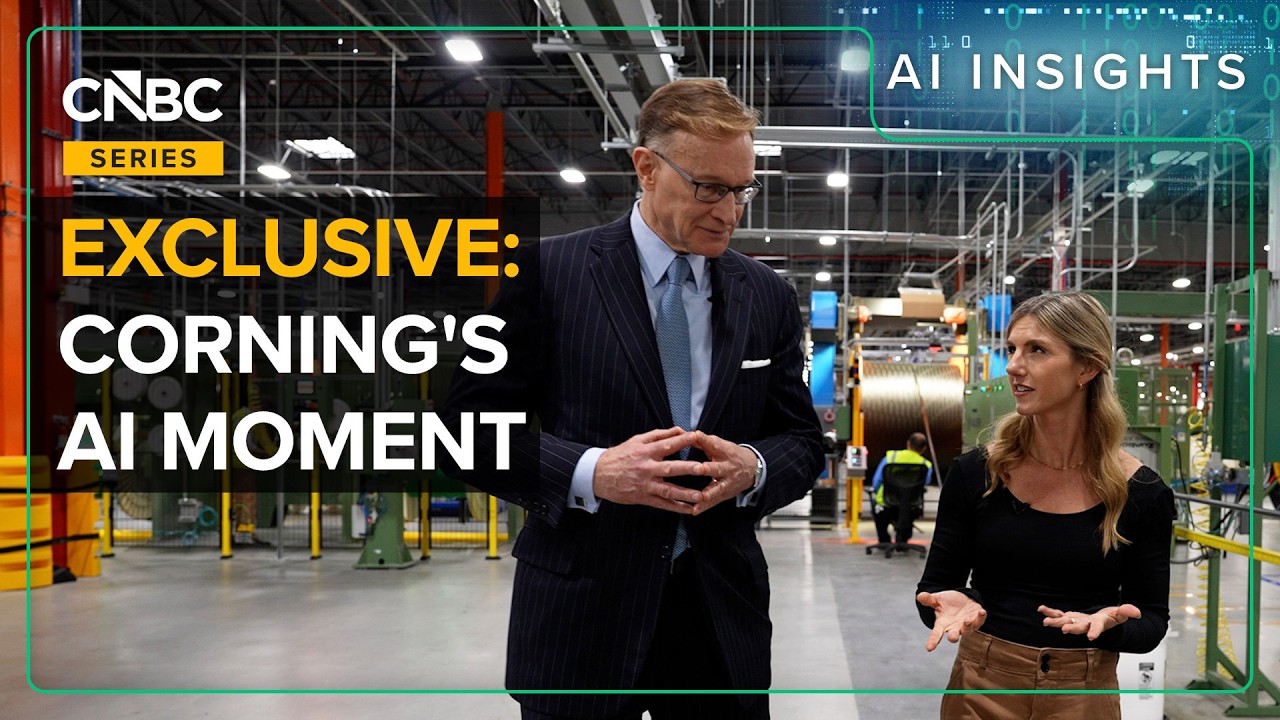
An interesting video on Corning (the Gorilla Glass Company) shows how fiber optics can replace the use of copper in AI data centers.
5 Likes
A fun take on the spectacle of businessmen analyzing the annual Budget, by a prominent businessman himself!
This piece in Economic Times by Harsh Goenka - Chairman of RPG Group, will put you right in the mood for Budget day 
The 72-hour Budget ritual when Indian business folks suddenly turn economists
4 Likes

Workers Are Disappearing As Demographics Age Around The World | Maria Vassalou
Maria Vassalou, head of the Pictet Research Institute, discusses global demographic decline and how technological revolution is imperative to prevent economic stagnation.
4 Likes
I agree with her core point that aging demographics will be a real drag on growth if productivity doesn’t step up, and tech is the obvious lever.
But this feels like a double-edged sword.
AI and automation reduce the need for workers, while demographics reduce the supply of workers. That solves one problem while quietly creating another.
Too few people → economic stagnation, fiscal stress, extinction-level long-term risk.
Too many people → resource strain, unemployment, social instability.
And that tension is what genuinely worries me.
3 Likes

https://reports.weforum.org/docs/WEF_Building_Geopolitical_Muscle_2026.pdf
Boston Consulting Group (BCG) and IMD Business School Report on Building Geopolitical Muscle: How Companies Turn Insights into Strategic Advantage
2026 WEF report on AI sovereignty
A great thread on long form articles on Indian stocks.
Good coverage 20 companies across Chemical, Pharma, Auto with some other sectors thrown in the mix.
2 Likes
The article is about Indian banks lending faster than they are collecting deposits, pushing the system’s loan-to-deposit ratio (LDR) to a record-high level. It explains what LDR means and why unusually high LDR levels can signal tighter liquidity/funding pressure for banks.
India’s banks are stretching their loan-to-deposit ratios.. Is it a worry?
4 Likes


The comparison to the dot-com bubble is valid but has one major difference is cash flow. In 1999, companies were pre-revenue and burning cash. Today, Alphabet, Microsoft, and Amazon are profitable.
Fun Fact: It Got Oversubscribed by 9.5x as of now
1 Like
Google’s parent, Alphabet, just issued a 100-year bond.
Why anyone would buy something they’ll never live to see paid back in full?
3 Likes
Fascinating story of PCB manufacturing

4 Likes
h/t Abhishek Basumallick’s blog
5 Likes
Why the government has changed how we see inflation in India
1 Like
If you have enjoyed reading Buffett’s annual letters and are looking for something similar in terms of value to read, try this.
-
Nomad Investment Partnership Letters(attached)
Full_Collection_Nomad_Letters_.pdf (3.9 MB)
This partnership lasted only for 12 years, but in those 12 years, I could see them gradually evolve from a “Buying Fair company at a great price” mindset to a “Buying Great company at a fair price” mindset.
Reading through the initial 5-6 years letter, it’s very interesting to see their thought process change from buying a company in Zimbabwe at a beatdown price(cigarette butt) to buying it from Costco at a fair price.
If you have read them as well, you can try Terry Smith’s annual letters from Fundsmith Equity Fund here https://www.fundsmith.co.uk/documents.
It started in 2008 and continues to this day.
Every year, he shares the list of key metrics he uses to analyse companies in his portfolio, such as ROCE, Gross margin, Operating margin, cash conversion ratio, and leverage, and compares them to benchmark indexes. I started using this format for my portfolio as well.
It’s very interesting to see his explanation of how the market has changed over the last 5 years, with inflows into the US index fund surpassing those into active funds, and how it may end.
We haven’t reached that level in India, but we’ve been moving in that direction over the last few years. Otherwise, why would someone buy a stock at a 1000 PE valuation?
Lastly, if you have read these letters as well, since Terry Smith’s book is famous, and wanted to read about a smaller fund managed by one person and the thought process, try RV Capital Letters by Rob Vinall. You will find this here: https://www.rvcapital.ch/articles-en. Note: You need to login to access this. Simple login, no payment. The best thing about the RV letter is the explanation of his initial research rigor.
In one of the letters, he discusses a small potential conflict of interest that may arise in the future, as one of the board members representing a supplier union. Just note that this was the pre-ChatGPT era, and he was/is a one-person research firm.
And interestingly, 10-12 back, he shared 3 really good Indian companies he would invest in if their valuation were benign. He didn’t invest in those companies. However, they are at least 10x in valuation since.
If you have read these letters as well, please let me know what you have read next. I will read it too. Thanks.
10 Likes