The authors talk about what “cheap” means, and how they define it (a stock having low absolute valuations - or a high free cash flow yield). They go on to explain the benefits of buying at a low valuation and how it creates a soft floor price for the stock. They also mention some real world examples of both sides - buying expensive stocks and buying “cheap” stocks.
I’m sure many of us would already know this playbook (and be grumbling “cheap valuations are ok, but how to find them!”). Still, reading such articles from time-to-time in a bull market, makes you less likely to forget what value investing is all about.
If you are a CA, CA student or just interested in IFRS/Accounting Standards. the following book is a must read. “Financials Shenanigans: How to Detect Accounting Gimmicks & Fraud in Financial Reports”.
This book contains illustrations on common accounting gimmicks, disclosure lapses, management compensation lapses and many other shenanigans that people use to manipulate current or future earnings, with real life examples!
A must read imho.
I cannot upload the pdf here due to size limit. But it’s readily available on the internet in PDF form.
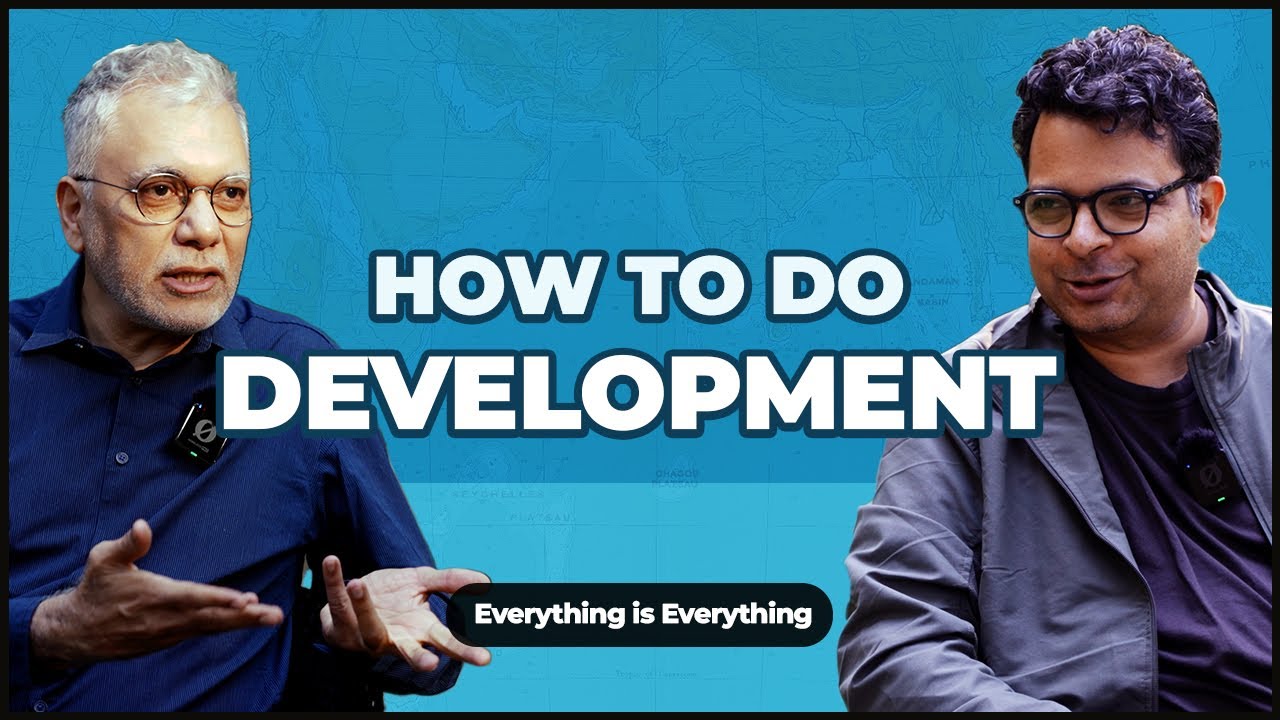
It is the moral imperative of every poor country to lift all its people out of poverty. And yet India, like so many other poor countries, has failed to do this. Development Economics carries much of the blame for this. Wrong beliefs and dangerous fashions within this field have mostly failed to help – and sometimes caused much harm. Welcome to Episode 57 of Everything is Everything, a weekly podcast hosted by Amit Varma and Ajay Shah.
Underestimating intensity of competition - noting that more companies are entering sectors, competing away market share and profits, and are willing to sacrifice margins. There was one large jewelry company that now there are probably five six players wanting to compete.
The article talks about capabilities of OpenAI Atlas and how it differs from the current browsers which are used for - well, browsing the internet
Atlas and its ilk are changing the function to intent driven agent that helps interpret your intent, filter and acts on it rather than being just a passive tool.
Seems like these features will soon start to be replicated by Chrome and Microsoft Edge as well.
Are the 3rd browser wars now looming on the horizon?
Excellent article, thank you for sharing. Helps with markets too.
One of the great qualities of English is the naming of things, which I believe Indian languages struggle with. English speaking world is always at the forefront of naming things which then become norm, standard.
While the article drew parallels between electricity and intelligence, I can apply its essence with markets.
Off late, I am seeing more and more software engineers who work with code come up with coded systems, without much market experience. They think that markets are logical, decision making happens like flowcharts. If markets were complete rational arenas, I would not have dared to step in.
Just like intelligence has components, not all of which can be explained; participation too, has multiple components; some logical, some intuitive. Playing to ones own strengths is one school of thought. Articles like these emphasize that argument. I presume most participants don’t have any idea about this. They do not know that they have something that they can use.
Markets do give things to think about; but to give structure to thoughts, to create and develop models, within cognitive limits; such writing helps in expanding existing areas, opening new ones.